
Review · TOKYO FOOD TOURS
Vegan/Vegetarian Ramen and Gyoza by Bentoya cooking
Vegan ramen in Tokyo tastes like a plan. I love how hands-on it is, you actually make your ramen soup from scratch and shape the meal yourself, and I love the supermarket part, you learn what Japanese ingredients to look for. One possible drawback: this is a cooking class, not a sit-and-watch show, so expect real prep time and knife work.
The big story here is dashi. Traditional Japanese ramen leans on fish-based dashi, but this class teaches vegan and vegetarian ways to get that savory depth without the usual fish stock. If you have always wondered whether plant-based ramen can feel satisfying, this is the practical way to test that idea.
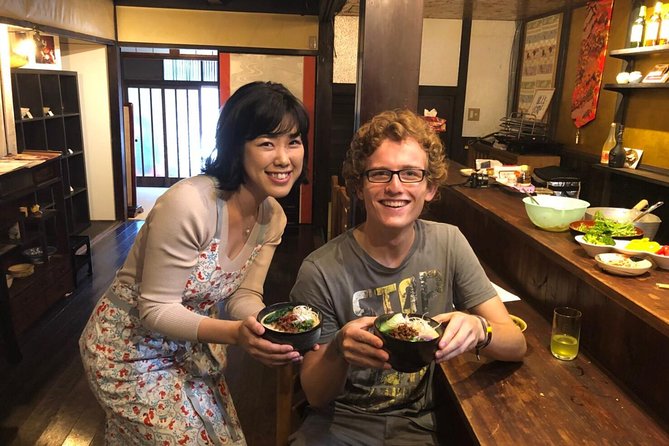
You meet near public transit at Komae Station, then spend about 2.5 hours together. The class runs in a small group, up to 6 people, uses a mobile ticket, and finishes back at the meeting point.
Key points that matter before you go
- A small group class (max 6), so you get real attention
- Supermarket stop to learn what to buy for vegan Japanese cooking
- Ramen soup from scratch, built for vegan or vegetarian eating
- Gyoza making with technique practice, not just assembly
- You leave with instruction files to help you repeat the dishes at home
Where BentoYa Cooking fits in Tokyo food life
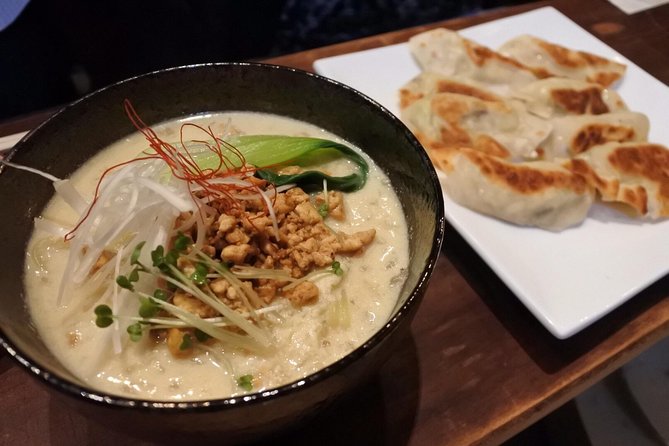
Tokyo is famous for ramen, but finding vegan ramen that tastes like ramen is still a challenge. Dashi, the savory soup backbone in many Japanese dishes, is commonly made with bonito flakes and other fish components. This class is designed around that exact hurdle, so you are not just making a “look-alike,” you are learning how Japanese-style flavor works when you remove the fish.
I like that the school frames the lesson around real Japanese basics. You are not chasing trendy “health food” swaps. You learn how ingredients and seasoning behave in Japanese cooking, then you apply that logic to ramen and gyoza.
It also helps that the vibe is practical. The reviews focus on technique, friendliness, and organization, and that lines up with what you need in a class like this. Good ramen at home is mostly about repeatable steps.
You can also read our reviews of more tours and experiences in Tokyo Prefecture.

Getting to Komae Station and planning your timing
The meeting point is near public transportation at Komae Station. The address given is 1 Chome-7 Motoizumi, Komae, Tokyo 201-0013, Japan, and the activity ends back at the same meeting point. That matters because Tokyo neighborhoods can be spread out, and you do not want a class that turns into a travel headache.
The schedule window listed is 10:00 AM to 1:00 PM, and the duration is about 2 hours 30 minutes. In other words, this is a morning slot that should work well if you want lunch content plus a learning experience before you start the rest of your day.
One more small practical point: it’s a mobile ticket activity. That’s simple, but it does mean you should have your ticket ready on your phone before you arrive.
The supermarket walk, where your vegan ramen shopping gets real
This experience includes a local supermarket visit. That is one of the smartest parts of the class for you, because most people struggle with the “what do I buy?” step after they return home.
In the supermarket, you get introduced to Japanese basic ingredients. The goal is not to memorize brands. It’s to learn what categories to look for and how to find ingredients that make vegan and vegetarian ramen feel grounded in Japanese cooking.
Why I think this matters: if you skip the grocery education, your home version often falls flat. You might use the right idea, but the ingredient mismatch changes the taste and texture. A lesson that includes the shopping step is how you avoid that.
Also, this is where conversation can happen. Reviews mention hosts being friendly and welcoming, and that tends to show up hardest during ingredient questions. If you care about understanding Japanese pantry logic, this segment is where you get the most value per minute.
Ramen soup from scratch, solved for vegan and vegetarian eating
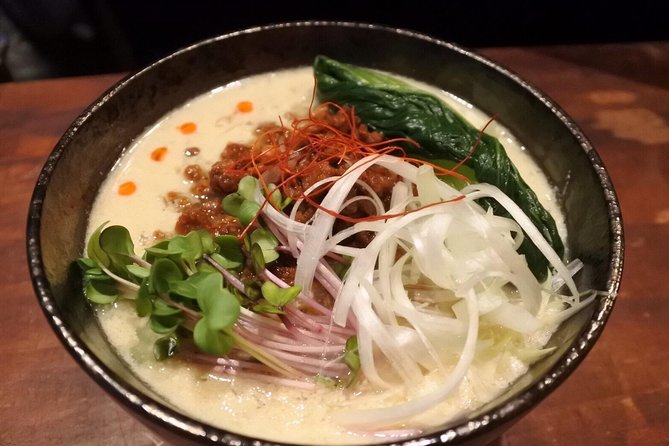
You will learn how to make vegan or vegetarian Japanese food, and the center of the class is the ramen soup made from scratch. This part is the heart of why the class exists.
As you probably already know, Japanese ramen typically relies on dashi, a stock usually made from bonito flakes and other fish-based sources. The class specifically calls out how tough vegetarian food can be in Japan because of this. That means you should expect the instructors to focus on how to build a savory broth without fish stock.
What you get out of this section is more than just a recipe. You learn the logic behind seasoning and timing in a ramen-style broth. Reviews mention skills like cutting and cooking techniques, seasoning, and presentation. In ramen, those skills directly affect taste, not just how the dish looks.
It also helps that multiple instructors show up in reviews, including Kaori and Rina, with English described as excellent in some sessions. If you learn best by asking questions, a strong instructor language skill can make the difference between following instructions and actually understanding what to do next time.
Making gyoza: stuffing, shaping, and getting it right
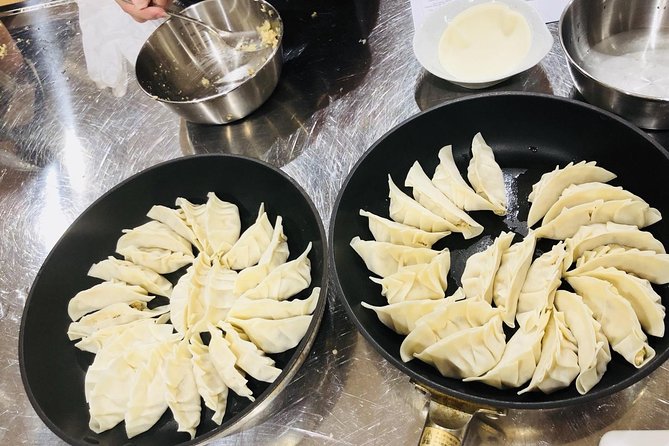
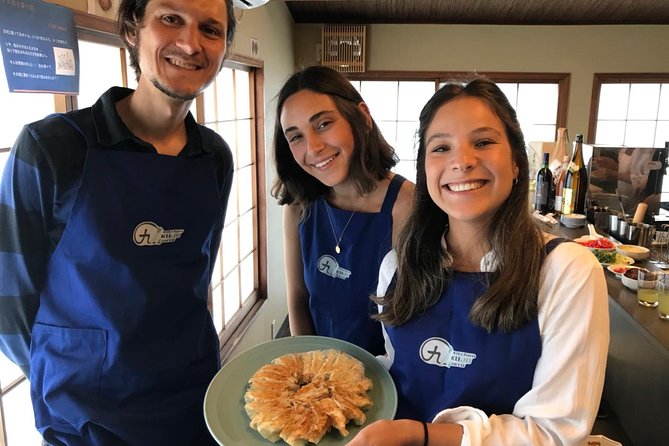
Gyoza is a dumpling made with minced stuffing, and in this class you learn how to make it. The value here is technique. Gyoza fails in predictable ways if you skip the basics: uneven stuffing, dumpling seams that don’t seal, or flavor that tastes flat.
The class is designed for hands-on learning. Reviews describe the cooking as extremely well organized, fun, and instructive. That tells me the instructors are guiding the process step-by-step, so you are not lost during the fiddly parts.
You should expect a lesson that covers the workflow, from preparing the filling to shaping the dumplings and getting them ready to cook. Even if you already know what gyoza looks like, your first try can feel awkward. That’s normal. The point of a class is to turn that awkward first attempt into a repeatable skill.
I also like that the class is taught with presentation in mind. Reviews mention presentation skills alongside cooking technique. That matters for gyoza because the dumpling shape affects how cleanly they look on the plate, and it can affect how confidently you serve your own food at home.

Lunch you made yourself, plus the confidence to repeat
When a cooking class ends with you eating what you made, you quickly learn whether the technique really works. Here, lunch is part of the experience, and reviews call the final results delicious.
That tasting moment is useful. You can connect what you did, like seasoning choices and cooking steps, to the final flavor. If you only followed directions and then ate something else, you would not build the same kind of understanding.
One of the most repeated positives in the reviews is that the meal comes out well and that you leave with tools to cook again. Some reviews specifically mention detailed instruction files after the class and successful re-cooking at home. For you, that turns the class from a one-time meal into actual training.
If you are the type who plans meals for future you, this matters a lot. Many classes in big cities teach one dish but give you nothing useful afterward. This one seems to focus on making your ramen and gyoza feel do-able after you fly home.
What the small group size changes for you
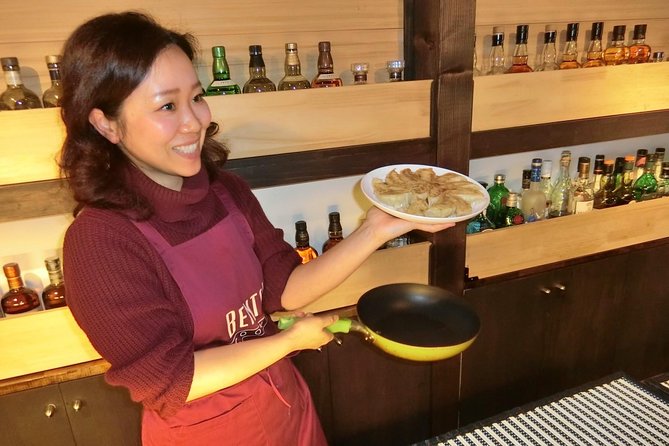
This activity has a maximum of 6 travelers. In practice, that small number is a big deal.
With a larger class, you often get generic guidance. With a group this size, you’re more likely to get help when you get stuck, especially with the steps that need a quick correction, like cutting technique or dumpling shaping.
Reviews mention being welcomed into the instructor’s kitchen and highlight how organized the session is. A small group also supports that home-kitchen feel without turning into chaos.
Price and value: why $75 makes sense here
$75 per person sounds like a “splurge,” but value in Japan often comes from what is included and how much you learn. Here, you’re paying for:
- A guided lesson by a local certified instructor
- A supermarket visit to learn Japanese ingredient basics
- Hands-on cooking of vegan or vegetarian ramen and gyoza
- A lunch created by you
- Small group attention
- Instruction files afterward, mentioned in reviews
If you compare this to the cost of ingredients plus time plus a good guide who can explain the dashi problem clearly, the price starts to look fair. It’s also a better use of your limited travel time than trying to figure everything out from scratch while you’re jet-lagged and shopping in an unfamiliar supermarket.
Also, if you’ve ever tried making ramen at home and ended up with something flat, this class targets the most common failure point, the broth flavor logic.
Who should book this BentoYa vegan ramen and gyoza class
This class is a strong fit if you:
- Want vegan or vegetarian ramen that is rooted in Japanese cooking logic
- Like learning techniques you can repeat, not just collecting photos
- Prefer small group experiences where you can ask questions
- Plan to shop for Japanese ingredients and cook after your trip
It might be less ideal if you:
- Want a purely observational activity
- Don’t enjoy cooking work like cutting, seasoning, and shaping
- Are short on time and can’t spare about 2.5 hours in the morning
Should you book this vegan ramen and gyoza cooking class?
If you care about plant-based Japanese food beyond the novelty stage, I think you should book it. The combination of supermarket education plus ramen soup from scratch plus gyoza technique is what makes this class feel practical. You are not just tasting Tokyo, you are learning how to make a Tokyo-style meal where the fish-based dashi problem is handled on purpose.
If you’re nervous about cooking, that’s okay too. The reviews repeatedly highlight friendliness, organization, and clear instruction from hosts like Kaori and Rina. Small group size also helps you get unstuck.
My final advice: go hungry, bring curiosity, and treat the class like training. If you do that, you will probably leave with skills you can use for real dinners at home, not just a nice memory.
FAQ
Where is the meeting point for BentoYa Cooking?
You meet near public transportation at Komae Station, 1 Chome-7 Motoizumi, Komae, Tokyo 201-0013, Japan.
How long is the vegan ramen and gyoza cooking class?
The experience lasts about 2 hours 30 minutes.
What is the price per person?
The price is $75.00 per person.
What is the maximum group size?
The class has a maximum of 6 travelers.
Is this class vegan and vegetarian focused?
Yes. The experience is for making Vegan or Vegetarian Japanese food, including vegan or vegetarian ramen soup from scratch and gyoza.
Do you visit a supermarket during the experience?
Yes. Part of the experience includes visiting a local supermarket to introduce Japanese basic ingredients.
Will I get anything I can use to cook again at home?
You will receive instruction files after the class, which can help you re-cook the dishes at home.
What if the weather is bad, or I need to cancel?
This experience requires good weather. If it is canceled due to poor weather, you will be offered a different date or a full refund. You can cancel for a full refund up to 24 hours in advance.
More Tour Reviews in Tokyo Prefecture

Not for you? Here's more nearby things to do in Tokyo Prefecture we have reviewed
Tokyo Food Tours, side by side.
 ★ 5.0Shinjuku Food Tour (13 Dishes at 4 Local Eateries)From $866,603 reviews
 ★ 5.0Tokyo Bar Hopping Tour in Shinjuku (All-You-Can-Drink + Dinner)From $1063,587 reviews
 ★ 4.9Shinjuku Food Tour (15 Dishes and 4 Eateries)From $852,033 reviews
 ★ 5.0Best of Shinjuku: Izakaya Food Tour (4 Stops, 14+ Tastings)From $921,863 reviews
 ★ 5.0Shibuya Meltdown Nightlife Tour: All-You-Can-Drink Bar HoppingFrom $1061,058 reviews
 ★ 5.0Eat and Drink Like a Local: Tokyo Ueno Food Tour-Taverns&RamenFrom $95957 reviews
 ★ 5.0Ramen & Gyoza Cooking Class in Tokyo with Local Supermarket VisitFrom $122823 reviews
 ★ 5.0Shibuya Food Tour (13 dishes and 4 Eateries)From $77770 reviews
This tour also belongs to