
Review · MOUNT FUJI TOURS
Winter Special: Clear View Mt. Fuji E-Bike Tour
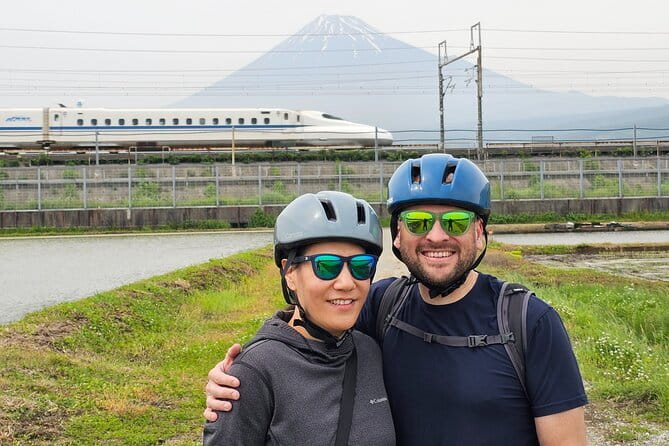
Mt. Fuji looks close here. This winter special uses electric assist to move you fast enough for great Mt. Fuji views but slow enough for real breaks, temple stops, and photo time. I like two things a lot: the small-group pace (max 5) and the chance to ride outside the usual crowds into calmer Fuji City roads. One consideration, though, is weather, because clear skies matter for getting those crisp winter views.
The route is built for comfort and rhythm. You’ll start at Shin-Fuji Station, roll past Myohoji Temple, pedal along Suruga Bay for shoreline scenery, then cool off with spring water stops at Yusui Park and Hounji before finishing at Fujisan Yume No Ōhashi Bridge for a classic Fuji angle.
If you’re used to rushing through Japan’s big sights, this tour feels like the opposite. You’ll cover a lot of ground, but you won’t feel chased. Pack warm layers, because even with kairo heat packs included for winter, winter air can bite when you stop for photos.
Quick hits: what makes this winter e-bike tour work so well
- Electric assist with a real, relaxed pace, so you can enjoy the views instead of power-worrying
- Small group size (up to 5), which means fewer bottlenecks at viewpoints and more guide attention
- Spring water stops at Yusui Park and Hounji fountain, with places to drink the region’s water
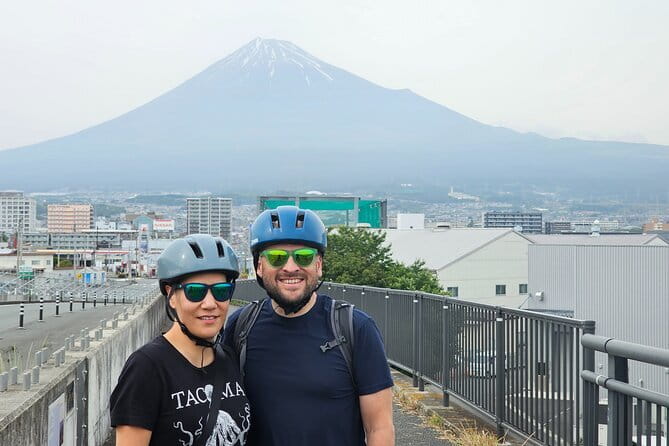
- Suruga Bay coastline riding, for a different angle on Mt. Fuji than the usual Hakone and Kawaguchiko routes
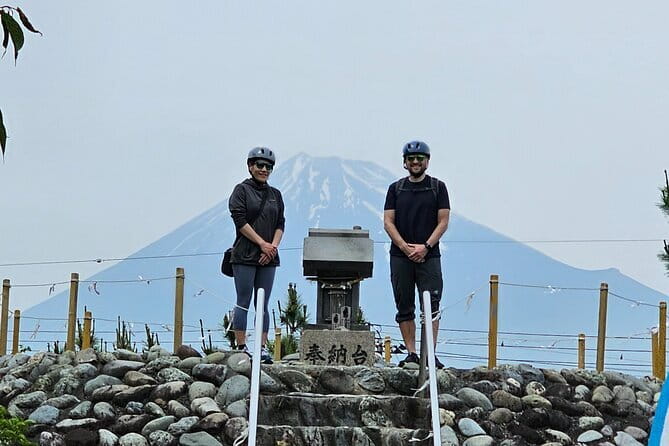
- Fujisan Yume No Ōhashi Bridge, including the south-side staircase (50 steps) for photo positioning
Winter air plus electric bikes: how you get better Fuji odds
Let’s talk about the main reason this tour is timed for winter. In cold, clear conditions, Mt. Fuji often shows more consistently, and the air feels sharper for photos. Even then, Fuji is Fuji, meaning the mountain can still hide behind cloud or haze. The good news is that the tour is designed around stops where you can appreciate the area, not just wait for one perfect sighting.
What I like about this setup is that the e-bike changes your whole experience of a day trip. In a regular bicycle tour, you might overwork yourself trying to keep up. Here, electric assist helps you maintain an easy, steady effort, so you’re more likely to arrive at viewpoints with energy for looking closely, not just snapping one quick picture and moving on.
This matters because the route leans into slower details: temple surroundings, everyday roadside scenery, and those spring water moments. You’re not touring like a checklist. You’re touring like someone who actually lives nearby for the day.
Also, winter gear is part of the plan. Heat packs called kairo are provided free in the winter season. That means you can keep moving without having to improvise warmth at every stop.
You can also read our reviews of more tours and experiences in Fuji.
The ride setup: Miyata Ridge Runner, helmet, and what to wear
You’ll ride a rental electric-assisted bike, a Miyata Ridge Runner. You get a rental helmet and a guide, plus insurance coverage handled by the operator. There’s also a mobile ticket, so you can keep things simple on the day.
The practical question is effort. This is an easygoing ride. You’ll still pedal, but you won’t need to “cycle through pain” to enjoy the scenery. If you can handle gentle riding and turns, you’re likely to be fine. The tour notes that most travelers can participate.
Now, what to wear. The tour is short, about 2 hours 30 minutes total, and you’ll be outside the whole time. Winter air can feel colder when you’re stopped for photos, so layer up. Bring gloves. Bring something to cover your ears if you get cold there. And keep a small stash of warm items in your pockets since you can’t count on a store being right around the corner.
One more detail: bottled water is not included. That’s not a dealbreaker, but it does mean you should plan to bring your own drinks, especially in winter when you might not feel as thirsty as you would in summer.
Meeting at Shin-Fuji Station: start calm, not frantic
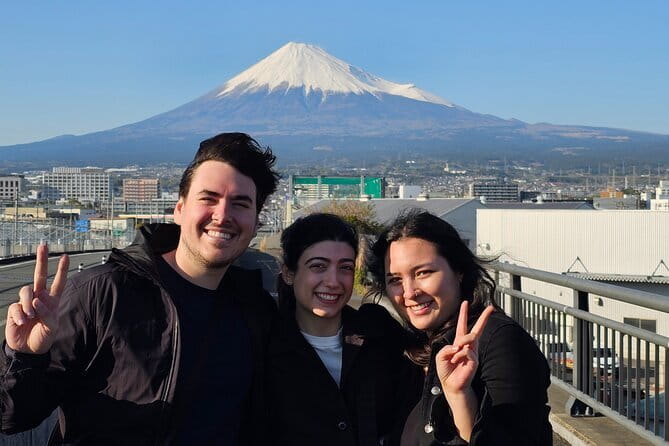
Your meeting point is the south exit of Shin-Fuji Station, where you meet the guide and begin your ride. The tour is set up to keep the start easy, with a quick first stop right away so you’re not standing around figuring out where to be.
Why I like starting here: Shin-Fuji is a real transit hub, so you’re not stuck navigating rural meeting points. It’s also a good mental reset. You arrive, get geared up, and then you move into a quieter side of the Fuji area right away.
The timing is efficient too. The tour runs around 2 hours 30 minutes including riding time and time at each segment, and you finish back at the same meeting point. That keeps it simple if your itinerary is tight later that day.
Stop 2: Myohoji Temple and the first taste of Suruga Bay scenery
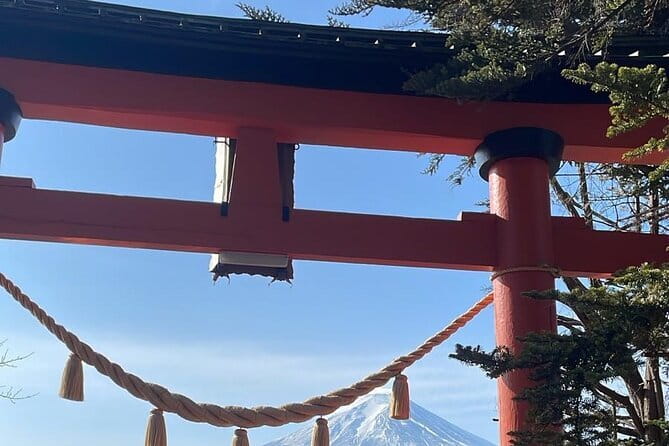
One of the first stops is Bishamonten Myoho-ji Temple. You’ll pause at Myohoji Temple, then head toward the sea. This is a smart early move because temples give you a different kind of context than you get from viewpoint buses.
From there, the ride transitions toward coastal scenery. You’ll cycle along a route with views of Suruga Bay, described as Japan’s deepest bay, and you can see Mt. Fuji from the same general area. That’s the key advantage of this tour. You’re not only seeing Fuji from one “big famous photo spot.” You’re getting more than one angle.
A drawback to be aware of: coastal routes can feel a bit cooler, and winter wind can sneak in. This is exactly where the provided warmth (kairo) helps. If you’re sensitive to cold, plan to dress a touch warmer than you think you need.
Yusui Park and Hounji Fountain: why spring water stops are more than a photo break
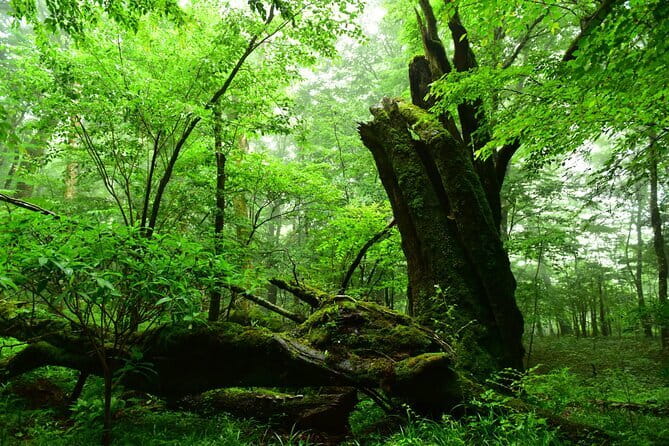
Then comes one of the most charming parts of the ride: the spring water break.
At Yusui Park, you’ll visit various spring water sites around the city. The focus is on water coming from Mount Fuji. Even if you’re not a water-nerd, this is a great palate cleanser during a scenic bike day. It slows you down in a good way, gives you a stretch opportunity, and gives you something tangible to experience that isn’t just scenery.
Next is Hounji, where you’ll see a fountain and can drink the spring water. This is the kind of stop that makes a tour feel local. Instead of only looking at pretty places, you’re participating in a small daily ritual. And because it’s built into the ride, you don’t have to guess where to stop or whether a shop is open.
One practical tip: treat this like any tasting stop. Take small sips first if you’re sensitive to temperature, and don’t assume it’s replacing your water bottle. In winter, it can still be chilly in your hands and you may want sips plus regular hydration from your own bottle.
Fujisan Yume No Ōhashi Bridge: the Fuji finale and the 50-step viewpoint
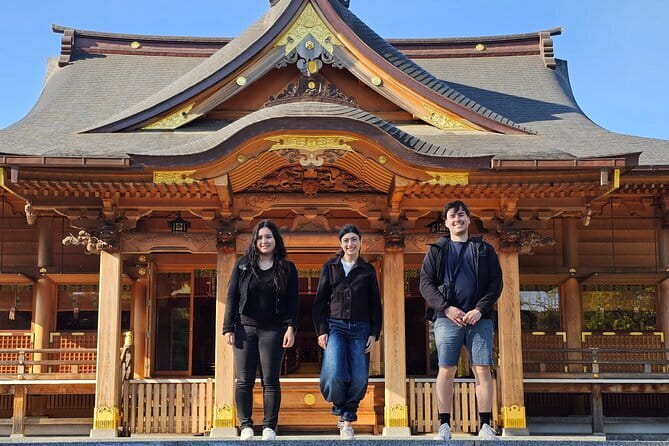
The tour’s photo finish is at Fujisan Yume No Ōhashi Bridge. It’s timed as a late-stage stop because by then you’ve already been riding, learning the area, and warming up through movement.
This bridge gives you a magnificent view of Mt. Fuji from the bridge itself. There’s also a staircase on the south side with 50 steps. That matters because sometimes the best photo isn’t at the main railing level. The steps let you reposition your angle and height.
If you’re serious about photos, this is where you should take your time. Move slowly, watch for foot traffic, and give yourself a few minutes for Fuji to appear clearly through any thinning clouds.
Also, bridges in winter can be windy. Even with winter warmth gear, keep your plan for gloves in mind so you can take photos without freezing your fingers.
Riding for real life: what guide Yasu Hasegawa brings to the day
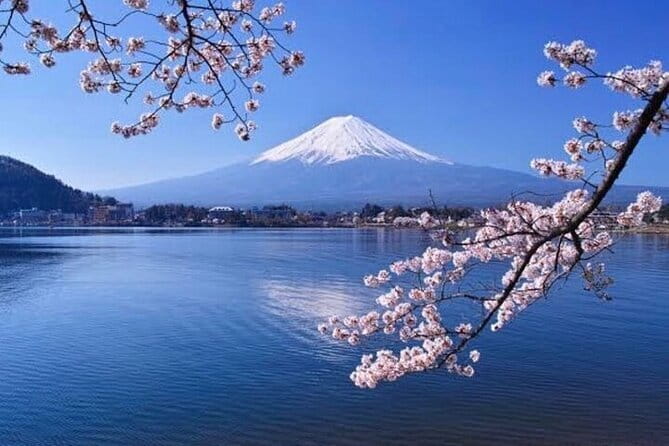
The tour’s quality isn’t only in the views. It’s in how the guide frames the route.
Your guide is Yasu Hasegawa. People consistently describe him as welcoming and informative, with a knack for making the ride feel personal. The most useful kind of guide knowledge here is not a lecture. It’s the small explanations that help you understand why certain places matter in Fuji City.
You’ll also get practical help with photos. Guides on e-bike tours sometimes act like traffic control. Here, Yasu helps you take pictures and shares context along the way, which makes your photos more meaningful after the fact.
There’s another advantage: the route is designed to show quieter parts of Fuji City that many visitors miss when they focus only on Hakone or Kawaguchiko. The result is that you see daily life, countryside edges, and a more grounded side of the Fuji area.
Because the group is capped at five people, it’s easier to ask questions, pause when someone needs a moment, and keep the day from feeling rushed.
Time and effort: what your 2.5 hours really feels like
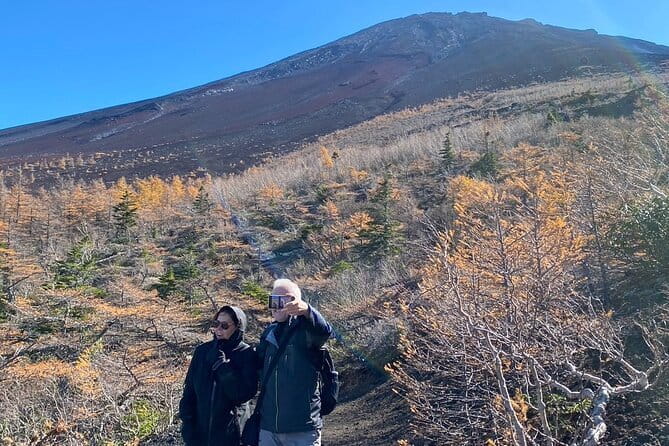
Total duration is about 2 hours 30 minutes. That includes the ride segments and time at each stop, and you return to the meeting point.
In practice, you’ll likely feel this as a relaxed afternoon block. You’re not doing an all-day endurance ride. You’re doing a scenic, structured loop where electric assist keeps effort low while the route still feels active.
Stop-by-stop, the day flows like this:
- Start at Shin-Fuji Station, meet at the south exit
- Visit Myohoji Temple and cycle toward the sea
- Pause at Yusui Park for spring water sites
- Stop at Hounji fountain to drink spring water
- Finish at Fujisan Yume No Ōhashi Bridge for the Mt. Fuji view and staircase option
- Return to Shin-Fuji Station
The value here is pacing. Each stop has a purpose, and none of them feel like a long museum detour. The riding fills the gaps, so the day stays fun instead of becoming a sequence of waiting.
Price and value: is $105.42 a good deal?
At $105.42 per person, this tour isn’t the cheapest thing you can do around Fuji. But it’s also not trying to be a low-budget, DIY experience. You’re paying for a guided route, a quality rental e-bike, a helmet, insurance coverage, and winter warmth support (kairo), plus the time and attention of a guide.
The value equation improves if you want to do more than one of these things on your own:
- reach the seaside views without figuring out the exact cycling route
- fit spring water stops into one organized plan
- get to a bridge viewpoint with built-in photo time
- handle cold-weather comfort gear so you can actually enjoy the ride
Also, small group size helps justify the price. When a tour caps at five, you’re not competing for attention or waiting for a chain of riders at every stop.
The one thing that could affect value is weather. If Fuji isn’t clear on the day, you may still enjoy the ride and local stops, but the “crisp winter views” are the headline. Since the experience requires good weather, it’s worth choosing a date you’re flexible with.
Who should book this winter Fuji e-bike tour
This is a strong fit if you:
- want a Mt. Fuji experience that feels calmer than the usual Hakone and Kawaguchiko crowds
- like bicycles but don’t want a workout to dominate the day
- enjoy small-group guidance and short learning moments along the way
- want to see spring water culture at the foot of the mountain, not just scenic overlooks
- travel as a couple, small group, or family where everyone can ride at an easy pace
It may be less ideal if you hate winter weather, you need frequent indoor breaks, or you want a long ride with minimal stops. This tour is short and structured, and winter requires you to dress for being outside.
Should you book the Winter Special Clear View Mt. Fuji E-Bike Tour?
If your top goal is seeing Mt. Fuji while keeping your day relaxed and efficient, I’d book it. The mix of electric assist, small group size, and Fuji City stops like Myohoji Temple, spring water breaks, and Fujisan Bridge makes this feel like a real local outing, not a rushed sightseeing loop.
My main caution is simple: weather. You’re paying for clear views, so keep your plans flexible. If you’re the type who enjoys countryside riding and little cultural moments, you’ll still have a satisfying day even when Fuji is shy.
If you want a Fuji highlight that feels different from the big crowd hubs, this winter e-bike route is one of the smarter ways to do it.
FAQ
Where is the tour meeting point?
You meet at the south exit of Shin-Fuji Station in Fuji, Japan. The tour ends back at the same meeting point.
How long is the Winter Special Clear View Mt. Fuji E-Bike Tour?
The total duration is about 2 hours 30 minutes, including riding time and time spent at each stop.
What type of bike do you ride?
The tour uses an electric-assisted rental bike, a Miyata Ridge Runner.
What’s included in the tour price?
Included are the electric assisted bike, a rental helmet, the guide, insurance coverage (handled by the operator), and winter heat packs (kairo). Bottled water is not included.
How big is the group?
The tour has a maximum of 5 travelers.
Do I need to bring bottled water?
Yes. Bottled water is not included, so you should prepare your own drinks.
What happens if the weather is poor?
The tour requires good weather. If it is canceled due to poor weather, you’ll be offered a different date or a full refund.
Is cancellation free?
Yes, you can cancel for a full refund up to 24 hours in advance. If you cancel less than 24 hours before the start time, the paid amount is not refunded.
More Tours in Fuji
More Tour Reviews in Fuji
Not for you? Here's more nearby things to do in Fuji we have reviewed
Mount Fuji Tours, side by side.
 ★ 5.0Mt Fuji and Hakone 1-Day Bus Tour Return by Bullet TrainFrom $16326,383 reviews
 ★ 4.0Mt Fuji & Hakone Cruise, Drum Show Bullet Train 1 Day from TokyoFrom $1497,413 reviews
 ★ 4.4Tokyo Mt Fuji 5th St & Hakone Cruise Bus Tour w/Bullet TrainFrom $1545,024 reviews
 ★ 4.5From Tokyo: Mount Fuji Full-Day Sightseeing TripFrom $684,970 reviews
 ★ 4.7Mt. Fuji Tour, Hakone Ropeway, Owakudani, Lake AshiFrom $544,002 reviews
 ★ 4.2Mt. Fuji 5th Station & Hakone Cruise 1-Day Bus TourFrom $1292,381 reviews
 ★ 4.7Mt Fuji Top 5 Spots Day Tour: Arakurayama Park,Oshino HakkaiFrom $532,066 reviews
 ★ 5.0Private Tour to Mt. Fuji and Hakone (Fully Licenced Operator)From $4971,910 reviews
This tour also belongs to