
Review · TOKYO CITY TOURS
Cook Everyday Japanese Home Meals with Your Tokyo Mom
A real home kitchen beats a show. Step into a quiet Koganei suburb house with Tokyo Mom’s Kitchen, where you cook everyday Japanese dishes with an English-speaking host and learn the little routines that make the meal feel lived-in.
I love the hands-on cooking and the fact that the class teaches core skills like dashi instead of just walking you through a recipe. I also appreciate how smoothly the sessions support first-timers, based on how instructors like Aki-san guide people through tasty results without making it feel intimidating.
One drawback to plan around is transport. The tour starts at a specific address in Koganei, and transportation and parking are not included.
Key things to know before your Tokyo Mom kitchen class
- Small group limit of 6 keeps the vibe personal, so you can ask questions while you cook
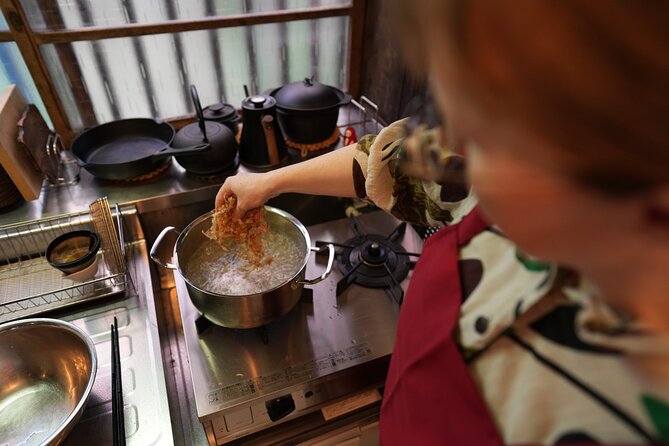
- You start with dashi, the flavor foundation behind miso soup and many Japanese dishes
- Shoes-off home etiquette is part of the experience, not an afterthought
- Pick a main dish style (Saikyo yaki, teriyaki, or your own request) and choose meat, fish, or vegetables
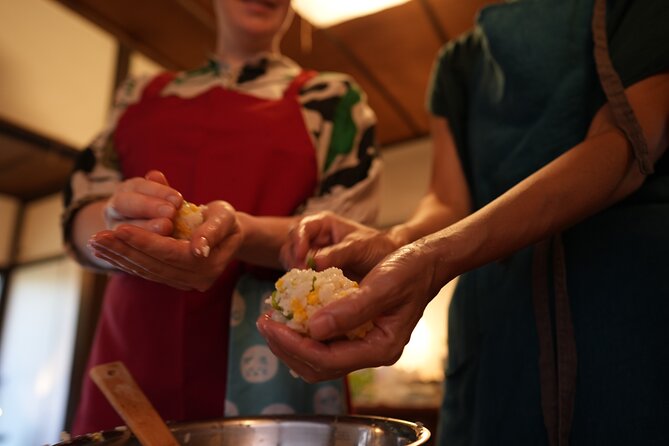
- You shape onigiri by hand, then wrap it with seaweed
- Apron and hand towels are provided, so you can focus on cooking instead of packing gear
A real Tokyo house meal, not a staged performance
This experience is built around stepping into a home kitchen, not a show kitchen. You’re in a retro Japanese house in a calm Tokyo suburb, and the goal is everyday life through food. That changes the feel fast. You are not just watching someone cook, you’re doing the work, using regular kitchen tools, and learning what matters to home cooks.
The cultural details are practical, like removing your shoes at the entrance and handling the space like you belong there. You also learn how dishes are set on the table, which sounds small until you realize how much it affects the flow of the meal. It’s the kind of know-how you only pick up when you’re in a real home setting.
The class also uses English-speaking instruction, which helps if your Japanese is basic. You’ll still feel the Japanese rhythm, but you won’t get lost when directions get specific.
You can also read our reviews of more tours and experiences in Tokyo Prefecture.

The cooking menu, and how your choices shape the meal
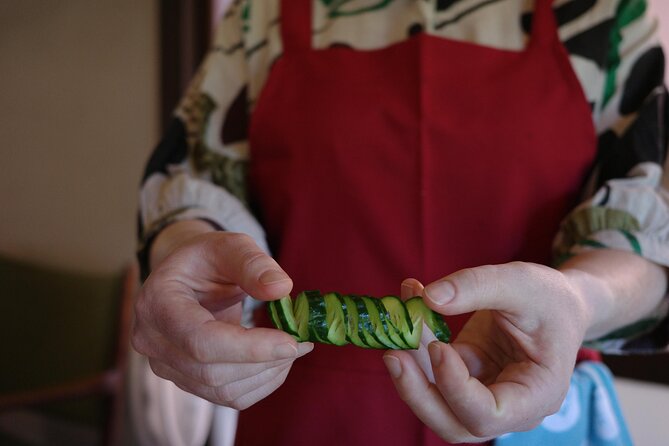
Your menu is a mix of Japanese home-style staples and flexible main dishes. The structure is consistent, but the main dish is where you get to steer the day.
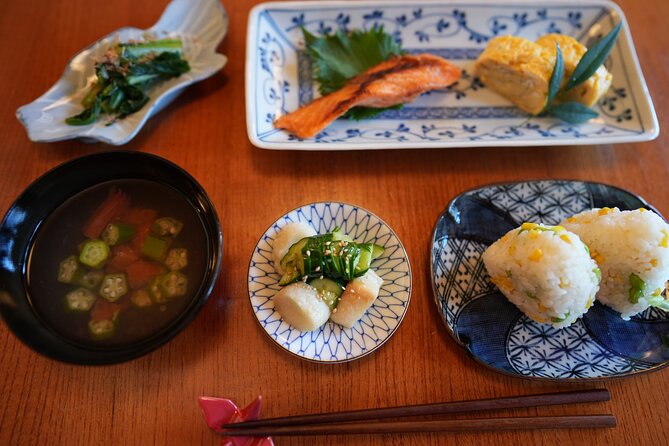
Here’s what’s included on the menu:
- A main dish that you choose by cooking style (and you can usually choose what it’s made from)
- Saikyo yaki: miso-marinated and grilled, known for a gentle, delicate flavor
- Teriyaki: sweet and savory soy-based glaze
- Your request: tell your host your favorite Japanese dish, and they’ll do their best to make it happen
- Onigiri, rice balls shaped by hand and wrapped with seaweed
- Tamagoyaki, a fluffy Japanese rolled omelet
- A seasonal vegetable dish
- Miso soup
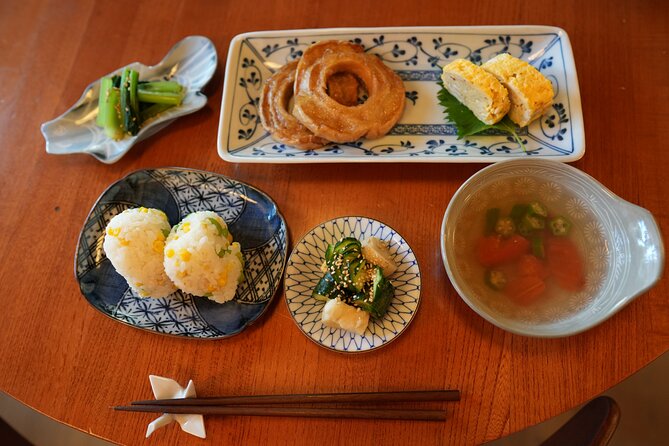
The value here is that the class doesn’t just teach one dish. You get a “full meal” feel, so you leave with a mental map of how Japanese home cooking hangs together: rice, a main, soup, a side, and a couple of techniques you can repeat later.
Also, the main dish choice matters because it changes the flavor profile and cooking approach. Miso-marinated and grilled feels one way. Teriyaki tastes another way. Even if you’re not a grill person at home, learning the timing and seasoning concept is the transferable part.
Why dashi is the skill you’ll actually use later
You’ll start by making dashi, a Japanese soup stock made from seaweed and dried fish. This step is more than a preface. It’s the backbone that helps Japanese cooking taste like Japanese cooking.
If you’ve ever tried a miso soup mix and found it flat, this is where the difference comes from. Learning how stock starts, how it smells, and how it turns into usable flavor gives you a foundation you can build on. Even if you don’t make stock every week at home, you’ll understand what makes it work.
Dashi also helps you connect dishes that otherwise seem separate. In this class, it ties into miso soup, and it supports the broader idea of balanced, everyday flavor.
Onigiri and tamagoyaki: the hands-on favorites
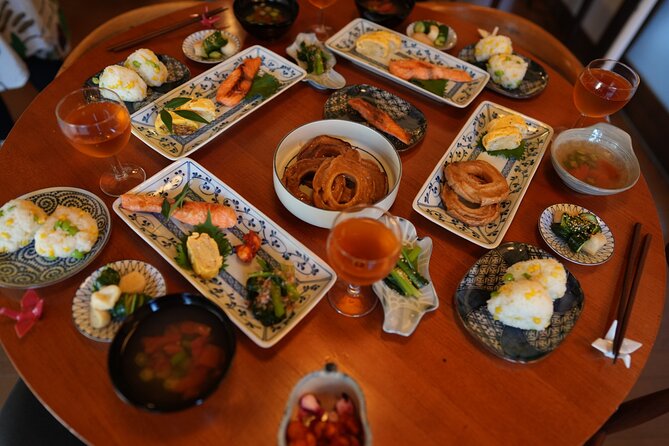
Two of the most satisfying parts of the class are the things you make with your hands.
Onigiri, shaped and wrapped
You’ll shape rice into onigiri, then wrap it with seaweed. That might sound simple, but it teaches technique: how to handle warm rice without making it gummy, and how to form a compact shape that holds together. When you get it right, it feels like you’ve cracked a Japanese home skill that you usually only see in convenience store wrappers and lunchboxes.

Tamagoyaki, rolled into something fluffy
You’ll also make tamagoyaki, the rolled omelet style that’s a Japanese breakfast and lunch staple. The highlight here is texture and folding. You’re learning the rhythm of rolling and setting layers so the final result comes out soft and “fluffy,” not uneven or rubbery.
In seasonal versions of the class, participants have reported especially enjoying the rolled egg and rice ball portions. It’s a good sign that these are taught in a beginner-friendly way, so the hands-on time doesn’t turn into stress.
Main dish time: Saikyo yaki, teriyaki, or your own request
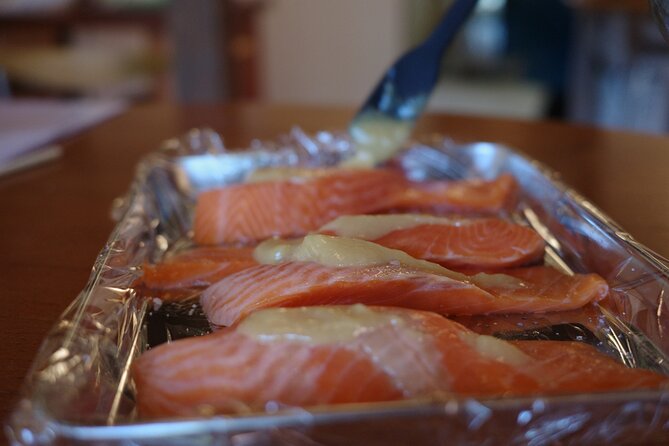
The class lets you choose from three paths for your main dish, and each one teaches something different.
Saikyo yaki (miso-marinated and grilled)
If you choose Saikyo yaki, you’ll work with miso marinade flavors and grilling technique. Saikyo style tends to taste refined and not too heavy, which is great if you want something that feels elegant but still home-cooked.
Teriyaki (soy-based sweet and savory glaze)
For teriyaki, you’ll glaze and time the sauce so it coats without burning. Teriyaki is approachable for many home cooks because the flavor is familiar, but doing it in a Japanese home setting helps you understand how the sweetness and salt balance lands.
Your request, matched as closely as possible
You can also let your host know your favorite Japanese dish, and they’ll do their best to make it happen. This is a strong option if you already know the flavors you want, but you want the home cooking method rather than a restaurant version.
One practical note: since the menu can be seasonal and the dish may vary, it’s smart to share your request clearly when you book or check in. The more specific you are, the easier it is for a host to adapt.
The home-cooking details that make the difference
This is where the experience feels more like cultural exchange and less like cooking class bingo.
You learn small habits, like:
- Removing shoes before you enter
- Handling table setup and dish arrangement the way a household would
- Moving through a meal in a natural sequence, rather than cooking random items one by one
The instructor also adds context about the culture and health of everyday home life in Japan. Even if you don’t catch every word, the meaning comes through. Japanese meals are usually built for balance, portion rhythm, and comfort.
From the way instructors are described, the teaching style is gentle and encouraging. People who don’t cook often report finishing with food they’re proud to eat. That matters, because the best cooking classes lower your fear and raise your confidence.
Instructor energy: what Aki-san and Ali point to
You’ll be taught by an English-speaking instructor from Tokyo Mom’s Kitchen. In past sessions, instructors named Aki-san and Ali have been highlighted for teaching with kindness and cheer, plus attention to detail and courtesy.
The big takeaway for you is not the names themselves. It’s the teaching approach those names represent: step-by-step guidance, patience for beginners, and enough structure that you can succeed even if your cooking skills are basic.
If you’re the type who worries about messing up in a small kitchen, this teaching vibe is a strong reason to book. In cooking classes, confidence is half the meal.
Timing, group size, and what the pacing feels like
The class runs about 2 hours 30 minutes. It starts at the meeting point and ends back there.
The group size cap is six travelers, which is ideal. In a larger group, you can get stuck waiting for tools or for instructions. Here, you’re more likely to cook in real time, ask quick questions, and adjust as you go.
Pacing-wise, it makes sense that the host begins with the foundational stock work, then moves into the main dish and side items. As items cook and set, you’ll shift between tasks like shaping onigiri, handling tamagoyaki steps, and finishing soup. The structure matters because it keeps the class from feeling chaotic, even though you’re doing multiple dishes.
Because there’s no private transport included, you’ll want to plan to arrive without rushing. If you’re late, it can throw off the whole flow for everyone in such a small group.
Value check: $99 for a real home-cooked meal experience
At $99 per person, the value is solid if you care about technique, not just the end result.
Here’s why:
- Ingredients and cooking utensils are included
- You get recipe and instruction materials, so you can repeat the basics
- Apron and hand towels are provided, which removes a tiny friction cost
- The class is small-group, so you’re paying for attention and guidance, not just a seat
You’re also not buying a meal from a menu. You’re eating what you made, and the experience covers foundational skill building like dashi, plus approachable “signature” items like onigiri and tamagoyaki.
Two things to keep in mind when judging value:
- Transportation is not included, so your total cost depends on how you reach Koganei
- Alcoholic beverages are not included, so budget for drinks if you want them after
Even with those considerations, you’re still getting a hands-on cooking session that includes the key ingredients and instruction needed to do it right.
Practical planning: where to meet and what to bring
You’ll meet at 4-chōme-15-17 Nakachō, Koganei, Tokyo 184-0012, Japan. The good news is it’s near public transportation. The not-so-fun part is you should still treat it like a destination, not a quick hop from central Tokyo.
What to bring:
- Comfortable clothes you can move in
- Any dietary concerns you want to flag ahead of time, especially since the main dish can be meat, fish, or vegetables
- A normal level of curiosity and patience
What you can leave at home:
- Cooking gear, since utensils are provided
- Hand towels and apron, since those are provided too
One small thing to remember culturally is the shoes-off norm. Wear footwear that is easy to remove and re-wear, even if you think you already can.
Who this class is perfect for
This is a great fit if you want:
- A real-world Japanese home meal rather than a tourist performance
- A cooking class that teaches techniques you can repeat
- Something friendly for first-timers, since beginners have succeeded in these sessions
- A smaller group experience where conversation is part of the cooking
It’s also a nice choice if you’re traveling with a friend or even on your own. With a max of six participants, solo travelers usually get pulled into the action instead of sitting on the edge.
If you’re a serious foodie who already cooks Japanese at home, you might want to go in with a specific interest, like dashi or tamagoyaki technique. Otherwise, you may find it more “learn and practice” than “chef-level deep technique.”
Should you book Cook Everyday Japanese Home Meals with Your Tokyo Mom?
If you want a Tokyo experience that feels like daily life, this is an easy yes. You’re not only learning what to cook, you’re learning how home cooks think: start with the right foundation, handle rice and eggs with care, and build a balanced table.
Book it if you:
- Like hands-on experiences and small groups
- Want to learn dashi, then use it in miso soup
- Care about cultural details like shoes-off etiquette and table setup
Skip it if you:
- Don’t want to travel to Koganei at all
- Are only interested in a specific dish and not the full home-meal lineup
Bottom line: for $99 and about 2.5 hours, you get a practical, teachable set of Japanese home cooking skills, plus a meal that actually reflects the work you did.
FAQ
What dishes are included in the class?
You’ll make dashi first, then prepare a main dish chosen from options like Saikyo yaki or teriyaki (or request another dish), plus onigiri (hand-shaped and wrapped), fluffy tamagoyaki, a seasonal vegetable dish, and miso soup.
Can I choose what my main dish is made from?
The class lets you choose the cooking style for the main dish, and you can choose meat, fish, or vegetables for each style. There is also an option to request your favorite Japanese dish and have the instructor do their best to accommodate.
How many people are in a group?
The experience has a maximum of 6 travelers, which keeps the class small.
What’s provided, and what do I need to bring?
All necessary ingredients, cooking utensils, recipe and instruction materials, an English-speaking instructor, and loan of an apron and hand towels are included. Transportation is not included.
Is transportation included in the price?
No. Private transportation, transportation costs, or parking fees are not included.
Is alcohol included?
No. Alcoholic beverages are not included.
More Tour Reviews in Tokyo Prefecture

Not for you? Here's more nearby things to do in Tokyo Prefecture we have reviewed
Tokyo City Tours, side by side.
 ★ 5.01-Day Tokyo Bus TourFrom $12914,250 reviews
 ★ 4.5TOKYO SKYTREE® Admission ticketFrom $1311,192 reviews
 ★ 4.6teamLab Planets TOKYO Digital Art Museum Entry TicketFrom $259,779 reviews
 ★ 4.0Mt Fuji & Hakone Cruise, Drum Show Bullet Train 1 Day from TokyoFrom $1497,413 reviews
 ★ 5.0Shinjuku Food Tour (13 Dishes at 4 Local Eateries)From $866,603 reviews
 ★ 4.4Tokyo Mt Fuji 5th St & Hakone Cruise Bus Tour w/Bullet TrainFrom $1545,024 reviews
 ★ 5.0Flagship 2-Hours Official Street Go-Kart Tour – Tokyo Bay ShopFrom $644,974 reviews
 ★ 4.5From Tokyo: Mount Fuji Full-Day Sightseeing TripFrom $684,970 reviews