
Review · MEIJI SHRINE TOURS
Personal prayer at Meiji Shrine!
A serene shrine ritual, minus the guessing. At Meiji Jingu, this tour helps you understand Shinto etiquette and what to do step by step, so you can focus on your intentions. I love that you get a personal prayer experience, not just a walk-through, with translation support so the process feels doable.
I also like the cultural parts built into the ceremony: the purification ritual you can watch up close, plus Gagaku (UNESCO Intangible Cultural Heritage) and a miko dance performance. One thing to consider is physical comfort, since the experience involves sitting and ritual bowing, and it is not recommended if you have pain when sitting straight.
Key things I’d watch for before you go
- Meet under the second torii gate, so you do not waste time hunting signage in a crowded shrine setting
- Etiquette coaching on how to walk the approach and pass through torii gates, with help avoiding accidental disrespect
- Purification and worship basics, including the specific coin offering and bow, clap, bow sequence
- A private prayer option where you write intentions, then submit an application form and offering fee to the shrine priest
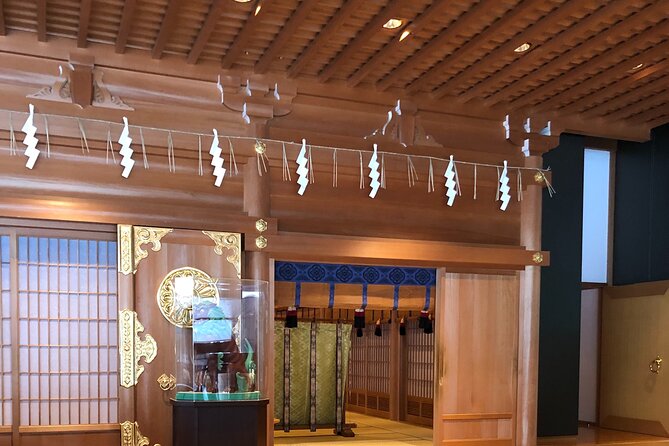
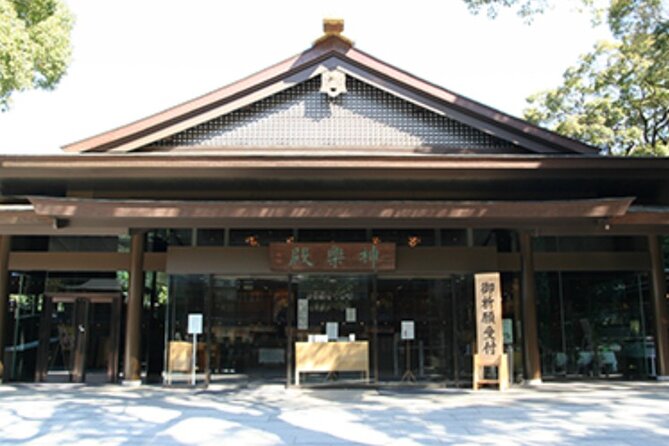
- Live ceremony elements, including drum-led purification, Gagaku, and miko dance in the Kaguraden area
- What you receive afterward: sacred offerings (including nori) and sacred sake (omiki)
Why this Meiji Jingu prayer feels different from a typical visit
Meiji Jingu is one of those Tokyo sites where you can easily get “tourist-brain.” Lots of people see the torii gates, take photos, and move on. This experience slows you down and gives you a clear script for what matters in Shinto worship.
The big value is simple: you get guided meaning, not just instructions. You learn how to behave around the torii gates and what the purification steps are for. Then you move into the Kaguraden area for a personal prayer session, where the ceremony includes traditional court music (Gagaku) and a miko dance performance. It turns an iconic landmark into something you can actually participate in.
The spiritual side is personal, but the logistics are practical. The tour includes translation support for the information and the application form, which matters because the prayer intentions are documented through a shrine form that is available in Japanese only.
You can also read our reviews of more tours and experiences in Tokyo.



First torii gate photos, waka poems, and what to notice on arrival
You meet at the start point near the Big Torii, and the tour begins under the second torii gate. Right away, your guide points out details that many visitors miss. You get help recognizing the torii’s unique features, and you also see displays nearby with sake barrels and wine barrels, along with a waka poem prominently displayed.
This stop is only about 15 minutes, and it is mostly about setting the tone. It helps you understand that Meiji Jingu is not just architecture, it is a shrine landscape designed to be read. You can take photos here, and your guide will gladly help you position for good angles.
If you want photos, show up ready. This is a popular shrine, and your time window is limited, so you benefit from having a guide help you know where the best spots are and what is worth looking at beyond the obvious.
Walking the sacred path correctly, passing torii gates with confidence
Next you walk from the second torii gate toward the third torii gate. This is where the tour earns its keep for foreigners. Passing through shrine gates and walking the approach has etiquette. When people guess, they often get it wrong without meaning to, and it can feel awkward for everyone involved.
Your guide explains proper behavior as you go. You also get pointers on waka poems and buildings you encounter along the route, and you are encouraged to take photos at locations where it makes sense.
A small but important advantage here is pace. Instead of trying to decode signs and guess ritual rules, you get a short, focused explanation and then you practice in real time. It helps your brain shift from sightseeing to respectful participation.
Purification and the coin offering ritual at the washing area
At the purification fountain, you pause before entering the main shrine area. You cleanse your hands and mouth in the traditional way. This part is only about 10 minutes, but it matters because it sets the physical rhythm of worship. You are doing something concrete before you pray.
Then you follow the same basic worship method used by the general public. The sequence includes offering a coin, then two bows, two claps, and one final bow. Your guide walks you through the order so you are not fumbling mid-ritual.
Photography rules also come up. There are areas where photography is not allowed, and your guide will tell you when to put the camera away. That guidance is genuinely helpful because it keeps you from feeling torn between your phone and the moment.
If you are the type who likes to fully understand what you are doing, you will appreciate this stop. It gives you a clear physical pattern, not just a vague “be respectful” message.
Kaguraden application: writing your intentions and submitting the offering
Now comes the personal part. You move into the Kaguraden, where you can receive individual blessings. Before the ceremony, you fill out an application form at the entrance. This is where you put your wishes into words for the shrine to consider.
You can choose intentions such as world peace, household safety, travel safety, recovery from illness, business success, finding a good match, safe childbirth, or academic achievement. There is also an opportunity to provide your address and name.
Two practical notes make this section much easier than it would be alone:
- The forms are available only in Japanese, but the tour provides thorough help with completing everything.
- You submit the form along with the offering fee. The personal prayer offering fee starts from 5,000 yen, and it is not included in the tour price.
Once you submit everything, you transition from paperwork mode to ceremony mode. The tour description also makes clear that the process includes a priest’s participation, which is why you want the form filled out correctly and on time.



Inside the ceremony: drum-led purification, Gagaku, and miko dance
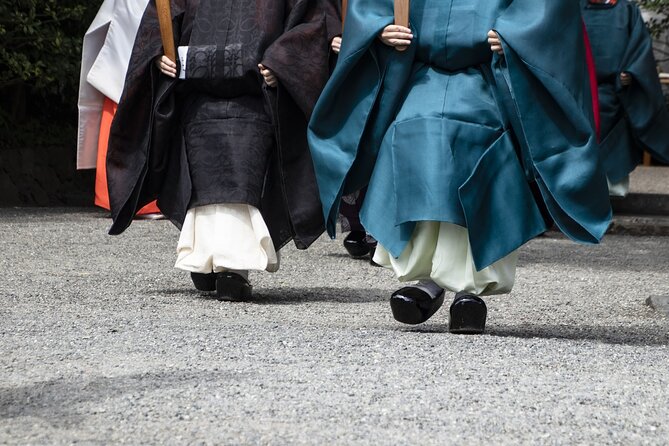
At the altar in the Kagura Hall area, the ceremony takes place. You can expect the sound of a drum to resonate as shrine priests, dressed in traditional Japanese attire, perform a purification ritual using sacred tools. Your guide stays with you so you know what you are watching and why it is happening.
After the purification, you experience Gagaku, which is traditional court music played on ancient instruments and flutes. Gagaku has been designated as a UNESCO Intangible Cultural Heritage, and in the ceremony setting it feels less like a museum topic and more like living tradition.
A miko dance performance follows, with shrine maidens in traditional costumes. This is one of the moments that can feel surprisingly moving, even if you came in expecting something “just cultural.” The choreography and music sit together in a way that makes the spiritual setting feel intentional, not staged for tourists.
Your guide also helps manage where you should stand or move, and respects areas where photography is not allowed. This is one of those experiences where staying focused beats trying to document everything.
After the prayer: what you receive and how to use it
When the ceremony concludes, the ritual wraps up through sacred offerings and sacred sake. You receive shinsen and drink omiki.
- Shinsen are offerings presented to the deities during the ceremony and later shared with participants. In this experience, they are often in the form of nori (seaweed), meant to be enjoyed at home.
- Omiki is sacred sake offered to the deities. A portion is shared with participants, and at the exit you receive a small cup and a shrine maiden pours the sake for you to drink on the spot.
This part is more than a souvenir moment. It is part of the logic of the prayer itself: items offered to the deities are believed to carry spiritual power, and consuming or using them is one way of continuing the prayer intention.
You end the tour when the prayers are completed and the group disperses at the exit of the Kaguraden. The experience does not end with a long lecture. Instead, it ends with you carrying something tangible, plus a clearer understanding of what you did and why.
Value check: is $98 worth it for this Shinto prayer?
At $98 per person for about 1 hour 30 minutes, this is not a budget add-on. You have to pay for a guide’s time, translation support, and the structure that makes a shrine ritual understandable for foreigners.
What helps the value is that you do not just get “information.” You get:
- Etiquette guidance that can prevent common mistakes around torii gates and worship gestures
- Help completing a Japanese-only application form
- A guided path through the worship flow, including purification steps and the personal prayer ceremony area
- Translation support for the application process, which is often the hardest part to handle alone
What is not included is the prayer fee to the shrine (starting from 5,000 yen) plus any amulets you purchase privately. So your final out-of-pocket cost will be higher than $98 if you choose the personal prayer option and want to bring home additional items.
I’d also point out that the tour requires good weather. If rain and poor conditions cancel it, you will be offered a different date or a full refund.
If you already feel confident navigating Shinto worship on your own, you might skip this. But if you want the peace of mind that comes from knowing exactly how to behave and what the steps mean, this is one of the better types of “guided culture” that actually respects the tradition instead of replacing it.
Timing, ticket style, and how to avoid the classic shrine day frustrations
This is a private tour/activity, meaning only your group participates. You also get a mobile ticket, which keeps things simpler on a smartphone.
The meeting point detail is important. You meet under the second torii gate. If you show up late, you might miss the start of the guided walkthrough. The experience description also notes that it is near public transportation, which helps you build a realistic arrival plan in Tokyo traffic.
One reliability note from past experiences: there can be occasional human hiccups. In one case, communication problems affected the start timing, and the provider apologized for their mistake. In another case, the interpreter fell ill, and the tour still proceeded with support, though there were communication issues. My practical advice is to treat this like any real-life ceremony schedule: keep your phone ready, confirm your meeting details ahead of time, and arrive early.
If you hate sitting straight for long periods, keep that in mind. The experience is not recommended for people with pain when sitting straight, which can affect comfort during ceremonial seating and ritual bowing.
Who should book this, and who might want a DIY shrine visit instead
This tour is a strong fit if you want a respectful, structured Shinto experience and you do not want to rely on guesswork. You will especially like it if you care about:
- getting the worship steps right
- understanding the meaning behind purification and ritual gestures
- having help completing the Japanese form for intentions
- experiencing Gagaku and miko dance as part of a prayer session, not just as a show
It is less ideal if you prefer free-roaming sightseeing, or if you are only interested in taking photos and moving on quickly. Also, if you know you will struggle with ritual posture and sitting, skip it.
Should you book this personal prayer at Meiji Jingu?
Book it if you want the kind of Meiji Jingu visit where you leave feeling centered, not just entertained. The best reason is the combination of etiquette coaching and a personal prayer ceremony that is structured around your intentions. The translation help is a big deal, especially for the Kaguraden application process.
Skip it if you are already comfortable with Shinto worship and you want to explore on your own schedule. Also reconsider if physical comfort during ritual posture is an issue for you.
If you do book, go in with two expectations: you will be asked to follow specific ritual steps, and you will get a calm, guided flow rather than a fast checklist of sights. For many people, that is exactly the point.
FAQ
What does the tour include?
The tour includes information and translation fees for the application form. The shrine prayer fee and any personal amulets you choose to buy privately are not included.
What is the prayer fee for the personal prayer?
The personal prayer offering fee starts from 5,000 yen and is paid directly to the shrine. Your tour fee does not cover that offering.
How long is the experience?
It is approximately 1 hour 30 minutes.
Where do we meet?
You meet under the second torii gate at the start area near the Big Torii, in Shibuya (151-8557). The tour ends with dispersal at the exit of the Kaguraden.
Is the tour private?
Yes. It is a private tour/activity, so only your group participates.
Do I need to speak Japanese?
The application form is available only in Japanese, but the guide provides assistance so you can complete it smoothly.
Are there places where I can’t take photos?
Yes. There are areas where photography is not allowed, and your guide will let you know where to stop.
Is it accessible for people who can’t sit straight comfortably?
It is not recommended for those who have pain in sitting straight.
More Tour Reviews in Tokyo
Not for you? Here's more nearby things to do in Tokyo we have reviewed












Meiji Shrine Tours, side by side.
 ★ 4.7Meiji Shrine, Asakusa, Skytree Bus Tour and CruiseFrom $1221,986 reviews
 ★ 4.5Tokyo Panoramic 1 Day: Meiji Shrine, Asakusa, Odaiba and SKYTREE®From $851,222 reviews
 ★ 4.9Meiji Shrine Walking Tour — Shinto & Imperial SystemFrom $23266 reviews
 ★ 5.0Meiji Jingu Shrine and Shinto Culture Walking TourFrom $19245 reviews
 ★ 5.0Meiji Shrine and Shinto Culture Walking TourFrom $18225 reviews
 ★ 5.0Meiji Shrine Walking Tour — Shintoism & Imperial SystemFrom $21209 reviews
 ★ 5.0Tokyo Morning Tour : Meiji Shrine, Asakusa and Fish MarketFrom $72102 reviews
 ★ 5.0Full Tokyo: Meiji Shrine, Imperial Palace, Asakusa & SkytreeFrom $3978 reviews
This tour also belongs to