
Review · NIKKO DAY TRIPS
Tokyo: Toshogu Shrine (Nikko Toshogu), Lake Chuzenji, Kegon Falls
Nikko is prettier than your camera expects. This one-day run strings together Nikko Toshogu Shrine and big nature views at Akechipingira Observatory, then tops it off at Lake Chuzenji and Kegon Falls. I like how the schedule focuses on the classic highlights in one long stretch, without you having to coordinate multiple transfers.
The main drawback: the flow can feel crowd-heavy early, and the guide can be tricky to spot at the start. If you hate hunting for your group, read your pick-up email carefully and give yourself a few extra minutes before the bus arrives.
Key Highlights You’ll Actually Feel in Your Day
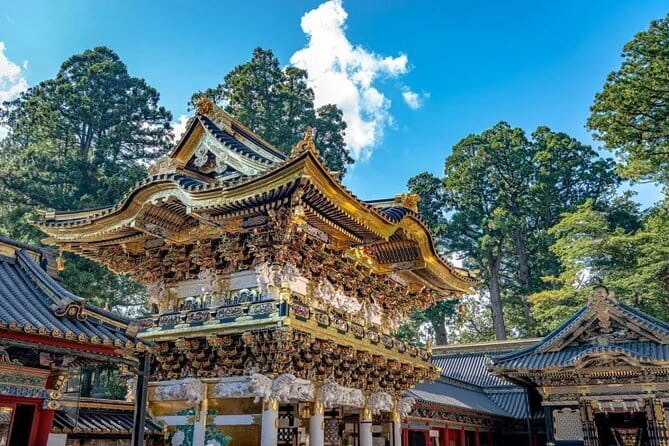
- Nikko Toshogu’s World Heritage setting: carved gates and temple buildings set against the Nikko Mountains
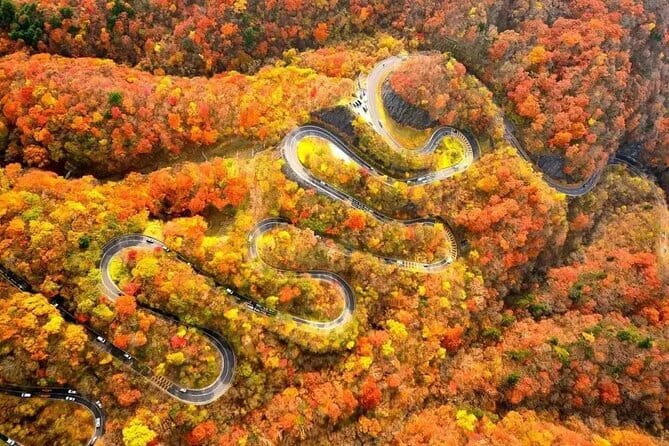
- A drive on Iroha Mountain Road: 15.8 km with 48 turns, built for views
- Akechipingira at 1,373 meters: a cable car ride that quickly puts you in lookout mode
- Lake Chuzenji’s year-round scenery: azaleas in spring, red leaves in autumn, snow in winter
- Kegon Falls’ photo setup: a major 700-meter drop with a 99-meter main fall and multiple side streams
A Quick Reality Check: It’s One Long Nikko Day From Tokyo
This trip is about 11 hours, built as a guided loop with planned stops and time for lunch. The big win is that you get out of Tokyo and into the Nikko Mountains without spending your whole day figuring out trains, buses, and connections.
This is also a trip style choice. You are moving on a schedule. The timing makes sense for hitting Nikko Toshogu, a major observation deck, Lake Chuzenji, and Kegon Falls, but it means you won’t have hours and hours to wander at each place.
Departures run on Tuesdays and Saturdays, with a minimum group size of 4 people. The group is capped at 15 travelers, which is fairly comfortable for a day tour, especially when you want to see a lot without feeling like you’re in a huge coach crush.
You can also read our reviews of more tours and experiences in Tokyo.



Entering Nikko Toshogu Okariden, Where Tokugawa Ieyasu Still Lurks in the Details
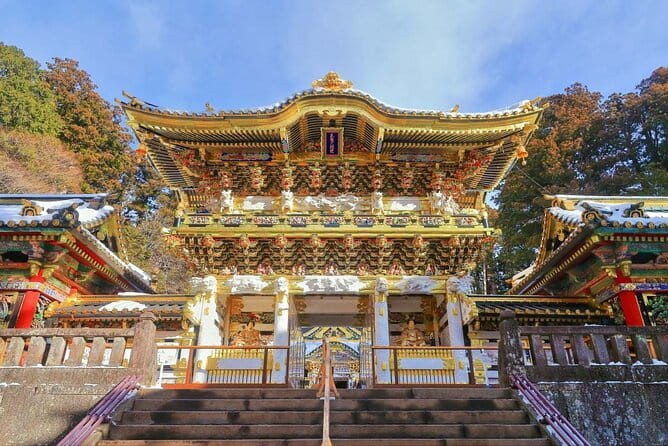
Nikko Toshogu is the headquarters of Toshogu Shrine, and it honors Tokugawa Ieyasu, the first shogun of the Edo shogunate. The main deity is Tosho Ogongen, and that matters because the shrine is not just scenic. It’s a place built to communicate power, symbolism, and status through architecture.
What I like here is the contrast: you walk among grand carved structures, and they feel set up like an outdoor museum. The tour stop focuses on the Okariden area, with admission listed as free. It’s located in the Nikko Mountains, built into the landscape rather than sitting off in flat town.
A couple of standout design notes you can watch for:
- The Japanese-style Mingyang Gate
- The Chinese-style Tang Gate
If you enjoy looking closely, this stop rewards you. The shrine is part of the UNESCO World Cultural Heritage site called Shrines and Temples of Nikko, designated in December 1999.
The possible downside is timing and crowding. Even if the architecture is why you came, mornings can be busy. The tour route starts here, so your best move is simple: arrive ready to walk, keep your eyes open for your group, and don’t plan to linger in the most popular spots for long.
Iroha Mountain Road: 48 Turns That Make the Journey Part of the Attraction
After the shrine stop, the day shifts from temple grounds to mountain road views. You’ll travel via Iroha Mountain Road, which is listed among the Top 100 Roads in Japan.
This road is 15.8 kilometers from Nikko City to Lake Chuzenji and Oku-Nikko, and it has 48 turns on the up and down route. That’s not just a trivia fact. The curves are what create those repeated chances for sweeping views, especially when the mountain air is clear.
If you’re the type who likes watching landscapes roll by, this drive is genuinely enjoyable. You’re not just getting from point A to B. The itinerary builds in a scenic corridor, and that sets up the nature stops to feel extra dramatic once you get out and look around.
Akechipingira Observatory: Cable Car Quick Lift to Lake Views and Waterfall Angles
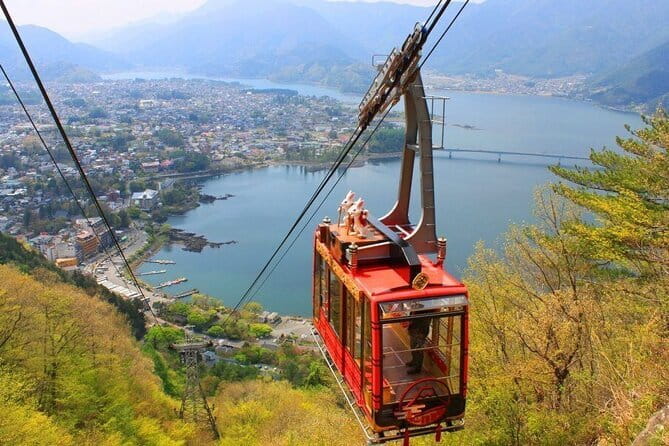
Next up is Akechidaira Observation Area, anchored by the Akechipingira Observatory, described as the most popular observatory in the Nikko area. Admission is included, and the viewing platform sits at an altitude of 1,373 meters.
One detail that makes this stop worth it: the view isn’t only one direction. From the observatory, you can see Lake Chuzenji and Huayan Waterfall. You can also spot Pingfeng Rock, described as continuous cliffs, plus rolling mountains in the distance from the east side.
Getting up there is fast. The cable car ride is about 3 minutes, so you’re not spending your limited time battling logistics. In a one-day itinerary like this, that efficiency is a big deal.
What to expect on arrival: you’ll likely be sharing the viewpoint with other visitors, but it’s still one of the best ways to get the big picture. This is the kind of stop where you first orient yourself, then you suddenly understand how Lake Chuzenji, the falls, and the surrounding terrain connect.
Lake Chuzenji: Highest Natural Lake in Japan, With Seasons Built In
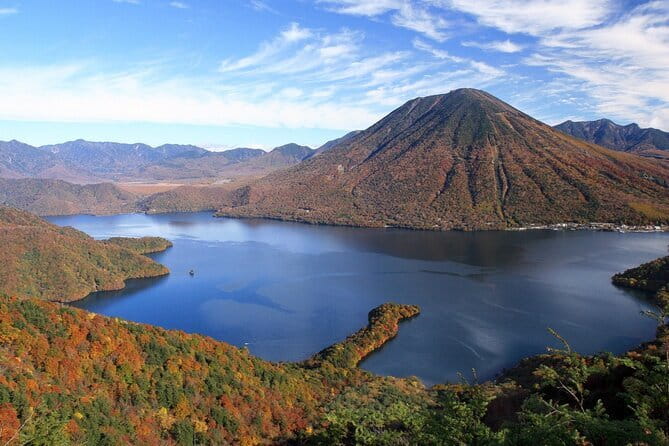
Then comes Lake Chuzenji, with admission included. It’s described as the highest natural lake in Japan, and it earns the attention because it changes throughout the year.
Here’s the seasonal lineup you can plan your expectations around:
- Spring: azaleas
- Summer: green trees
- Autumn: red leaves
- Winter: snowy scenery
If your trip lines up with spring or autumn, you’ll get the famous “camera season” vibe the lake is known for. If it’s another time of year, you’re still getting a scenery-driven stop, just with a different mood.
I like how the itinerary gives you a full hour here. That’s enough time to stroll and find a comfortable viewpoint without feeling rushed out the door. Keep your pace steady. Lake views tend to lure you into long pauses, and it’s better to plan for that than to feel stressed trying to fit everything in.


Kegon Falls: The 99-Meter Main Drop and the Rock-Gap Streams
Kegon Falls is one of Japan’s three famous waterfalls, and it’s a short, high-impact finale in the Nikko National Park area. Admission is free in this tour stop, and the visit time is about 30 minutes, which is just enough to see it properly and get photos without turning the day into a marathon.
Here’s what makes the falls impressive, and why it’s worth your limited time:
- The water comes from Chuzenji Lake and forms the Ojiri River at its eastern end
- It crosses Mount Nantai
- The water flows down about 700 meters to form the main waterfall
- The main fall is described as 99 meters high
- The upper rock protrudes forward
- There are 12 small waterfalls that flow out of rock gaps
That last point matters for photos and for understanding what you’re seeing. It’s not one single sheet of water. You’re looking at multiple streams shaping the scene.
In autumn, the tour notes that surrounding red leaves blanket the area, which turns the falls into a mountain postcard. Even if you’re not going in autumn, the falls still have that “artist’s impression” feeling created by mountains and moving water.
Price and Value: Paying for the Scenic Route, Not Just the Seats
At $105.99 per person, the value comes from bundling transport and key admissions into a guided one-day arc. You also get a mobile ticket, and you’re traveling with a professional Chinese driver and tour guide.
What’s included:
- Vehicle service fees, fuel costs, and tolls
- Driver service fee
- Vehicle service time is listed as within 10 hours under Japanese law
- Admission for the Akechipingira Observation Area and Lake Chuzenji
- Nikko Toshogu Okariden is free in the itinerary
- Kegon Falls stop is also listed as free
What you’re paying for, in plain terms: you’re buying time and simplicity. You don’t have to hunt down tickets for the main nature stops. You also avoid the “what’s the next bus” stress that can happen when you try to do Nikko DIY in one day.
The trade-off is that the schedule is set. You’ll spend more time on the road and less time deciding. If you love flexible wandering, this might feel tight.
Comfort, Crowds, and Group Reality You Should Plan For
This is a group day trip, limited to 15 travelers. That’s good. You won’t feel completely lost in a giant crowd.
But based on the kind of start-line snag that sometimes happens on Nikko departures, I recommend a simple strategy:
- Read the departure reminder email the night before
- Note the pick-up time and the vehicle registration number
- Since guides do not initiate contact, show up at the stated location early
- Keep your essentials ready, because many hotels cannot park for a long time, so you’ll wait in front of the hotel, not in the lobby
One more practical thing: the tour isn’t ideal if you’re trying to pack lots of luggage. It explicitly says it’s not recommended to carry luggage for a one-day trip. If you must bring it, you need to register it clearly when booking. One luggage per person is allowed, and there’s an extra 100 yuan per piece if you did not note it or if it turns out you brought more than one piece.
If you travel light, you’ll feel calmer in crowded areas. That alone can make the experience smoother.
Who Should Book This Nikko Day Trip (and Who Might Prefer DIY)
This trip is a strong fit if you want:
- A classic Nikko highlights circuit in one day
- Scenic viewpoints without coordinating transport
- A day that works for families and active travelers who don’t need slow museum pacing
- A structure that takes you to multiple “wow” stops, including a shrine and big nature sights
You might want to think twice if:
- You get irritated when groups feel crowded at the start
- You prefer long stays and slow wandering with no time pressure
- You’re traveling with more luggage than a day bag
Should You Book This Nikko Day Trip?
If you’re short on time in Japan or you want a guided route that lands you at the right sights, I think this one is worth booking. The combination of Nikko Toshogu, a high viewpoint at Akechipingira, and the paired payoff of Lake Chuzenji and Kegon Falls is a sensible way to experience Nikko in a single long day.
Just go in knowing what can be a little imperfect: the first meeting can be hectic, and mornings at popular temples can feel busy. If that doesn’t bother you, and you’re happy to follow a timetable, you’ll come away with exactly what most people hope for from Nikko: shrine grandeur plus mountain views plus waterfalls.
FAQ
How long is the Tokyo to Nikko tour?
The trip is approximately 11 hours.
What are the departure days?
It departs on Tuesdays and Saturdays.
Is there a minimum or maximum group size?
There is a minimum of 4 people to run the tour, and the tour has a maximum of 15 travelers.
What ticket types are used?
You get a mobile ticket.
Which stops are included in the day?
You visit Nikko Toshogu Okariden, the Akechidaira Observation Area (Akechipingira Observatory), Lake Chuzenji, and Kegon Falls.
Are admissions included for all stops?
Admission is free for Nikko Toshogu Okariden and Kegon Falls in the itinerary. Admission is included for the Akechidaira Observation Area and Lake Chuzenji.
Are children included?
Children under 3 years old are free of charge without occupying a seat.
How do pick-ups work?
You’ll receive a departure reminder email the night before with vehicle registration number, guide contact info, and pick-up time. Guides do not initiate contact with guests, so you should wait at the specified location.
What is the cancellation rule?
You can cancel up to 24 hours in advance for a full refund. If you cancel less than 24 hours before the start time, the amount paid is not refunded.
More Tour Reviews in Tokyo


Not for you? Here's more nearby things to do in Tokyo we have reviewed












Nikko Day Trips, side by side.
 ★ 4.6Nikko: Kegon Falls, Lake Chuzenji & Toshogu TempleFrom $891,577 reviews
 ★ 4.5Nikko Toshogu Shrine and Kegon Waterfall TourFrom $841,266 reviews
 ★ 5.0Nikko Full-Day Private Tour with Government-Licensed GuideFrom $155259 reviews
 ★ 4.9From Tokyo: Nikko World Heritage Site Private Full-Day TripFrom $483243 reviews
 ★ 4.3Nikko: Edo Wonderland Edomura Cultural Theme Park TicketFrom $35205 reviews
 ★ 4.8Nikko World Heritage Private Day Trip Hotel Pick-upFrom $390145 reviews
From Tokyo: Nikko World Heritage Sight Full Day Private TourFrom $362127 reviews
 ★ 4.9Nikko – Beautiful Full-Day Personal and Private TourFrom $364119 reviews
This tour also belongs to