
Review · TOKYO
Special sushi rolls only available in Japan Making Experience
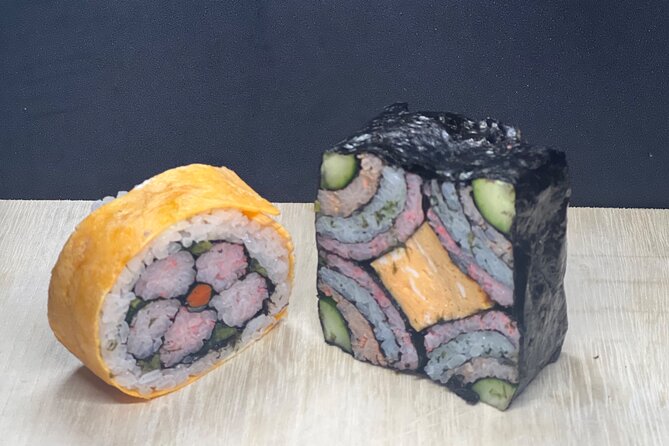
Sushi, but with a theme and a plan. This private class focuses on designer maki you can actually photograph, with one-to-one guidance from Yumi. I love that you get hands-on instruction while you build the roll, and I love the pay-off moment when you cut and reveal your pattern in the finished pieces. One thing to consider is the meeting point: it starts at Shinkashiwa Clinic in Kashiwa, Chiba, so you’ll want to budget time to get there even though it is marketed as a Tokyo experience.
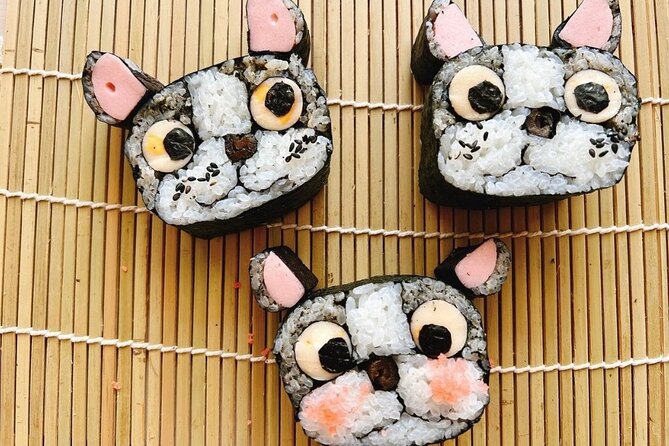
What makes this class feel different from a typical sushi lesson is the creativity built in. You choose imaginative designs like minions, flowers, Mount Fuji scenes, dogs, or cats, and you learn how to use colored rice plus decorations to get that look. The guide, Yumi, is described as patient and step-by-step, which is especially helpful if it is your first time making sushi.
Key highlights you will care about
- One-to-one instruction from Yumi, with questions welcome as you work
- Designer roll results using colored rice, decorations, and a clear rolling method
- Photoworthy patterns you can see right after slicing into four pieces
- Take-home sushi setup with wrapping and takeout containers provided
- Small-group flexibility where you may go to a home kitchen or a communal kitchen
- Friendly pacing for beginners and families, including accommodating classes for young daughters
Private sushi class in Tokyo outskirts: what the setup really means
Even though the experience is tied to Tokyo, the meeting point is in Shinkashiwa (Kashiwa, Chiba). That does not make it bad, it just changes the logistics. You are not just dropping by a central Tokyo kitchen, you are traveling to a specific starting spot, then returning there at the end. If you like having a focused activity with a clear start and finish, that structure is a plus.
Because it is private, you get more control over the pace. The class is described as one-to-one tuition in a private sushi class, which matters when you are learning a hands-on skill like maki rolling. With public classes, you often rush to keep up. Here, you can ask questions while you work, and you can slow down during the fiddly parts like cutting seaweed and arranging colored rice and decorations.
Group size can also affect where the class happens. The experience notes that if you book a smaller number of people, you may head to Yumi’s parents house, while a larger group may go to a communal kitchen. Either way, the goal is the same: you are learning the method, building the design, and taking your rolls home in containers.
Finally, there is a special request option if Shinkashiwa is too far. The notes suggest kitchens can be rented and recommend areas near Asakusa and Skytree, but you need to add a special request for where you want to enter. That is useful if you are already planning to stay in those neighborhoods.
You can also read our reviews of more tours and experiences in Tokyo.



Cost and value: why $40.97 can be worth it
At $40.97 per person for about 2 hours, the price is not just for a quick snack. The value comes from what is included: instruction, ingredients, and packaging for take-home sushi. You are also paying for a class format that is designed to be more personal than group demos.
Here is what you effectively buy with that cost:
- Guided instruction while you make your own roll, not just watch
- All ingredients provided by the instructor, including what you need for colored rice and decorations
- Takeout containers so your final product can leave with you
- A class structure that ends with your rolls wrapped and ready to take home
If you have ever taken a food experience where you only get to taste at the end, this is the opposite. You work through the process: mixing, cutting, placing, rolling, slicing. And the best part is that you do not have to guess how your pattern will look. The method ends with cutting into four pieces so you can immediately see the design you created.
One possible drawback to keep in mind is that you are paying for the experience format. If your goal is purely low-cost sushi tasting, this is not built for that. But if you want a fun skill you can repeat later, and you want the satisfaction of designer results, the price starts making sense.
Where you meet, how you start, and how the session flows
You start at Shinkashiwa Clinic, located at 1-chōme-4-5 Shinkashiwa, Kashiwa, Chiba 277-0084, Japan. The good news is it is listed as near public transportation, so you do not have to worry about getting completely stuck.
After you meet, the class takes one of two paths depending on group size:
- Smaller bookings may go to the instructor’s parents house.
- Larger group bookings may go to a communal kitchen.
Either setup is still focused on your rolling session. The important part is that the timeline stays tight and you get a full end-to-end experience.
The session itself is fairly direct and teachable. You start with rice work, then move into seaweed and decoration, and finally do the rolling and slicing that creates your pattern. Once the roll is finished, you wrap everything so it is ready to take home. After that, there is time to relax with coffee, tea, and snacks before you are taken back to the pickup point to end the activity.
That last step sounds simple, but it matters. Learning to make maki is one thing. Being able to leave with it packaged and ready is what turns this into a real memory you can share at home.
The hands-on method: colored rice, seaweed, rolling, and the pattern reveal
The heart of the class is the build process. You follow the steps in order, and you learn what each step is doing for the final look.
First, you mix the rice and some ingredients to create colored rice. This is the foundation for the whole design effect. If you want the roll to look like an animal, a flower, a character, or a theme scene, colored rice is what makes the pattern possible.
Next comes the seaweed stage. You cut the seaweed, then arrange the colored rice and other decorations. This is where the private instruction really helps. You are not just learning a recipe, you are learning how to place materials so the design stays visible after rolling.
Then you roll it up. Rolling maki sounds simple until you try it. The class method gives you a consistent way to build the roll so it holds together and so your decorations do not shift.
Finally, you cut the roll into four pieces. That slice is your payoff moment. You can see the pattern you made, such as a flower, animal, or character design.
If you love “show me how it ends” learning, this is satisfying. You do not have to wait until you get home to find out whether your idea worked. The class builds the design and then checks it in real time.
Choosing your designs: Minions, animals, flowers, and Santa
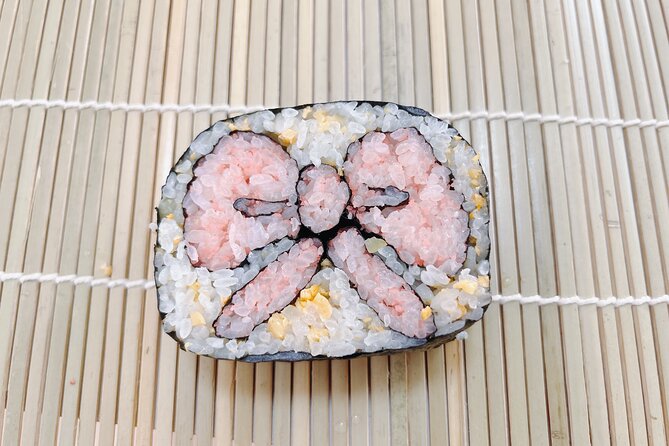
The creativity in this class is not random. You are offered imaginative design options and can choose the look you want. The listed examples include minions, flowers, Mount Fuji scenes, dogs, and cats.
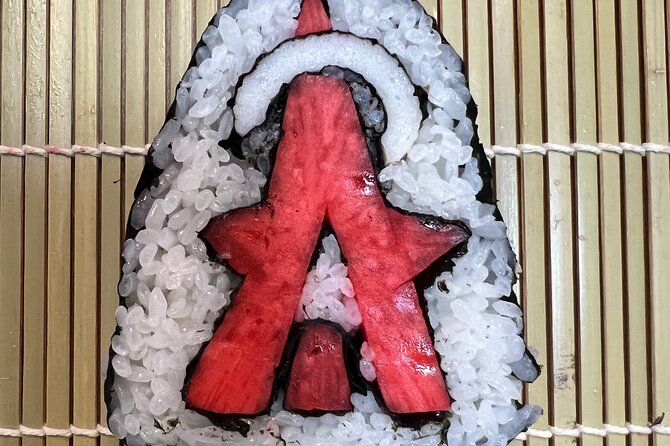
One of the examples mentioned from a previous class includes a Santa sushi roll. That matters because it suggests the studio can go beyond basic animals and flowers into character-style themes, depending on what you request and what they can support.
Also, the class is described as making animal-themed sushi rolls and fun designs that are highly photogenic. The pattern reveal after slicing into four pieces is clearly designed to make that photo moment happen while you are still in the class.
Practical tip for your choice: pick a design you can describe clearly. If you want cats or dogs, keep it simple. If you are requesting a character like minions or Santa, focus on what kind of placement you want, because the design depends on how you build the roll layer by layer with colored rice and decorations.
Even if you have zero experience, the class format is set up for first-timers. One set of feedback highlights that Yumi guided people step by step patiently, and that the final design turned out beautifully even though it was their first attempt.



After class: wrapping, coffee and tea, and taking your sushi home
Once your roll is finished and sliced, you move into the take-home phase. The process includes wrapping the sushi rolls so they are ready to take home, and takeout containers are provided. This is one of the most useful parts of the experience because it protects the effort you put into your design.
You also get a short relaxed finish. The description includes coffee and tea, plus snacks. This is not just a formality. After learning a precise food technique, it gives you a small pause to reset before traveling back.
Then you get taken back to the pickup point to end the activity. Since you are private, you do not have to worry about coordinating with strangers who might have different finishing times.
If you are planning your day in Tokyo, treat this as a self-contained block. It is about 2 hours, with an end that brings you right back to your start. That makes it easier to plan dinner nearby, or to keep the rest of the day flexible.
Who this is for, and who might want a different style
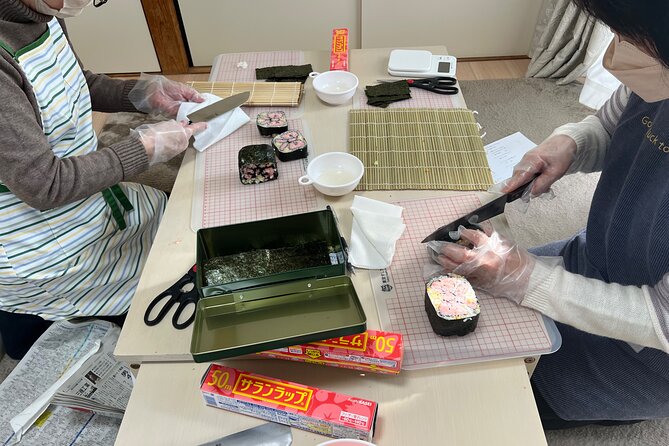
This class is a strong match if you:
- Want a hands-on food activity instead of a tasting only experience
- Are a beginner who needs step-by-step coaching
- Care about making something that looks good on camera and on a plate
- Want a skill you can repeat, even if your first attempt is a themed roll
It is also a good family option based on feedback that mentions accommodating young daughters and staying patient through the process.
You might hesitate if:
- You prefer staying strictly in central Tokyo neighborhoods, because you are starting in Shinkashiwa, Chiba
- You are only interested in eating sushi, not learning how it is made
- You want a very long meal experience, because this is about making the rolls and then taking them home, not sitting down for a full course
Should you book this sushi-making experience?
I think this is worth booking if you want a guided beginner experience with real results. The strongest signals are the one-to-one style with Yumi, the clear step-by-step method, and the built-in payoff of cutting into four pieces to reveal your pattern. Add takeout containers, and the class does not end at the kitchen door. You leave with what you made.
If you are already comfortable with food classes and you want something more casual, you may find it less exciting than a freeform tasting. But if you want structure, creativity, and a photogenic, take-home souvenir made by your own hands, this is a great fit.
If Shinkashiwa is a hassle, check whether a special request can move the kitchen closer to where you will be, with Asakusa or Skytree mentioned as examples. That one detail can make the difference between a smooth day and a stressful commute.
FAQ
Is this class private?
Yes. It is listed as a private tour or activity, and only your group participates.
How long does the sushi-making experience last?
It lasts about 2 hours.
Where does the experience start?
The meeting point is Shinkashiwa Clinic, 1-chōme-4-5 Shinkashiwa, Kashiwa, Chiba 277-0084, Japan.
Is there one-to-one instruction?
Yes. The experience emphasizes one-to-one tuition in a private sushi class.
What kind of sushi rolls can I make?
You can make designer rolls with imaginative designs such as minions, flowers, Mount Fuji scenes, dogs, or cats. You also work with colored rice and decorations to create patterns you can see after slicing.
Are all ingredients provided, and do I get take-home containers?
Yes. Ingredients are provided by your instructor, and takeout containers are provided so you can take your sushi away.
If Shinkashiwa is too far, can the class be held elsewhere in Tokyo?
The notes say that if Shinkashiwa is too far, it may be possible to arrange lessons in Tokyo, and kitchens can be rented for a fee. As examples, areas near Asakusa and Skytree are suggested, with a special request needed for where you would like to enter it.
Can I cancel for free?
Yes. Free cancellation is available, with a full refund if you cancel up to 24 hours in advance.
What kind of ticket do I get?
It is listed as having a mobile ticket, and you should receive confirmation at the time of booking.











