
Daikoku at night hits different. This is a Japan car-culture outing where the GT-R R35 makes the ride feel like part of the event, and the guided visit to Daikoku Car Meet puts you in front of rare JDM builds and even some exotic supercars, without you wrestling public transport. I especially like that the schedule is paced so you can actually enjoy photos and conversation, not just hurry from place to place.
One thing to keep in mind is comfort limits and rules. This experience has strict fit guidance (not recommended for people over 100 kg or over 180 cm), and there are vehicle rules like no smoking and no food in the vehicle. If you are claustrophobic, get motion sickness easily, or need wheelchair access, it is probably not the right fit.
Key things that make this Daikoku night work
- GT-R R35 transfer experience that turns the trip into a highlight, not dead time
- Daikoku PA guided hour with explanations of tuning culture and the on-site car meet vibe
- Autobacs Shinonome stop that gives you a fast taste of Japanese auto retail and aftermarket culture
- Small group format (up to 6) so the guide can keep the flow smooth and personal
- Fixed stops on a structured timeline so you are not guessing where to be next
Why Daikoku PA feels like Tokyo car culture, in one stop
Daikoku Parking Area is one of those places that makes Tokyo feel like it has two worlds. By day, it is normal city life. By night, it turns into a magnet for drivers who build cars for sound, stance, and turbo punch, then show them off with pride.
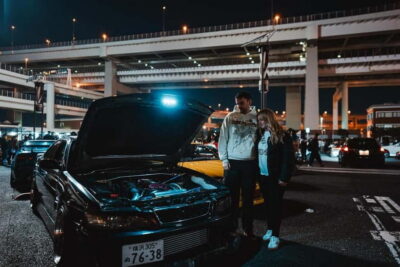
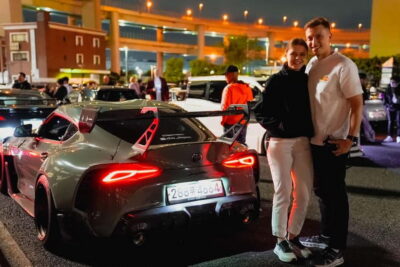
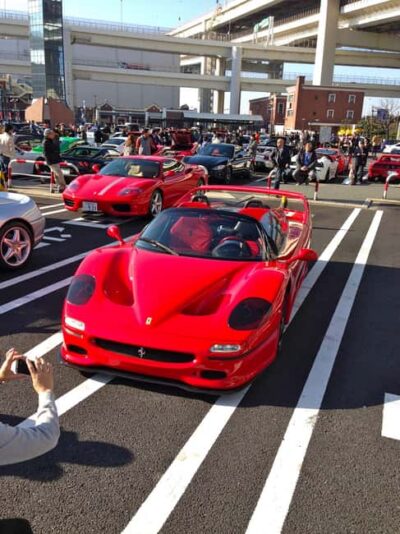
What you can expect at Daikoku is variety. Yes, it is strongly JDM, so you are likely to see iconic Nissan Skyline GT-Rs, Toyota Supras, and attention-grabbing custom builds from brands like Mazda and Honda. But it is also a place where you might spot European supercars mixed into the lineup. That blend is part of the fun, because you get both the street-built culture and the high-end “how do they even own that” crowd in the same parking-lot grid.
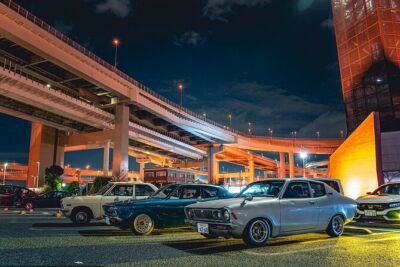
I also like the photography angle here. The lighting and the sheer number of cars make it easy to get dramatic shots with neon reflections and close-up details. If you like comparing mods, liveries, body kits, and exhaust setups, this is one of the more rewarding places to do it because you see so many styles clustered together.
You can also read our reviews of more tours and experiences in Tokyo.

The GT-R R35 ride: making transit part of the experience
A big reason this tour hits so hard is that it does not treat the drive as boring in-between time. You ride in a Nissan GT-R R35, and that changes your mindset from the first minutes. The point is not just getting there. The point is feeling the car culture through the sound and the power you associate with Tokyo performance driving.
The rides I read about are also described as smooth and comfortable, which matters. A car meet can get loud and chaotic, and you do not want the trip to feel uncomfortable before you even reach the parking area. The same guide-led flow that helps at the stops also shows up in the drive, with people reporting clear communication and a professional, friendly vibe.
Also, this is not a “solo you figure it out” situation. You get a live English or French speaking guide, and you are given a timeline for when you need to be back to continue. That reduces stress in a city where car culture happens at specific times and you do not want to miss your window.
One note for expectations: the most intense parts of the night come from the Daikoku stop itself. The GT-R ride sets the tone, but you should still plan for an hour at Daikoku as the main show.
Arrow Parking Udagawachō to Autobacs Shinonome, the warm-up portion
Your day starts at Arrow Parking Udagawachō. The meeting detail matters: you take the elevator up to the 8th floor. That is the kind of small instruction that saves you time if you follow it exactly.
From there, you head to autobacs Shinonome for a self-guided 30-minute visit. This is a smart warm-up. Autobacs is a place where you can quickly “read” Japan’s automotive culture in retail form. Even if you do not buy anything, the layout and the range of car-related goods helps you understand why enthusiasts care so much about parts, accessories, and day-to-day customization.
In practical terms, that half hour is short. So do not plan a slow browse. Instead, use the time to check out what is popular, pick up any small souvenirs you actually want, and get yourself ready for the photo-heavy Daikoku hour that follows. If you are the type who likes to study how different builds are put together, this stop gives you a useful background layer before you start looking at the cars up close.
This portion also plays a bigger role than it looks. It breaks the night into two parts: a pre-car-culture stop, then the main car meet. That pacing keeps the whole experience from feeling like one long rush.
Autobacs Shinonome: use the 30 minutes like a pro
Because the autobacs time is self-guided, your success depends on how you use it. I suggest you decide before you go what you want out of it.
Here are realistic goals that fit the time limit:
- Look for small car culture items you can carry easily, since oversized luggage is not allowed on the tour
- Get ideas for what to photograph at Daikoku, like wing styles, wheel setups, and shop-style styling
- If you want a quick snack or drink, plan for it outside the vehicle, since food in the vehicle is not allowed
You do not need to turn this into a full shopping trip. Think of it as a “Tokyo car world briefing.” Then you roll right into Daikoku, where you can compare real builds to the kinds of parts and accessories you just saw on shelves.
Daikoku Car Meet hour: what the guide helps you notice
The Daikoku Parking Area stop is where the experience becomes uniquely memorable. It is guided for about an hour, and that hour is doing a lot of work.
A good guide matters here because Daikoku is not just a parking lot. It is a scene with unwritten social rules: respect among drivers, pride in craftsmanship, and a focus on sharing passion rather than treating cars like random objects behind glass. When you have explanations, you notice more than the cars themselves. You notice the culture around them.
During this guided time, you can look for the “usual stars,” like Skyline GT-Rs and Supras, and also the more creative builds that show up at Daikoku. Some cars are rotary-powered, some are heavily modified for drift, and some are fully customized street builds. The mix is the point. You might go in expecting only JDM, but you should stay open to spotting high-end exotics mixed into the crowd too.
Photography is also easier when someone helps you understand where to stand, when to pause, and what details are worth focusing on. People also report that you can take your time for photos and that there is even an opportunity to grab something to eat or drink while you are there. Just remember the tour itself does not include food, so treat any purchases on-site as optional extras.
One more practical detail I like: the guided structure helps keep your time from slipping away. You get the car meet experience, plus context, without needing to manage the whole night yourself.
How the fixed plan stays flexible enough to feel smooth
The tour is structured, with set start and stop locations. Still, the overall feel is not rigid. The concept is to take you straight to Daikoku, which is a huge value in itself because getting there and timing it correctly can be a headache if you are relying on public transport.
Also, your group size is small, limited to 6 participants. That is a big deal at a place like Daikoku, where moving a large group would slow everything down. With a small group, the guide can keep track of everyone and give you clear checkpoints.
The timeline also tends to feel organized. People describe receiving information about when to report back to continue the journey, and that is exactly what you want. In a city where you might not share the same language as the local crowd, having a clear schedule reduces uncertainty.
If you love car culture, the most frustrating thing is arriving late or wandering without a plan. This tour avoids that by running a guided path with predictable timing, while still letting you enjoy the cars once you are there.
Price and value: is $225 per person fair for GT-R plus Daikoku?
At $225 per person for about 210 minutes, this is not a bargain-basement activity. But it can be good value if you think about what you get.
You are paying for three core things:
- Transportation included as part of the experience along the fixed route
- A live guide who provides explanations about tuning culture and the car scene
- Time at the two key stops that actually matter for a JDM night out, the pre-stop at autobacs and the main event at Daikoku
Daikoku PA is famous, and that fame comes with a practical problem. It is not straightforward to reach by typical public transport in a way that feels easy, especially if you also want the right timing. This tour tackles that head-on by taking you directly, instead of making you solve transit while you also try to catch the best atmosphere.
Then there is the GT-R element. Even if you are not obsessed with Nissan specifically, riding in the GT-R R35 turns the night into a more complete experience. It is not just walking around cars, it is getting the sound and feel that people associate with the whole scene.
Where the value can shrink is if you end up spending extra on food and drinks or on personal purchases at the stops. Those are not included, and the tour also has restrictions like no food in the vehicle, so you will plan on your own. But if you budget for that, the base price can feel more reasonable.
Who should book this, and who should skip it
This is a fun fit if you want a structured night out centered on car meets, JDM culture, and the sound of Tokyo performance driving.
It is also a poor fit for some common situations, and the tour data is clear about that. It is not suitable for wheelchair users, it is not recommended for people over 100 kg or over 180 cm due to fit in the seat, and it is not recommended for people over 100 kg or with motion sickness. It also flags claustrophobia and heart problems as reasons not to book.
Age matters too. The tour is for adults, and participants under 18 must be accompanied by a responsible adult, with unaccompanied minors not allowed.
Also, the rules are strict about what you bring and do. Pets are not allowed. Weapons or sharp objects are not allowed. Oversize luggage and large bags are not allowed, and there are vehicle rules like no smoking, no food in the vehicle, and no alcohol or drugs in the vehicle.
If you check those boxes and you want a small-group, guide-led car night, it is a strong choice.
Quick practical checklist before you head out
This is the kind of tour where being prepared keeps things smooth.
- Bring your passport
- Plan for carry-light travel, since luggage restrictions apply and oversize luggage is not allowed
- Expect a guided experience at Daikoku for about an hour, plus a self-guided 30 minutes at autobacs
- Bring cash or a card if you want snacks or drinks on-site, since food and drinks are not included
If you follow those basics, you avoid most of the friction that can happen during any night-time, rule-heavy car event.
Should you book the GT-R R35 Daikoku experience?
If your goal is a guided, low-stress night with real car culture, I think you should consider booking. The combination of a GT-R R35 ride, a visit to Japan’s top tuning spot at Daikoku PA, and a quick stop at autobacs Shinonome makes the experience feel like it has multiple layers instead of one short photo stop.
I would hesitate only if you are sensitive to tight seating or have motion sickness, because the tour includes clear comfort limits and vehicle restrictions. If you fit the recommended size and you want a smooth plan that gets you to the right spots on time, this is one of the more straightforward ways to experience Tokyo car culture at night without getting lost in logistics.
FAQ
How long is the Daikoku car meet experience?
The total duration is 210 minutes.
What is included in the $225 per person price?
The price includes a guided tour of iconic Japanese car culture spots, exclusive access to legendary car meet locations, in-depth explanations of Japan’s tuning scene and history, a visit to top automotive stores like Autobacs Shinonome, free transportation along the fixed itinerary, and a small group experience.
Where do I meet the tour guide?
Meet at Arrow Parking Udagawachō, and take the elevator to the 8th floor.
Do I need a passport?
Yes, you need to bring your passport.
Is food and drinks included?
No, food and drinks are not included. Also, food is not allowed in the vehicle.
What languages is the live guide speaking?
The live tour guide is available in English and French.
More Tour Reviews in Tokyo
Not for you? Here's more nearby things to do in Tokyo we have reviewed
Daikoku & JDM Car Tours, side by side.
 ★ 4.8GT-R35 800hp Club Membership – secret underground car meetFrom $205998 reviews
 ★ 4.8Daikoku JDM Car Meet & Night Car Culture TourFrom $98626 reviews
 ★ 4.8Secret Car Meet: R34 Skyline Car Club MembershipFrom $236494 reviews
 ★ 4.9EVO, WRX, Skyline – JDM Night Run to Daikoku Car MeetFrom $125478 reviews
 ★ 4.7Tokyo Drift: Daikoku PA Supreme Car Experience 大黒PAFrom $58372 reviews
 ★ 4.9Legendary JDM CAR Daikoku Underground MeetupFrom $82360 reviews
 ★ 4.6Go Daikoku PA Fast & Furious 3 Sports Car MeetupFrom $49356 reviews
 ★ 4.5Daikoku Car Club Temporary MembershipFrom $145275 reviews
This tour also belongs to