
Review · 1-DAY TOURS
Mt.Fuji day trip with English Speaking Chauffer
Mt. Fuji looks better with the right plan. This private, English-friendly day trip adds photo and video help to classic viewpoints, while you ride in comfort from Tokyo.
I love two parts most: the guide gives hands-on coaching for shots and video, and you get bottled water so the day stays easy. In at least one well-liked experience, the guide Abdul was praised for humor, group photo moments, and even putting together a video compilation later.
One big consideration is the Mt. Fuji 5th Station segment can be affected by weather, including snow and conditions that make access impossible on some days.
Key highlights at a glance
- English-speaking guide and driver all day so you are not juggling directions or transport
- Photo and video assistance geared to help you frame better shots at each stop
- Air-conditioned private vehicle with van sizes sized to your group (6-seater or 10-seater)
- A tighter Fuji route than standard group tours, with room to adjust your vibe and pace
- Top viewpoints plus variety, from pagodas and ponds to a lava cave and shrines
Private van comfort, English guidance, and your whole day handled
This is a real private day trip, built around the idea that Mt. Fuji viewing is mostly about logistics. You get a chauffeur and an in-person English guide, plus an air-conditioned vehicle. That matters when the day runs long and you want to keep your energy for the viewpoints, not for route problems.
The vehicle size is flexible too. Depending on your group, you may ride in a 6-seater or a 10-seater van, which is a nice way to keep the group together without feeling cramped. There is also pickup offered, and you do not have to figure out how to transfer between far-flung spots around the Fuji Five Lakes area.
Practical bonus: the tour uses a mobile ticket, so you are not hunting for paper. And on a hot or long day, the included bottled water is one of those small things that quietly improves everything.
More Tokyo tours and experiences for the shortlist



How customization changes the way you experience Mt. Fuji
Mt. Fuji day trips can feel like a conveyor belt: quick stops, hurried photos, then back to Tokyo. What I like here is that the day is set up for customization, so your itinerary can match your interests and season.
Your options are basically two modes:
- Climbing season hiking (July to September) when trails open
- Photo-focused viewpoints when you want scenic stops, lakes, parks, and easy walking
Even if you stay in the photo mode, the plan is varied enough to avoid the same-same. You start with a classic shrine pagoda shot, then move through pond scenery, then up toward the 5th Station, and later pivot to lake views, a reconstructed village, a lava cave, and a final shrine stop.
If you care about photos and video, this tour is unusually direct about helping. You are not just told where to stand, you get assistance crafting the shot, which is a big deal if your camera skills are rusty or you are trying to film without looking awkward.
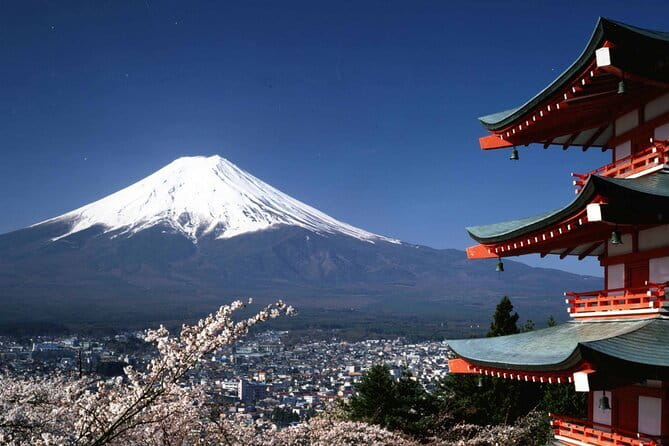
Chureito Pagoda at Arakura Sengen Shrine: the Fuji postcard angle
Stop one is Chureito Pagoda, a five-storied pagoda that sits on the mountainside above Fujiyoshida City. Mount Fuji shows up in the background, which is why this spot is famous: it’s basically a built-in framing device for your “there it is” moment.
The pagoda is part of Arakura Sengen Shrine, and the admission here is free. You get about one hour, which gives you time to arrive, settle your bearings, and take a few different angles.
What to watch for: with a spot like this, the best photos depend on timing and light, not just the view. If the day is hazy, you may see less of Mt. Fuji. If it is clear, you can slow down and aim for compositions that include both the pagoda tiers and Fuji behind it.
Oshino Hakkai: eight ponds, easy strolling, no entry fee
Next comes Oshino Hakkai, a small area in the Fuji Five Lakes region known for eight ponds. It sits between Lake Kawaguchiko and Lake Yamanakako, and it is built on the site of a former sixth lake that dried out.
This stop is about 50 minutes, and admission is free. It is a “touristy” kind of scenic, meaning you will likely share the pathways with other visitors, but it is also a pleasant, walkable break from viewpoint hopping.
This is a great spot to switch gears and shoot something different from the pagoda. Think calmer water reflections, the pond edges, and wider compositions that show the Fuji region feel without requiring a mountain climb.
One practical tip: keep an eye on your time here. Oshino Hakkai is quick and enjoyable, but it can be easy to linger. If you want the rest of the day to flow smoothly, use the full 50 minutes and then move on.
Mt. Fuji 5th Station: closest-by-car altitude, with weather risk
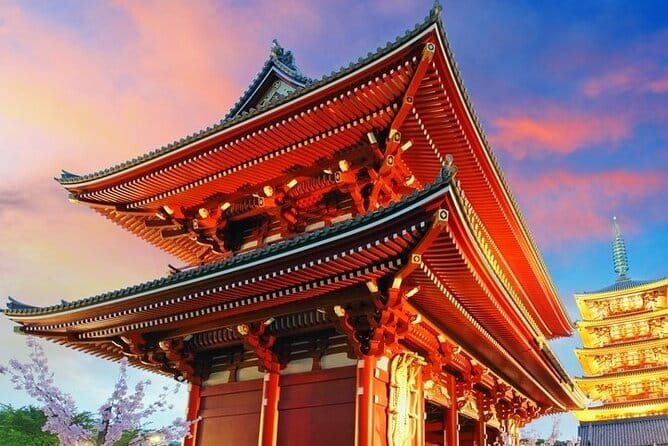
The highlight climb-up attempt is Mt. Fuji 5th Station. This is the highest point accessible by car, at about 2,200 meters, and it is the closest stop to the top you can reach without hiking higher.
You get around two hours, and admission is not included. The viewpoint offers splendor views of the surrounding city area, and for hikers, it is interesting because it represents a major elevation milestone.
Now, the key caution. On some days, access can be blocked by snow and weather conditions. In other words, you should treat this as a plan, not a guarantee. If it is closed, you will lose that “step toward the summit” moment, so keep your expectations flexible.
If the station is accessible, this is the time to slow down and dress for colder air than you expect. Even on a clear day, altitude changes the feel of the weather fast.



Oishi Park and Lake Kawaguchiko: flowers, water, and long views
After the mountain stop, the route shifts to Oishi Park on the north shore of Lake Kawaguchi. This is where the tour leans into scenic variety and photography-friendly scenery. From the park you can enjoy views of Mount Fuji and Lake Kawaguchi, and there’s a 350-meter walking path lined with flowers.
Admission is not included, and the tour duration here depends on how your guide keeps the full day moving. The reason this stop works is simple: it gives you a calmer pace after the altitude portion, and it is built for steady photo time rather than quick check-ins.
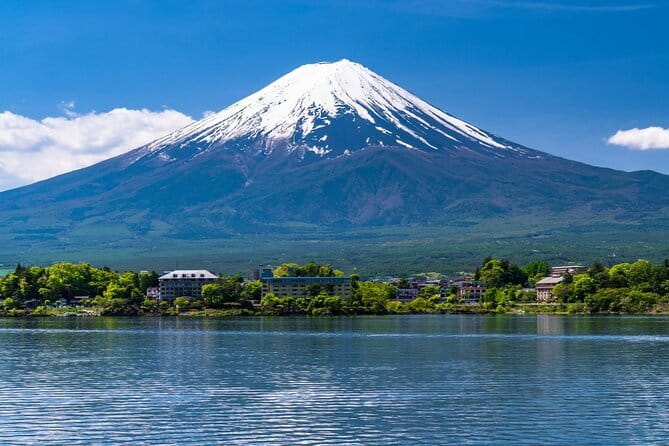
Then you continue to Lake Kawaguchiko, one of the signature lakes in the Fuji Five Lakes region. The lake sits at about 830 meters elevation, which translates into cooler summers and icy winters. If you are sensitive to temperature swings, this is where layers matter again.
You get about 45 minutes, and admission is not included. Depending on what you choose that day, you may consider a ship cruise or ropeway option in the Lake Kawaguchiko area. This is your chance to get more motion in your Fuji photos, not just static viewpoints.
Saiko Iyashi no Sato Nemba: reconstructed village and a slower rhythm
At Saiko Iyashi no Sato Nemba, you step into a reconstructed Japanese village. The point here is not a dramatic view, it’s atmosphere. You can explore the houses and even rent traditional clothing, which can be fun if you want a more cultural angle in your photos.
This is a shorter stop, around 30 minutes, and admission is not included. Because it is time-limited, I recommend treating it like a photo and browsing sprint. Look for streetscape angles, doorway details, and spots where the Fuji region feel comes through in the background.
If your group wants a break from constant scenic points, this village stop is one of the best ways to do it without losing the Mt. Fuji connection.
Fugaku Wind Cave: a lava tube detour with real geology flavor
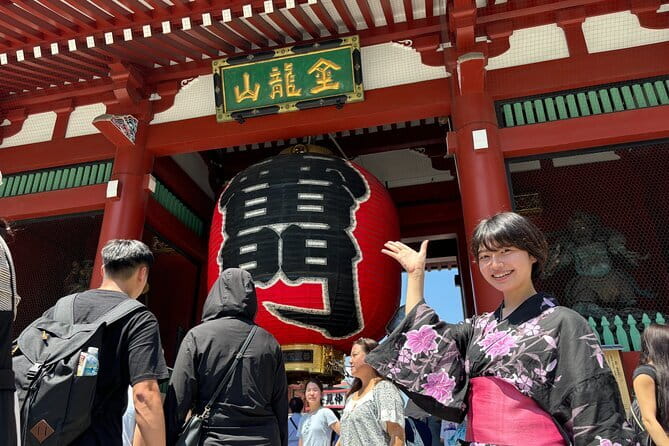
Then comes Fugaku Wind Cave, a lava tube at the northern foot of Mount Fuji in the Aokigahara forest area. It is described as the largest of several lava tubes in that region, which makes it a good change of pace after lakes and shrines.
You get about 30 minutes, and admission is not included. This stop is especially worth it if you enjoy oddball nature facts. Lava tubes are one of those geological features that feel grounded in reality, not just scenic.
The only real consideration: caves tend to mean cooler temperatures and potentially different ground conditions than open-air viewpoints. Dress accordingly and give yourself time to move carefully.
Kitaguchi Hongu Fuji Sengen Jinja Shrine: volcano worship, plus a quiet landing
Your final named stop is Kitaguchi Hongu Fuji Sengen Jinja Shrine. It’s an Asama shrine type that enshrines the deity of volcanoes in general and Mount Fuji in particular. There are around 1,300 Asama shrines across Japan, so this is part of a bigger tradition, not a one-off landmark.
This stop takes about 30 minutes, and admission is free. The shrine is also tied to the Mt. Fuji UNESCO World Heritage area, which adds a layer of significance beyond the view.
For me, this is a nice end-of-day landing spot. After parks, lakes, and caves, a shrine visit gives you a reason to pause and reflect on how the Japanese relationship to Fuji is both spiritual and practical. If you are also planning shots, look for how the shrine grounds frame the mountain views when they are available.
Timing that matters: what an 8 to 10 hour day really feels like
The day runs about 8 to 10 hours. That is long enough to see a lot, but not long enough to treat each stop like an all-day excursion. The private format helps because your time is protected. You do not wait on buses or shuffle between group arrivals.
Here’s what I’d plan around:
- You will have short to medium stops, often around 30 to 60 minutes
- You will do some walking, including the 350-meter path at Oishi Park
- You will move between altitude, lakeside air, and cave conditions
I also love that bottled water is included. When you are busy taking photos, hydration can get forgotten. Having water on hand keeps the day comfortable without forcing you to buy every time.
If your goal is filming, ask for photo and video help early. The best way to get more usable clips is to start with guidance on framing, then reuse what you learn as the scenery changes from pagoda to ponds to lakes.
Price and value: when a private chauffeur makes sense
The price is $462.36 per group for up to 5 people. If you fill the group, that works out to about $92 per person. If you have fewer than five, your per-person cost rises, but you still gain the value of a chauffeur, private transport, and an English guide.
You also get bottled water, and you can get free picture taking or video making assistance if needed. That part is not just a nice add-on. It can save you from the awkward trial-and-error of changing lenses, guessing angles, and missing the light.
Now, the trade-off: some admissions are not included. Specifically, you should budget for entries at Mt. Fuji 5th Station, Saiko Iyashi no Sato Nemba, Fugaku Wind Cave, and the Lake Kawaguchiko area. On the other hand, Chureito Pagoda, Oshino Hakkai, and Kitaguchi Hongu Fuji Sengen Jinja Shrine have free admission in the plan.
For value, this tour shines when:
- You are traveling with a small group or family
- You want English guidance without switching transport
- You care about photos and want help, not just directions
Book it if you want guided Fuji photos and a smooth day from Tokyo
I think this is a strong pick if you want a private, English-speaking Mt. Fuji day trip with a plan that hits the main highlights plus a few different flavors. It’s especially worth it when your group includes mixed ages, or anyone who gets tired from transit logistics.
Book it if:
- You want help crafting shots and video, not just a quick stop
- You prefer comfort, air-conditioning, and fewer transfers
- You want variety, from pagoda views to ponds to a lava cave
Skip it or be extra flexible if:
- Weather uncertainty worries you, especially for Mt. Fuji 5th Station
- Your budget is tight for add-on admissions at the paid stops
If you are aiming for July through September hiking on open trails, consider planning early, since this kind of day is often booked well in advance.
FAQ
How long is the Mt. Fuji day trip with an English-speaking chauffeur?
It runs about 8 to 10 hours.
Is this tour private?
Yes. It is a private experience, and only your group participates.
Is pickup offered?
Pickup is offered.
What vehicle will we ride in?
You can choose between 6-seater and 10-seater vans depending on group size. The vehicle is climate-controlled and air-conditioned.
Do we have an English guide?
Yes. The tour includes an in-person English guide.
Is bottled water included?
Yes. Bottled water is included.
Do you help with photos or video?
Yes. There is free picture taking or video making assistance if needed.
Are entry fees included for the Mt. Fuji 5th Station and other paid stops?
No. Entry or admission for Mt. Fuji 5th Station, Saiko Iyashi no Sato Nemba, Fujikawaguchiko machi (as listed), and wind/ice caves are not included.
Is Mt. Fuji 5th Station always accessible?
Not always. The stop can be impacted by snow and weather conditions, which may make access impossible on some days.
Can I cancel for a full refund?
Yes. You can cancel up to 24 hours in advance for a full refund. If you cancel less than 24 hours before the start time, the amount paid is not refunded.
More 1-Day Tours in Tokyo


More Tour Reviews in Tokyo
Not for you? Here's more nearby things to do in Tokyo we have reviewed












1-Day Tours, side by side.
 ★ 5.0Mt Fuji and Hakone 1-Day Bus Tour Return by Bullet TrainFrom $16326,383 reviews
 ★ 5.01-Day Tokyo Bus TourFrom $12914,250 reviews
 ★ 4.0Mt Fuji & Hakone Cruise, Drum Show Bullet Train 1 Day from TokyoFrom $1497,413 reviews
 ★ 4.5DisneySea 1-Day PassportFrom $572,726 reviews
 ★ 4.6Tokyo Disneyland 1-Day PassportFrom $572,512 reviews
 ★ 4.2Mt. Fuji 5th Station & Hakone Cruise 1-Day Bus TourFrom $1292,381 reviews
 ★ 5.0Tokyo Customized Private Tour (Must See Places in 1 Day)From $1451,499 reviews
 ★ 4.5Kamakura & Enoshima Day Trip including Temple TicketsFrom $581,375 reviews
This tour also belongs to