
Review · TOKYO
TokyoSumoShow, ChickenHotPot, and Mochi-Pounding by Pro Wrestlers
If you want a fast route into sumo culture, this hits. In Ryogoku, the sumo home base, SUMOLAND Tokyo Ryogoku turns the sport into an up-close show with former pros, a Yokozuna-supervised program, and hands-on moments like mochi pounding.
I especially love that you’re not stuck watching from afar. You get chicken chanko hot pot prepared for you as part of the program, and you also get chances to step in for the interactive parts.
One consideration: while the show is the star, the included meal and some participation moments can feel more limited or hit-or-miss depending on your group.
Key highlights at SumoLand Tokyo Ryogoku
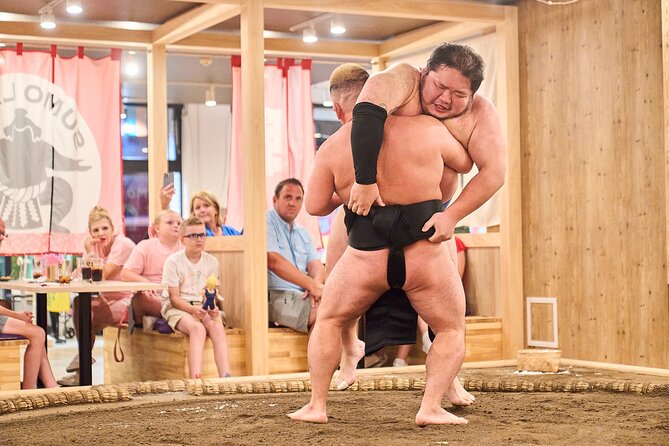
- Former professional wrestlers, Yokozuna-supervised program: you’re watching talent with real credibility, not just a theme act.
- Hands-on sumo and mochi: kids welcome, and you can actively join key challenges when it’s your turn.
- Chicken chanko hot pot included: warm, filling, and prepared with sumo-style care (Isegahama stable supervision is part of the pitch).
- Good staff energy and clear communication: English support comes through, including practice with Japanese words tied to the program.
- Ryogoku location is practical: near Ryogoku Station, with easy add-on sights like Asakusa, Akihabara, Nihonbashi, and Tokyo Skytree.
Where SumoLand fits in Tokyo: Ryogoku is the real reason to go
Ryogoku is Tokyo’s sumo neighborhood, and SumoLand is placed right where the sport lives. The venue is at 1F Takashima Ryogoku Mansion, 4-32-19 Ryogoku, Sumida City, and it’s a short walk from Ryogoku Station. The front is easy to spot with big sumo wrestler signage and flags, so you won’t be hunting for long.
This location matters because it changes your mindset. You’re not just doing a random show in a random part of the city. You’re doing it in the sumo area, where you can also pair it with other sightseeing before or after. If your schedule is tight, this is one of those activities that still feels connected to Tokyo rather than pasted on top.
You can also read our reviews of more tours and experiences in Tokyo.



The 1.5 to 2 hour flow: what happens from hot pot to ring
The program runs about 1 hour 30 minutes to 2 hours, and the whole structure is built to keep you moving. Your ticket is a mobile ticket, and the experience begins on time, so arriving a few minutes early is smart.
Here’s the typical rhythm you can expect:
1) Chicken chanko hot pot time
You start with the included hot pot, so even if you’re arriving hungry from exploring, you’ll have something to do and eat right away.
2) Ring entrance ceremony
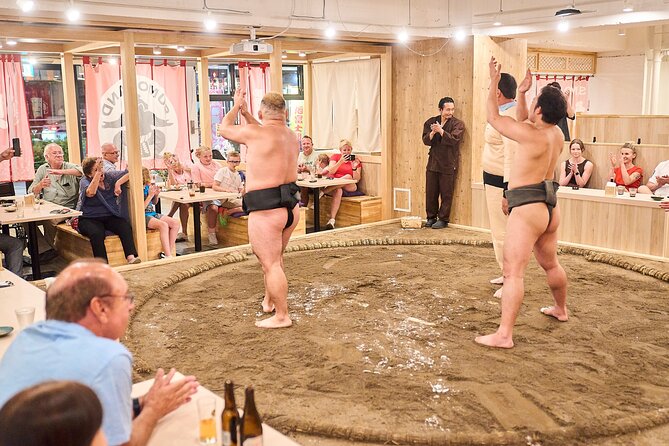
Former top-division wrestlers make an entrance that sets the tone. It’s not a silent museum moment. It’s showmanship, and the energy ramps quickly.
3) Mochi-pounding challenge
Then comes the mochi-making experience. Kids are welcome, and you try your hand with the wrestlers.
4) Sumo show begins, Yokozuna-supervised
You watch a performance designed to explain and demonstrate sumo in an entertaining way.
5) Sumo bout challenge
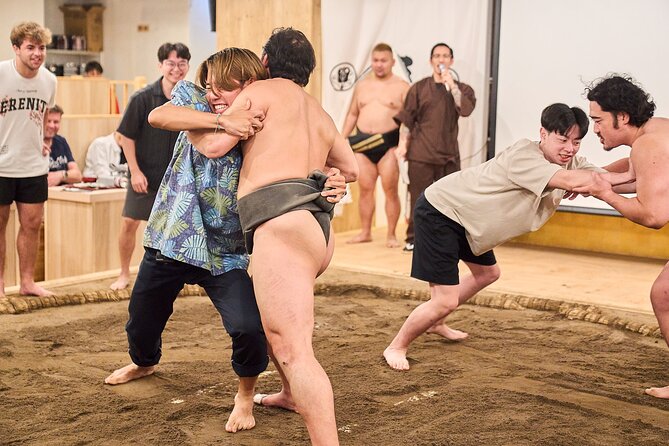
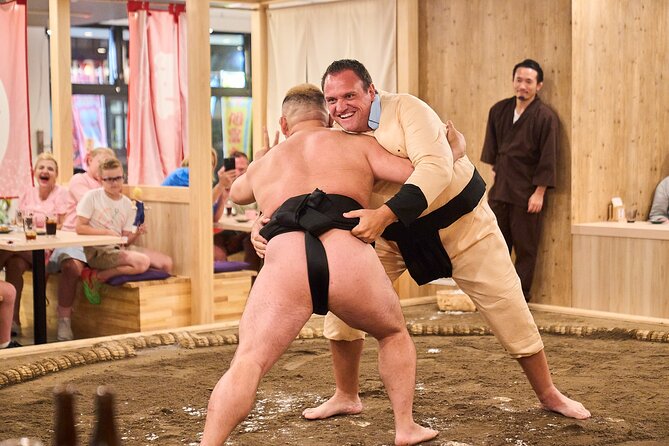
After the show, you step into the ring for a challenge against a real sumo wrestler. It’s the part many people remember most because it’s interactive and funny, while still feeling legit.
6) Photo time and souvenir
You’ll also get a photo time with the wrestlers, plus an included お土産 (souvenir). Souvenirs may vary by season.
Chicken chanko hot pot: included, warm, and usually satisfying
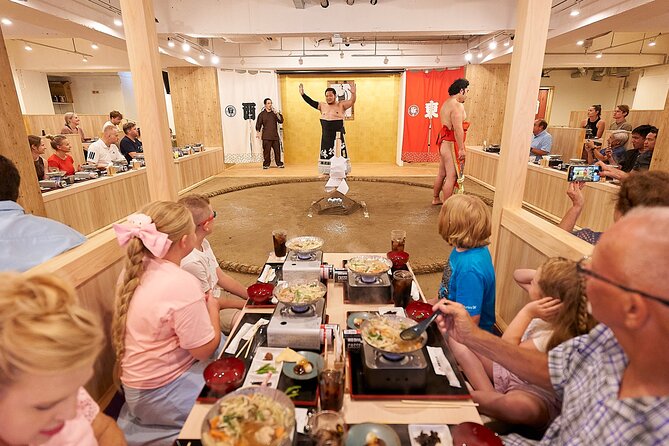
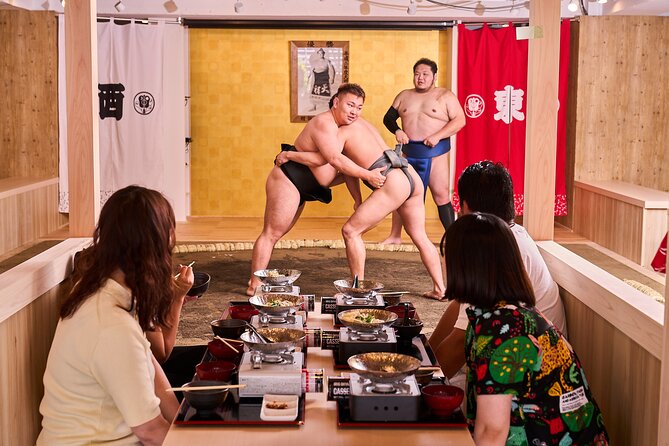
The ticket includes chicken chanko hot pot, and it’s described as specially prepared by sumo wrestlers and supervised by the Isegahama stable. In practical terms, that means you’re eating something that feels tied to the sport rather than a generic meal thrown in for logistics.
From reviews and how the experience is set up, two patterns show up. Many people call the hot pot delicious, and they like the broth. Others describe the food as fine or just okay. So I’d treat the meal as a strong bonus, but the show and participation are the main event.
Also note what’s not included: alcoholic beverages and bottled water aren’t part of the package. You might want to plan on buying drinks nearby if you expect you’ll need them.
Mochi pounding: a hands-on crowd favorite with real limits
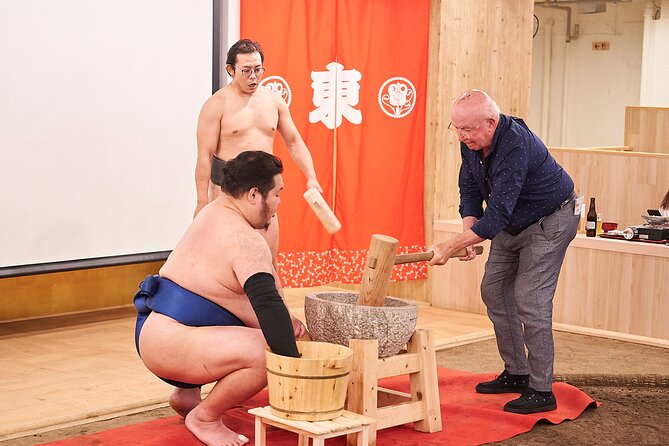
Mochi pounding is one of those activities that sounds simple until you actually do it. It’s traditional, it’s tactile, and it fits a wide range of ages because you’re not just watching. Kids welcome is clearly part of the experience.
One key detail to plan around: if many guests join the mochi challenge, participation may be limited to one person per group or decided by lottery. That means you should go with flexible expectations. Even if you don’t personally get every chance to join, the show is still designed so you’re not standing around doing nothing.
For families, this is a big plus. You can manage energy because you’ll have both a seated meal segment and then active moments where kids are included.
Ring entrance, the show, and the sumo bout challenge up close
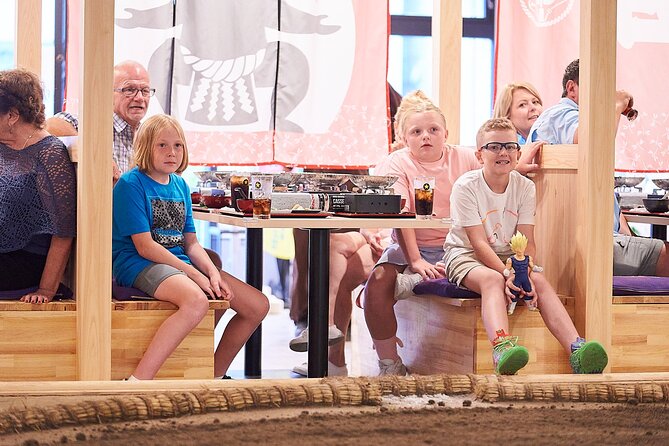
The show is supervised by a Yokozuna, and the program leans into both performance and explanation. You’ll see real sumo technique and you’ll get a sense of how the sport is practiced and presented.
Then comes the best part for many people: the sumo bout challenge where you step into the ring and take on a sumo wrestler. This is not just a staged photo-op. The point is you try something, even if it’s in a friendly, guided format.
A lot of the praise centers on the wrestlers being engaging and on the staff being upbeat. One repeated theme is that the interaction feels fun without turning silly in a way that cheapens the sport. You get laughs, but you also get something you can take away: sumo is hard work, and the wrestlers’ skill is immediately obvious when they demonstrate close up.



Photos and souvenirs: how the memory part is handled
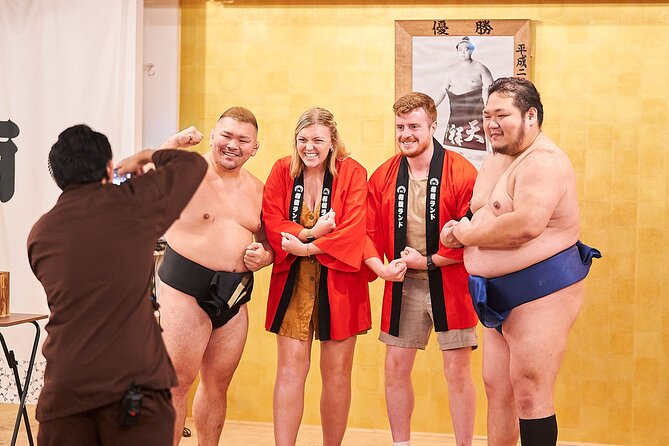
You’ll have photo time with the wrestlers as part of the program, and you also receive an included お土産. Those details matter because they reduce the mental load. You don’t have to figure out when to take photos or chase souvenirs right after. The flow builds those moments into the experience.
Souvenirs can vary by season, so if you’re the type who hopes for a specific item, don’t plan your expectations too tightly. Still, the fact that a souvenir is included is a real value add since you’re not paying extra for basic take-home items.
Price and value: what $106.12 buys you in Tokyo
At $106.12 per person, you’re paying for a bundled experience: entrance, the hot pot meal, interactive challenges, photo time, and a souvenir. For Tokyo, that bundle is the main justification.
If you compare it to doing a museum-style activity plus separate lunch plus a paid show later, the math gets easier in SumoLand’s favor. The program is also short, about 1.5 to 2 hours, which helps if you have a full itinerary and you want a high-impact block of time.
Just remember what’s driving the value. The center of gravity is the wrestler-led entertainment and the hands-on parts. The included food is a meaningful bonus, but it’s not described as consistently perfect by everyone.
Seats, kids, and safety: important details for families
Your seat locations are assigned by the venue, and you can’t select them in advance. That’s common for popular shows, but it matters most for families.
There’s a specific safety note for standard seats: it can be dangerous to sit while holding a child on your lap in those areas. The instruction is to make your reservation for the exact number of people. If you’re traveling with kids, it’s worth taking that seriously.
Box seats are noted as safe for holding a child on your lap, and the box seats can seat up to six people. If you’re traveling as a small group with children, that’s potentially the more comfortable option. The big takeaway is to plan your booking around the seat category logic, since the venue controls actual placement.
Dietary needs: what you can request, and what you must plan around
If you’re vegetarian or vegan, you can request it, but you need to request ahead. Vegetarian and vegan meals are available upon request at least 2 days in advance.
On the other hand, gluten-free and halal meals are not available. The good news is you can bring your own food. So if your needs are gluten-free or halal, don’t count on the included meal being compatible. Plan a backup snack or meal you can eat before or during the program.
This approach is especially useful for picky eaters or anyone with allergies. The show includes chanko hot pot, but the dietary support is limited to what they can prepare in-house, and the rest is handled by you bringing food.
How to plan your day: timing, water, and nearby sights
Because the program is time-bound and starts on time, I’d treat this like a scheduled show, not a flexible stroll-through. The most practical move is arriving a few minutes early, grabbing your bearings, and settling in before the ring entrance ceremony begins.
Ryogoku is a smart base for half-day planning. Around Ryogoku Station, you can also connect to popular sights like Asakusa, Akihabara, Nihonbashi, and Tokyo Skytree. If you’re building a theme day around Tokyo neighborhoods, Ryogoku makes sense as the sumo stop.
One more practical note: bottled water and alcohol are not included, so plan on buying drinks before or after. If you know you get thirsty during activities, bring a game plan so you don’t waste time hunting mid-program.
Should you book this? The honest call
Book it if you want a family-friendly, interactive sumo experience in the actual sumo neighborhood of Tokyo. I’d especially recommend it when you value hands-on moments like mochi pounding and the ring bout challenge, plus close-up time with former professional wrestlers. The way the program is structured is built for mixed ages, from kids who want action to adults who want something more than a quick photo.
Don’t book it if your top priority is a traditional, purely cultural observation with long, quiet explanations. This is entertainment with participation baked in. Some people also describe the hot pot as only okay rather than standout, so if you’re primarily meal-driven, adjust expectations.
If you’re on the fence, here’s my simple decision rule: if you’ll enjoy laughing, trying, and learning basic sumo ideas through demonstrations, you’ll likely feel it was worth it. If you’re hoping for a strict, tournament-accurate deep study with no interactive bits, look at other sumo-focused options instead.
FAQ
Where is SumoLand Tokyo Ryogoku located?
The venue is at 1F Takashima Ryogoku Mansion, 4-32-19 Ryogoku, Sumida City, Tokyo 130-0026, Japan. It is described as a short walk from Ryogoku Station, with signage around the entrance area.
What does my ticket include, and what is not included?
Your ticket includes the entrance fee, chicken chanko hot pot, and an included お土産 (souvenir). Alcoholic beverages and bottled water are not included.
How long is the experience?
The program runs about 1 hour 30 minutes to 2 hours.
Will I get a mobile ticket and when will I receive confirmation?
This experience uses a mobile ticket. Confirmation is received within 48 hours of booking, subject to availability.
Can I choose my seat?
No. Seat locations are assigned by the venue and you cannot select them.
Are vegetarian and vegan meals available?
Yes. Vegetarian and vegan meals are available upon request, as long as you request at least 2 days in advance. Gluten-free and halal meals are not available, and you may bring your own food.
What if there are too many people for mochi pounding or the ring challenge?
Participation may be limited if many guests join those challenges. It can be limited to one person per group or decided by lottery.
What is the cancellation policy?
You can cancel for a full refund if you cancel up to 24 hours in advance. If you cancel less than 24 hours before the start time, the amount paid is not refunded. Cut-off times are based on local time.











