
Review · TOKYO CITY TOURS
Tokyo’s Authentic and Finest Taiko Drumming Experience
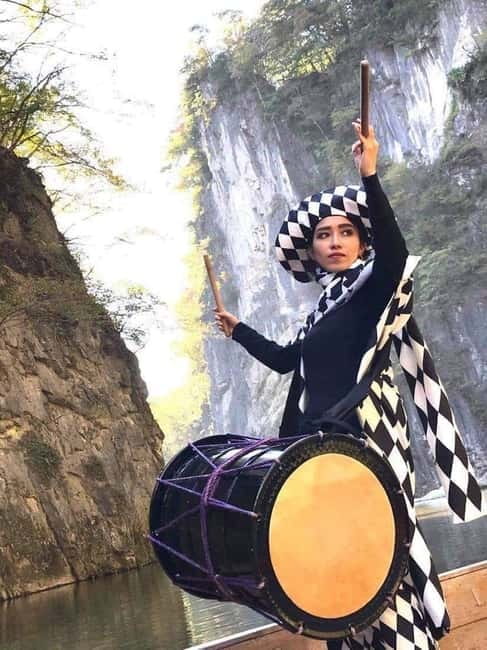
Taiko drums are louder than you expect, and this 90-minute workshop with Eva Kestner turns that surprise into a real lesson in rhythm and form. I love how she teaches technique step by step, and I love that you leave with a personalized video to replay at home. The only catch is it is physical, so wear comfortable clothes and be ready to sweat.
You start with foundation training, then move into rhythm drills that sharpen your timing fast. You will also learn a traditional and contemporary taiko piece, plus hear a brief history of taiko and its place in Japanese culture. An instructor demonstration shows what the finished performance should feel like.
The session runs 90 minutes, no prior experience required, and you can learn in English (with Japanese also offered). For larger groups, the studio is about 20 minutes from Shibuya by train, though the exact meeting point can vary by booking. Private group options are available if you want your own class.
Key Takeaways Before You Go
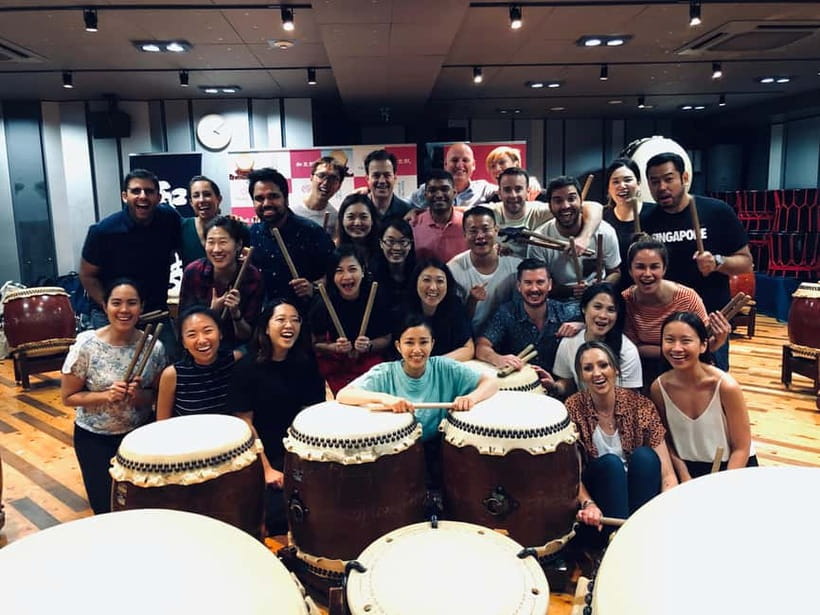
- Eva Kestner brings serious taiko credentials, including founding Cornell University’s taiko drumming group and awards from Tokyo University of the Arts
- You learn both traditional and contemporary taiko, not just random beats
- Foundation and rhythm training are built in, so you understand the why, not only the what
- You get a personalized video of you playing to practice later
- Expect a workout, with sore arms and quick pace, even if you are a complete beginner
Why This Taiko Workshop Feels Like the Real Thing
If you have ever tried to learn taiko from a short clip online, you know the problem. Taiko is not just noise. It is posture, grip, timing, and control, all moving together.
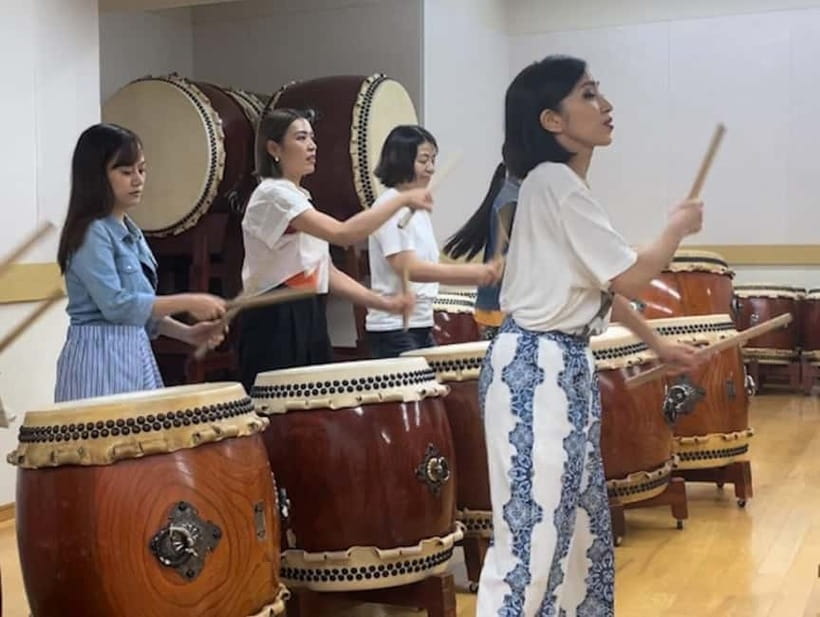
This workshop is built around technique, rhythm, and performance, not a quick try-out. In the room, you learn how to hold the sticks, how to position your body, and how to lock into patterns so you can actually play a piece, not just hit the drum. The best part for me is that it stays grounded in real taiko practice while still being friendly for newcomers.
The vibe is also refreshingly straightforward. You are taught in an English-forward format, and you are guided through a full arc, foundation training to learning a set piece, then a demonstration performance that helps you connect the dots.
You can also read our reviews of more tours and experiences in Tokyo.



Meet Eva Kestner, and Why Her Background Matters
Eva Kestner is not just a performer who can teach. She has deep institutional and artistic credibility, and you feel it in how organized and clear the class is.
She has been the founder and first musical director of Cornell University’s Taiko Drumming group. She also received an excellency award from the Tokyo University of the Arts New Artists Competition. And her original music is published by Harper Collins and Cambridge International Curriculum.
Why does that matter for you? Because it shapes the teaching. When someone has trained people, directed ensembles, and composed original music, you get more than generic instructions. You get a structured approach that helps your body learn the rhythms quickly, without you flailing around for 90 minutes.
In addition, the class is taught by someone who can explain taiko history briefly and clearly, then bring it back to what you are doing with the drum in real time. That link between culture and technique is where this experience earns its high rating.
The 90-Minute Flow: What You Actually Do in Class
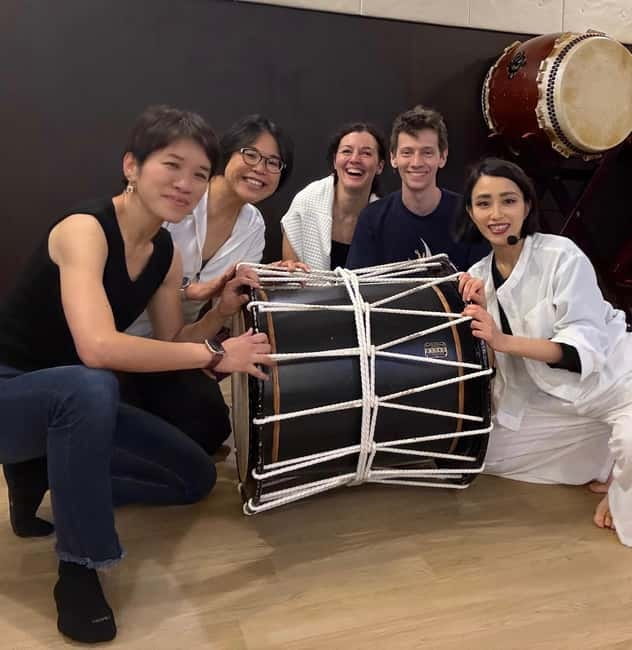
The workshop is 90 minutes long, with no prior taiko experience required. That timing is important. It is long enough to build real technique and short enough that you can leave without feeling like you have been stuck in a drill session all day.
Here is the rhythm of the class as you will experience it:
1) Foundation training
You learn how to hold the sticks and how to use your body for power and control. This is not glamorous, but it is the difference between loud and accurate.
2) Rhythm training
You do exercises that train your timing and coordination. The pace tends to move quickly, and that is a good thing. Your brain and arms both adapt fast when you keep moving.
3) Learning a traditional and contemporary piece
You move from drills into a set taiko drumming piece. You are not just copying a single pattern. You are learning a full piece with structure, so the end feels like performance, not only practice.
4) Demonstration performance
Eva demonstrates, and she includes a brief taiko history explanation. That step matters because it shows how the technique translates into musical intent.
If you are the type who likes clarity, you will appreciate how the workshop is organized into these distinct sections. And if you worry you will fall behind, the foundation training is designed to get you started on the right foot.
Traditional and Contemporary Taiko: You Learn the Meaning, Not Only the Moves
Taiko gets boiled down online into the dramatic moment where someone hits a huge drum. But the workshop frames taiko as a living art form with regional roots and evolving styles.
You learn a traditional and contemporary taiko drumming piece, which helps you hear and feel the difference. You also get a brief explanation of taiko history and its role in Japanese culture. That context helps you understand why particular rhythms and performance choices exist, instead of treating everything as random variations.
One attendee context that stuck with me is how the class can include elements connected to real traditional performances, including pieces originating from islands near Tokyo. That kind of connection makes the workshop feel more grounded than generic drumming lessons.
You may also notice that the rhythms come with physical storytelling. A change in intensity, a pause, or a repeated pattern is not just for sound. It is for structure, and it shapes the performance. By the time you are practicing the full piece, you start to recognize those musical cues.
Your Take-Home Video: Practice Without Guesswork
This is one of the most practical features, and it is the reason many people keep mentioning the class long after they leave.
After the workshop, you receive a personalized video of you playing the taiko drums. That turns your memory into something you can review. It is especially helpful for form, because taiko technique is easier to correct when you can see your own posture, stick angle, and timing.
From a value standpoint, this is big. A lot of short activity classes end with a few photos, and then you forget what you did in the moment. Here, you get a training tool you can replay.
So if you like the idea of practicing and improving, you will like having your own reference. And if you just want a souvenir that is actually meaningful, the video delivers that too, because it captures what you learned, not only where you sat.



The Sweat Factor: What You Should Expect Physically
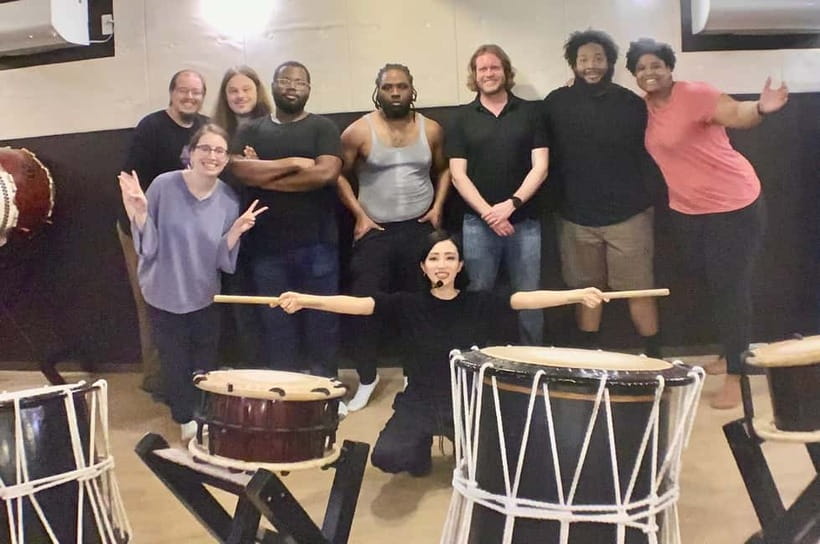
Let’s be honest. Taiko is a workout. Even in a beginner-friendly class, you are using your shoulders, forearms, core, and legs to generate power and keep timing. Your arms can get sore, and the room can feel warm.
A few practical points to keep you comfortable:
- Wear comfortable clothing you can move in easily.
- Bring a water bottle and use it.
- If you get hot easily, plan for shorts or breathable options.
The good news is that the class is beginner-friendly. You do not need prior taiko experience. But you do need to be willing to work. Think athletic rhythm practice, not museum quiet time.
Price and Value in Tokyo: Is $120 Worth It?
At $120 per person for a 90-minute workshop, this is not the cheapest activity in Tokyo. But you are paying for a real instructor, a complete structured lesson, and a take-home recording.
Here is what you get that justifies the cost:
- A professional instructor with deep taiko credentials and performance experience
- A full 90-minute session with foundation training and rhythm training
- Learning a traditional and contemporary taiko piece
- A demonstration performance plus brief history context
- Drums and sticks provided
- A personalized video to practice at home
In other words, you are not paying for a one-off demo. You are paying for an actual skill-building class that ends with something you can revisit. If you like hands-on cultural experiences, this is a strong deal, especially for central Tokyo access and a high-quality teaching setup.
If you are only looking for light sightseeing or a low-energy activity, taiko may feel like more effort than you want. But if you want to learn something you can repeat, it is well worth the price.
Getting There: Studio Time and How to Plan Your Tokyo Day
The workshop is based in a studio, and the exact meeting point may vary depending on the option booked. For larger groups, the studio is about 20 minutes away from Shibuya by train.
That matters for planning. If you are building a tight schedule, give yourself a little buffer for getting to the meeting spot. Train rides in Tokyo are easy, but meeting points that vary can surprise you if you assume it is always the same station.
Also, duration matters. With a 90-minute workshop, you can usually fit it into a morning or afternoon without wrecking your entire day. Just check starting times based on availability, since that will determine what you can pair it with.
Who Should Book This Workshop, and Who Might Think Twice
You should book if:
- You want a real taiko lesson with clear progression
- You are a beginner who wants structure, not chaos
- You care about Japanese culture and want taiko history explained in plain language
- You want a take-home practice tool, the personalized video
- You are traveling with family or a group and want a shared activity
You might think twice if:
- You do not want a physically demanding class
- You have wrist, shoulder, or gripping issues and you are worried about the stick handling and repetitive motion
- You only want passive entertainment, because this workshop is hands-on throughout
One of the best things about the format is that it still feels organized even though it is energetic. You get moved from technique to rhythm to performance, with guidance the whole way.
Should You Book This Taiko Drumming Experience?
Yes, if you want more than a tourist photo moment. This workshop is built like a real lesson, with foundation training, rhythm drills, and a traditional and contemporary piece. Add in Eva Kestner’s credentials and the personalized video, and the experience becomes something you can keep practicing after you fly home.
Book it if you can handle a workout. Bring water, wear comfortable clothes, and treat it like an active cultural class. The payoff is control, confidence, and a video souvenir that actually shows what you learned.
FAQ
How long is the taiko drumming workshop?
The workshop lasts 90 minutes.
How much does it cost?
The price is $120 per person.
Do I need prior experience?
No prior experience with taiko drumming is required.
What languages are used during the class?
The instructor teaches in English and Japanese.
What is included in the workshop?
You get a 90-minute taiko drumming workshop with foundation training, rhythm training, learning a traditional and contemporary taiko drumming piece, a demonstration performance, a brief history of taiko, taiko drums and sticks provided, and a personalized video of you playing.
What should I bring?
Bring a water bottle and comfortable clothing.
Where do I meet, and how far is it from Shibuya?
The meeting point may vary depending on the option booked. For groups larger than 20 people, the studio is about 20 minutes away from Shibuya by train.
Is cancellation allowed?
Yes, there is free cancellation up to 24 hours in advance for a full refund.
Is a private group available?
Yes, private group options are available. For groups larger than 20 people, you are asked to contact [email protected] to coordinate.
More Tour Reviews in Tokyo


Not for you? Here's more nearby things to do in Tokyo we have reviewed












Tokyo City Tours, side by side.
 ★ 5.01-Day Tokyo Bus TourFrom $12914,250 reviews
 ★ 4.5TOKYO SKYTREE® Admission ticketFrom $1311,192 reviews
 ★ 4.6teamLab Planets TOKYO Digital Art Museum Entry TicketFrom $259,779 reviews
 ★ 4.0Mt Fuji & Hakone Cruise, Drum Show Bullet Train 1 Day from TokyoFrom $1497,413 reviews
 ★ 5.0Shinjuku Food Tour (13 Dishes at 4 Local Eateries)From $866,603 reviews
 ★ 4.4Tokyo Mt Fuji 5th St & Hakone Cruise Bus Tour w/Bullet TrainFrom $1545,024 reviews
 ★ 5.0Flagship 2-Hours Official Street Go-Kart Tour – Tokyo Bay ShopFrom $644,974 reviews
 ★ 4.5From Tokyo: Mount Fuji Full-Day Sightseeing TripFrom $684,970 reviews