
Review · MOUNT FUJI TOURS
From Tokyo MOUNT FUJI and Lake Kawaguchi-ku Full Day Tour
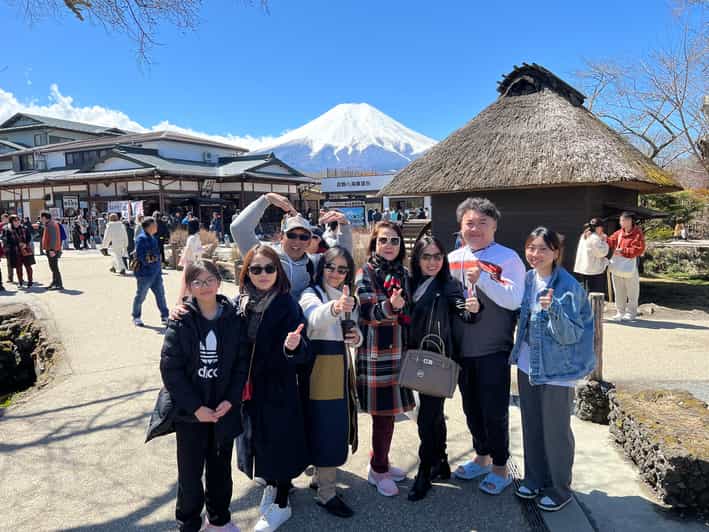
Fuji day trips can be hit or miss. The smart move here is a private, door-to-door plan with an English-speaking guide who can keep the day moving even when visibility is messy. You get a full, well-paced route that mixes big viewpoints with cultural stops tied to how Japanese people actually connect to Mount Fuji.
What I like most is the variety, you do not just park at one photo spot. You also get the calm contrast of Lake Kawaguchi after higher-elevation views, plus time for little walks at places like Chureito Pagoda and Oshino Hakkai. The one drawback to consider is simple: weather controls how much of Mount Fuji you’ll clearly see, so dress for cold and be ready to rely on the day even if the mountain plays hide-and-seek.
Key highlights that make this day trip work
- Private VAN pickup from any Tokyo ward means less hassle and more usable time
- English guide who explains Fuji’s culture, temples, and gods, not just directions
- Mount Fuji 5th Station at 2,300m gives you one of the closest summit-area experiences
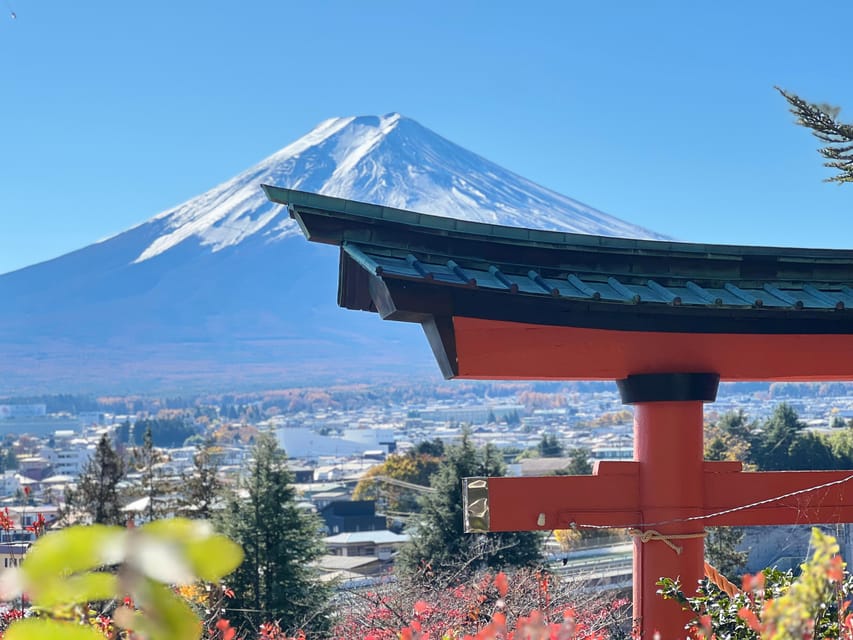
- Chureito Pagoda at Arakurayama Sengen Jinja delivers a classic Fuji-and-pagoda photo angle
- Oshino Hakkai’s eight ponds from snowmelt adds a nature and history angle
- Two lake zones (Kawaguchi plus Saiko) give you both lively views and a quieter “healing village” stop
Private Mount Fuji From Tokyo, without the stress
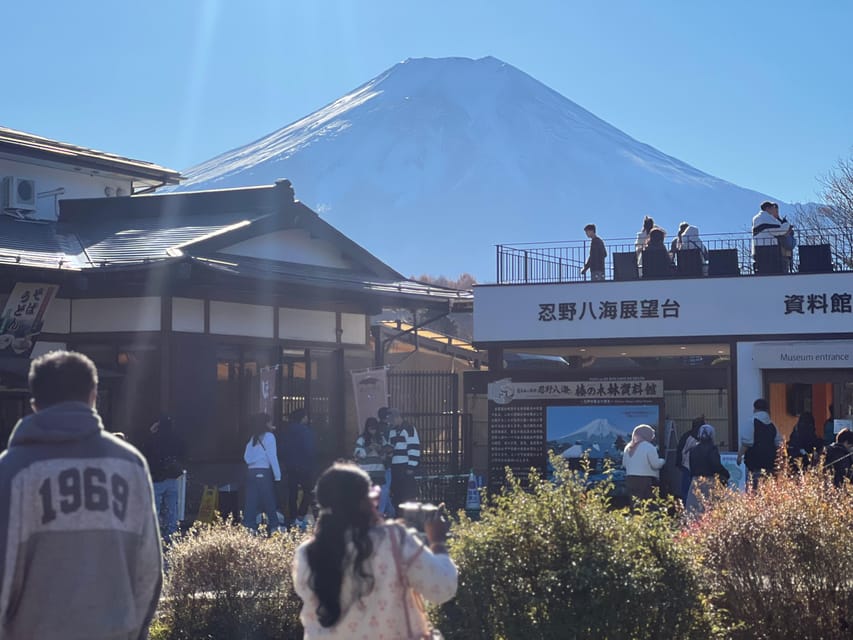
A Mount Fuji day trip from Tokyo can be either smooth or chaotic, depending on how it’s organized. This one is designed for comfort and flow: you ride in a private VAN, you get picked up where you’re staying in Tokyo, and you do not have to worry about other people slowing the schedule down.
That matters because the best spots around Fuji are time-sensitive. Sunrise is not required, but fog and clouds can erase views, and buses can turn popular lookouts into a photo line. With a private setup, you can spend your time where the air looks good, and where you still have energy to walk a bit.
More Tokyo tours and experiences for the shortlist
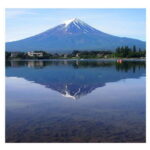
Door-to-door pickup, VAN comfort, and your English guide
Pickup and drop-off can make or break a full-day excursion. Here, you can be collected from any Tokyo ward location, then returned the same way. That cuts down the awkward start-and-finish routine that often eats the first and last hour of a day.
You also travel in comfortable VANs, and you get practical extras included like parking fees and one water bottle per person. The guide being English-speaking is key too. If the sky is thin and Fuji is partly covered, the tour still has substance, because your guide can steer you through what the sites mean and what to look for.
From the guide names shared in past experiences, you may meet Khan (also listed as Ali). In particular, Khan stands out for being attentive and on-time, and for giving useful tips for food when the mountain view does not cooperate.
Mount Fuji 5th Station at 2,300m: the closest summit-area feeling
The day’s signature altitude moment is Mount Fuji 5th Station, around 2,300 meters. Even if you do not hike high, being this close gives you a real sense of scale. The air feels different, and on a clear day you can see wide views toward the summit region.
You should expect a mix of sightseeing and light walking. There’s also time to visit a shrine and, weather permitting, you may walk part of the Fuji trail. That trail segment is not about “climbing” the mountain. It’s more about getting your boots on the ground in a place that feels tied to the pilgrimage side of Fuji, not just the postcard side.
The main consideration is weather. Clouds can move fast up here. Dress warm, bring good walking shoes, and plan to enjoy what you can see rather than treating the 5th Station as a guarantee.
Chureito Pagoda and Arakurayama Sengen Jinja: the classic shot with real walking
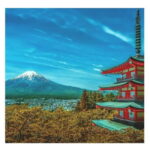
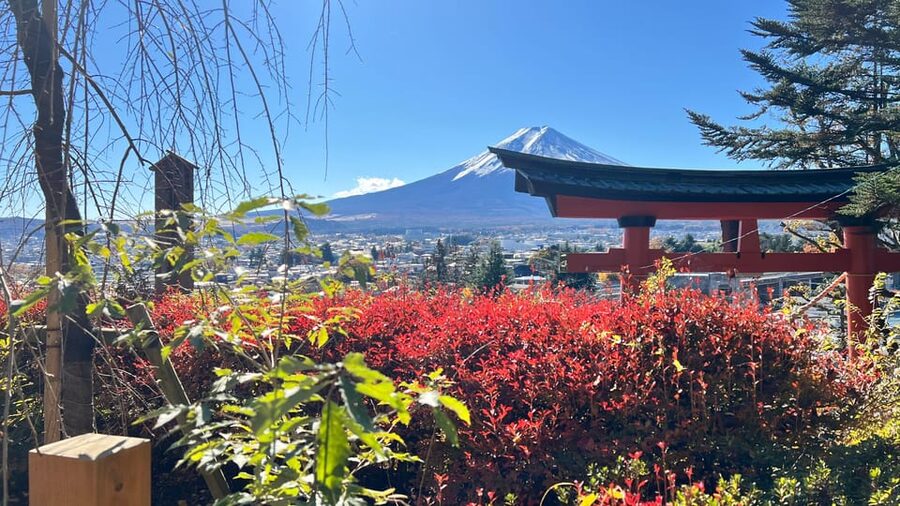
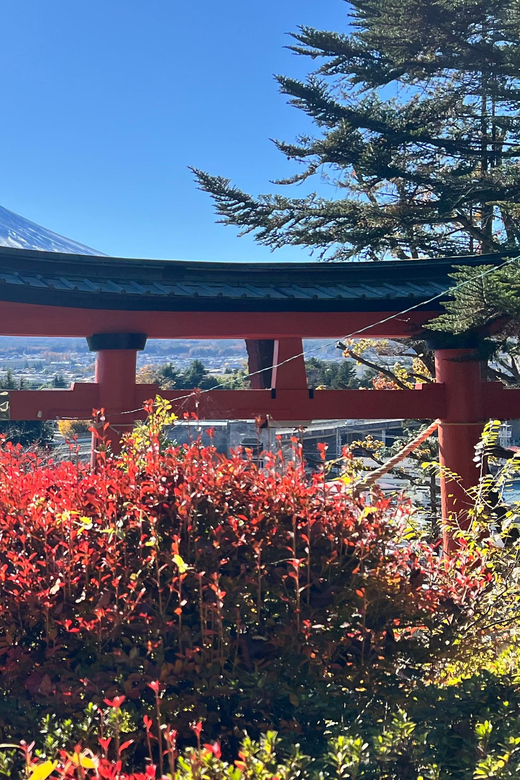
Next comes Chureito Pagoda (Arakurayama Sengen Jinja), one of the most recognizable Mount Fuji viewpoints in Japan. The composition is why people come, the five-story pagoda framed with Fuji behind it. But the stop also has a nice physical element, there’s a short hike to reach the viewpoint.
This is a good place to time your photos. If Fuji is visible, you’ll get that strong layering effect. If not, the pagoda still stands on its own, and you can enjoy the shrine setting and viewpoint area without feeling like the stop was pointless.
Season matters here. If you’re traveling around cherry blossoms or autumn, the viewpoint tends to feel extra dramatic because of the color around you. Even outside peak season, this is a straightforward stop that helps your day feel distinctly Fuji-shaped.
Oshino Hakkai: eight snowmelt ponds and snacks you’ll actually remember
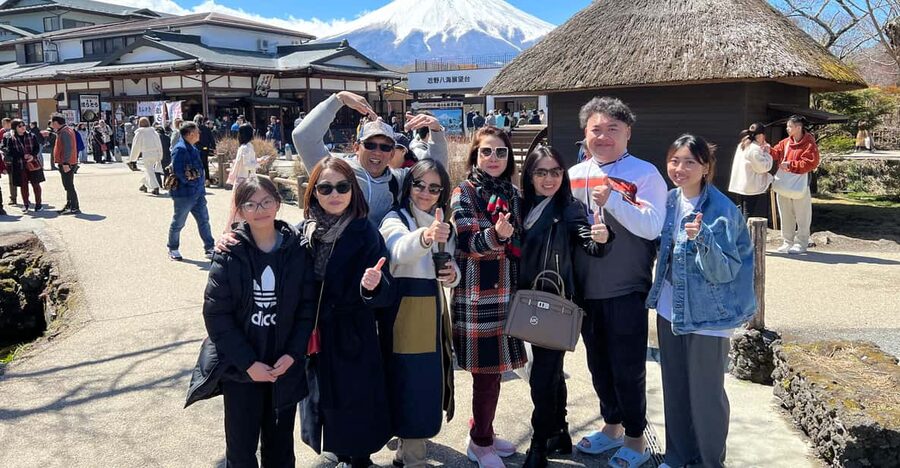
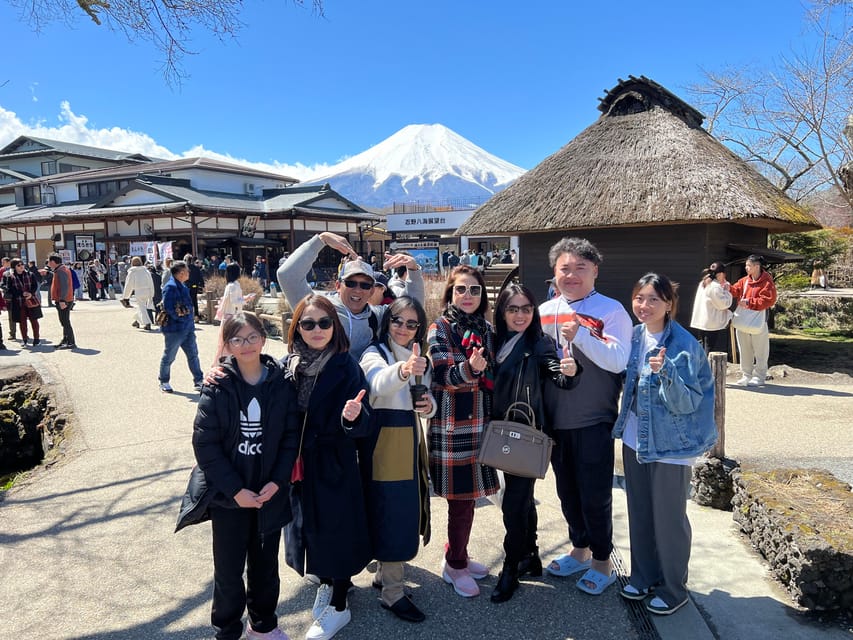
Then you head to Oshino Hakkai Village, known for traditional buildings and a very specific nature story. This area is built around eight crystal-clear ponds fed by Mount Fuji’s snowmelt. The result is a calmer, more “slow down” kind of stop than the high-altitude lookouts.
You’ll typically get time to wander the village structure and see how the ponds and houses connect to daily life and local culture. It’s also where it’s fun to try small local treats. Options mentioned include yatsuhashi and fried mochi.
One practical tip: this is not a long walking day hike. It’s an easy-going stroll, but the time you have is still limited. If you want photos of the ponds, step back often, and take a couple of minutes just watching the water, because that’s when the “clear and cool” effect really shows.
Lunch with Fuji views: plan for meals and possible entrance fees
Lunch is where you need to manage your expectations and your wallet. Meals are not included, and lunch and snacks are not included either. The good news is that lunch is arranged at a local restaurant, often with choices like Hōtō noodles, tempura, or local trout.
There’s also mention of an option to select a scenic lunch spot with Mount Fuji views. That’s not something you should assume is guaranteed every day, but it’s a smart way to use the time between the higher viewpoints and the lake zone.
Also keep in mind that entrance tickets are not included. Some of these stops can have paid entrances, so it’s wise to carry cash or a card for small add-ons. Your guide can usually help you figure out what’s worth paying for on the day you’re there.
Lake Kawaguchi and Oishi Park: the Fuji reflection phase
Once the mountain-area stops are done, you shift to Lake Kawaguchi (Kawaguchiko), one of the Fuji Five Lakes. This part of the day feels like the reset button. You can stroll the lakefront, stop at a café if there’s a view, or enjoy seasonal events depending on when you travel.
There are also options to do small on-lake activities, like renting a swan boat, if you want something light and different from photos on dry land. If you’re visiting in spring, this region is known for flower festivals, including the Fuji Shibazakura Festival.
On the north side, Oishi Park is a strong companion stop. It’s known as a flower park, with photo-friendly Mount Fuji views. The types of blooms vary by season, with lavender mentioned in summer and other colorful seasonal displays. There’s also a small local market and a café area where you can pick up Fuji-themed treats.
The practical thing to know: lake area photos are often about timing and angle. If Fuji is visible, give yourself a little breathing room to find the view that works best, rather than snapping one photo and calling it a day.
Saiko Iyashi no Sato Nemba: the quiet “healing village” break
For a change of pace, the tour continues to Saiko Iyashi no Sato Nemba. This is a restored traditional Japanese village and an open-air museum located near Lake Saiko on the western shore, close to Mount Fuji.
It’s often described as a “healing village,” and that label makes sense once you’re there. Instead of chasing the highest viewpoints, you slow down to absorb rural architecture and atmosphere. If you like culture that feels lived-in rather than staged for tourists, this stop is often the one that lingers.
You can expect scenic views of Mount Fuji in the background when the weather cooperates, plus a chance to see old-style buildings and a quiet side of the region. It’s also a helpful buffer in the day because it breaks up the more “looking outward” energy of the pagoda, the ponds, and the lakeshore.
Timing and pacing: about half an hour per stop, use it wisely
The day is designed with short time windows for each key location, often around half an hour. That keeps the tour moving so you hit multiple highlights, but it means you should travel light in your head.
Here’s how to get the most out of that pacing:
- Decide before you arrive which stop gets your longest camera time
- Wear shoes you can walk in comfortably, because several spots include walking
- Keep your warm layer accessible, because it can feel colder at higher elevations
- If Fuji is visible, prioritize the viewpoint that gives you the best angle, not the one you like most
It’s a good setup for people who want a full day without turning the trip into a marathon. If you prefer slow travel, you might feel the time pressure at one or two stops.
Price and value: $397 per group up to 6, what you’re actually buying
At $397 per group up to 6, this is not a budget bus tour. But it’s also not priced like a private driver with no plan. You’re paying for a bundle: private guide, VAN transportation, door-to-door pickup, parking fees, and one water bottle per person.
The value shows up most for small groups. If you’re traveling with friends or family, splitting the cost makes the “private” part feel much more reasonable. It also pays off if you want a flexible pace and fewer moving parts.
What’s not included is important for budgeting. Meals and drinks are not included, and lunch and snacks are not included either. Entrance tickets are also not included. So you’ll want to budget extra for food and any paid entry at sites.
For couples, it’s still worth considering if you really want private logistics and an English guide through the day’s cultural stops. If your top priority is only photos, you may question the price versus simpler options. But if you care about context, the guide’s explanations can make the sites feel more meaningful instead of just scenic.
Who should book, and who should skip
This private Mount Fuji and Lake Kawaguchi day trip fits well if you:
- Want a private experience with Tokyo pickup
- Like classic Fuji viewpoints plus cultural stops, not just one lookout
- Travel with a small group, up to 6 people, and want the cost spread out
- Prefer an English-speaking guide who can explain the spiritual and historical connections
It’s not a great match if you:
- Need wheelchair access, because it’s not suitable for wheelchair users
- Have significant mobility issues, because there is walking at multiple points
- Travel with children under 6, because it’s not suitable for children under 6
- Are pregnant, because it’s not suitable for pregnant women
- Have heart problems, because it’s not suitable for people with heart problems
Should you book this Mount Fuji and Lake Kawaguchi tour?
If your idea of a great Fuji day is a mix of views, culture, and a comfortable ride, I’d lean yes. The private format plus door-to-door pickup is a big quality-of-life upgrade, and the guide support makes the experience feel more grounded than a checklist of photo stops.
Book it if you’re traveling in a group of two to six and want to avoid the stress of public transport schedules. Skip it if you want maximum freedom to linger for hours at one place, or if your priorities are only viewpoints and you’re trying to keep costs super low.
One last practical thought: check the forecast, pack warm layers, and accept that Fuji can hide. When it does, the guide’s job becomes even more important, and past experiences highlight guides like Khan (Ali) as the kind of people who keep your day productive and enjoyable anyway.
FAQ
What languages are the guides available in?
The guide language is English.
Does this tour include hotel pickup and drop-off in Tokyo?
Yes. Pickup and drop-off are available at any Tokyo ward location.
Is transportation included, and what vehicle is used?
Transportation is included, using comfortable VANs.
Are meals and drinks included in the price?
No. Meals and drinks are not included, and lunch or snacks are not included.
Are entrance tickets included?
No. Entrance tickets are not included.
Is this tour suitable for people who use wheelchairs?
No. The tour is not suitable for wheelchair users.
What weather or visibility should I plan for?
Mount Fuji visibility depends on weather. Dress warmly and bring comfortable shoes, since you’ll have walking at several stops.
More Full-Day in Fujiyoshida

More Tours in Fujiyoshida
More Tour Reviews in Fujiyoshida
Not for you? Here's more nearby things to do in Fujiyoshida we have reviewed
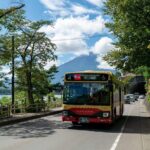
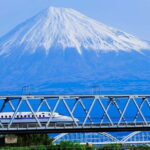
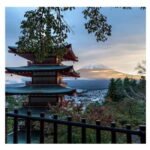
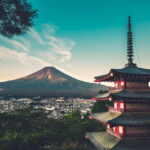
Mount Fuji Tours, side by side.
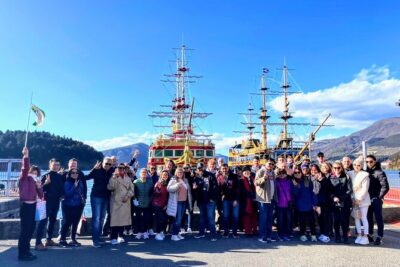 ★ 5.0Mt Fuji and Hakone 1-Day Bus Tour Return by Bullet TrainFrom $16326,383 reviews
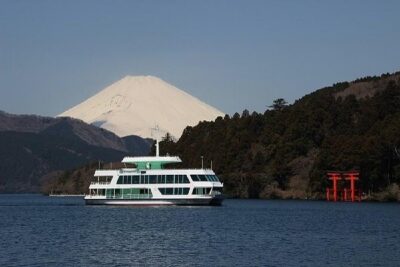 ★ 4.0Mt Fuji & Hakone Cruise, Drum Show Bullet Train 1 Day from TokyoFrom $1497,413 reviews
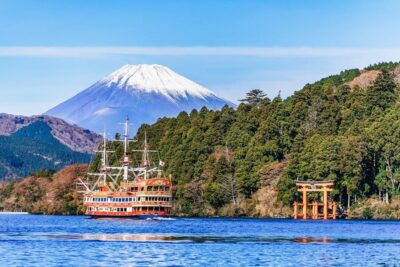 ★ 4.4Tokyo Mt Fuji 5th St & Hakone Cruise Bus Tour w/Bullet TrainFrom $1545,024 reviews
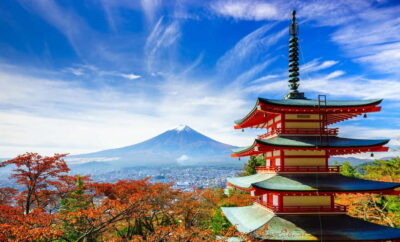 ★ 4.5From Tokyo: Mount Fuji Full-Day Sightseeing TripFrom $684,970 reviews
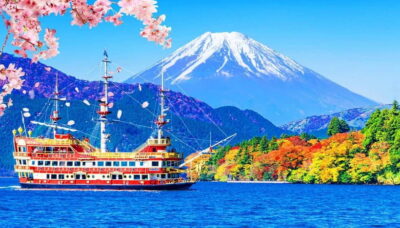 ★ 4.7Mt. Fuji Tour, Hakone Ropeway, Owakudani, Lake AshiFrom $544,002 reviews
 ★ 4.2Mt. Fuji 5th Station & Hakone Cruise 1-Day Bus TourFrom $1292,381 reviews
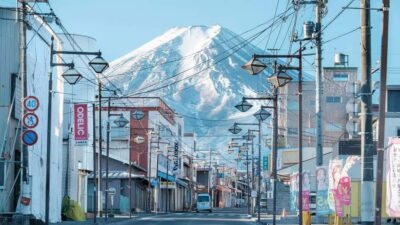 ★ 4.7Mt Fuji Top 5 Spots Day Tour: Arakurayama Park,Oshino HakkaiFrom $532,066 reviews
 ★ 5.0Private Tour to Mt. Fuji and Hakone (Fully Licenced Operator)From $4971,910 reviews
This tour also belongs to