
Review · ASAKUSA TOURS
Asakusa Traditional Experience
A walk in Asakusa can feel like stepping into older Tokyo. This half-day tour pairs Senso-ji Temple with Nakamise-dori shopping, then hands you the tools for Edo kiriko glass crafting. I especially like the way your guide turns the area into something you can actually understand, not just photograph, and I like that you end with a hands-on souvenir you make yourself. The only real catch is that the kiriko workshop fee is not included, so you will want to budget extra yen.
You get a private setup for up to 5 people, starting at 10:00 am and returning to the same meeting point. Expect about 4 hours total, including travel time, and a straightforward plan that works well even if this is your first day in Tokyo.
Key Points Worth Noting
- Senso-ji first, not last: You start where the temple story begins, with a full hour to get oriented.
- A guide who explains what you are seeing: Expect Edo-era and architectural context, not just a route.
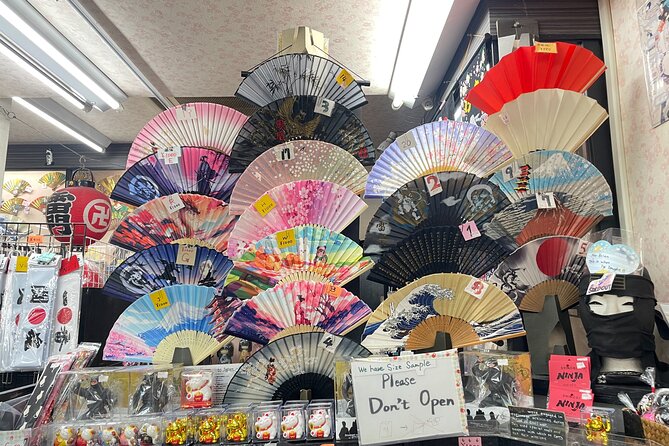
- Nakamise-dori for classic buys: Over 200 meters of traditional snacks and souvenirs like yukata and folding fans.
- Hands-on Edo kiriko in about 90 minutes: Design a pattern and cut it yourself at Sumida’s kiriko workshop.
- Private group, up to 5: Easier pacing, better questions, less time lost in crowd shuffling.
Senso-ji Temple, Tokyo’s Oldest Temple Start
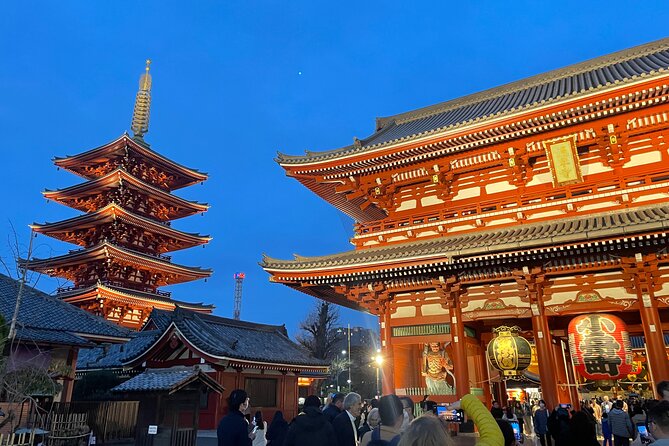
You begin at Kaminari mon 2-chōme-3-1 Asakusa near Senso-ji, Tokyo’s best-known temple area, famous for its approach lined with landmark shops and lanterns. The plan gives you a full hour at Senso-ji Temple, and that time matters. Most people rush through here, but an extra hour helps you notice details you would otherwise miss: the way the grounds are laid out, how the main temple area feels, and how the Edo-era atmosphere shows up in the architecture and everyday temple life.
A key fact that your guide uses is the temple’s age. Senso-ji was completed in 645 AD, which is part of why this place still feels like a living “old Tokyo” hub rather than a single photo spot.
Practical note: Senso-ji admission is listed as free for this part of the tour. So you are not paying to get your bearings, and you can spend your money where it counts later in the itinerary.
What I like most about starting here is that it gives the rest of the tour meaning. When you understand where the neighborhood’s traditions come from, Nakamise-dori shopping feels less like browsing and more like a continuation of the same cultural flow.
You can also read our reviews of more tours and experiences in Tokyo.


Nakamise-dori Shopping Street, 200 Meters of Traditions
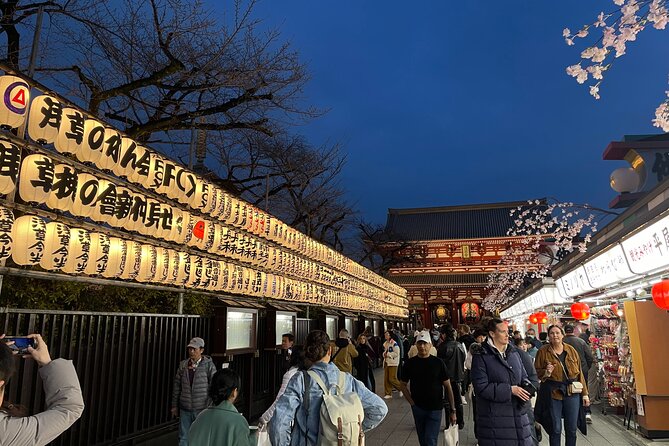
After Senso-ji, you head into Nakamise-dori, the shopping street connected to the temple. It runs for over 200 meters, which sounds short until you realize it is packed. You get about an hour here, and that is a good chunk of time to browse without turning it into a frantic sprint.
This is where you find the classic, easy-to-recognize souvenirs. Think traditional snacks and items like yukata and folding fans. If you want gifts that feel local, this is the spot. If you want snacks, this is also your chance, but note that snacks are not included in the tour price.
One thing to consider: your time here is clearly meant for shopping and choosing items. If you are traveling with a strict no-shopping mindset, that hour may feel like “time in a store street.” The tradeoff is that you get to experience how Asakusa people actually shop around the temple, not just pass through.
Also, since this tour is private for up to 5, you do not have to fight for attention with a big crowd. You can ask where to find specific items, or what is worth buying versus what you might be able to get elsewhere.
Sumida Edo Kiriko Crafting, Make a Pattern Then Cut It
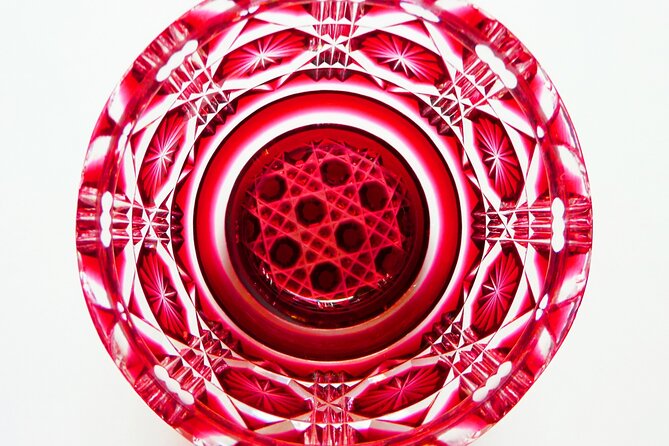
The highlight for a lot of people is the final stop: Sumida Edokirikokan, where you practice Edo-kiriko. Edo-kiriko is traditional cut glass that originated in the Edo period. What makes this experience different from typical souvenirs is that you are not just buying something made by someone else. You design a pattern and then cut it yourself.
The workshop block is listed as about 90 minutes, and the total stop time in the tour plan is about 1 hour 30 minutes. That means you have time to take the process seriously, not just rush through and get a final product with no learning.
Here is the value of this stop for your trip: a finished kiriko piece is a physical memory. You can keep it on your desk or give it as a gift, and it communicates that you actually learned a craft step-by-step. That is different from buying an item off a shelf.
Budget heads-up: the tour lists the Edo kiriko workshop fee as 4,950 JPY (not included). Admission is also listed as not included for this part. So treat this as an add-on cost you should plan for when you decide if the tour fits your budget.
Also, the tour info lists that the location may change depending on departure. That is not the same as a bait-and-switch, but it does mean you should be flexible on the exact workshop address on the day.
How the Private Group Format Changes Your Day
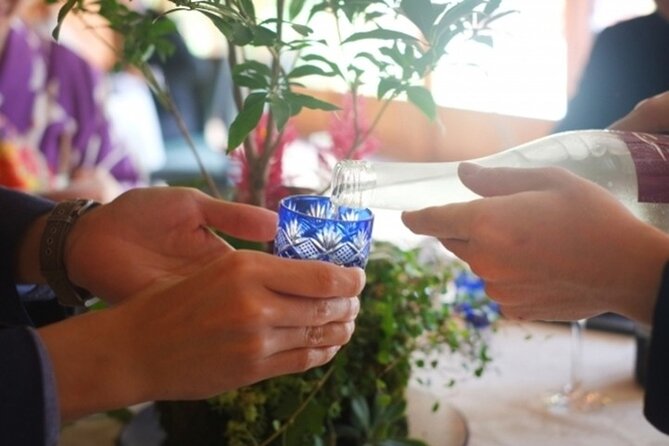
This is a private tour/activity for your group only, up to 5 people. That matters more than it sounds. In Asakusa, crowds can make standard group tours feel like a conveyor belt. Here, your guide can slow down when you have questions, and you can spend a little extra time with what you care about most, like temple details or souvenir browsing.
It also helps when you hit the craft workshop. Hands-on activities usually go smoother when your group is smaller. You are not waiting behind a line of strangers trying to ask the same questions.
Duration is listed as about 4 hours, and that includes travel time. So you get a clear half-day structure:
- Temple orientation and context
- Shopping street browsing for traditional items
- Crafting time to create a real souvenir
If you like focused tours that still feel human, this format is a strong fit.
Price and Value for $142.84 Per Group
The price is $142.84 per group, for up to 5 people. That is the group price, not per person, which is where the value comes in. If you are traveling as a couple, a small family, or a group of friends, splitting the total cost can make this a very reasonable way to combine sights plus a craft experience.
But here is the balanced view you should keep in mind: the tour price covers the tour guide cost. It does not include snacks at Nakamise-dori, and it does not include the kiriko workshop fee (4,950 JPY). There is also a wagashi making experience listed separately at 1,800 JPY.
So the true “all-in” cost depends on what you choose to add:
- If you only do the listed kiriko workshop, you budget the 4,950 JPY on top.
- If you add wagashi, you budget the extra 1,800 JPY.
- If you snack on Nakamise-dori, add that too.
That said, the value is still strong because you are buying learning time plus a crafted object. Your money goes into a cultural activity with an actual product you make, not just a walk past landmarks.
What the Guide Adds (and Why It Makes the Stops Easier)
Even though the itinerary looks simple on paper, the guide is the reason it feels like more than sightseeing. In particular, the guide’s approach is described as friendly and very well-informed, and the explanations focus on things like temple architecture and interesting background you can connect to what you see in front of you.
This kind of guidance is practical. When you know what you are looking at, you remember more later. You also shop smarter in Nakamise-dori, because you understand why certain items are so strongly associated with this temple area.
If you enjoy asking questions, this tour style usually works well. You are not rushed to keep pace with a big group, so you can ask what a feature means or why a tradition is still done today.
Timing, Meeting Point, and How to Prepare
Start time is 10:00 am, and the tour ends back at the meeting point. The meeting spot is listed as:
Kaminari mon 2-chōme-3-1 Asakusa, Taito City, Tokyo 111-0032, Japan.
Because there is a craft component, your preparation matters a bit more than for a pure walking tour:
- Wear comfortable shoes, because you will walk through the temple area and the shopping street.
- Bring a small bag for purchases so your hands do not get tired.
- Expect the craft workshop to take real focus. You do not want heavy shopping right before you sit down to work.
The tour uses a mobile ticket, and confirmation is received within 48 hours of booking, subject to availability. That is helpful if your plans are still in motion.
Should You Book This Asakusa Traditional Experience Tour?
Book it if you want a compact Asakusa day that includes both the landmark experience and a real takeaway you make yourself. The combination of Senso-ji, Nakamise-dori, and Edo kiriko is a smart way to cover three different types of “Tokyo tradition”: sacred space, everyday commerce, and craft skill.
Skip it or reconsider if you know you will not spend money on the craft fee, or you are not interested in the shopping street component. Since snacks and workshop admission are not included, you will need to plan for extra costs like 4,950 JPY for Edo kiriko.
If you are traveling as a small group and want a guide-led plan with a private feel, this one is a solid value play.
FAQ
Where do you meet for the Asakusa Traditional Experience?
The tour starts at Kaminari mon 2-chōme-3-1 Asakusa, Taito City, Tokyo 111-0032, Japan.
What time does the tour start, and how long does it take?
The start time is 10:00 am, and the total duration is about 4 hours, including travel time.
Is this tour private, and how big is the group?
Yes. It is a private tour or activity, and your group is limited to up to 5 people.
What is included in the tour price?
The tour includes the tour guide cost. Tickets for the temple and other listed admissions are handled per stop, based on what the itinerary states.
Are admission tickets included for all stops?
Senso-ji Temple and Nakamise-dori segments list admission as free. The Edo kiriko workshop admission is listed as not included.
Is the kiriko workshop fee included in the price?
No. The Edo kiriko workshop costs 4,950 JPY and is listed as not included.
Can I cancel for a full refund?
Yes, you can cancel for a full refund if you cancel at least 24 hours before the experience’s start time.
More Tour Reviews in Tokyo
Not for you? Here's more nearby things to do in Tokyo we have reviewed






Asakusa Tours, side by side.
 ★ 4.8Japanese Dance Cabaret Theater Asakusa-Kaguwa TicketFrom $492,270 reviews
 ★ 4.7Meiji Shrine, Asakusa, Skytree Bus Tour and CruiseFrom $1221,986 reviews
 ★ 4.9Roll and Authentic Sushi Making Class in AsakusaFrom $581,957 reviews
 ★ 4.8Asakusa Walking Tour with Sensoji Temple VisitFrom $221,583 reviews
 ★ 5.0Tokyo Asakusa Rickshaw TourFrom $421,375 reviews
 ★ 4.5Tokyo Panoramic 1 Day: Meiji Shrine, Asakusa, Odaiba and SKYTREE®From $851,222 reviews
 ★ 5.0Tokyo Go Kart: Asakusa, Skytree, and Akihabara **IDP MUST**From $99988 reviews
 ★ 4.7Asakusa, Skytree & Akhihabara Go-Kart City ExperienceFrom $96761 reviews
This tour also belongs to