
Review · TOKYO
EDOCCO Tea House–A Quick Dive into Japanese Traditional Culture
Tokyo slows down for one hour. At EDOCCO Tea House in Sotokanda, you get a matcha ceremony plus kimono, shodo, origami, and a Geisha dance with English explanations. I love that it runs in a beautifully restored, Edo-meets-modern space, and that the instruction feels small group and personal, not rushed. One possible drawback to plan for: the Geisha dance portion is brief, so this is more a taste than a long, full performance.
I also like how everything fits into an easy one-hour format that leaves you with real things to do, not just watch. You’ll check in with a mobile ticket near public transport, and the experience ends back at the meeting point, so it’s simple to slot into a busy Tokyo day.
Key Highlights Worth Booking
- A restored studio setting that feels like Edo meets modern Tokyo
- Matcha preparation with Japanese sweets included
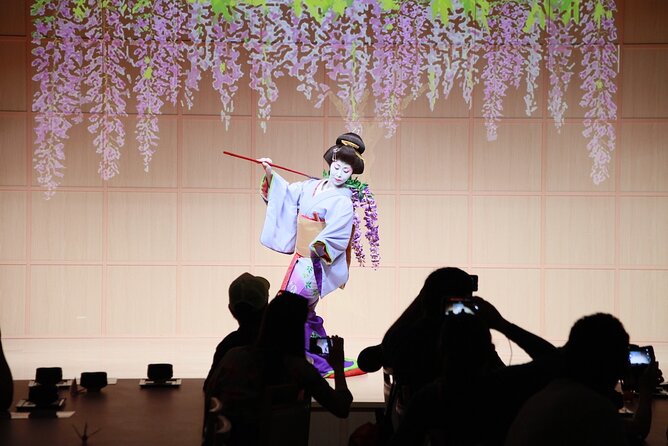
- A Geisha dance show explained in English
- Kimono cosplay for instant Edo-style photos
- Hands-on shodo calligraphy and origami in one hour
Where EDOCCO Tea House Fits in Your Tokyo Day
EDOCCO Tea House is based in Tokyo’s Chiyoda area, with the meeting point at EDOCCO2-chōme-16-2 Sotokanda, Chiyoda City, Tokyo 101-0021. The format is designed to be grab-and-go: about an hour total, and you’re done where you started.
In practical terms, this makes it a great “first week in Tokyo” activity. You’ll get a tight crash course in a few core Japanese arts and manners, without needing a big time block or complicated planning.
Getting there is straightforward since it’s near public transportation. If you’re using the Marunouchi Line, Ochanomizu station (M20) is a handy reference point. From there, follow a short walk that includes crossing the road, going up to a flyover bridge, then turning left and making a first right at the intersection to reach the studio area.
You can also read our reviews of more tours and experiences in Tokyo.



The Matcha Tea Ceremony and Sweets You Actually Make
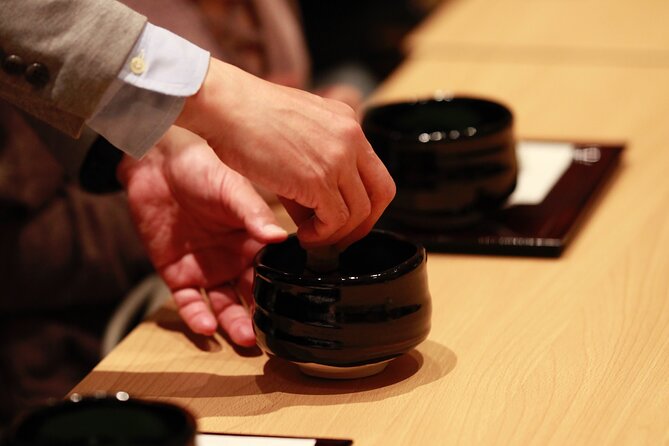
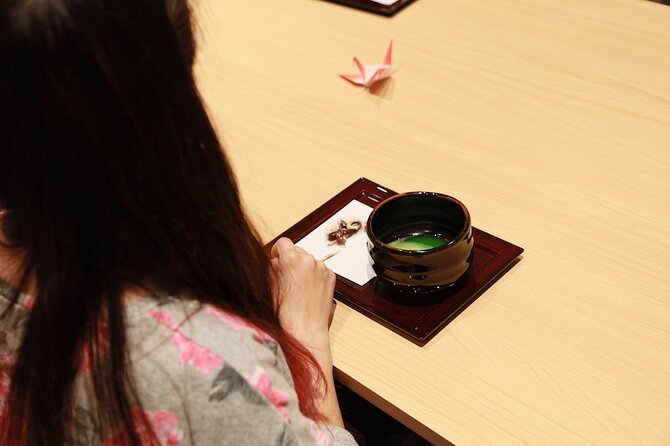
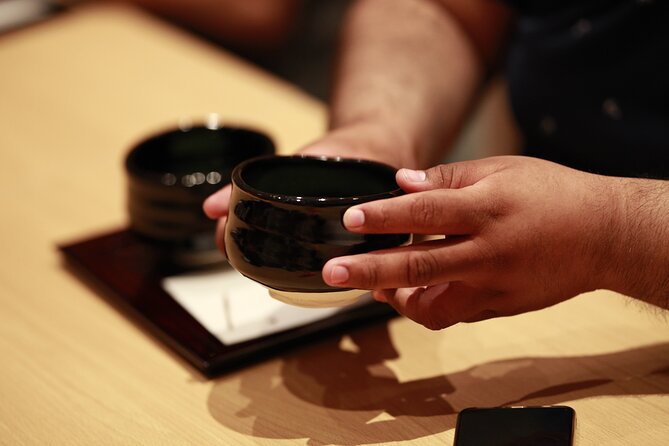
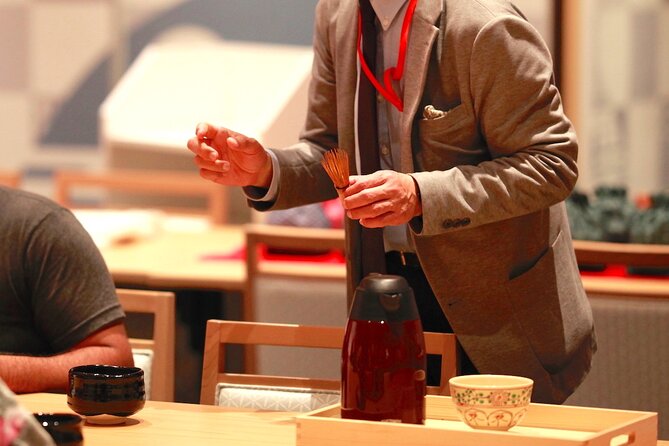
The heart of the experience is the Japanese tea ceremony, centered on matcha. You’re guided through preparing and serving matcha, and you’ll pair it with Japanese sweets as part of the included snack set.
This part matters because tea ceremony is not just about drinking green powder. It’s a lesson in pace, attention, and small gestures. Even if you’ve never held a whisk before, you’ll see how the motions connect to the overall feeling of the ritual.
Also, don’t expect a hard sell. The matcha set details are clear: a full matcha tool kit is not included, but a matcha set (tea bowl, matcha powder, bamboo whisk, and other tools) is available for purchase if you want to keep practicing at home. If you’re the type who thinks, I’d like to learn this for real, that option can be useful.
Watching the Japanese Dance Show With English Explanation
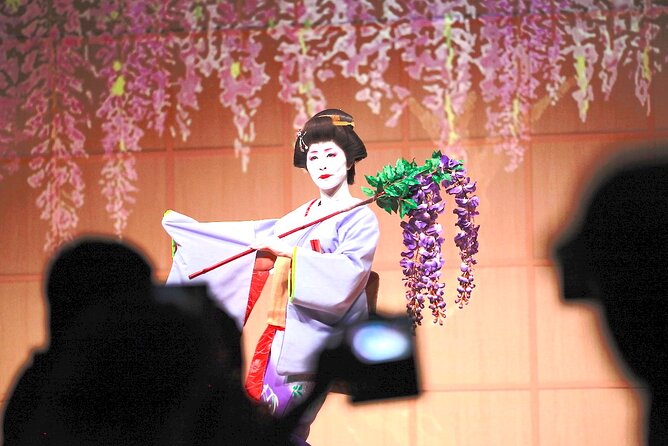
After tea, you shift to the Japanese dance show, paired with matcha and sweets as the atmosphere carries you into performance mode. The key practical point is that there are English explanations, so you’re not left guessing what you’re seeing.
One heads-up: the dance segment is short. If what you want most is a long, story-driven stage performance, you may feel it ends quickly. But if you’re trying to understand key movements and get oriented to the style, this “taste” can be a good fit, especially inside a one-hour program.
If you’re a photo person, this is also a moment to be present rather than constantly shooting. You get the added benefit of context in English, which helps the movements make sense in your head while you watch.
Kimono Cosplay: Fun, Photos, and Edo-Style Atmosphere
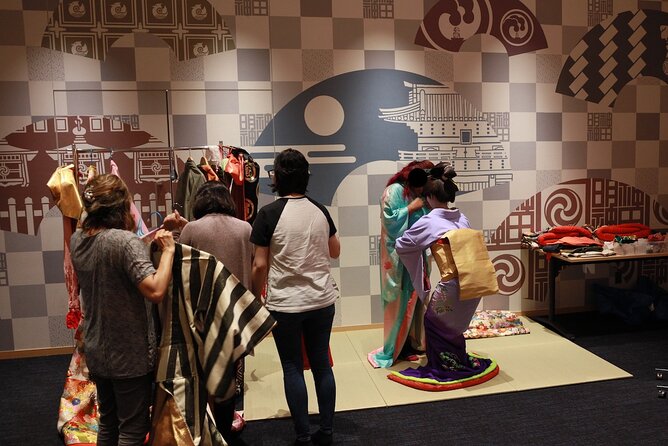
The kimono cosplay experience is one of the most instantly enjoyable parts, and it’s also one of the easiest ways to understand how costume supports cultural storytelling. You’ll dress in kimono and get the Edo-style look while you enjoy the rest of the program.
This is more than costume for costume’s sake. Wearing the kimono changes how you stand, move, and pose, and it gives you that quick sense of time and place that you can’t easily recreate with normal sightseeing clothes. Plus, it’s a strong “memory moment” to end up with pictures that feel distinctly Japanese rather than generic travel shots.
If you’re traveling with kids, this is often the segment that sparks the most excitement. Even if your group is more interested in crafts than performances, kimono dressing tends to make the whole hour feel playful while you learn.
Shodo Calligraphy Basics and Origami You Finish
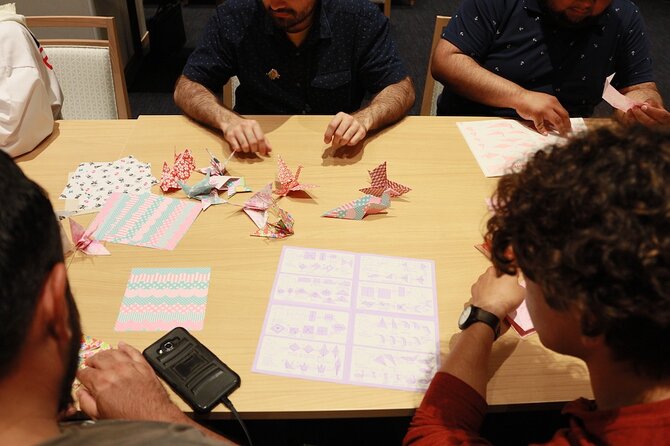
The hands-on parts are the reason this experience works. You’re not just watching tea or dance. You’ll do shodo (Japanese calligraphy) and an origami mini workshop.


Shodo: Brush Strokes and a Character You Make
In shodo, you learn the basics of brush strokes and create your own character. Calligraphy can feel intimidating at first, but that’s exactly where guided basics shine. You’ll get a structured starting point, so you’re not staring at a blank page thinking, now what.
One helpful way to think about it: shodo is about control and rhythm. Even if your result is not perfect, your process is the learning.
Origami: From Simple Folds to a Finished Paper Work
Origami is also hands-on and skill-building. You’ll learn traditional paper folding, from simpler designs like cranes to more intricate shapes. The lesson is easy to appreciate even if your hands are slow at first: one sheet becomes something three-dimensional through patience and careful folds.
If you’re the kind of person who likes taking home a tangible result, origami and calligraphy deliver. They also make the experience stick in your memory, because you can compare your work to what you see later in Japan.
How the One-Hour Format Stays Relaxing
The schedule is compact by design, but it doesn’t feel like a factory line. The experience is paced so each section leads naturally to the next, with tea and sweets acting like a reset between activities.
The group size is capped at a maximum of 20 travelers. In a group that size, you’re more likely to get the specific kind of attention you need for calligraphy strokes or folding technique. Small-group instruction comes up again and again in the positive feedback, including mentions of the hosts keeping things comfortable and not rushed.
Also, the staff communication is a big deal. English explanations are built in for the dance show, and the hosts are consistently described as warm and supportive throughout the hour.
From the named staff in the experience, Ori is highlighted for calligraphy instruction, and Mr. Bambu and Ori are both praised as standout guides who share Japanese history and culture alongside the practical activities. That pairing matters. It turns crafts into stories, and stories into context you can remember.
Price and Value: Is $72.48 Worth It?
At $72.48 per person for about an hour, you’re paying for a concentration of multiple Japanese cultural elements in one sitting. The value comes from the combination: matcha ceremony plus sweets, a dance show with English context, kimono dressing, and hands-on shodo and origami.
Here’s what you should weigh:
- You’re getting several guided activities, not just a single workshop.
- The venue is designed as a cultural center experience, so the setting supports the learning.
- Some items are available for purchase separately. Specifically, the matcha set is not included, though it’s offered if you want tools to take home.
If you compare this to doing each piece separately, the biggest “value win” is time. In Tokyo, time is expensive, and you’re compressing a lot of culture into a neat one-hour block.
One extra detail that signals good organization: confirmation is provided at booking time unless you book within one day of travel, in which case confirmation comes as soon as possible subject to availability.
Who This Experience Suits Best (and Who Might Want Something Different)
This is a strong match for:
- First-time visitors who want a gentle, structured introduction to Japanese arts
- People who want both performance and hands-on activities
- Families looking for a short, friendly cultural activity
- Anyone who likes learning through doing, not just reading signs
It might be less ideal for:
- People who want a long, uninterrupted Geisha dance performance
- People who are seeking a single deep specialty class, like a full-length tea ceremony tradition or advanced calligraphy training
The hour is balanced, and that’s the point. It gives you enough variety to understand what each tradition feels like, even if you’ll want to go deeper later on your own.
A Few Practical Tips Before You Go
To get the most out of EDOCCO Tea House, aim to arrive a few minutes early so you don’t feel hurried during kimono dressing and the transition to tea.
Also, wear comfortable clothing. Kimono styling may change how your arms and posture feel, and you’ll likely move between stations for tea preparation, calligraphy, and origami.
Finally, come with a “learn in small pieces” mindset. This experience is built around short segments, and the best results come when you treat each segment like a mini lesson, not a full course.
Should You Book EDOCCO Tea House?
If you want an easy, one-hour Japanese culture experience that combines matcha, kimono cosplay, shodo, and origami under one roof, I think EDOCCO Tea House is a smart booking. It’s also a nice option when you want the cultural context delivered in English, especially for dance.
If your top priority is a long performance, don’t book this expecting a lengthy stage show. But if you’re after a friendly, well-paced sampler of Edo-style arts and manners, this is exactly the kind of activity that makes your Tokyo trip feel more human and less like a checklist.
FAQ
How long is the EDOCCO Tea House experience?
It lasts about 1 hour.
How much does it cost per person?
The price is $72.48 per person.
What does the price include?
It includes a snacks set with matcha and Japanese sweets, appreciation for the Japanese dance show, calligraphy experience, origami experience, and Japanese dress cosplay experience.
What is not included?
A matcha set (tea bowl, matcha powder, a bamboo whisk, and other tools) is available for purchase, but it is not included.
Where do I meet for the experience?
The meeting point is EDOCCO2-chōme-16-2 Sotokanda, Chiyoda City, Tokyo 101-0021, Japan. The activity ends back at the meeting point.
Is there a mobile ticket?
Yes, the experience uses a mobile ticket.
How many people are in the group?
The maximum group size is 20 travelers.
What if the weather is poor or I need to cancel?
You can cancel for a full refund up to 24 hours in advance. If it’s canceled due to poor weather, you’ll be offered a different date or a full refund.













