
Review · SHIBUYA TOURS
Easy Japanese Speaking Experience and Meet Locals in Shibuya
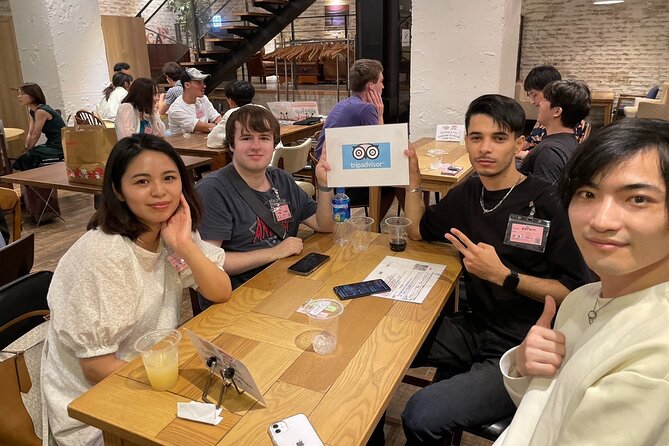
Shibuya gets easier when you can talk. This Japanese English language exchange at Jinnan Cafe turns practice into a low-pressure hangout, with an included drink that makes small talk feel natural. I especially like the way the setup hands you a conversation starter instead of forcing you to improvise from zero, and I also like the staff support that keeps things moving. One consideration: it is only about 2 hours, so you may want to eat first since snacks are not included.
The event is built for real interaction, not classroom performance. You join small mixed groups of about 3 to 4 people, and staff rotates seats so you get multiple chances to speak with different partners. There is also a scheduled English conversation slot of 15 minutes, which is great if your Japanese is still finding its footing.
Logistics are straightforward once you know the floors. You order your drink on the 1st floor, then check in at the reception on the B1 floor, where staff prepare your seat and topic card. It runs Tuesdays, 7:30 PM to 9:30 PM, and it is capped at 20 people, so it stays manageable even when Shibuya is busy outside.
Key takeaways
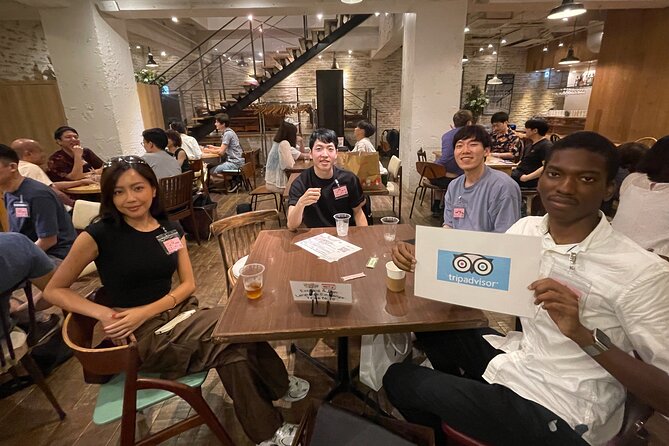
- Jinnan Cafe language exchange in Shibuya with a relaxed, conversation-first format
- Included drink (soft drink or alcohol), perfect for breaking the ice
- Topic cards help you keep talking even if your Japanese is limited
- Small groups (3 to 4) with Japanese and foreign participants
- Seat rotation so you practice with more than one person during the night
Shibuya Japanese practice, minus the classroom pressure
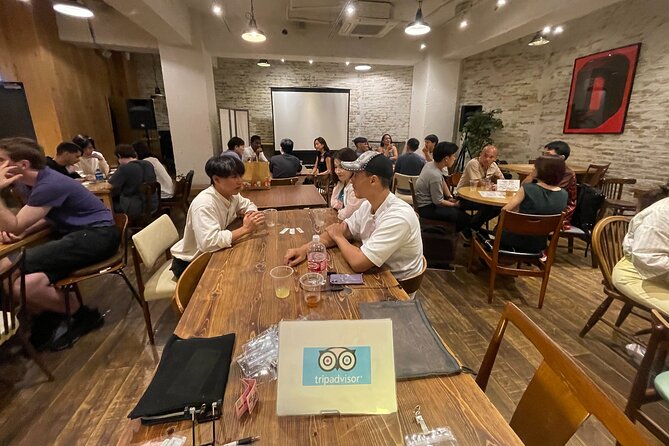
Tokyo can be intimidating when your Japanese is shaky. This kind of event is the antidote. Instead of drilling grammar, you spend your time doing what you actually want in Japan, talking to people and learning how conversations really flow.
I like that this is designed as a relaxed setting you can enter even if you cannot speak much Japanese. The staff provides structure, including prepared seats and topic cards, so you are not left staring at a blank mind. You also get an English-Japanese mix, which means you can contribute in your stronger language while still pushing your Japanese little by little.
The biggest win for me is the value angle. For a set price, you get organized small-group practice, staff facilitation, and a drink included. When you compare that to paying for a private lesson or even just grabbing drinks while hoping to meet people, the deal is strong. The only real drawback is time. Two hours passes quickly, so your best results come from being ready to talk early, not warming up late.
You can also read our reviews of more tours and experiences in Tokyo.



Jinnan Cafe logistics: where to order, where to check in
This event happens at Jinnan Cafe, which is a good choice for a language exchange because it feels like a place you can settle into rather than a formal venue. The practical rhythm matters, so here is what to expect.
First, you order your drink on the 1st floor. You can choose from a soft drink or alcohol since one of those is included. If you know you want a non-alcohol option, plan for that when you arrive, so you can focus on conversation instead of figuring it out mid-event.
Then you head to check in at the B1 floor reception. That is where staff handle the smooth part for you, preparing your seat and your topic card. Getting checked in this way reduces the awkward shuffle of finding your group in the middle of the evening.
Because the event starts at 7:30 PM, I suggest arriving a little early. You do not want to be rushing drink orders and check-in while everyone else has already started chatting. Also note that the event is near public transportation, which helps in a city where “just walk there” is not always the best plan.
Your 2-hour itinerary: a conversation circuit you can actually follow
There is one main stop, Jinnan Cafe, but the time is organized like a mini conversation tour. Think of it as a structured hangout where staff guide the flow and you rotate partners.
Here is the sequence in plain terms:
- You order your included drink on the 1st floor.
- You check in on the B1 floor, get seated, and receive your topic card.
- You start talking with your group. Staff keep groups small, around 3 to 4 people, with a mix of Japanese and foreign participants.
- The event includes a scheduled moment for English conversation that runs for 15 minutes. That segment is useful if you want to reduce friction and keep momentum.
- Staff change seats so you can speak with more than one person. The goal is multiple speaking rounds, not a single awkward 2-person conversation that ends when you run out of ideas.
- After that, you have the option of continuing the conversation afterward, if you want to keep the new connections going.
What makes this itinerary work is that it keeps you from getting stuck. If your Japanese stalls, topic cards and the scheduled English time act like a reset button. And the seat rotation means you get several different conversational styles in one evening.
The main drawback is that there is no mention of snacks being included. So if you get hungry, you will want to plan something before you come or grab a bite separately on the way. Two hours plus an included drink can still leave you feeling peckish, especially if you arrive later.
Small mixed groups: how the speaking gets easier fast
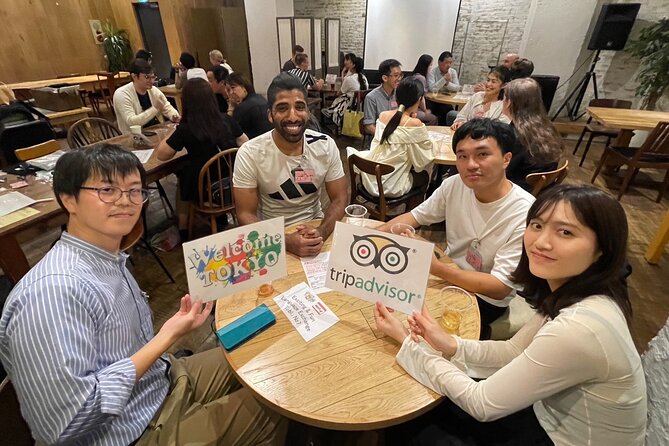
If you have tried language exchanges before, you may know the problem. You show up, you meet one person, you talk politely for 10 minutes, then the conversation dies. This event avoids that by using small groups and changing seats during the night.
You are placed into groups of about 3 to 4. Having multiple people helps because you can jump in when you have something to add, and you are not stuck carrying every moment of the dialogue. The mix of Japanese and foreign participants also matters. You get to practice in a way that feels balanced, not like you are the only one working.
Another smart detail is seat rotation. Staff change seats so you can meet more than one partner and practice more than once. That is a big deal for spoken language practice because you get repetitions of real topics, not just one conversation that might not match your interests.
The topic cards are the secret sauce for beginners and intermediate speakers alike. They reduce the fear of starting. Instead of thinking, what do I say?, you can think, which of these prompts fits my real life? Even if your grammar is imperfect, you still get traction, and traction is what helps you improve.
English and Japanese balance: using English without quitting Japanese
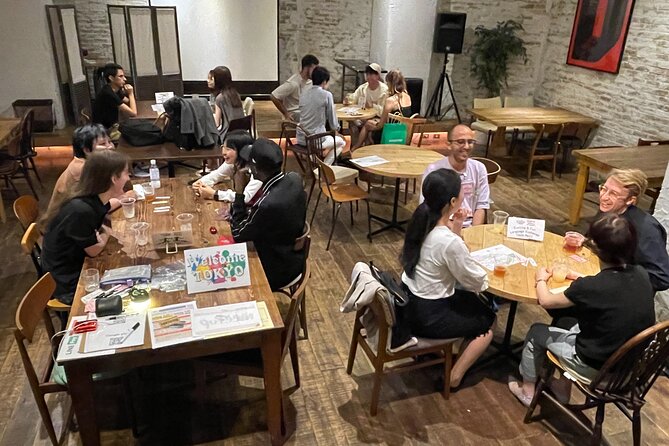
There is a scheduled 15-minute English conversation component. That detail might sound minor, but it changes the whole experience.
If you are studying Japanese, a little English support can keep you engaged when you hit a word you cannot recall. It also lets you learn how Japanese speakers explain things when they are thinking clearly, not when they are trying to translate perfectly. You can ask quick questions, compare phrasing, and then switch back to Japanese with a bit more confidence.
If your Japanese is stronger, that English segment still helps because it gives you a chance to role-play being the teacher, even lightly. You are not trapped in only your comfort zone, but you are also not set up to fail.
The key is to use the English moment as a bridge, not a detour. Try to listen for patterns you can reuse later, even if you answer in mixed sentences. With topic cards and seat rotation in play, you will get multiple chances to try again.



The included drink: more than a perk
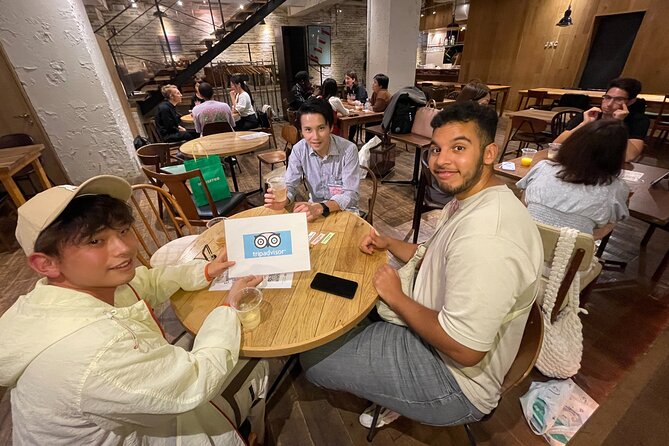
The event includes one beverage, either a soft drink or alcohol. It is not just there for fun. It helps conversation stay natural.
A drink lowers the emotional volume. It makes it easier to laugh at awkward phrasing, and it gives you something to do with your hands besides clutch your phone. It also helps break the ice when people are meeting for the first time in a new language.
One practical note: since snacks are not included, the drink can feel like the only immediate reward. If you are the type who eats earlier and then forgets to snack, you will likely be fine. If you tend to get hungry in the evening, plan for it before you go.
Who this Shibuya language exchange is best for
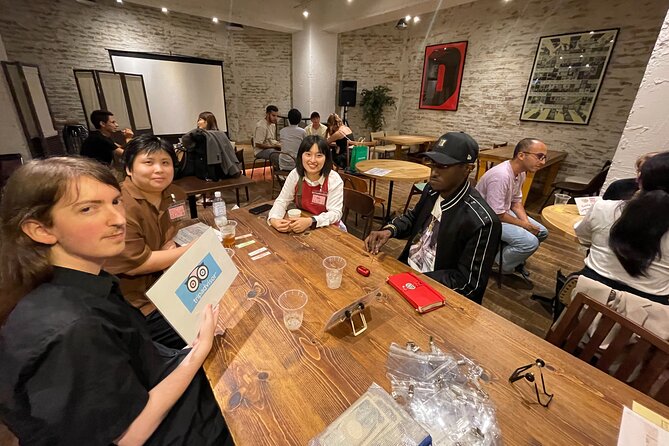
This is a strong fit if you want practical speaking practice in Tokyo and you do not want the pressure of a formal class. It is also a solid choice for solo visitors.
If you are traveling alone, you will not have to invent an excuse to join a group. The staff handles small-group setup, and the event structure pushes you to meet multiple people during the night. That is especially useful when you are new to Shibuya and want a reason to talk instead of just navigating transit.
If you are curious about Japanese language schools, this format can serve as a gentle trial. You get a sense of how locals converse, how topics get discussed, and what kinds of situations you want more practice for later. It is not the same as structured coursework, but it does give you real feedback on what you can do right now.
If you are advanced, you might find the topic cards mildly repetitive. Still, the seat rotation and the English-Japanese balancing can be a good way to refine how you explain your ideas in simpler language.
Price and value: $53 for a facilitated night of speaking
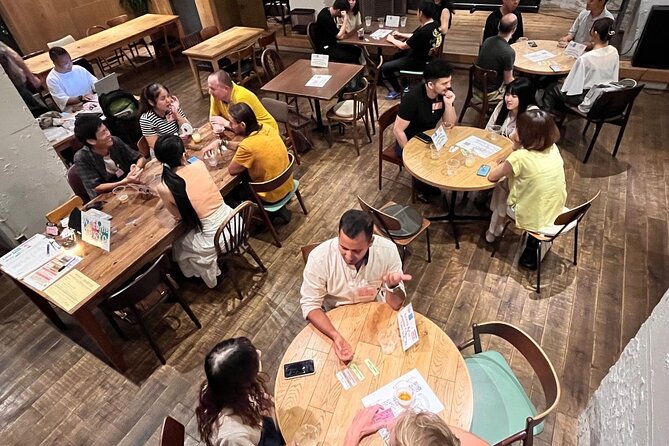
At $53 per person, you are paying for more than access. You are paying for facilitation, group management, topic cards, and the included drink.
Here is why that matters. Free meetups can be unpredictable, and you might leave having talked to one person for a few minutes. Paid language school sessions are often longer, but they can feel like homework if you are nervous. This sits in a useful middle space: guided conversation with just enough structure to keep it moving.
Also consider the scale. The event caps at 20 travelers, which helps keep the experience personal enough for actual conversation. With a smaller group, the staff can handle seating rotations and topic changes without the chaos you sometimes see in bigger events.
If you are on a budget, this is one of those payments that feels fair because you know what you are getting: a two-hour speaking event with drink included. If you are expecting a restaurant night, it is probably too short and snack-less. If you want language practice and local tips, it hits the target.
Tips to get the most out of your conversation rounds
You do not need perfect Japanese to participate, but you do need a few habits to make the night feel easy.
- Arrive ready to talk right away. Your first conversation round sets the tone.
- Treat topic cards like training wheels. Use them even if your brain feels blank.
- Pay attention during the 15-minute English segment and then try a Japanese answer in the next round.
- When staff rotate seats, do not just switch partners, switch energy. Ask a question that is actually about the person you are speaking with.
- Since snacks are not included, eat beforehand or plan a quick post-event bite nearby.
One more small idea: keep your goal simple. Instead of trying to speak perfectly, aim to say one or two things clearly each round. That mindset makes the practice build up instead of disappearing after one mistake.
Is this worth booking for your Tokyo plan?
If your Tokyo trip includes at least one moment where you want to speak Japanese with real people, this is a good bet. It is relaxed, it is structured, and it gives you multiple speaking chances in a single evening thanks to topic cards and seat rotation. The included drink also makes it easier to settle in and stay social without forcing it.
Skip it if you want a long, in-depth cultural program or if you are looking for a food-focused outing. This is not a sightseeing tour, and you should not plan around snacks being provided.
My practical recommendation: book this when you have one free evening in Shibuya or nearby, and do it early enough that it fits your schedule. On average, people book about six days ahead, which suggests it can fill up when dates align with travel plans.
If you want an easy way to get talking in Tokyo, this kind of Japanese English language exchange delivers. It turns practicing into meeting, and meeting into confidence.
FAQ
What is the duration of the experience?
It runs for about 2 hours.
Where does the experience take place?
The event stop is at Jinnan Cafe in Tokyo.
What day and time does it run?
It runs on Tuesdays from 7:30 PM to 9:30 PM.
How much does it cost?
The price is $53.00 per person.
Is a drink included?
Yes. One soft drink or alcohol is included.
Are snacks included?
No, snacks are not included.
Do I need to speak Japanese to join?
No. You can join even if you cannot speak Japanese, and staff prepare topic cards to help you chat.
How are participants grouped?
Staff split attendees into small groups of about 3 to 4 people, with a mix of Japanese and foreign participants.
Is there an English portion during the event?
Yes. There is a schedule of 15 minutes of English conversation.
What is the cancellation policy?
You can cancel for a full refund if you cancel up to 24 hours in advance of the experience start time. If you cancel less than 24 hours before, you will not be refunded.
More Tour Reviews in Tokyo
Not for you? Here's more nearby things to do in Tokyo we have reviewed












Shibuya Tours, side by side.
 ★ 5.0Official Street Go-Kart in ShibuyaFrom $763,435 reviews
 ★ 4.9Street Kart Experience in ShibuyaFrom $741,484 reviews
 ★ 5.0Shibuya Meltdown Nightlife Tour: All-You-Can-Drink Bar HoppingFrom $1061,058 reviews
 ★ 5.0Shibuya Official Street Go-Kart in Shibuya AnnexFrom $69972 reviews
 ★ 5.0Shibuya Food Tour (13 dishes and 4 Eateries)From $77770 reviews
 ★ 5.0Best of Shibuya Food TourFrom $217612 reviews
 ★ 4.8Shibuya Highlights Walking TourFrom $19601 reviews
 ★ 4.7Premium Go-Kart Tour with Tower & Shibuya CrossingFrom $116528 reviews
This tour also belongs to