
Review · TOKYO CITY TOURS
Go Karting Tokyo Bay Experience | 9 Top Destinations in 120 Mins
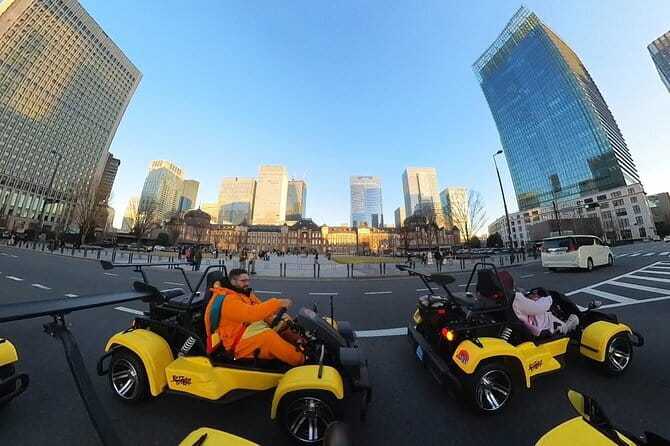
Tokyo’s streets feel different from a go-kart. In about 1 hour 40 minutes, you roll past major landmarks with a guide, plus 360-degree photo and video. It’s one of the few ways to see a lot without spending your whole day in transit.
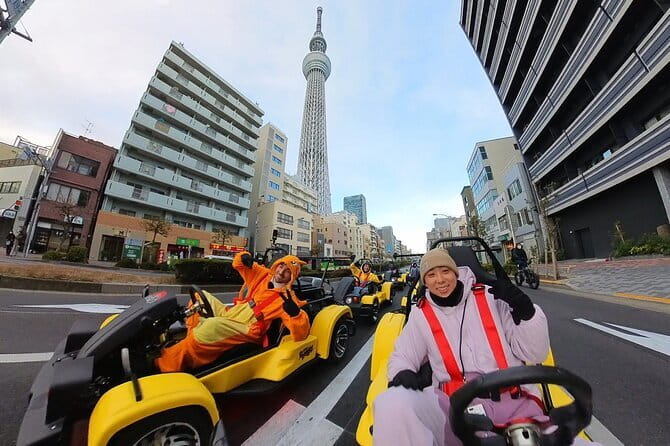
I love the small-group size (max 10), because it makes the ride feel organized instead of chaotic. I also like that you get more than driving, you get cultural context and practical recommendations as you pass places like Tokyo Skytree, Akihabara, and Asakusa.
One thing to plan for is the driving-license requirement. If you cannot show your original local license and the International Driving Permit (1949 Geneva Convention), your tour can be canceled with no refund.
Key things to know before you ride
- You cover a lot fast: 9 destinations in roughly 120 minutes is the main appeal.
- 360-degree photo and video included: you’re not stuck taking every picture yourself.
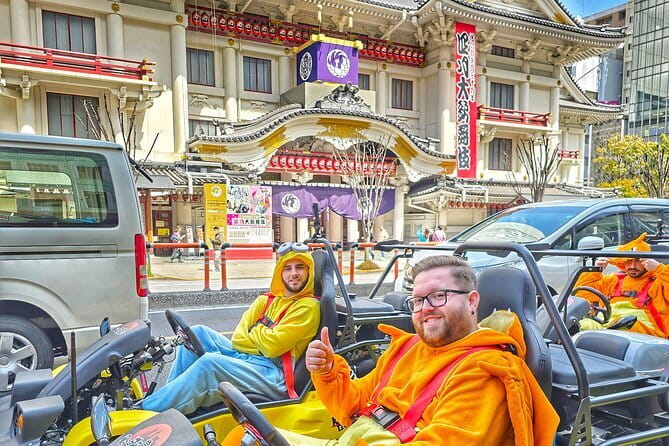
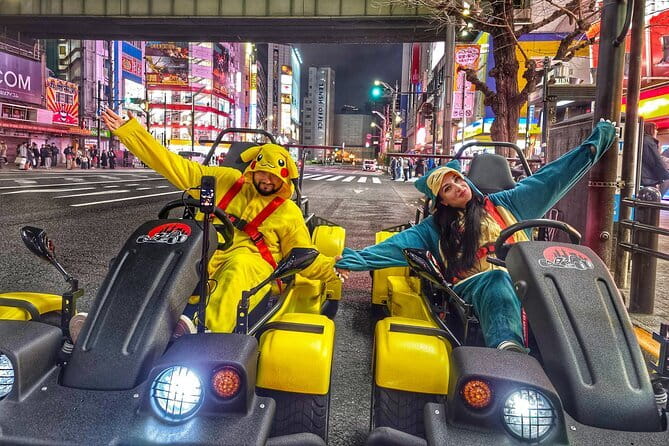
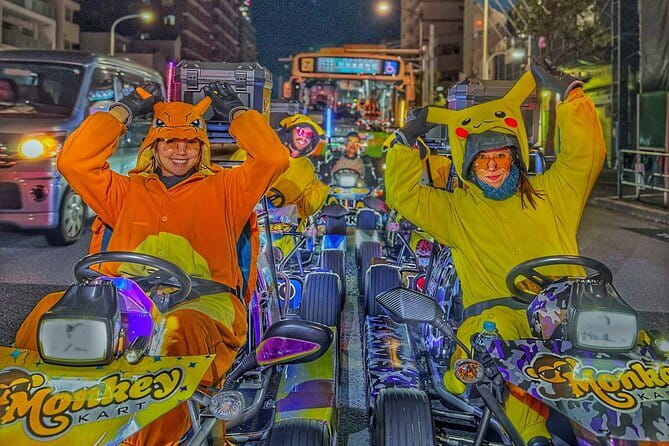
- A novelty costume is part of the fun: you’ll suit up before you start driving.
- Guides add context: you’ll get history and architecture pointers while you move through neighborhoods.
- Safety-first mindset matters: past riders specifically praised feeling safe.
- Weather can affect the schedule: it requires good weather to run.
How a 120-minute go-kart route fits 9 Tokyo landmarks
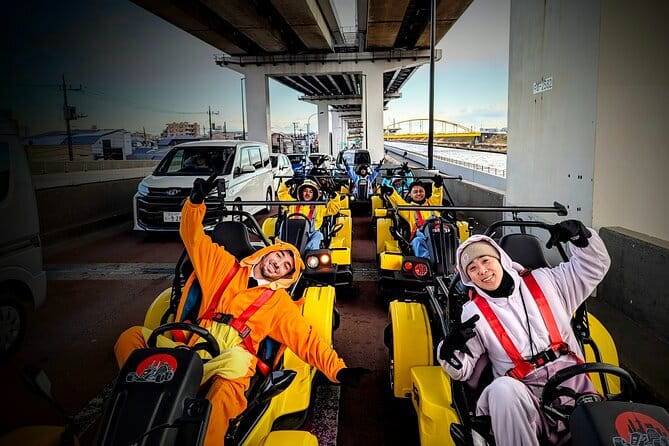
The big value here is time. Tokyo can eat your day with walking, crossings, and trains. On a go-kart, you move through areas that would take you much longer to reach on foot, and you still get stops and storytelling along the way.
In two hours plus, you’ll hit a mix of Tokyo icons and specific districts, from Tokyo Skytree in Sumida City to Akihabara and the Imperial Palace area. The goal is not museum-level detail. It’s more like getting a fast, guided orientation to what makes each neighborhood tick, then seeing it through the unique perspective of driving.
The rhythm usually feels like: short briefing, gear up, then a steady flow of neighborhoods with the guide pointing out what you’re seeing. Since photos and videos are included, you can relax your phone grip and focus on the ride.
You can also read our reviews of more tours and experiences in Tokyo.
Where you start at Higashiyotsugi and what to expect after
Your tour starts and ends at the same place, at 124-0014 Tokyo, Katsushika City, Higashiyotsugi 1-chōme 20-2 (the listed meeting point is at 小島貸事務所). That round-trip setup is helpful. You don’t need to figure out another station afterward, and you can plan dinner near your start point if you want.
The meeting point is noted as being near public transportation, which matters if you’re coming by train or taxi. Also, you’ll use a mobile ticket, so have it ready on your phone before you arrive.
One practical tip: build in a little buffer time to get there calmly. Japan’s transit is excellent, but go-karting tours move quickly once everyone is ready.
Gear up: costume, kart rental, insurance, and fuel
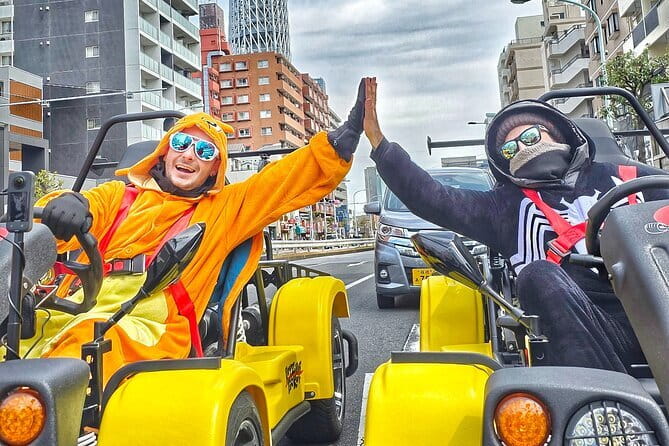
This experience is set up to be self-contained. You don’t just rent a kart and fend for yourself. The included package lists go-kart rental, tour guide, costume, fuel, insurance, and photo and video.
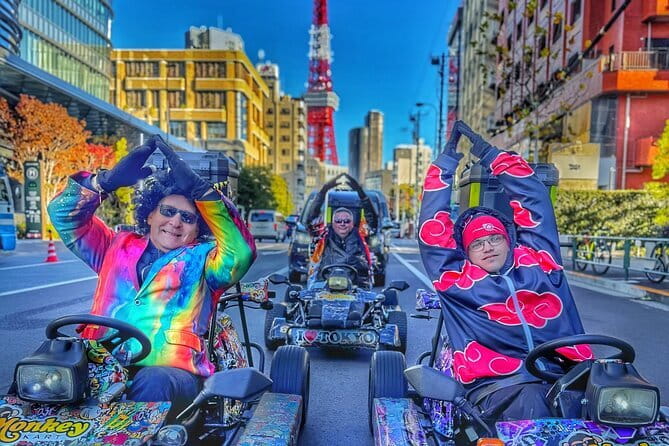
The costume part is a real morale boost, especially if you’re with teens or friends who want something goofy to remember. It’s also a useful social equalizer. Everyone looks like they’re in the same movie scene, not a bunch of separate individuals trying to take selfies.
Because insurance is included, you can focus on enjoying the ride instead of doing mental math about coverage. Still, follow the guide’s instructions closely. Go-karting in a busy city works only if everyone plays by the rules.
Not included is a data card for the camera (if you buy one), and food, so eat beforehand. The tour is long enough to work up an appetite, but there is no meal built into the price.
Driving in Tokyo: licenses and the one rule that can cancel your trip
Japan has strict requirements for foreign drivers. This tour specifically notes that:
- For US Forces in Japan (SOFA), a SOFA driving license is required.
- For everyone else, you need a local driving license plus an International Driving Permit (IDP) issued under the 1949 Geneva Convention.
- You also need your passport.
- If you fail to provide the original license and IDP, the tour can be canceled and no refund is offered.
There are also specific rules for nationals of Switzerland, Germany, France, Belgium, Monaco, and Taiwan. They can drive if there is a Japanese translation of the driving license available, and you’re asked to contact the provider about a month in advance for assistance.
So here’s the simple way to handle this: double-check your license situation before you book, and bring the originals on the day. Printouts or photos won’t help if the requirement says originals.
Safety-wise, two separate reviews strongly praised the experience of feeling safe and having a guide who explained things clearly. That lines up with what you want from a city go-kart operator: calm, rules-first guidance, not bravado.
Tokyo Skytree and Sumida-area views: iconic skyline energy
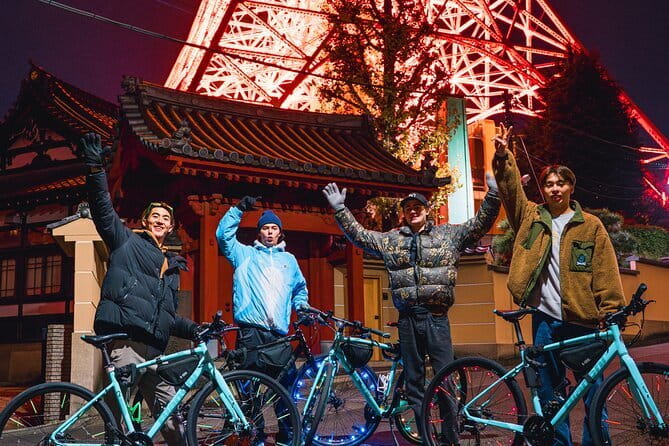
One stop is Tokyo Skytree, described as the world’s tallest broadcasting and communication tower and the third tallest structure. Even if you’ve seen Skytree from postcards before, the scale hits different when you’re in the neighborhood where it towers over the skyline.
The practical value of having Skytree on the route is that you get that dramatic “you’re really in Tokyo” moment without hunting for it on your own. Also, being on wheels changes how you notice the city. You tend to see the tower in changing angles as you move, rather than just one static viewpoint.
What to watch for: in a short, guided session, you probably won’t have the time to treat Skytree like a full sightseeing day. If you want Skytree at the top, plan that separately. This tour is best for street-level context and motion-based sightseeing.
Ryogoku and the sumo connection, plus the Tokyo Sword Museum stop
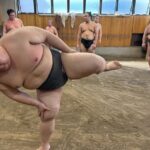
In the Ryogoku area, the route highlights the sumo stadium theme. Ryogoku is where sumo’s modern home energy shows up, and placing it on a go-kart route makes sense. You get a fast cultural snapshot as you move through a district linked to one of Japan’s most recognizable traditions.
Another stop is the Tokyo Sword Museum. The tour description emphasizes that Japanese swords are not only weapons but also symbols of authority, works of art, and objects of worship. That framing helps you understand why swords are treated with care and respect in Japanese culture.
Here’s why these stops work well for this type of tour: the guide can give you meaningful context in a short time, so you don’t just pass by with a blank stare. A quick explanation can turn a “cool building name” into something that sticks.
If you love Japanese culture beyond typical photo stops, this kind of add-on matters. It’s one reason this tour feels more intentional than a random circuit.
Tokyo Station and Marunouchi: architecture you can feel at street level
The tour passes Tokyo Station and the Marunouchi district. Tokyo Station is framed as an architectural symbol with early 20th-century roots. You’re basically getting a guided introduction to one of the city’s most recognizable transit landmarks, and you’re seeing it at the human scale of the street.
Driving through Marunouchi also helps you understand Tokyo’s layout. This is where polished corporate Tokyo meets major rail power. Even if you’re not headed anywhere, you’ll leave with a better mental map of how the city organizes itself.
The only caution: Tokyo Station is a busy area. The guide’s pacing and route planning are important, and the small-group limit (max 10) helps keep things manageable.
Akihabara, Ueno Park, and Asakusa: different types of Tokyo in one ride
This tour stitches together several neighborhoods that feel very different from each other, and that’s a big part of the fun.
Akihabara: tech, anime, and Meiji-era roots
The route includes Akihabara, described as the heart of Japan’s electronic and pop culture, known as the Otaku Capital of the world, with history dating back to the Meiji period. Even if you’re not shopping for electronics or anime goods, Akihabara has a strong visual identity.
On a go-kart, you experience the density without standing in it for hours. You get the vibe, then you can decide later if you want to return and browse on foot.
Ueno Park: from Tokugawa-era beginnings to modern art
The tour includes Ueno Park, with notes that it gained prominence after the Tokugawa Shogunate in Edo in 1603. It began with Buddhist temples and townsfolk, then grew into a hub for modern Japanese art and culture during the Meiji period.
Also, the itinerary lists admission ticket free for Ueno Park. That’s helpful if you want to extend your visit on your own after the tour ends.
Asakusa: old Tokyo charm, low-city character
Asakusa is framed as having origins dating back about 1400 years to the Asuka period. The tour description calls it the authentic charm of Tokyo’s shitamachi or low city.
Asakusa is one of those districts where the details matter, so the quick guided pass is like a teaser. If you want slow walking time, add it later. But if you want to cover a lot in a single afternoon, this format gives you a starter pack of Tokyo’s older identity.
Imperial Palace area: the emperor’s residence, and the planning behind it
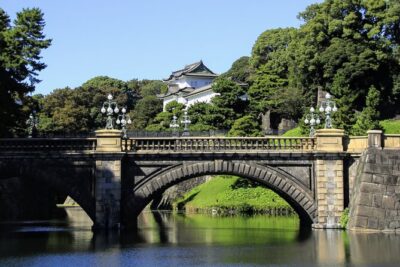
The itinerary includes the Tokyo Imperial Palace area, described as the residence of the Japanese Emperor and Empress. It notes construction in 1457 by Ota Dokan within the Edo Castle grounds.
Even from a moving vehicle perspective, this kind of stop can change how you understand Tokyo. You see that Tokyo isn’t only modern towers and shopping streets. There’s also the long, planned presence of power and governance in the city’s layout.
In a shorter tour, this is the kind of stop where you benefit most from the guide’s narration. It turns a big landmark name into a timeline you can recall later.
Who this Tokyo go-kart experience is best for
This is a strong fit if you want a mix of motion and context. You like the idea of seeing multiple areas in a single block of time, and you’re happy to treat each stop as a guided highlight rather than a deep, slow museum day.
It also suits:
- Friends and couples who want a shared activity, not just another walking tour
- Families with teens who can handle the driving-license rules and want something energetic
- First-time visitors who need a quick orientation to major districts like Akihabara, Asakusa, and Tokyo Station
It may be less ideal if:
- You want long photo time at each landmark
- You are short on time for IDP and license requirements
- You prefer fully independent sightseeing, with no guidance or pacing
One more note from the ride vibe: reviewers praised a guide named Travis for making the group feel safe and for sharing interesting details. That kind of “clear, calm guidance” is what you should look for in a go-kart tour, and it sounds like this one delivers.
Price and value: what $117.27 covers in real terms
At $117.27 per person, you’re paying for more than the kart. The included list covers kart rental, tour guide, costume, fuel, insurance, and photo and video.
That matters because the hidden costs in DIY go-karting often add up fast. Here, the price is basically packaged. You show up with the right driving paperwork, and the main expense categories are already included.
Is it cheap? No. But for a structured, guided, photo-supported 1 hour 40 minute experience that hits multiple major Tokyo landmarks, the value comes from what you get per hour: movement, context, and included media rather than constant stop-start planning.
If you’re trying to squeeze the most memorable activity into limited days, this is the type of booking that can justify the spend.
Should you book this Tokyo go-karting experience?
I’d book it if you want an active way to see Tokyo without sacrificing the story behind the sights. The combination of 360-degree photo and video, a novelty costume, and a guide who explains what you’re passing is exactly the kind of effort-saving setup that makes a day feel richer, not busier.
I’d think twice if you’re not confident about the driving-license and IDP rules, or if the idea of good-weather dependence would put stress on your schedule. Since it ends back where it starts, plan your day around that fixed timing.
If you’re ready for a short, guided hit of Tokyo’s top districts from the driver seat, this one is a practical, fun choice.
FAQ
How long is the go-karting experience?
It’s listed at about 1 hour 40 minutes.
Where does the tour start and end?
The tour starts at 124-0014 Tokyo, Katsushika City, Higashiyotsugi, 1-chōme 20-2 (小島貸事務所) and ends back at the same meeting point.
What is included in the price?
The tour includes go-kart rental, tour guide, costume, fuel, insurance, and photo and video.
What is not included?
Not included are pickup and dropoff, a data card for the camera (available for purchase), and food.
Do I need a mobile ticket?
Yes, the experience uses a mobile ticket.
What driving documents are required?
A local driving license and an International Driving Permit issued under the 1949 Geneva Convention are required, plus your passport. US Forces in Japan with SOFA require a SOFA driving license.
What happens if I bring the wrong documents?
The information provided says failure to provide the original local driving license and International Driving Permit will result in cancellation and there will be no refund.
How many people are in the group?
The tour lists a maximum of 10 travelers.
Is the tour weather dependent?
Yes. It requires good weather, and if canceled due to poor weather, you’ll be offered a different date or a full refund.
More Tour Reviews in Tokyo
Not for you? Here's more nearby things to do in Tokyo we have reviewed


Tokyo City Tours, side by side.
 ★ 5.01-Day Tokyo Bus TourFrom $12914,250 reviews
 ★ 4.5TOKYO SKYTREE® Admission ticketFrom $1311,192 reviews
 ★ 4.6teamLab Planets TOKYO Digital Art Museum Entry TicketFrom $259,779 reviews
 ★ 4.0Mt Fuji & Hakone Cruise, Drum Show Bullet Train 1 Day from TokyoFrom $1497,413 reviews
 ★ 5.0Shinjuku Food Tour (13 Dishes at 4 Local Eateries)From $866,603 reviews
 ★ 4.4Tokyo Mt Fuji 5th St & Hakone Cruise Bus Tour w/Bullet TrainFrom $1545,024 reviews
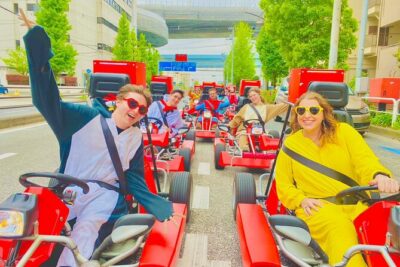 ★ 5.0Flagship 2-Hours Official Street Go-Kart Tour – Tokyo Bay ShopFrom $644,974 reviews
 ★ 4.5From Tokyo: Mount Fuji Full-Day Sightseeing TripFrom $684,970 reviews
This tour also belongs to