
Review · TOKYO
IKEBANA experience
Turn flowers into calm.
That is the simple magic of this Ikebana class, taught gently in English by Hiromi in her own home. You get a real sense of Japanese domestic life too, with Japanese-style rooms, and a lesson that starts with basics and then bends toward what you want to create.
Two things I really like: the instruction is hands-on from the start, and you are not stuck doing one rigid step forever. You watch Hiromi make a sample using a textbook, then you make your own arrangement and get edits until it looks right. The other big win is the finish, with matcha and Japanese sweets (and sometimes a quick look at basic tea ceremony steps if you want).
One consideration before you book: the experience depends on good weather, and it is also a short, 1 hour 30 minute session. So it is great for beginners and travelers with limited time, but it will not replace a full day culture plan.
Key things to know before you go
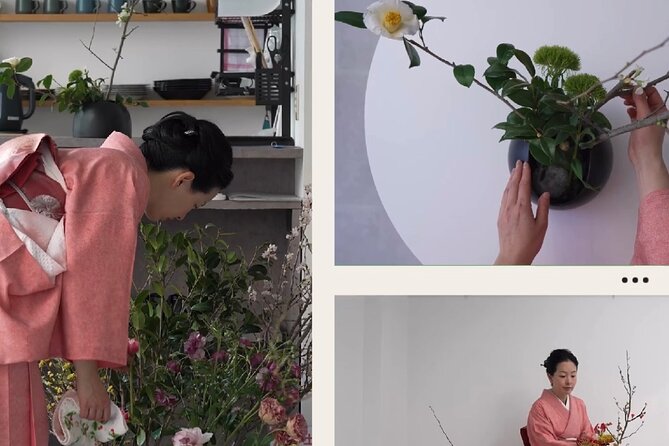
- Hiromi teaches in English, with patient coaching while you work from a textbook
- Private class in a home setting, so you see Japanese-style rooms and studio space up close
- You create your own arrangement, with feedback and a photo at the end
- Matcha and wagashi-style sweets are offered if you have time after the lesson
- Optional basic tea ceremony guidance if you are interested
- Start and finish back at the same meeting point, near Toritsu-daigaku Station
Why this Ikebana class feels different in Tokyo
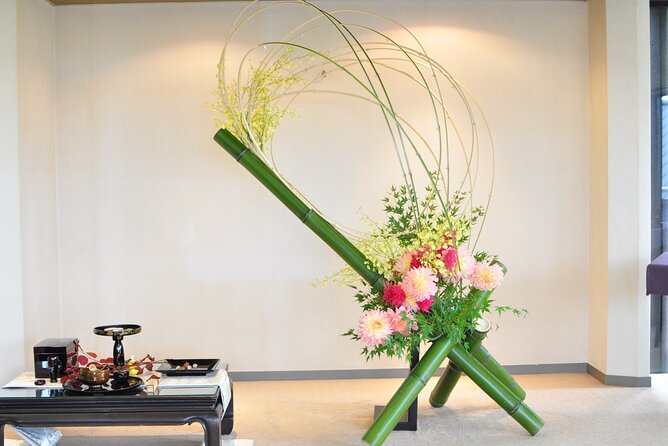
Tokyo has plenty of flower displays, but this is not a photo-only stop. This is a slow, focused way to understand Japanese aesthetics through hands-on practice. Ikebana is about line, balance, and attention to the space around the flowers, not about packing in the biggest bouquet.
The format matters. You begin with a sample arrangement and then move straight into making your own. That means you are not just collecting facts. You are learning what to do with your hands, and why it works.
Also, doing this inside a Japanese home changes the tone. You get to see Japanese-style rooms, and the lesson feels connected to everyday life, not staged for tourists. If you like cultural activities that feel personal and quiet, this one fits.
You can also read our reviews of more tours and experiences in Tokyo.



Meeting Hiromi and stepping into a Japanese home studio
Your class meets at Toritsu-daigaku Station. The meeting point is listed specifically at 1-chōme-5-1 Nakane, Meguro City, Tokyo 152-0031. The activity ends back at the same meeting point, so you are not left guessing where to wander next.
This is a private tour/activity, meaning it is only your group. That matters more than people think. In a small group, you can ask questions without feeling rushed. And because you are working with something as hands-on as arranging flowers, private time helps you get clearer feedback fast.
Expect a calm setup. The reviews point to a welcoming home atmosphere, including quiet traditional space and even tatami-style seating during the food and tea part. If you are traveling with kids, partners, or multiple generations, this kind of pace is usually easier than a strict workshop where everyone must move on at the same time.
The 90 minutes: what you will actually do
The lesson is about 1 hour 30 minutes, and the flow is simple.
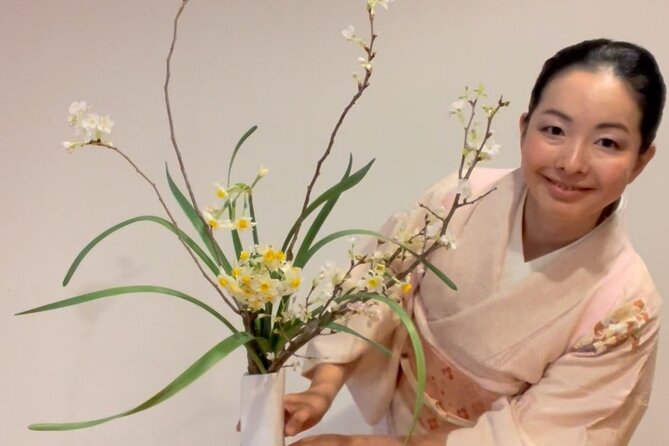
First, Hiromi makes a sample arrangement while looking at the textbook. This gives you a framework. You can see how the steps connect to the final result, and you get a preview of the style you are aiming for.
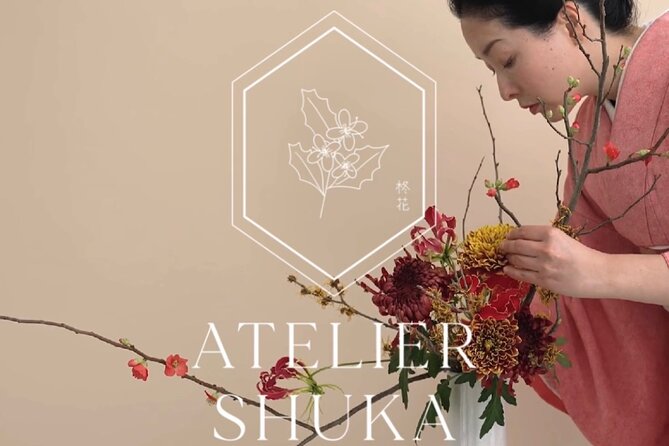
Next, each participant creates a living arrangement by themselves. You start from the same guide, but the goal is not robotic copying. Hiromi comments, revises, and helps you shape your arrangement. Think of it like coaching with your hands. She does not just watch silently.
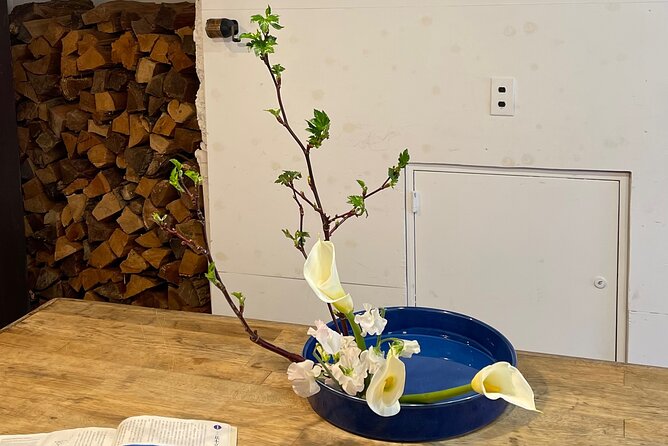
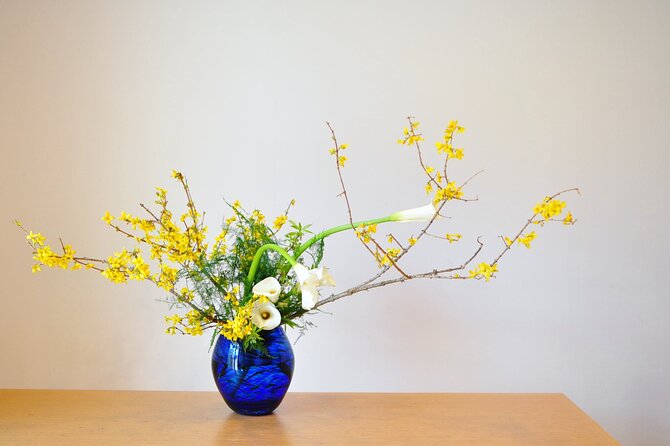
Then you take a photo. That small moment is worth it. You will have the proof of your own work, which helps if you want to practice again later at home.
Options inside the lesson
You can usually go in two directions:
- learn from the basics, step by step
- choose a style you want to work on using the textbook
Hiromi also offers a chance to connect Ikebana with Japanese tea culture. If you are interested in tea ceremony, she teaches you basic steps. The exact depth will depend on time, but the option is there if tea is on your Tokyo wishlist.
The matcha and sweets part is not an afterthought
Many classes end when you leave your flowers on the table. Here, there is a thoughtful bonus if you have time: Japanese sweets and matcha.
In the reviews, this food break is described as happening in a tatami room, which makes it feel like a continuation of the same theme. You just spent time working with shape, line, and restraint. Then you slow down again, with tea and a sweet that fits the season and the moment.
Practical tip: treat the matcha portion like part of the experience, not something to multitask. If you are the type who rushes to the next stop, you might miss the point.
And yes, this is also a nice recovery moment after sitting and concentrating. One of the best things about a class like this is that you get both creative output and a calmer mood shift.



English instruction plus real guidance for beginners
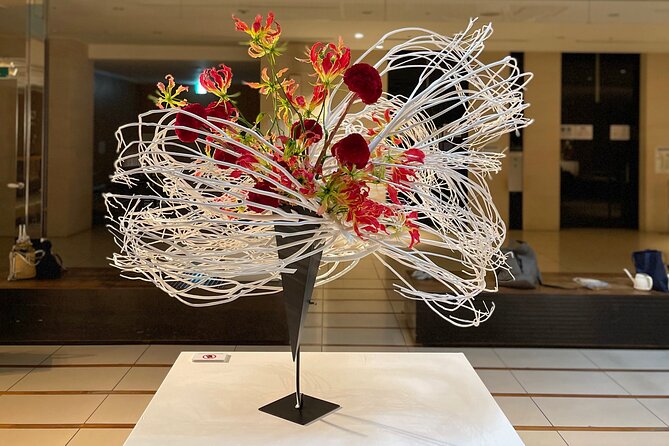
If you are worried about your Japanese level, this is one of the easier culture activities to tackle. Hiromi teaches in English, and the tone is described as careful and gentle.
The coaching style is also a big deal for first-timers. The lesson includes:
- an instructor sample you can follow
- hands-on making time
- corrections and revisions so the arrangement looks intentional
In other words, you do not have to guess if you are doing it right. If you want to ask what something means, you can. If you want advice for Tokyo too, that is part of the interaction.
One more beginner-friendly note: Ikebana can feel manageable because it often focuses on flower line and spacing, rather than filling up the whole container. Reviews mention that you do not need tons of flowers, which can make the class feel less chaotic and more elegant.
Value at $115.31: what you get for the money
The price is listed at $115.31 per person, booked on average about 28 days in advance, with a mobile ticket. Duration is about 1 hour 30 minutes.
Is it worth it? For me, value here is about what is included in a private setting:
- a private class, not a crowded group session
- English instruction
- a textbook-based learning structure
- feedback and revisions while you build your arrangement
- a photo at the end
- optional basic tea ceremony guidance
- matcha and sweets if you have time after
The class also has a “Tokyo quality” to it that you do not get from a typical add-on workshop. It happens in a home, in Japanese-style rooms, and you leave with a piece of your own work, not just a memory.
One thing to keep in mind: you may want to ask about materials and any extra costs for bringing supplies home. One review specifically mentions being able to purchase supplies so you can continue practicing. That sounds like a good option if you want to keep the habit, but it is not something I would assume is included without checking.
Getting there: Toritsu-daigaku Station area logistics
The meeting point is near Toritsu-daigaku Station, which keeps this from becoming an all-day transit project. Tokyo neighborhoods can be tricky for first-timers, so having a station anchor helps.
The address detail is given, and the tour starts there and returns there. That is handy if you want to plan your schedule afterward, especially if you have dinner reservations.
If you are going on a hot day, bring water and plan for walking from the station. One review mentions an umbrella being used for sun, which hints that weather can matter for comfort on the walk to the home studio.
Who should book this Ikebana class
This works especially well if you are:
- a beginner who wants structure and reassurance
- traveling with a partner, since the private format feels calm and romantic in a quiet way
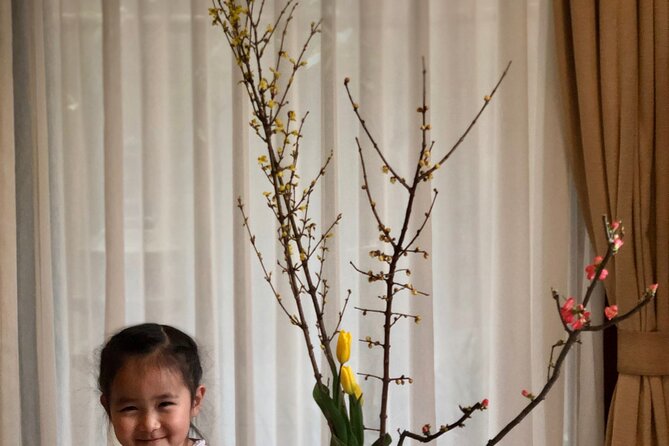
- bringing kids or multiple generations, because the pace and hands-on making can be flexible
- a traveler who prefers small, personal cultural time over bus-tour overload
- interested in Japanese tea culture, with the option to learn basic tea ceremony steps
If you are the type who loves learning by doing, this is a great use of 90 minutes. You will go from watching to creating, and that shift is the whole point.
When you might want to choose a different activity
A few situations where this might not be your best match:
- You hate sitting and working carefully. Ikebana is detail work.
- You want a long sightseeing day with lots of walking and landmarks. This is more of a studio experience.
- Weather matters to you. The experience requires good weather and can be rescheduled or refunded if canceled due to poor weather.
Also, because it is time-limited, it may not satisfy you if you want a deep, multi-session study of one specific school or style. But for a first taste, it is a strong entry point.
Should you book Hiromi’s IKEBANA experience?
Yes, if you want a Tokyo experience that is calm, hands-on, and culturally grounded, this is an excellent pick. I would book it if you value:
- a private class in English
- gentle guidance while you make your own arrangement
- a real connection to Japanese home life, with tatami and tea moments
- a chance to leave with a take-it-home mindset, including the possibility of buying supplies
Before you go, read your own travel style. If you want one short activity that leaves you relaxed and proud of something you made, this fits nicely. If you want nonstop sights, consider pairing it with something more energetic after.
FAQ
How long is the Ikebana experience?
It is approximately 1 hour 30 minutes.
Is this class private or shared with other people?
It is a private tour/activity. Only your group participates.
What language is the class taught in?
Hiromi teaches carefully and gently in English.
Is matcha and Japanese sweets included?
Japanese sweets and matcha are offered if you have time after the lesson.
Will we learn tea ceremony during the class?
If you are interested in tea ceremony, the instructor will teach you basic tea ceremony steps.
Where do we meet for the lesson?
The start point is Toritsu-daigaku Station, with the listed address at 1-chōme-5-1 Nakane, Meguro City, Tokyo 152-0031.
What happens if the weather is bad or the class can’t run?
The experience requires good weather. If canceled due to poor weather, you will be offered a different date or a full refund. It also requires a minimum number of travelers, so you may get a different date or a full refund if that minimum is not met.













