
Review · GO-KARTS
GINZA: Go Kart Experience with NEO GINZA
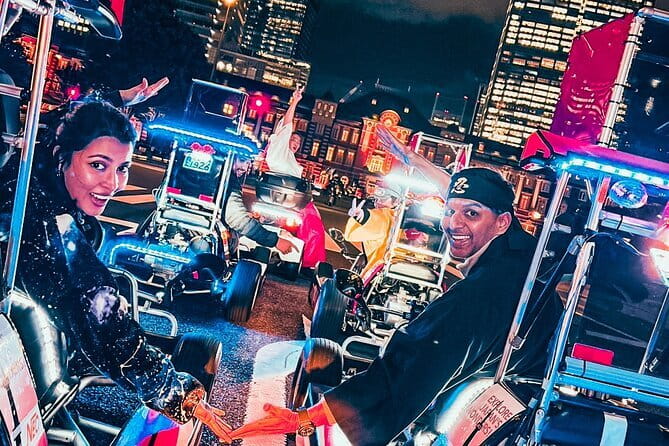
Dress up, then race Tokyo’s icons. In about an hour, NEO GINZA turns the Ginza area into a themed go-kart outing with costumes and guided photo moments that make the city feel less like sightseeing and more like play.
You’ll also like how the ride is supported by an English-speaking guide team, with photo stops at major landmarks like Zojo-ji Temple and Tokyo Tower. One thing to plan for: you must have the right driving documents for Japan, and you need a valid driver’s license plus an International Driving Permit (IDP) in the required format.
Key Things I’d Focus On Before You Book
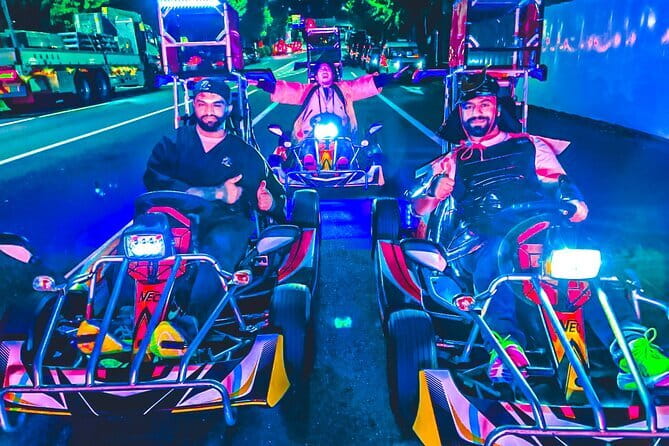
- Costume-first fun: pick an outfit before you hit the streets, so the photos look like a theme park and feel like Tokyo.
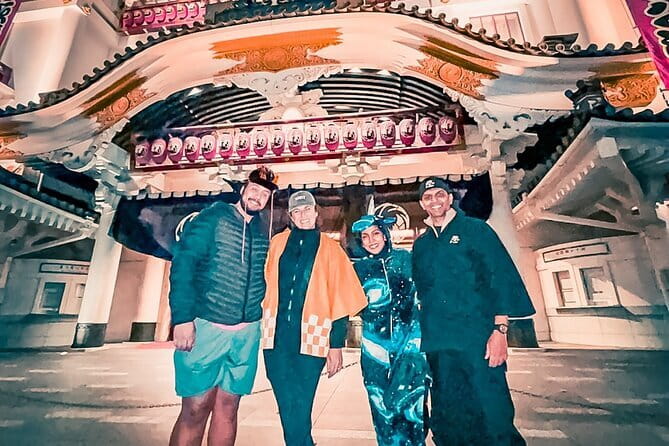
- Photo stops at real landmarks: Zojo-ji Temple, Tokyo Tower, Imperial Palace Outer Gardens, Tokyo Station, and Kabuki-za.
- Small group limits to 6: fewer people, more attention, and less waiting around.
- Two guides for smoother timing and safety: instructions, route guidance, and lots of hands-on help.
- Insurance and photo shooting included: the practical stuff is handled, not tacked on later.
Why Ginza by Go-Kart Feels Different Than a Bus Tour
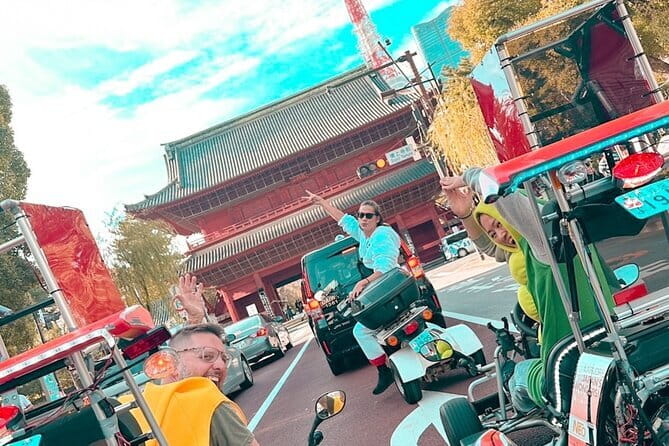
Ginza is the kind of place you can study for hours, but a bus tour tends to keep you passive. A go-kart flips the script. You’re not just looking at Tokyo, you’re moving through it at street level, which makes the landmarks hit harder and faster.
I like that this isn’t a random driving loop. The route is built around big, recognizable stops: Zojo-ji Temple, Tokyo Tower, Tokyo Station, and Kabuki-za. That matters because you can connect what you see with what you already know, then enjoy the surprise of how the streets and buildings frame those classics.
The pace also works. You get about 60 minutes in the kart, which is long enough to feel like you drove Tokyo, but short enough that you stay fresh and focused on the fun and the photos.
You can also read our reviews of more tours and experiences in Tokyo.



Costumes, Photos, and the Extra Fun Factor
The headline is the themed go-kart experience, and the costume part is what makes it memorable. You choose from an array of options, then you ride as your character around central Tokyo. It’s an easy way to turn a standard sightseeing day into something you’ll remember when you’re back home.
The photo service is another big value lever. A guide captures your moments during the stops, and you get photos at the end of the experience. That takes away the common Tokyo problem: trying to manage your phone, your kart, and your timing all at once.
One practical note: you’ll need to follow the no-cellphone rule while driving. That’s not a deal breaker, it’s actually helpful. It keeps your attention where it belongs, and it frees you from worrying about filming constantly.
Meeting at 新富町一丁目ビル, Then Getting Your Driver Setup Right
The meeting point is 新富町一丁目ビル. Plan to arrive a little early so you can handle check-in, get your costume, and go through the driver briefing without stress.
This activity is one of those Tokyo experiences that feels easy once you’re rolling, but it depends heavily on documents beforehand. The key requirement is that all participants who drive need special driving paperwork in Japan. For most countries, you’ll need an International Driving Permit (IDP) in the booklet format compliant with the 1949 Geneva Convention.
A few details worth taking seriously:
- An IDP must be issued by the same country that issued your domestic license. You can’t get it online while you’re already traveling.
- If your license is from Switzerland, Germany, France, Taiwan, Belgium, or Monaco, you need a Japanese translation from the Japan Automobile Federation (JAF), not an IDP.
- If your license is from a country not covered by the 1949 Geneva Convention (examples include China, Indonesia, Mexico, Qatar, Saudi Arabia), driving is not permitted.
Bring your physical IDP and a physical passport. Not screenshots. Not copies. Real documents.
Also keep the outfit rules in mind. High-heeled shoes are not allowed, slippers are not allowed, and alcohol or drugs are not allowed. If you’re planning what shoes to pack for Tokyo, choose something stable and comfortable for walking and quick changes.
Zojo-ji Temple Stop: Classic Tokyo Meets Street-Level Energy
The first landmark stop is Zojo-ji Temple. This is a strong start because it’s instantly recognizable as “real Tokyo,” not just modern skyline views.
What makes this stop work in a kart format is the timing and the photo opportunity. You’re not stuck standing in a crowd for long. You arrive, take guided photo moments, and then move on. That keeps the energy up and prevents the day from turning into a series of long waits.
Potential drawback: temple areas can have pedestrians and traffic patterns that require patience. The good news is you’ll have guides, and you’ll be told how to handle timing and safety around each stop.
If you like travel that connects atmosphere with landmarks, this is a smart opener. Zojo-ji gives you context, then Tokyo Tower gives you the scale.
Tokyo Tower Photo Stop: The Skyline Moment You’ll Actually Feel
Tokyo Tower is the stop most people picture when they think of this kind of outing, and it’s a central one here. Expect photo time, guided sightseeing, and scenic driving passes that let you take in how the area is laid out.
In a car, Tokyo Tower can feel distant and framed. On a kart route, you get closer. You feel the streets around it. You also get the sense of moving through the city in real time, which makes the Tower feel less like a postcard and more like part of your actual route.
This is also where the costume payoff shows up. When you’re dressed as a character and standing in front of Tokyo Tower, the photos end up looking like a themed street adventure, not a normal travel snapshot.
If you choose a night departure when available, you can get extra impact from the illuminated Tower view. The idea is simple: the city shifts mood, and the landmark becomes a light show.



Imperial Palace Outer Gardens: Big-Time Tokyo Without the Long Detours
Next up is the Imperial Palace Outer Gardens photo stop. This is a good choice for kart visitors because it gives you a major landmark contrast after the Tower. You go from a famous vertical silhouette to a more historic and formal area.
Again, the key is how it’s structured: guided tour moments, photo stops, and then a pass along the way. You’re not forced into a long walking circuit. You get the essentials and the photos, then you keep driving.
One consideration: if you expect a deep walking tour at each site, this experience is not that. It’s a go-kart experience built around short, well-timed stops. If you want to read every stone and see every corner, you’ll likely do best pairing this with separate visits later. For many people, though, the quick-hit approach is exactly what makes the hour feel worth it.
Tokyo Station and Kabuki-za: Two Icons, One Practical Route
Tokyo Station is one of those places you can’t miss once you know it’s there. In this kart experience, it works as a photo stop and scenic pass, giving you a strong “I’m really in Tokyo” anchor without turning your day into a detour.
Kabuki-za is another headline stop. It adds cultural flavor and a distinct look to your photo set. With a character costume and a guide capturing your shots, these stops feel like a mini production, not just travel documentation.
Timing matters here. The route is designed so you see each landmark in a sequence that keeps your energy and attention steady. You’re constantly moving, then you pause, snap photos, and continue.
A small caution: these are busy central areas. You’ll want to listen closely to the guide instructions and keep your focus during the passes. The experience is designed to be fun, but street safety always comes first.
Safety, Pace, and the Small-Group Setup (Up to 6)
This is a small-group experience limited to 6 participants. For a go-kart activity, that’s a big deal. It means you’re less likely to get stuck waiting for the group ahead of you, and you’re more likely to get clear guidance.
You also have two guides. That shows up in how the ride runs. One of the benefits of a guide team is smoother coordination: briefing before you roll, help during photo stops, and support so everyone stays on track.
From the overall vibe, it’s clear that safety and organization are priorities. People describe feeling safe and guided, and the structure makes sense: you get instructions, you drive at a controlled pace relative to a group, and you have staff to keep things running smoothly.
You’ll also want to plan around the driving basics. The activity explicitly requires an International Driving Permit (for most countries), and that alone filters the experience to people who are ready to follow rules. If you don’t have a driver’s license or you’re under 18, this isn’t suitable.
Price and Value: What $64 Buys in One Hour
The price is $64 per person. On its face, that might sound like a lot for one hour. But here’s why it can feel like good value.
You’re paying for:
- 60 minutes of go-kart driving
- a costume
- insurance coverage
- English-speaking staff plus Japanese-speaking staff
- a photo shooting service at stops
Most city sightseeing costs you in one of two ways: either you pay for transportation and still spend hours passive, or you pay for photos and end up doing the work yourself. Here, the photos are handled, the driving is handled, and you’re guided through a route that includes multiple landmark stops.
Also, the route targets iconic sites in one go. Instead of doing separate tickets for each “must-see,” you’re getting a high-energy loop that bundles your main-photo moments into one session.
If you’re counting only driving time, the math looks short. If you include the full package of costume, guidance, insurance, and photos, it starts looking like a smart use of your Tokyo time.
Who This Ginza Kart Experience Suits Best
This works especially well if:
- you want a fun way to see central Tokyo without sitting on a bus all day
- you like themed photo moments and costumes
- you prefer a small group and clear guidance
- you’re comfortable handling IDP requirements ahead of time
It’s not a fit if:
- you don’t have a driver’s license
- you’re under 18
- you’re not prepared to carry the required physical documents
- you dislike activities where your phone stays off during driving
If it’s your first trip to Japan, this is a fun way to get your bearings around major sights quickly. If it’s a return visit, it can still feel fresh because the angle is different: street-level driving, costume photos, and a guided route with quick landmark hits.
Should You Book This NEO GINZA Go-Kart Experience?
If you want a high-impact, single-hour activity in Tokyo that combines driving, costumes, guided photo stops, and a small group, I’d say yes. It’s built for people who like doing rather than just watching, and the included photo service reduces the usual Tokyo hassle.
But be honest with your planning: check your driving documents early. If you can’t get the correct IDP or translation in advance, the experience becomes a no-go. Also, if you want long guided walks at each landmark, this format is short-stop by design.
Overall, for $64, with insurance, costume, and photo shooting included, it’s one of the cleaner “fun per hour” ways to see Ginza and Tokyo’s biggest icons.
FAQ
How long is the go-kart experience?
The total experience duration is 1 hour, and the go-kart driving time is 60 minutes.
Where does the tour start?
The starting location is 新富町一丁目ビル.
Do you need an International Driving Permit to drive?
For most countries, yes. You need a physical International Driving Permit (IDP) compliant with the 1949 Geneva Convention, issued by the same country that issued your domestic license.
Are there any exceptions for certain countries?
Yes. If your license is from Switzerland, Germany, France, Taiwan, Belgium, or Monaco, you need a Japanese translation of your license from JAF, not an IDP.
What’s included in the price?
Included are 60 minutes go-kart experience, English-speaking staff, Japanese-speaking staff, insurance, costume, and photo shooting service.
What is not included?
Not included are hotel pickup and drop-off, other personal expenses, and GoPro rental and SD card.
How big is the group?
It’s a small group limited to 6 participants.
Are there any rules about what you can wear or bring?
High-heeled shoes, slippers, alcohol and drugs, and cellphones are not allowed.
Who is this activity not suitable for?
It’s not suitable for people without a driver’s license, and drivers under 18 years.
What cancellation options are offered?
Free cancellation is available up to 24 hours in advance for a full refund.
More Tour Reviews in Tokyo
Not for you? Here's more nearby things to do in Tokyo we have reviewed












Go-Karts, side by side.
 ★ 5.0Flagship 2-Hours Official Street Go-Kart Tour – Tokyo Bay ShopFrom $644,974 reviews
 ★ 5.0Official Street Go-Kart in ShibuyaFrom $763,435 reviews
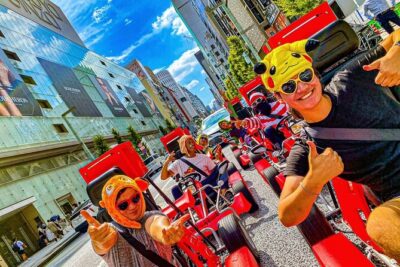 ★ 5.0Official Street Go-Kart Tour – AkihabaraFrom $611,578 reviews
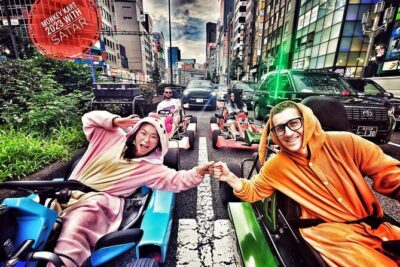 ★ 5.0Tokyo Go Kart: Asakusa, Skytree, and Akihabara **IDP MUST**From $99988 reviews
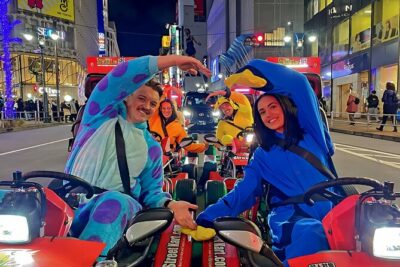 ★ 5.0Shibuya Official Street Go-Kart in Shibuya AnnexFrom $69972 reviews
 ★ 4.7Asakusa, Skytree & Akhihabara Go-Kart City ExperienceFrom $96761 reviews
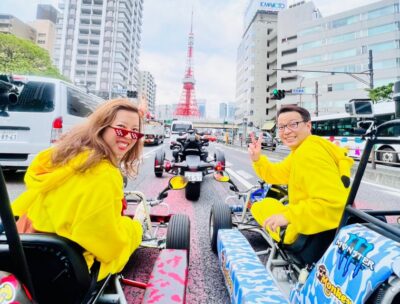 ★ 4.7Premium Go-Kart Tour with Tower & Shibuya CrossingFrom $116528 reviews
Shibuya Kart: Premium Go-Karting Tour through Shibuya, TokyoFrom $63463 reviews
★ 4.7Premium Go-Kart Tour with Tower & Shibuya CrossingFrom $116528 reviews
Shibuya Kart: Premium Go-Karting Tour through Shibuya, TokyoFrom $63463 reviews
This tour also belongs to