
Review · SHIBUYA TOURS
Shibuya Authentic Tea Ceremony with experienced instructor
Shibuya gets quiet for matcha lessons, in a small-group session with a real tea master. I love how it trades crowded sightseeing for a calm tea-house vibe, with up to 8 people. I also love the hands-on part, where you learn by doing, not just watching.
Meet Mai and you will feel the tone shift right away, polite and welcoming from the start. You’ll prepare and whisk your own bowl of matcha using traditional tools, and you even get to choose a chawan (matcha bowl) that fits your style. One possible drawback: it’s only about 50 minutes, so it’s a focused intro, not a full, multi-hour deep dive.
Key moments that make this tea ceremony worth it
- Up to 8 people means more attention and less waiting around
- Stone-mill matcha prep gives you a concrete view of how matcha starts
- A full ritual demonstration with context about tea’s long journey in Japan
- Nerikiri sweets alongside freshly made matcha, a classic pairing
- You whisk your own bowl with traditional tools, then enjoy what you made
- A tranquil tea house in Dōgenzaka keeps the experience away from Shibuya rush
A calm tea house in Shibuya, not a hurried add-on
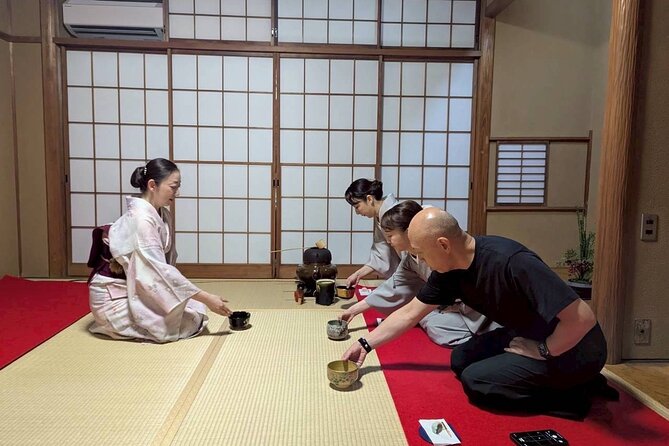
Shibuya is loud most of the day, with trains, people, and neon pulling you in every direction. This experience swaps that energy for something quieter and slower. The setting is an older, original tea house off a side street in Dōgenzaka, so you get an immediate change of pace the moment you arrive.
The best part for me is the feel. It’s not a performance you speed through. The room is designed for attention. You’ll hear explanations, watch the ritual carefully, and then get your own turn without the sense of being rushed through a checklist.
And yes, it still feels like you are in Tokyo. You are just taking a short exit from the “go, go, go” style of sightseeing. That matters because tea ceremony is about rhythm, not just tasting something green.
You can also read our reviews of more tours and experiences in Tokyo.



Meeting point in Dōgenzaka, and how the 50 minutes are paced
You meet at Japan, 150-0043 Tokyo, Shibuya, Dōgenzaka, 1-chōme15 万字ビル. The activity ends back at the same meeting point, so you do not have to plan a second route afterward. It’s a relief when you’re trying to keep your Shibuya day from turning into logistics.
The session is about 50 minutes. That timing is part of the value equation. You get a full arc: history and matcha basics, a ritual demonstration with sweets, then hands-on practice making your own bowl. If you are hoping for a half-day immersion with multiple themed courses, this won’t be that. But if you want a high-quality taste of the tradition with guidance, the length is just right.
Also, this is a small group, with a maximum of 8 travelers. In a setting like this, smaller is better. You can ask questions, you can actually see what the instructor is doing, and you are not stuck waiting for your turn while everyone else moves on.
Tea history and stone-mill matcha, the part most people skip
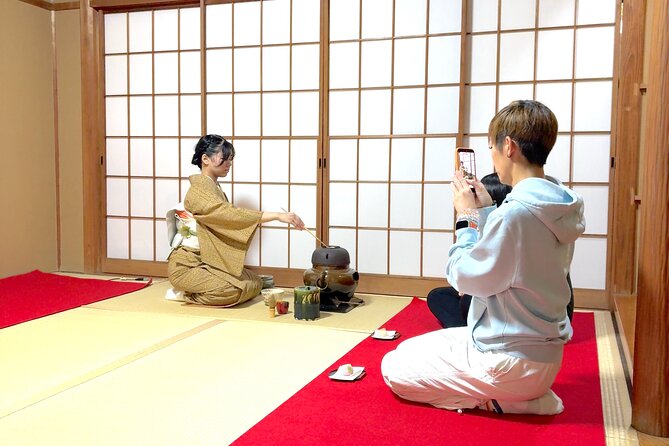
Your first stage is learning. You start with a short explanation of the history of tea in Japan, then you move into the practical side: seeing how matcha is made using a traditional stone mill.
Why this matters: matcha does not begin as a drink. It begins as work. Watching the stone-mill process (even at an introductory level) helps you understand why matcha has that distinct texture and why the whisking step matters later. If you have only ever bought matcha as a powder at a store, this step makes it feel real and specific.
It also sets you up mentally. You are not just being handed a beverage. You are being taught what to pay attention to: aroma, color, and the foam that forms when you whisk properly. When you reach the tasting and practice later, the earlier explanation makes the hands-on part click.
Watching the traditional tea ritual, plus matcha tasting with nerikiri
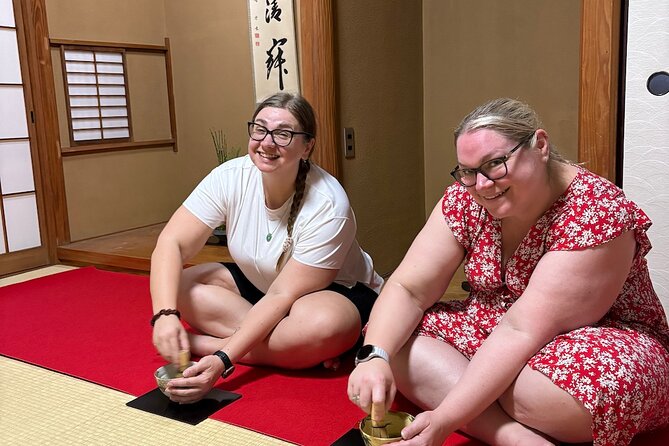
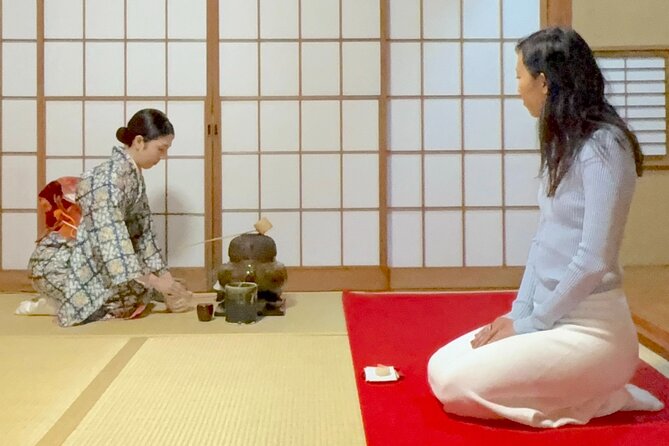
After the background, you shift into watching the ritual. The instructor performs the traditional tea-making sequence, a process with history reaching over 500 years. You get to see how the movements and tools fit together as one continuous practice.
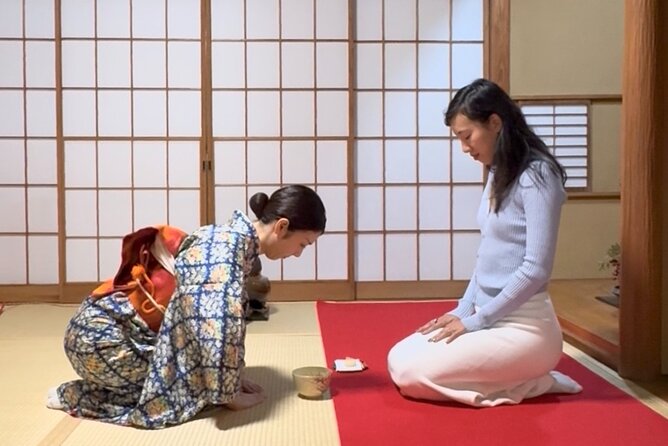
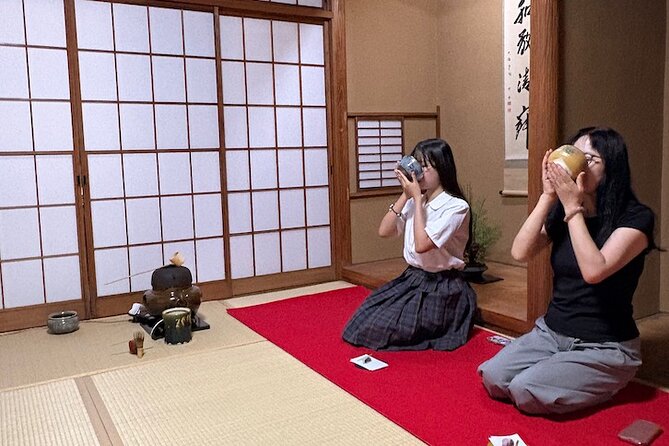
Then comes the moment that most people remember: you taste the freshly prepared matcha along with nerikiri, a traditional Japanese sweet. Nerikiri is not the same category as a random cookie. It’s designed for pairing, with a texture and sweetness that sit nicely alongside matcha’s vegetal bitterness.
The pairing is a small detail, but it makes the ceremony feel complete. It’s easier to appreciate the flavor when you’re not just drinking plain matcha. You’re getting a designed moment, the kind of quiet “sit and notice” pause that daily life rarely provides.
If you are a matcha fan, this part is a treat. If you are unsure about matcha, it is also a good introduction because you experience it as part of a broader tradition, not just as a trendy drink.
Making your own matcha, whisking with tools and choosing your chawan
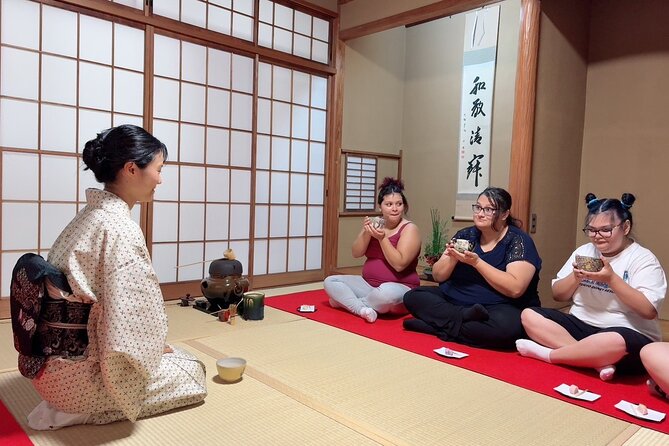
Now for the main event: you make your own bowl of matcha. You’ll use traditional tea-making tools and whisk your matcha yourself. This is where the small group format pays off again, because you are not just observing. You are practicing under guidance.
One of the most practical parts is the bowl choice. You can select your favorite chawan (matcha bowl) from a variety of beautiful options. That might sound like decoration, but it’s not. In a tea ceremony mindset, the bowl affects how the tea is served and how the experience feels. Picking one gives you agency, and it makes the moment feel personal.
From there, you’ll take the techniques you learn and apply them at the end, when you enjoy what you made. That matters for two reasons:
- You leave with a repeatable process, not just a photo opportunity.
- Your mouth understands what the steps are trying to create, especially the foam and the overall balance.
If you like skill-building travel experiences, this is exactly that. You’re not hunting for a distant museum artifact. You are learning a motion, a method, and a way to make a beverage properly.



Instructor energy matters, and Mai sets the tone
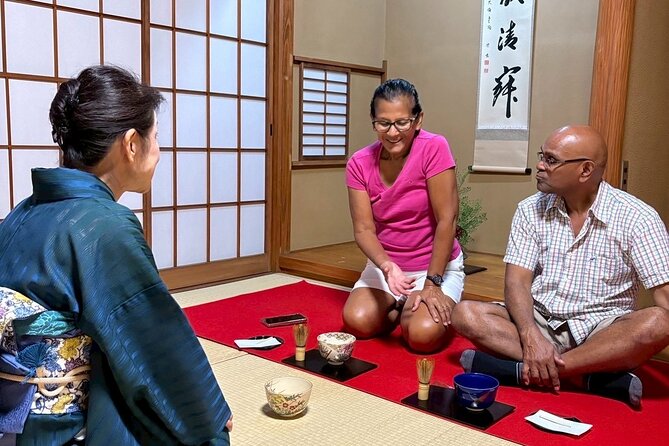
The experience is led by a Japanese tea master, and the friendly instruction style really comes through in the way people describe the session. Mai in particular is repeatedly mentioned for being welcoming and calm, with explanations that make the ceremony feel approachable instead of intimidating.
That balance is important. Tea ceremony can sound formal, and in some settings it becomes stiff. Here, the vibe stays respectful but human. You get room to ask questions, and you feel comfortable doing the whisking step without worrying you will mess it up.
You also notice the difference between scripted talk and real teaching. The instructor doesn’t just tell you what to do. You learn why the steps matter, then you feel it in your hands.
Price and value: about $25.76 for a full matcha ceremony arc
At $25.76 per person, you’re not paying for a long show. You are paying for three things that cost time and attention: instruction, ritual observation, and hands-on preparation plus tasting.
In about 50 minutes, you get:
- History context and seeing matcha preparation with a stone mill
- A traditional tea ritual demonstration
- Tasting fresh matcha and nerikiri
- Your own matcha making with traditional tools
- The option to choose a chawan
That bundle is the value. A typical “tasting” experience gives you the drink. This gives you the method behind the drink, plus you practice it. That’s the main reason it feels worth the money. Even if you never become a tea-ritual expert at home, you’ll still know how to whisk for a better texture and how to enjoy matcha in a more intentional way.
Who should book this tea ceremony in Shibuya
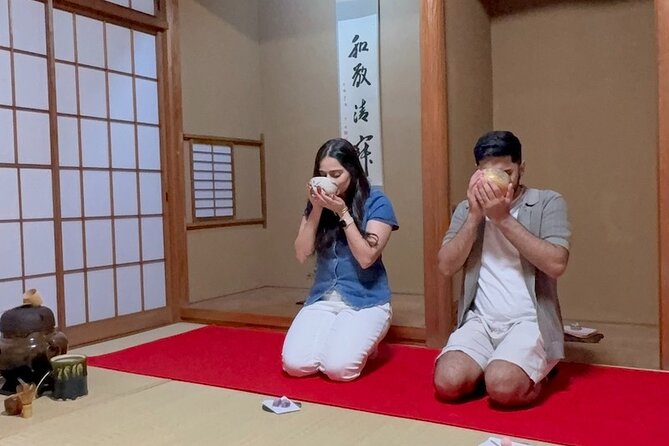
This is a great match if you want:
- A break from the street energy of Shibuya
- A hands-on cultural activity that fits into a busy day
- An expert-led introduction to matcha and tea ritual
- A calm, quiet experience where the pace lets you focus
It’s also a strong pick for first-timers. You do not need prior knowledge. The structure starts with history and basics, then moves into watching the ritual and practicing the whisking.
If you are the type who wants hours of sightseeing stitched together, this may feel too short. But if you want one meaningful cultural stop, in a small group, with a real teacher and a skill you can repeat, this works.
Should you book this Shibuya Authentic Tea Ceremony with an instructor?
Yes, if you want a compact but authentic tea experience. I’d book it when you want the contrast, quiet after noise, and you value learning something practical instead of just collecting photos.
Skip it only if you need a longer experience window or you’re set on a day packed with multiple major sights. Otherwise, this is a smart use of time in Tokyo because it gives you context, practice, and a tasting that feels complete.
FAQ
Where is the meeting point?
The meeting point is in Shibuya at Japan, 150-0043 Tokyo, Shibuya, Dōgenzaka, 1-chōme15 万字ビル. The activity ends back at the meeting point.
How long is the tea ceremony?
The duration is about 50 minutes.
What is the group size?
The session has a maximum of 8 travelers.
What will I do during the experience?
You’ll learn about the history of tea in Japan and see matcha made with a traditional stone mill, watch a traditional tea ceremony and enjoy matcha with nerikiri, and then make your own matcha using traditional tools. You can also choose a chawan from a selection.
Is there a mobile ticket?
Yes. The tour uses a mobile ticket.
What is the cancellation policy?
Cancellation is free. You can cancel up to 24 hours in advance for a full refund.
More Tour Reviews in Tokyo
Not for you? Here's more nearby things to do in Tokyo we have reviewed









Shibuya Tours, side by side.
 ★ 5.0Official Street Go-Kart in ShibuyaFrom $763,435 reviews
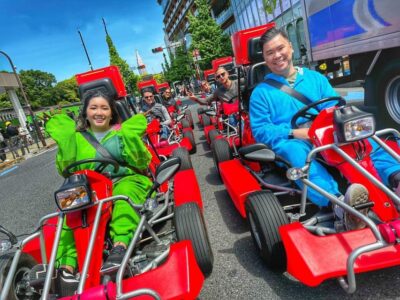 ★ 4.9Street Kart Experience in ShibuyaFrom $741,484 reviews
 ★ 5.0Shibuya Meltdown Nightlife Tour: All-You-Can-Drink Bar HoppingFrom $1061,058 reviews
 ★ 5.0Shibuya Official Street Go-Kart in Shibuya AnnexFrom $69972 reviews
 ★ 5.0Shibuya Food Tour (13 dishes and 4 Eateries)From $77770 reviews
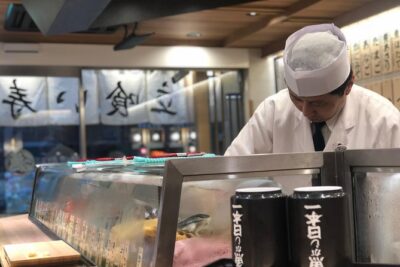 ★ 5.0Best of Shibuya Food TourFrom $217612 reviews
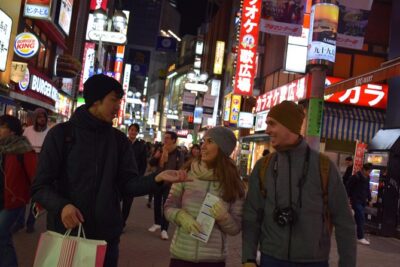 ★ 4.8Shibuya Highlights Walking TourFrom $19601 reviews
 ★ 4.7Premium Go-Kart Tour with Tower & Shibuya CrossingFrom $116528 reviews
This tour also belongs to