
Review · SHIBUYA TOURS
Shibuya: Ramen Dojo Tokyo | Make All 3 (Tonkotsu/Shoyu/Miso)
Making ramen in Shibuya is hands-on fun. At Ramen Dojo Tokyo you learn tonkotsu, shoyu, miso side by side, with a pro noodle machine and a guided flavor-tuning flow. I love that you do the noodle work yourself, then compare three broths in one sitting. I also like the English-guided support and the practical recipe you can use later. One caution, it is not a fit for celiac or severe wheat, egg, or soy allergies, and the studio is stairs-only.
This is a 90-minute workshop near Shibuya Station with a max 8 guests small group. You’ll start at the same studio you finish at, so you can head right back out into Shibuya afterward, either for more food or just to wander.
Quick, practical highlights
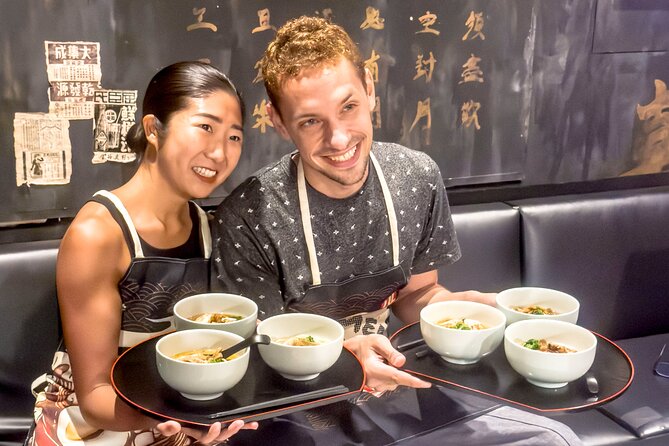
- Three broths, one session: Make tonkotsu, shoyu, and miso ramen and taste them side by side.
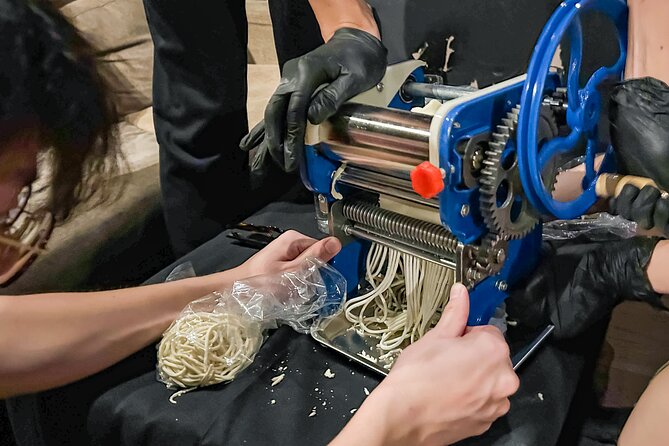
- Real noodle technique: Knead, roll, and cut fresh noodles with a professional machine plus staff guidance.
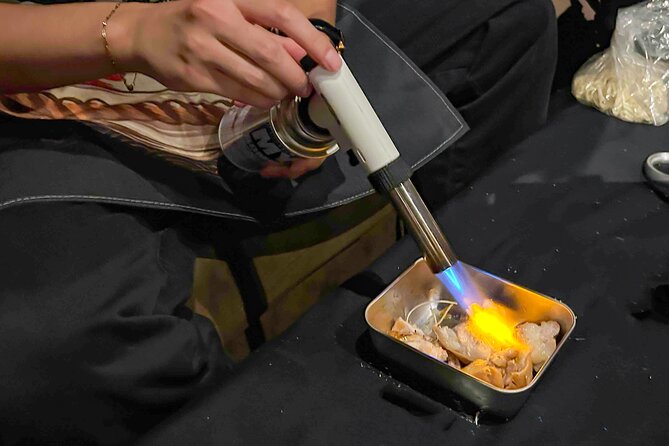
- Chicken chashu focus: You’ll prep and finish chicken chashu as part of your ramen trio.
- Beginner-friendly in English: Clear instruction for first-timers, with small-group attention.
- Photo-worthy payoff: Plating and tasting happen at the end, with time to take pictures.
Ramen Dojo Tokyo in Shibuya, what you are really buying
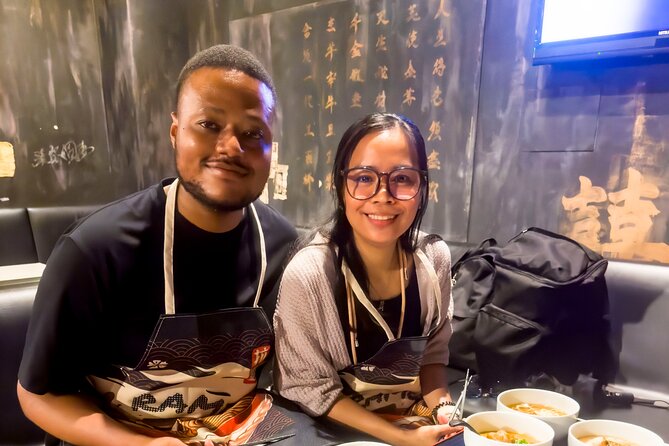
At $64 per person for a 90-minute class, this is not just a quick snack stop. You are paying for three things that add up fast in Tokyo: hands-on ramen technique, tasting three ramen styles in one meal, and getting a format you can repeat at home without fancy equipment.
What makes it feel like good value is the structure. You do multiple steps, but the class is paced so you are never stuck waiting around. The end result is also satisfying: you get fresh noodles you made, plus a trio of mini bowls. Many cooking classes are either mostly watching or mostly eating. Here, you get both, with your hands in the process.
If you want ramen culture with a little behind-the-scenes context, this is a smart way to get it. You’ll learn what changes when you go from creamy tonkotsu to lighter shoyu to miso’s deeper profile, and you’ll get a sense of how the soup base is adjusted to your preferences.
You can also read our reviews of more tours and experiences in Tokyo.



Finding the studio from Shibuya Station, without stress
The studio is near Shibuya Station, about a 10-minute walk. That matters because Shibuya can eat your time. You do not need complicated transfers, and you do not need to build in a long buffer.
Plan to check in properly. Doors open 10 minutes before class start, and there is no early entry waiting area. Arrive 5 to 10 minutes before your scheduled time. If you show up late, you may be asked to join in progress or could be refused for safety and class flow.
The studio address is 1F, 2-16-29 Ohashi, Meguro-ku, Tokyo 153-0044. One important practical note: it is stairs only. If stairs are a problem for you, this is worth reconsidering before you book.
From check-in to noodle dough, the first steps you will remember
Your session runs 90 minutes, and the pace is built around momentum. A typical flow looks like this:
Check-in and briefing, about 10 minutes
You’ll get a quick overview and instructions on how the class will run. This is where you learn how to handle the noodle work without feeling rushed. For many people, this is the difference between a fun class and one that feels confusing.
Chicken chashu prep, about 5 minutes
You start with chicken chashu preparation. Even if part of it is faster than you expect, it sets the tone: ramen is not one big cooking moment. It is a collection of components that come together.



Noodle making, about 20 minutes
This is the star of the show. You will knead, roll, and cut fresh noodles using a professional noodle machine. Staff walk you through what to do step by step so you do not guess.
A detail I like, even for beginners, is that the class emphasizes technique. Some instructors also encourage hand-based methods alongside the machinery, so you understand what you are doing rather than just pushing buttons.
Practical tip: wear clothes you do not mind getting flour on. Aprons are provided, but flour still has a way of finding its path.
Chicken chashu finishing, about 10 minutes
After your noodle work, you shift back to the chashu. This timing is smart. It breaks up the activity so your brain stays fresh, and it also means you are not waiting too long for the reward.
The tonkotsu, shoyu, miso comparison, built for your taste buds
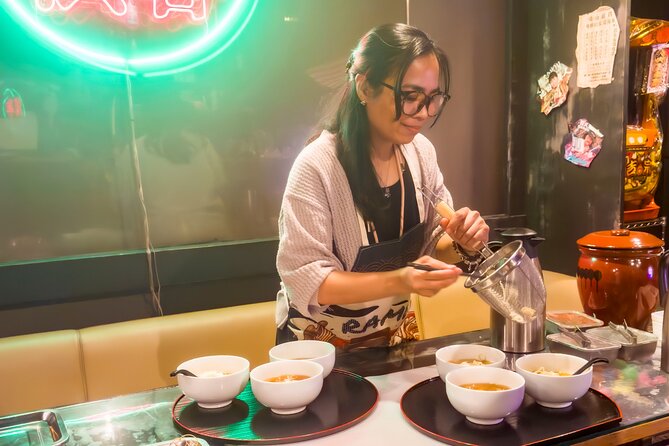
The most memorable moment in this class is tasting three ramen styles back to back in one session. You are not bouncing between restaurants and paying separate meals. You compare flavors immediately, so the differences actually stick.
Soup preparation and noodles boiling, about 10 minutes
You’ll handle soup preparation and boiling in a way that keeps the class moving. One thing to know: long-cook elements may be pre-prepared so you can focus on what you can control, like noodle timing and how the soup base is adjusted.
This is where you learn what changes from style to style. Tonkotsu tends to feel richer and more rounded. Shoyu leans into soy sauce notes and clarity. Miso brings deeper, savory warmth. The class lets you fine-tune the strength to your preferred taste, which is great if you like things bold or if you prefer something lighter.
Plating, about 5 minutes
Plating is faster than you might expect, but it is not rushed. You assemble your three mini bowls so you can taste properly and get those classic ramen visual cues: noodles, broth, toppings, and garnish.
Photo note: photography is welcome, and there is even an Instagram-friendly moment built into the end of class. Staff appreciate posts with #RamenDojoTokyo.
Toppings, aroma, and why the last 30 minutes matter
The final chunk is where many people feel the value click.
Tasting and photo time, about 30 minutes
You’ll sit down and enjoy the ramen you made. This is not a tiny bite. You get three mini bowls, one each for tonkotsu, shoyu, and miso. It adds up to a filling meal, especially because you made the noodles yourself.
Aromatic payoff is real here. As you shift between broths, you notice how scent changes perception of flavor. It is also a fun moment for questions. If you want to know what to do differently next time, this is when the instructor energy is at its best.
What I like about this pacing is that you do not have to leave hungry. Some classes are all technique and no satisfaction. Here, the tasting is built in, and you still have time to take pictures without feeling like you are eating on the run.
English instruction and small-group attention, what it means on the ground
The class is taught in English (with Japanese support from the instructors). It is designed for beginners. Group size is max 8, which matters because noodle-making needs quick feedback. If the dough sticks, if the thickness is off, or if you are unsure when to move to the next step, you want someone close by.
In reviews, instructors such as Kazuki, Kensei, Arata, Atari, Kuzuki, and Ivy show up as names people remember. That signals consistency in the team, and it also hints at a friendly, student-first approach rather than a strict, restaurant-style kitchen.
If you are traveling solo or as a couple, the small group is a big plus. You will still interact, but you won’t feel lost in a big class.
What to wear, what you can eat, and allergy reality
This is where you should make a quick checklist before you book.
What to wear
Aprons are provided. Still, expect flour on clothes during noodle making. Wear something comfortable that can handle a little mess.
Allergens and cross-contamination
Ingredients can include wheat (gluten), egg, soy, chicken, and pork. The studio cannot guarantee complete prevention of cross-contamination. If you have a serious allergy, do not treat this as a flexible cooking class.
Dietary requests
There may be partial accommodation for no chicken/pork, vegetarian, and vegan, but you need to inquire in advance. If you require strict dietary compliance, it is listed as not suitable.
Age and mobility
The workshop is recommended for ages 6+. Stairs only means mobility matters. If you cannot use stairs, plan for another ramen option.
Getting the digital recipe and making ramen at home
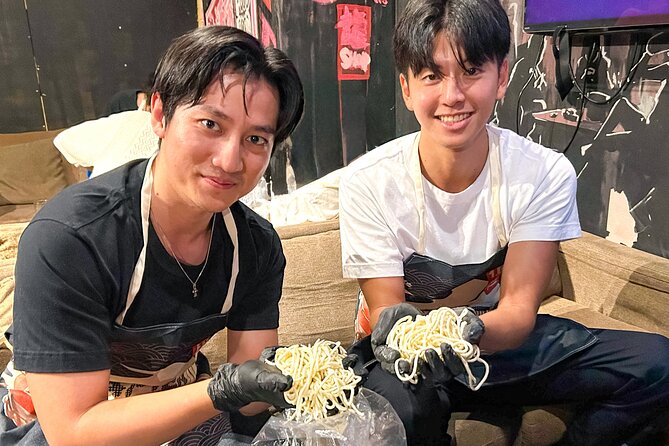
One of the practical perks is that you receive a digital recipe after the class. That is how this experience becomes more than entertainment.
The format is taught in a way that is designed to be done back home. You learn the process and the logic of flavor adjustments rather than just memorizing steps. Even if you do not have the same exact equipment, the method helps you understand how noodle texture should feel and how soup base strength changes the final bowl.
What you end up with is a ramen baseline you can refine. If you love tonkotsu, you now know what drives the richness. If shoyu is your thing, you learn what makes it feel balanced and clean. If miso is your comfort zone, you get a sense of how to push it savory without going too heavy.
Who should book this ramen class in Shibuya
Book this if:
- You want hands-on ramen making, not just eating.
- You like the idea of tasting tonkotsu, shoyu, miso in one sitting.
- You want an English-guided activity that works for beginners.
- You are in Shibuya and want something that fits cleanly into a day without complicated timing.
You might skip it if:
- You have celiac disease or severe wheat, egg, or soy allergies.
- Stairs are a deal breaker for you.
- You need strict dietary compliance beyond the listed partial accommodations.
Should you book Ramen Dojo Tokyo?
Yes, you should book it if you want a real ramen lesson with a meal attached. The 90-minute structure is efficient, the small-group format makes technique easier, and the triple-tasting setup helps you understand the differences between tonkotsu, shoyu, and miso without restaurant hopping.
If your travel style is hands-on, and you like learning by doing, this is a strong choice. If you are picky about allergies or mobility, treat this as a non-fit rather than a gamble.
FAQ
What is the duration of the Ramen Dojo Tokyo workshop?
The class lasts 90 minutes.
Where is the workshop located?
It is near Shibuya Station, about a 10-minute walk from the station. The studio address is 1F, 2-16-29 Ohashi, Meguro-ku, Tokyo 153-0044, Japan.
What ramen styles do you make and taste?
You make and taste three styles in one session: tonkotsu, shoyu, and miso.
Is the class taught in English?
Yes, the workshop is conducted in English.
How big is the group?
The group size is limited to a maximum of 8 guests.
What is included in the price?
Included are an English-speaking instructor, all ingredients and kitchen equipment, tasting of three mini bowls, an apron loan, and a digital recipe provided after the class.
Are there dietary accommodations?
Partial accommodation may be possible for no chicken/pork, vegetarian, and vegan. You need to inquire in advance. The studio cannot guarantee complete prevention of cross-contamination.
What should I wear?
Aprons are provided, but you may get flour on your clothes during noodle making. Wear comfortable clothes you do not mind getting a bit messy.
More Tour Reviews in Tokyo
Not for you? Here's more nearby things to do in Tokyo we have reviewed












Shibuya Tours, side by side.
 ★ 5.0Official Street Go-Kart in ShibuyaFrom $763,435 reviews
 ★ 4.9Street Kart Experience in ShibuyaFrom $741,484 reviews
 ★ 5.0Shibuya Meltdown Nightlife Tour: All-You-Can-Drink Bar HoppingFrom $1061,058 reviews
 ★ 5.0Shibuya Official Street Go-Kart in Shibuya AnnexFrom $69972 reviews
 ★ 5.0Shibuya Food Tour (13 dishes and 4 Eateries)From $77770 reviews
 ★ 5.0Best of Shibuya Food TourFrom $217612 reviews
 ★ 4.8Shibuya Highlights Walking TourFrom $19601 reviews
 ★ 4.7Premium Go-Kart Tour with Tower & Shibuya CrossingFrom $116528 reviews
This tour also belongs to