
Review · ASAKUSA TOURS
Asakusa:Japanese Calligraphy & Make your original folding fan!
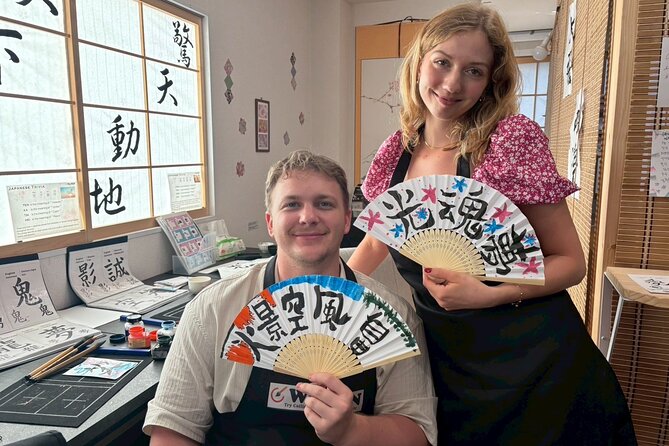
Your name, turned into ink and paper in Asakusa. This is a one-hour Japanese calligraphy class where you learn the basics, write your own kanji or Japanese name, and leave with a folding fan you made yourself. I especially like the hands-on practice and the calming, guided pace, even if your handwriting in daily life is, well, optimistic.
One thing I’d flag: it’s only about 1 hour, so you’ll get solid instruction and a great finished fan, but you won’t have time for big, detailed calligraphy projects.
The setting also helps. You’re based in Asakusa, close to Senso-ji, so your craft lesson feels tied to real Tokyo instead of a classroom that could be anywhere.
Key highlights you’ll actually use
- A short history video on kanji and calligraphy, so your strokes feel purposeful, not random.
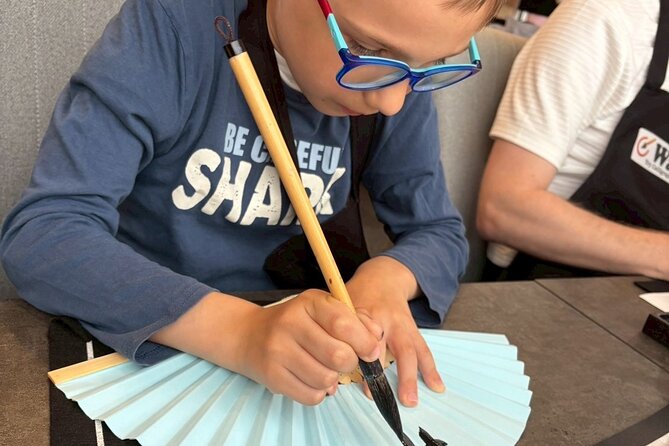
- Ink prep and brush-holding practice, plus posture and writing style basics.
- The basic 8 strokes, which makes it easier to understand what you’re drawing.
- Write your name in Japanese or choose a favorite kanji, then transfer it to your souvenir.
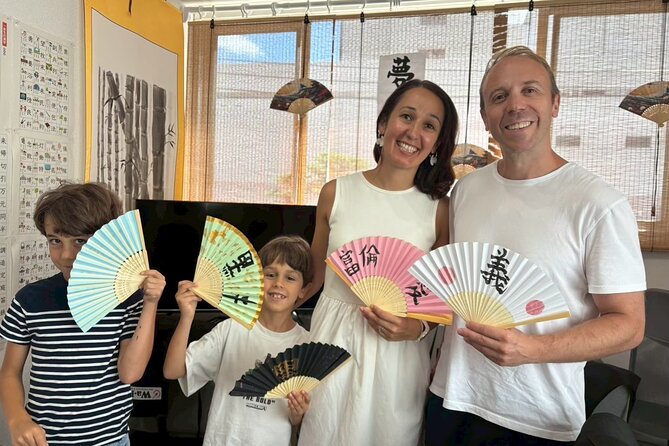
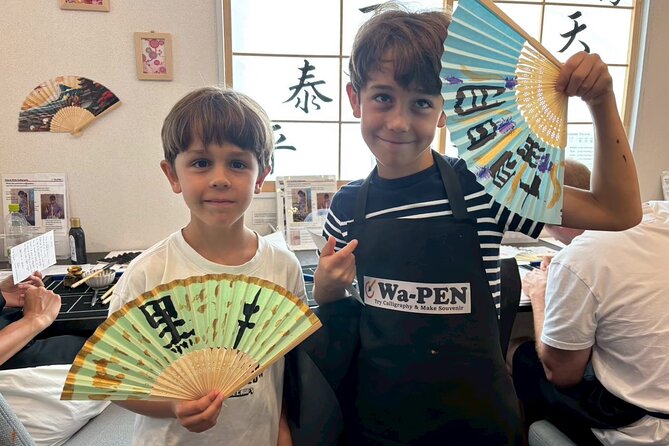
- A folding fan made from your characters, plus an optional option to print on clothes.
- Patient English support from staff like Mana, who’s described as friendly and easy to learn from.
Asakusa Calligraphy and a Folding Fan, a rare souvenir that feels personal
Asakusa is one of those Tokyo neighborhoods where culture is close enough to touch. You can walk past temple streets and shops, then step into a focused lesson that turns what you see around you into something you keep.
What makes this experience worth your time is the pairing: calligraphy practice plus a wearable or displayable result. Lots of Tokyo activities end with a photo. This ends with something you can open, close, and show friends later, with your own characters on it.
The best part is how guided it is. You get instruction that covers how to hold the brush and how to control it, plus multiple practice sheets before you commit your character to the final fan. That structure lowers the stress, especially if you’re a beginner.
You can also read our reviews of more tours and experiences in Tokyo.



Price and value for a one-hour custom craft in Tokyo
At $43 per person, this sits in the reasonable range for a private, guided cultural workshop in central Tokyo. You’re not just paying for someone to hand you a finished item. You’re paying for instruction, practice time, and the materials tied to your finished folding fan.
Also, the class includes more than the final product:
- A short video lesson on calligraphy and kanji
- Brush basics and the basic 8 strokes
- Ink creation and getting your posture and grip right
- Writing your chosen name or kanji
- Transferring it onto your own souvenir
When an activity gives you both learning time and a made-by-you artifact, the value usually holds up better than experiences that are mostly sightseeing or mostly watching.
Finding the meeting point near Nishiasakusa, and keeping it easy
The meeting point is at Wa-PEN Calligraphy Attractions & Make Design clothes, 111-0035 Tokyo, Taito City, Nishiasakusa, 3-chōme 27-2 building 3F. The activity is described as near public transportation, and it’s intended to be straightforward to reach.
Because this is a private experience for your group, you won’t be searching for your seat in a big crowd. Still, I suggest giving yourself a little buffer time to get to the exact address and floor. In Tokyo, those building numbers and floor locations matter.
Also, since you’ll be using ink and a brush, you’ll feel better if you go in dressed so you can be comfortable sitting and moving your arm without worrying about your outfit.
Senso-ji and Asakusa stops, why the location matters for calligraphy
This experience includes time around Senso-ji Temple and Asakusa. Even if the calligraphy itself happens during the lesson, the location is part of the point.
Senso-ji is one of the most well-known temple areas in Tokyo, and Asakusa is packed with places that reinforce why kanji and calligraphy matter. Seeing the neighborhood first helps the later practice make sense. Your brushwork becomes a small piece of the larger cultural world you’re standing in.
A realistic note: your schedule is short, about 1 hour, so don’t expect a long temple tour. Think of it as a cultural anchor, not a full day of sightseeing.
The short history video on kanji, so your strokes have meaning
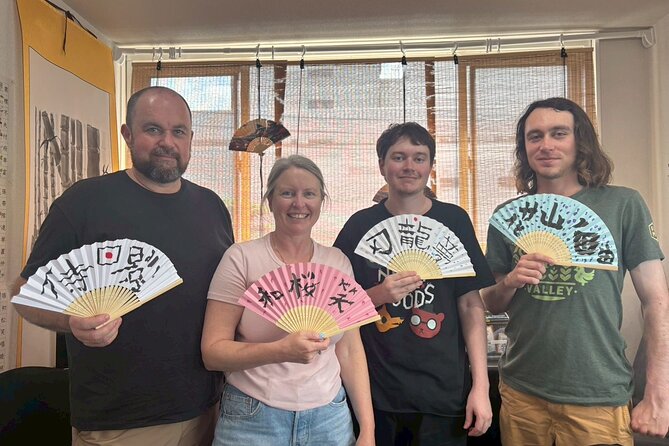
Before you touch the brush, you watch a short video about the history of Japanese language and calligraphy. That matters more than it sounds. When you understand that kanji characters have structure and that brushwork follows rules, you stop treating it like random art and start treating it like a language you can learn.
In the lesson flow, you also get explanation tied to kanji and the written language of Japan. That background helps when you choose a kanji, because you’re not only copying a symbol. You’re choosing something tied to real meaning.
And because the lesson is paced for beginners, you don’t need to already know strokes or radicals. The video and instruction are there to bring you up to speed quickly.



Ink prep, posture, and the brush basics you’ll feel right away
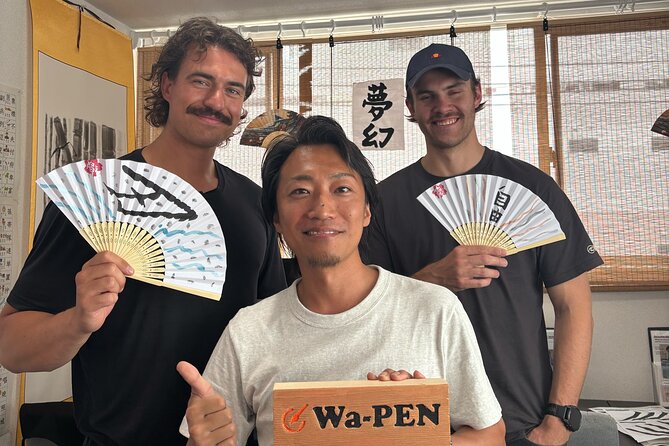
A big chunk of the value is the technique teaching. The staff guide you on:
- how to hold and use the brush
- posture and writing style
- creating the ink
- practicing the foundational movements
One of the most praised parts is how patient the instructor is. People describe instructors who take their time, explain clearly, and support you as you practice. In one case, the instructor Mana is mentioned as friendly, patient, and knowledgeable, with English that works well for learners.
You’ll also get green tea during the session, and that little break can make the whole hour feel calmer. It’s not just a craft class, it’s a guided reset.
Practical takeaway for you: don’t rush the brush in the first practice. Your hands will adapt faster if you slow down for the basics first.
The 8 strokes foundation, why beginners should care
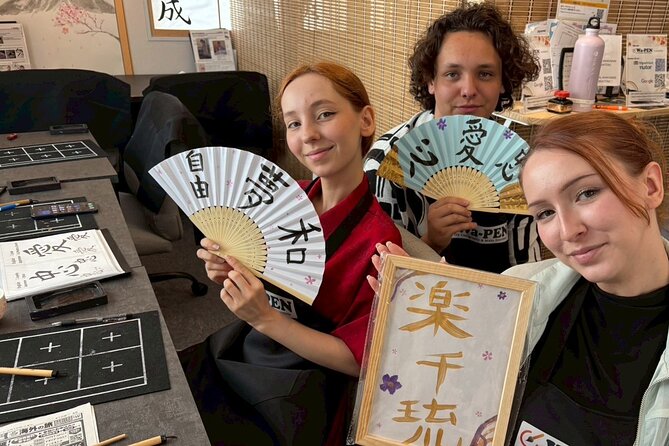
The lesson includes the basic 8 strokes. This is where many beginners quietly gain confidence. Once you learn the core stroke types, you can recognize the structure inside nearly any character.
Instead of guessing, you can focus on learning how to start a stroke, how to apply pressure, and how to finish cleanly. Even if your final kanji is not museum-grade, you’ll usually get something that looks intentional.
You also get plenty of practice sheets so you can try different kanji or variations before writing on the final fan. That practice time turns the class from stressful to doable.
If you’re worried about writing, this is the section that likely makes the biggest difference for you.
Choosing your name or kanji, and making it feel like your trip
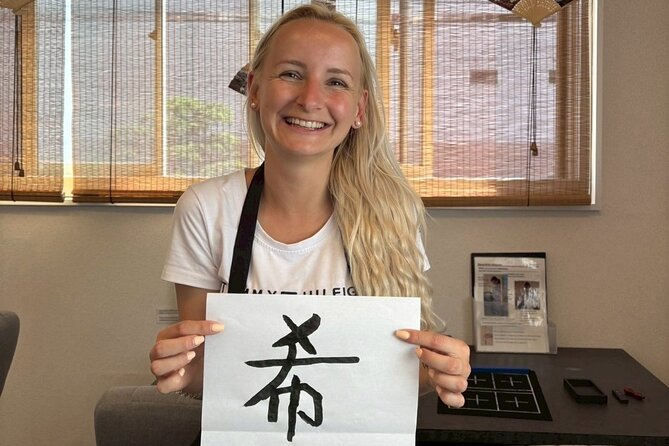
You choose what to write. Options include:
- your name in Japanese
- a favorite kanji
- a chosen Japanese word
That choice is the emotional payoff. Anyone can buy a generic souvenir. When you write your own name or a personal kanji, the finished item becomes a little time capsule.
The instruction supports your choice. Staff help you write the characters correctly and guide you through the process. People mention getting help with names in Japanese and even explanations of meaning, which turns the craft into something you can actually talk about later.
Pro tip for choosing your character: pick something with meaning to you, but also something you can recognize as the shape you’re aiming for. If you pick a character that feels too complex, the instructor can still help, but you’ll probably enjoy the result more if you choose within your comfort zone.
From practice sheet to folding fan, the souvenir part
Now for the fun part: your original folding fan. The process takes the character you worked on and transfers it onto the fan so you end with something you can use immediately, not just admire flat in a frame.
People really like this because it’s both traditional and practical. A folding fan fits Japanese summer culture, it packs well, and it’s easy to gift. When your writing is on it, it’s also more than decoration.
There’s also an optional add-on mentioned: you can print the characters you wrote on clothes, like a T-shirt. If you want something you can wear, this is a clever way to turn your calligraphy from desk art into everyday memory.
When you leave, you’ll have a tangible reminder that you learned a skill in real time, not just picked up an item off a shelf.
How to get the most from a one-hour private lesson
Because the total duration is about 1 hour, you’ll want to be mentally ready when you arrive. Here’s how to make that hour work hardest for you:
- Bring your name and any kanji you’re considering. If you’re not sure how your name appears in Japanese, ask early so you have time to finalize.
- Don’t overthink your first practice. Treat it like warm-up, not your final work.
- If the instructor suggests a simpler version, listen. Getting a clean, readable character will beat a complicated one that smears or wobbles.
- Be open to feedback on brush grip and pressure. Small adjustments can change everything.
Also, since it’s private for your group, you’ll likely get more direct support than you would in a large class. That makes it easier to ask questions and correct mistakes quickly.
Who should book this Asakusa calligraphy class
This experience is a strong fit if you want:
- a meaningful souvenir you make yourself in Tokyo
- beginner-friendly guidance with a clear lesson structure
- a short cultural activity that doesn’t eat your whole day
- a calm, hands-on break from temple crowds and train stations
It’s also great for couples or small groups who want to share a creative moment. People describe doing it with a partner and enjoying how watchable the instructor is, even when one person enjoys the process more than the other.
You might skip it if:
- you’re looking for a deep, multi-session art course
- you want a long temple and walking tour day
- you already know brush calligraphy and want advanced techniques beyond basic strokes
For most visitors, though, this hits the sweet spot: learn enough to feel proud, finish with something you can use.
Practical tips on what to wear and how to plan your day
The data doesn’t specify a strict dress code, but calligraphy usually means ink and time at a table. So go with sensible clothing you don’t mind getting a little closer to ink.
In your day planning:
- Pair it with a visit to Senso-ji and Asakusa area. It’s close enough to make sense as a cultural stop.
- Keep your next activity flexible. If your fan needs final drying or finishing time, you’ll want to avoid rushing across town.
- If you’re doing the optional clothes printing, plan a bit more time for that added step, since your session still needs to fit within the total duration.
Should you book the Asakusa Japanese calligraphy and fan workshop?
Yes, if you want a souvenir that actually carries a story. The combination of history + technique + your own chosen characters + a folding fan you make is exactly what makes this kind of class memorable.
I’d book it especially if you’re a first-time calligraphy learner and you care about being supported. The repeated themes from the experience descriptions are patient instruction, clear teaching, and enough practice sheets to help you land on something you’re happy with.
Book it if:
- you have 1 hour to spare
- you like hands-on cultural activities
- you want a personal, portable keepsake from Tokyo
Skip it if:
- you want a long, guided sightseeing day
- you’re looking for advanced calligraphy training
If you’re on the fence, pick a kanji or word you genuinely connect with before you go. Once you have that choice ready, the lesson turns into more than craft. It becomes a small, satisfying way to bring Asakusa home.
FAQ
How long is the Japanese calligraphy and folding fan experience?
The experience lasts about 1 hour.
How much does it cost?
It costs $43.00 per person.
Is this a private activity?
Yes. It is a private tour or activity, so only your group participates.
What kind of ticket do I get?
You receive a mobile ticket.
Where does the experience start?
The meeting point is Wa-PEN Calligraphy Attractions & Make Design clothes, Tokyo, Taito City, Nishiasakusa, 3-chōme 27-2, building 3F (111-0035 Tokyo).
What will I write during the lesson?
You can choose your name in Japanese or a favorite kanji, or a word you want to write.
What do I make at the end?
You make your own original folding fan using your calligraphy.
Is there an option to put the design on clothing?
Yes, there is an option to print the characters you wrote on clothes.
What is the cancellation policy?
You can cancel for free up to 24 hours in advance for a full refund. If you cancel less than 24 hours before the start time, the amount paid is not refunded.
More Tour Reviews in Tokyo
Not for you? Here's more nearby things to do in Tokyo we have reviewed












Asakusa Tours, side by side.
 ★ 4.8Japanese Dance Cabaret Theater Asakusa-Kaguwa TicketFrom $492,270 reviews
 ★ 4.7Meiji Shrine, Asakusa, Skytree Bus Tour and CruiseFrom $1221,986 reviews
 ★ 4.9Roll and Authentic Sushi Making Class in AsakusaFrom $581,957 reviews
 ★ 4.8Asakusa Walking Tour with Sensoji Temple VisitFrom $221,583 reviews
 ★ 5.0Tokyo Asakusa Rickshaw TourFrom $421,375 reviews
 ★ 4.5Tokyo Panoramic 1 Day: Meiji Shrine, Asakusa, Odaiba and SKYTREE®From $851,222 reviews
 ★ 5.0Tokyo Go Kart: Asakusa, Skytree, and Akihabara **IDP MUST**From $99988 reviews
 ★ 4.7Asakusa, Skytree & Akhihabara Go-Kart City ExperienceFrom $96761 reviews
This tour also belongs to