
Review · TOKYO CITY TOURS
Go Karting Tokyo Old Town Experience | 8 Destinations in 100 Mins
Go-karting through Tokyo beats sightseeing photos. This tour turns you into the driver while a local guide threads you through Old Town areas, and I like the small group cap (10 people max) plus the costumes that keep the whole ride fun. The main drawback to watch for is documentation, you need the original physical IDP on the day, not just a digital copy.
You steer past big-name sights like Tokyo Skytree, Ryogoku’s sumo stadium area, Akihabara, and the Imperial Palace, with built-in chances for photos and videos. The experience is wheelchair accessible and runs about 1 hour 40 minutes using a mobile ticket, but pickup and drop-off are not included so you need to get to the Katsushika meeting point yourself.
Key points I’d plan around
- Small group cap of 10, so you are not stuck waiting behind a big pack
- Costumes plus photo and video included, so you can focus on the ride
- Eight major Old Town areas in about 100 minutes, a fast way to see lots of Tokyo
- Fuel, insurance, and go-kart rental included, one less line item to worry about
- IDP must be original and physical, digital copies can cause cancellation
- No pickup or drop-off, plan to arrive near public transport on your own
Old Town Tokyo from the driver’s seat
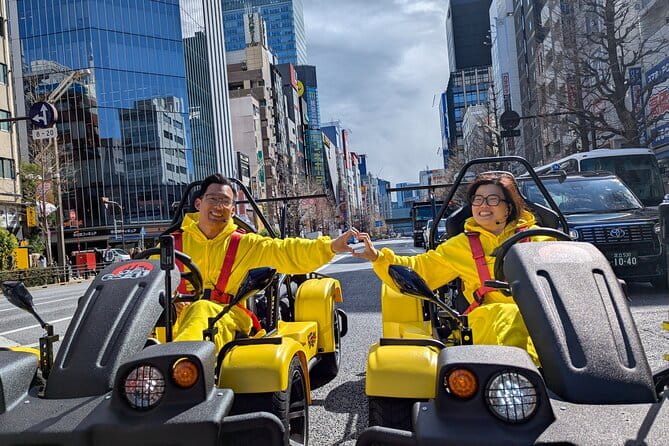
This is not a slow bus tour where you stare at attractions from the curb. You drive a go-kart guided through Tokyo’s classic neighborhoods, which changes what you notice. Streets feel more human at kart speed, you pick up the rhythm of corners, signage, and storefronts instead of just landmark silhouettes.
I also like that the route targets a mix of Tokyo you might not combine on your own in one day. You go from modern icon views like Tokyo Skytree to areas known for electronics and pop culture like Akihabara, and then to historic authority zones like the Imperial Palace grounds. It is a practical sampler, and the included guide means you get quick context while you ride.
The trade-off is simple: because you are in motion, you should treat each stop as a photo and orientation moment rather than time for long museum-style visits. You will get memories and angles, but you will not be lingering for hours at any one place.
You can also read our reviews of more tours and experiences in Tokyo.
Before you drive: your IDP, and how not to get canceled
Japan is strict about driving rules for activities on public roads. The tour requires your original local driving license plus an International Driving Permit (IDP) issued under the 1949 Geneva Convention. If you fail to provide the originals on the day, the tour can be canceled with no refund.
This is the part you should plan like a checklist, not a detail. Bring your passport, too, because it is explicitly required in the tour info. If you are counting on a digital copy of your IDP, do not, the tour information emphasizes that you need the original physical permit.
If your situation is different, there are specific allowances. Nationals of Switzerland, Germany, France, Belgium, Monaco, and Taiwan can drive if they have a Japanese translation of their driving license, and you are asked to contact assistance about a month in advance if you need help. U.S. Forces in Japan require a SOFA driving license.
Practical tip: keep everything together in one folder or pouch you can grab at the counter. That single move reduces stress when check-in is busy.
Meeting at Katsushika: timing, transport, and what to expect
Your tour starts and ends at the same meeting point in Katsushika City, Higashiyotsugi, at 1-chōme202 小島貸事務所. The activity is listed as near public transportation, but pickup is not included, so you should plan your route to arrive early enough to settle in.
The total duration is about 1 hour 40 minutes. That sounds short until you remember you need time for go-kart orientation, getting into a costume, and then driving through several areas with photo and video pauses. The “eight destinations in 100 minutes” idea fits that pace: you are seeing a lot, not spending all day.
Also note what is included versus not. You get drinking water, but food is not included. If you are prone to snack cravings, eat beforehand or budget a quick meal after, especially if you want to keep the rest of your Tokyo day moving.
Eight stops through Old Town, what each one adds
The route connects big Tokyo names with neighborhoods that feel distinctly Japanese at street level. You are not just looking at buildings, you are getting brief guide-led moments about why the place matters, then rolling on to the next.
Tokyo Skytree and Sumida City Ward views
Tokyo Skytree is the world’s tallest broadcasting and communication tower, and it is also the third tallest structure. It sits in Sumida City Ward, so even if you already know the skyline icon, you will likely experience it more like a nearby landmark than a distant postcard.
In a go-kart format, your best use of this stop is visual scanning. I suggest you slow your attention down for photos, because Skytree is the kind of tower where small angles change the entire picture.
A possible drawback is crowd-level expectations. Even if the route gives you photo chances, the time is limited, so you will not get “stand and linger” time.
Ryogoku area and the sumo stadium focus
Ryogoku is tied to sumo culture, and this stop is built around the Sumo Stadium area. The tour frames it as a blend of tradition and modernity, and riding through Ryogoku helps you see how a Tokyo district can carry a specific national tradition while staying firmly in city life.
On a kart, this part can feel like a story beat. You go from skyline-scale Tokyo to a district identity, and you get a sense of where locals likely connect to the sport.
The trade-off here is time. If you hoped to do a deeper visit at the stadium itself, this format is more about passing through and capturing quick context than entering for long viewing.
Tokyo Sword Museum stop for samurai craft and symbolism
The Tokyo Sword Museum is highlighted for its preservation of Japanese swords and samurai-associated artifacts. The tour info emphasizes that swords are not only weapons but also symbols of authority, works of art, and objects of worship.
This stop works well for riders who like cultural meaning more than just fast photo angles. Even if you only get a short orientation, the guide framing helps you connect what you see to why the items mattered historically.
Consider a drawback: if you are the type who wants long museum time, this activity is more of a “see and understand briefly, keep moving” experience. You are likely to leave with curiosity, not a full museum report.
Tokyo Station and Marunouchi architecture moments
Tokyo Station appears on the route with a focus on the Marunouchi district. The station is described as a symbol of architectural brilliance, and it dates to the early 20th century.
This is one of the stops where a go-kart pace can actually help. Tokyo Station’s scale and symmetry are easier to notice when you are not walking slowly, and the ride gives you quick different angles that you would miss from one spot.
The only real consideration is patience for photos. A moving format means you need to be ready when the guide signals the photo and video moments, not after you have already lost the angle.
Akihabara for electronics and pop culture history
Akihabara is presented as Japan’s electronic and pop culture heart, with history dating back to the Meiji period. It is also described as the epicenter for anime, and known as the Otaku capital of the world.
If you are visiting Tokyo for your first time, this stop can hit two goals at once: it shows you the area’s identity in a short ride, and it gives you a historical thread so it feels more than just a shopping zone.
The downside to know: this is not a guided shopping hour. You will get snapshots and street-level cues, but you should plan to explore deeper on your own if shopping is your priority.
Ueno’s path from Edo temples to modern art
Ueno is framed as prominent after the Tokugawa Shogunate in Edo in 1603. The tour info says it started with Buddhist temples and townsfolk, then grew into a modern hub for Japanese art and culture during the Meiji period.
That timeline matters because it positions Ueno as layered. Riding through the area with that context in your head helps you notice how Tokyo’s “old” and “modern” can sit side by side without feeling out of place.
A practical drawback: with quick driving passes and photo chances, you will not get a full sense of each institution. Treat it as a signpost stop for a later return if you want deeper exploring.
Asakusa’s long roots in shitamachi charm
Asakusa’s origin is described as dating back about 1400 years to the Asuka period. The tour also calls it a must-visit for the authentic charm of Tokyo’s shitamachi, meaning low city, and you get a look at why the district has that local feel.
For me, this is where go-karting can feel especially fun. Asakusa reads differently when you are moving, because the neighborhood vibe comes through in what you pass, not just what you stop to see.
The consideration is that “authentic charm” usually takes time on foot. If your goal is to shop, snack, and wander, this tour will give you a hit, not a full immersion day.
The Imperial Palace and Japan’s imperial residence
The Imperial Palace is described as the residence of the Japanese Emperor and Empress. The tour info says the palace was constructed in 1457 by Ota Dokan inside the expansive grounds of Edo Castle.
This stop adds a different kind of Tokyo contrast. After electronics and street culture, the Imperial Palace area signals order, history, and national identity. Even if you are mostly capturing views, the guide framing can make the area feel more meaningful than a quick glance would.
The drawback is expectations. Since you are driving and moving between stops, you should not assume this will replace a dedicated, slow paced palace visit. It is a guided orientation and photo moments stop.
Costumes, photo and video, plus what to bring
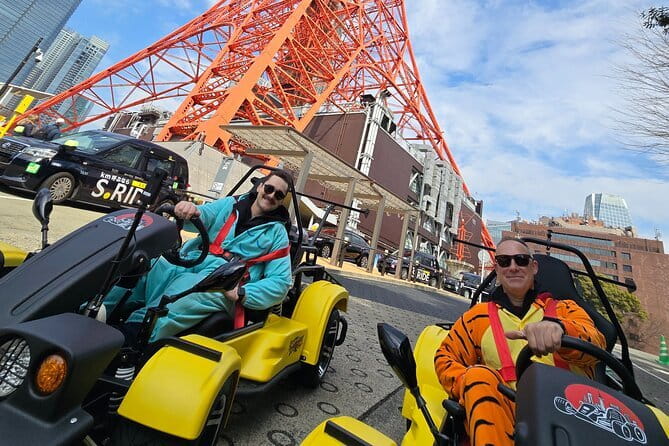
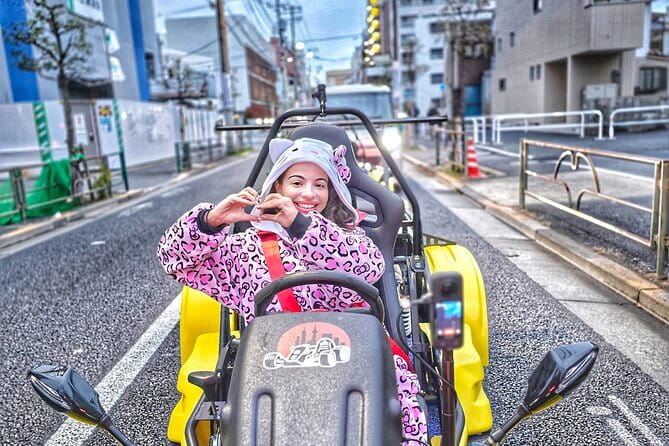
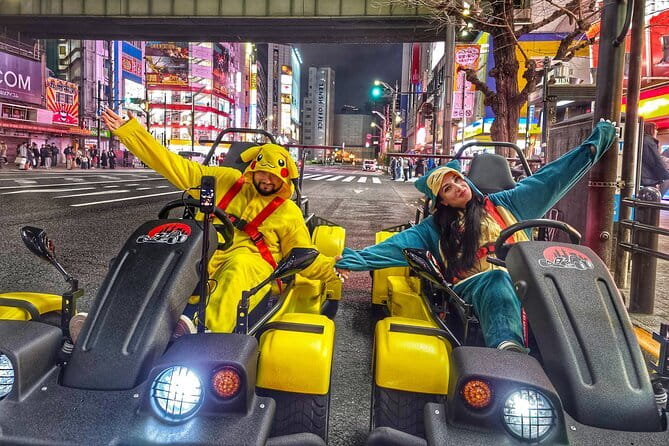
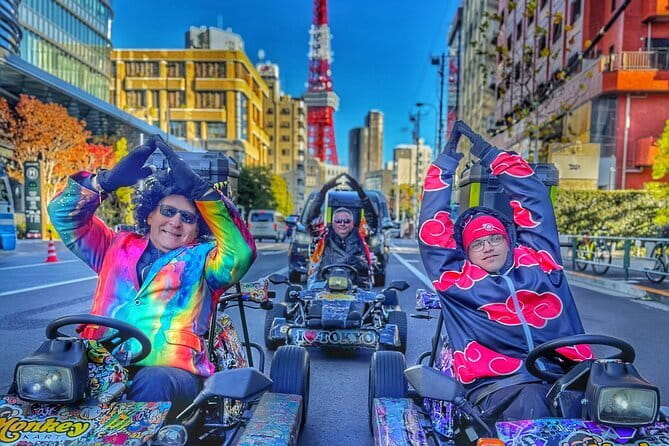
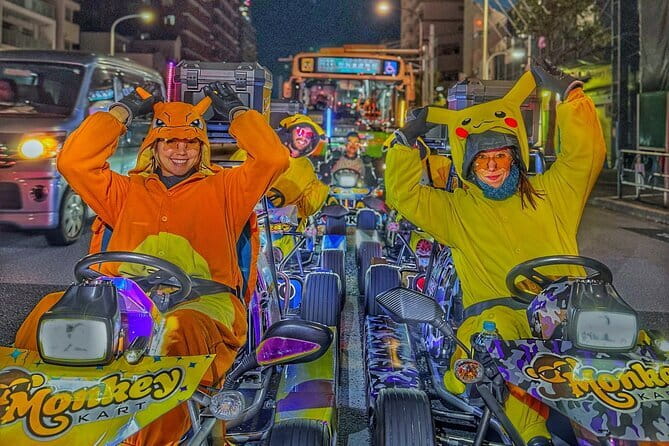
One of the fun extras is the costume. The tour encourages you to help yourself to quirky costumes for the drive. That turns the kart ride into something more playful, and it is also useful if you like photos where you are not just standing next to a landmark.
The tour also includes photo and video. That is value you can feel right away, because it reduces the pressure to perfect every selfie angle. Still, it is smart to bring your own phone so you can capture your own shots while you are waiting for the guide cue.
If you are thinking about action camera footage, there is a specific note. A data card for an Insta360 camera is not included, but it is available for purchase. So if you care about high quality footage, plan to ask about the camera setup and whether you want that optional add-on.
Finally, fuel and insurance are included. That means you are not tracking extra costs or asking yourself whether safety coverage is handled. You also get drinking water, which is a small inclusion that matters in Tokyo’s summer or if you arrive on an empty stomach.
Who should book this Tokyo go-kart Old Town tour
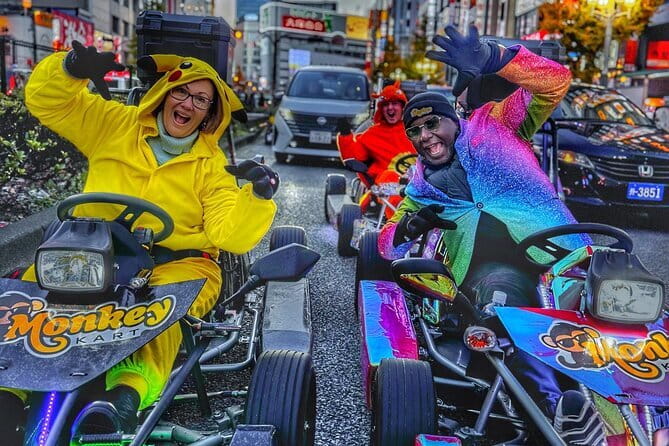
This tour fits you best if you want active sightseeing. If you like street level orientation and you enjoy driving a vehicle on a guided route, you are probably going to have a great time. The eight destinations concept is also a win for first timers who feel overwhelmed planning a logical loop.
I also think it is a good option for people who value photos and structure. Costumes, photo-video coverage, and a guide that connects the dots make the experience easier to enjoy even if you are not an expert on Tokyo.
It might be less ideal if you are missing the required paperwork. If you do not have the correct physical IDP and local license ready, you risk losing the tour with no refund. Also, if you want long museum time at any stop, the go-kart format is set up for short orientation moments, not deep, slow exploring.
The tour info says it is wheelchair accessible, which is a meaningful inclusion. Still, because the details of mobility support are not spelled out here, I recommend asking ahead how the activity handles wheelchair access on the kart setup and photo moments.
Should you book Kartzilla for Old Town Tokyo?
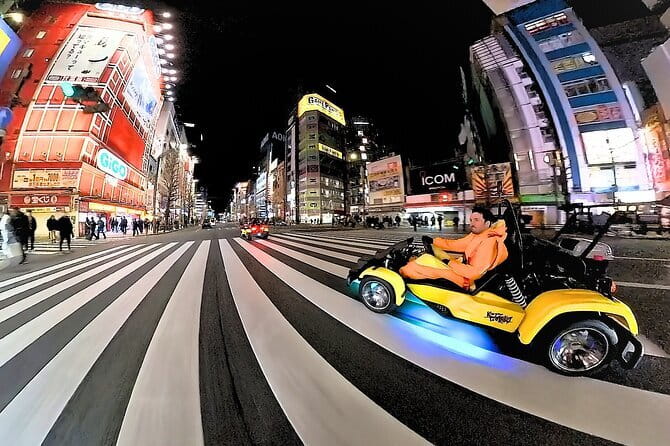
I would book if you meet the driving requirements and you want a single outing that strings together Tokyo’s most famous neighborhoods. The value is strong for what you get: go-kart rental, fuel, insurance, a guide, costume, and photo and video included at about $91.45 per person for around 1 hour 40 minutes.
The other good sign is the overall track record in the rating data provided, with a 4.8 score and 92% recommendation. That usually points to people feeling satisfied with the big elements, like the guide-led route and how smoothly the activity is handled.
I would hold off if your IDP situation is uncertain. This is the one area where logistics can truly derail the day, since the tour requires original physical documents and can cancel without refund if you cannot present them.
FAQ
FAQ
How long is the go kart experience?
The tour runs for about 1 hour 40 minutes.
How many people are in the group?
The group is capped at a maximum of 10 travelers.
What is included in the price?
Included are go kart rental, a tour guide, costume, fuel, insurance, photo and video, and drinking water.
What driving documents do I need?
You need the original local driving license and an International Driving Permit (IDP) issued under the 1949 Geneva Convention, plus your passport. If you do not provide the originals, the tour can be canceled with no refund.
Is pickup and drop-off included?
No. Pickup and drop-off are not included, and the tour ends back at the meeting point.
Where does the tour start?
It starts at Japan, 124-0014 Tokyo, Katsushika City, Higashiyotsugi, 1-chōme202 小島貸事務所.
Is the tour wheelchair accessible?
Yes, the experience is listed as wheelchair accessible.
What happens if the weather is bad?
The experience requires good weather. If it is canceled due to poor weather, you will be offered a different date or a full refund.
More Tour Reviews in Tokyo
Not for you? Here's more nearby things to do in Tokyo we have reviewed


Tokyo City Tours, side by side.
 ★ 5.01-Day Tokyo Bus TourFrom $12914,250 reviews
 ★ 4.5TOKYO SKYTREE® Admission ticketFrom $1311,192 reviews
 ★ 4.6teamLab Planets TOKYO Digital Art Museum Entry TicketFrom $259,779 reviews
 ★ 4.0Mt Fuji & Hakone Cruise, Drum Show Bullet Train 1 Day from TokyoFrom $1497,413 reviews
 ★ 5.0Shinjuku Food Tour (13 Dishes at 4 Local Eateries)From $866,603 reviews
 ★ 4.4Tokyo Mt Fuji 5th St & Hakone Cruise Bus Tour w/Bullet TrainFrom $1545,024 reviews
 ★ 5.0Flagship 2-Hours Official Street Go-Kart Tour – Tokyo Bay ShopFrom $644,974 reviews
 ★ 4.5From Tokyo: Mount Fuji Full-Day Sightseeing TripFrom $684,970 reviews
This tour also belongs to