
Review · ASAKUSA TOURS
Hand-carved stamps made with craftsmen in Asakusa, Tokyo
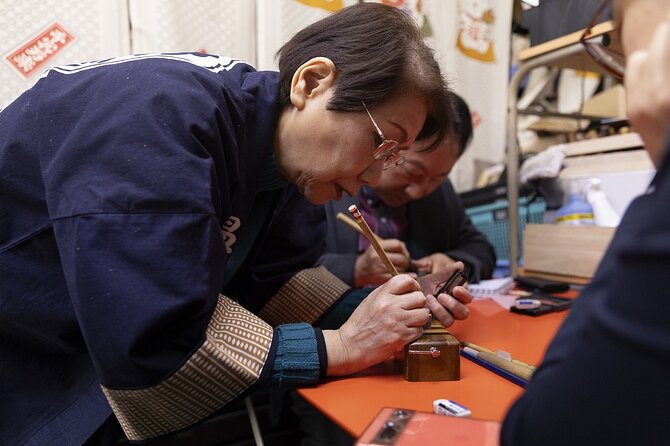
Carving your own stamp feels oddly personal. In Asakusa, you make a Japanese name seal you can actually use, while a craftsman explains the methods behind hanko making.
What I really like is the private, hands-on guidance. You carve your own design into small twigs of natural wood with one-on-one support, so you are not just watching a demo.
One consideration: the experience time can feel shorter than you expect. One earlier comment noted the session wrapped up around an hour even though it is advertised as about two hours, so plan to stay flexible.
Key things to know before you go
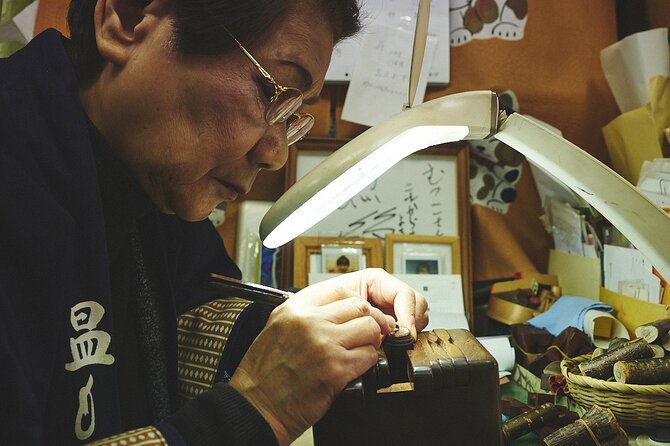
- Private workshop format means only your group participates, with guided coaching throughout
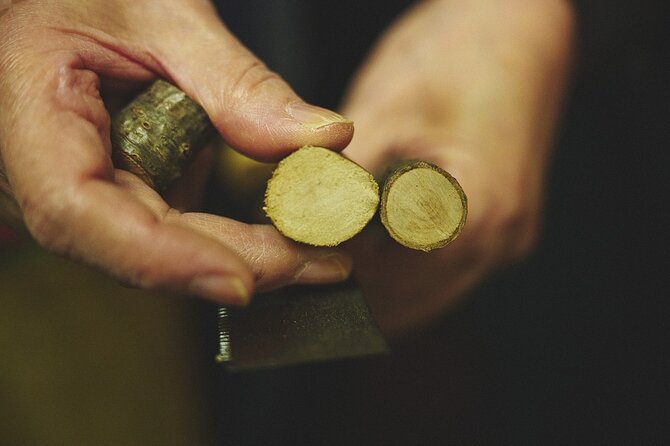
- Natural wood materials from twigs like Sakura or Sansho, shaped into about a 10 cm seal
- English interpreter included, so you can follow tool technique and design advice clearly
- Vermilion inkpad provided, so you can test your stamp right away
- Complex patterns may be harder within the time limit, so keep your design simple
- Casual clothes are best, and you may want an apron if you worry about carving debris
Asakusa hanko carving, the practical souvenir that means something
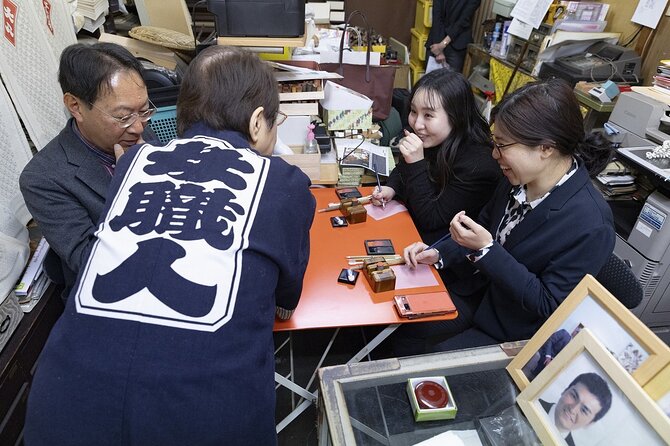
An Hanko workshop in Asakusa is not about buying a postcard or a mass-made trinket. You leave with a functional, personal object, usually the kind of souvenir people keep and use more than once.
This is especially appealing if you like crafts where the result looks simple but took real skill. A name seal is small, but the carving choices matter. Too deep or too thin changes how the stamp prints.
The other big plus is the setting. Asakusa is one of those Tokyo areas where traditional work still shows up in daily life, so the craft does not feel like an “experience set.” It feels like a working workshop.
You can also read our reviews of more tours and experiences in Tokyo.



The wood, the size, and what your design needs to do
You carve into natural wood twigs, often Sakura or Sansho, and the finished seal is about 10 centimeters long. That means you are working on a compact surface, with carving tools that require control at a small scale.
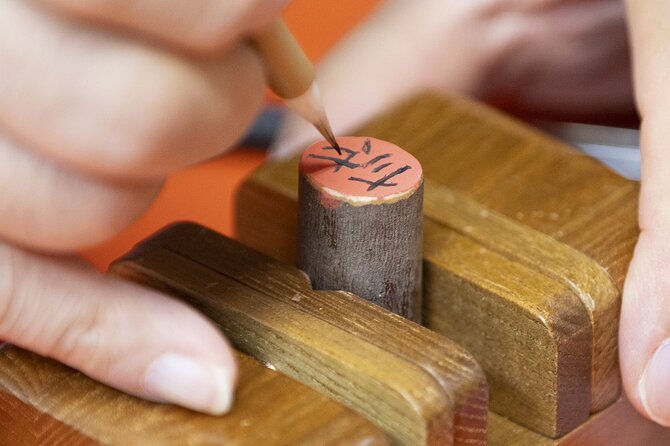
You choose your design with guidance from the artisan. You can make your name or a custom pattern. If you are imagining something very intricate, keep in mind the workshop has limited time. The rules are simple: your design needs to read well and be feasible to carve before you are done.
Here is how to think about it. You are not only carving an image, you are carving negative space. The parts you cut away will become white on the print. The raised parts become the stamp mark. Even if the artisan helps a lot, you will get the best outcome with a design that has clear, thick lines rather than hairline detail.
Your private workshop flow in Taito (and what happens at Stop 1)
The workshop runs about 90 to 120 minutes, and it is structured as a single main stop in Taito. The activity starts and ends at the meeting point in Asakusa area, so you do not have to factor in multiple transit legs or a moving itinerary.
At the start, you will meet at 伊藤印房1-chōme-19-4 Senzoku, Taito City, Tokyo 111-0031, Japan. From there, expect the session to follow the natural rhythm of carving:
- You select or finalize your pattern with help
- You transfer the design concept onto your wood in a way you can carve
- You carve with the provided tools while getting real-time adjustments
- You ink test using the vermilion inkpad
- You finish with your finished hanko to take home
Since this is a private experience, you are not stuck waiting for a group. That is one reason the workshop can feel efficient when you are focused, and why some people may finish quicker than the maximum time.
One-on-one guidance and English support, not just a quick demo
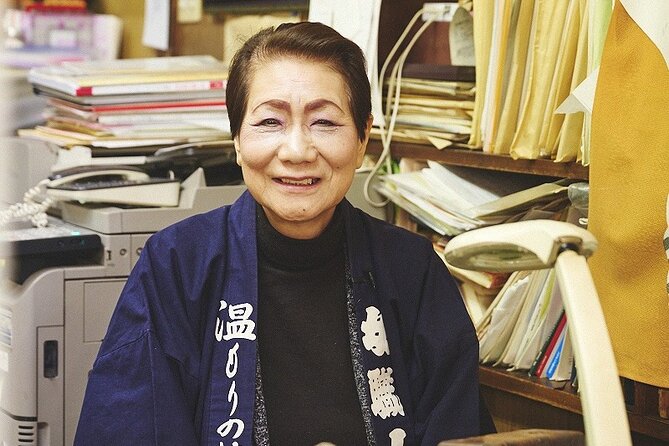
The workshop is built around personal guidance. The artisans are described as kind and passionate, and the teaching style is practical, with help when you need it. This matters because carving is where most people struggle, especially if you have never used carving tools before.
An English interpreter is included, which helps you move past vague directions. Even when you can copy an example, knowing what to fix, like line thickness or depth, is where your results improve.
One detail I found particularly interesting from the workshop stories: the host shares an inspirational background connected to being one of the early female hanko craftsmen. That kind of context changes how you view the work. It stops being just a souvenir craft and becomes part of a living tradition, carried forward by specific people.
Tools, ink, and what is actually included in your $93.33 price

Your experience fee covers what you need to make the stamp:
- Tools for the experience
- Natural wood (the twigs you carve)
- The hanko you create during the session
- A vermilion inkpad
- An English interpreter
You also get “something to do with your hands” built into the price, which is where this becomes more than a typical ticketed activity. Many craft experiences make you pay for instruction, but you still end up buying the product separately. Here, the seal is included as the main output.
There are also souvenirs available at the workshop, but those are not included in your experience fee. So if you fall in love with extra hanko designs or related items, you will likely want to browse after your carving.
And yes, there is a mobile ticket. You should expect to show your ticket on your phone near the start.



Price and value: is $93.33 a fair trade for two hours of carving?
At $93.33 per person, this is not a bargain workshop. I would call it a “pay for quality instruction” kind of price.
The value comes from three things that are hard to fake:
1) Private, hands-on teaching instead of a large-group format
2) The included materials and the finished hanko you take home
3) English support so you can actually understand what you are doing
That said, there is one pricing reality check. One earlier comment flagged that it felt expensive for the short length of time, and that it finished closer to an hour. If you are the type who wants a long workshop, a longer history talk, or a slower pace, this might feel a bit rushed relative to your expectation.
So the fair way to judge value is this: you are paying mainly for the coaching and the end result, not for a long lecture. If you want hours of guided craft history, you may feel you are paying for output rather than time.
What to wear, what to bring, and the debris question
This is a casual workshop, so dress like you might for a hands-on class. The guidance is to come in casual attire.
You do not need to bring anything in particular. But there is one smart optional item: if you are concerned about carving debris, bring your own apron. That is a practical tip. Carving wood can create small bits, and being prepared means you can relax instead of worrying about your clothes.
Toilet info is simple. There is no toilet at the experience, but there is a public restroom about one minute walk from the meeting point. Use it before you start, so you do not interrupt your carving flow.
Timing and expectations: how to plan when 90 to 120 minutes might vary

The experience duration is listed as 90 to 120 minutes, and it may vary depending on customers. In practice, you should plan as if it could run toward the shorter end if your group is efficient or if the workshop process moves quickly.
That also means it is best to schedule this as a main event, not something you wedge between trains with no buffer. In Asakusa, your day will have walking, street life, and frequent snack stops. Give yourself a calm landing time after the workshop so you can enjoy your new hanko (and pick up any extras at the shop without stress).
Who this Asakusa hanko workshop suits best
This experience fits best if you:
- Want a personalized, functional souvenir, not a decorative trinket
- Like learning crafts through making, rather than only watching
- Are comfortable with at least some beginner-level tool use
- Appreciate local artisan storytelling, including how tradition is carried forward
It is also family-friendly in the sense that kids can participate, with a clear rule. Participation is for over 10 years old. For children under 10, separate confirmation is required, so ask ahead.
If you are coming with someone who hates doing anything hands-on, this might be a tough sell. Carving is the whole point, and the satisfaction comes from finishing something with your own hands.
The main logistical anchor: one meeting point, near public transit
The start is at the workshop address in Senzoku, Taito City, and the tour ends back there. That keeps things predictable. You do not need to coordinate another pickup later.
It is also described as near public transportation, which is exactly what you want in Tokyo. You should still expect to do a short walk at the end, but it should be manageable.
Since this is a private experience, you will not be shuffled into a different group. That matters when you have design choices to make, or when you want your pace respected.
Should you book this private hanko carving workshop?
I would book it if you want a souvenir with real meaning, and you like the idea of taking home an item you actually test with ink. The included tools, materials, and hanko output make it a straightforward value proposition if you care about the result.
I would think twice if you are mainly after a long cultural lecture. The session is carved around making, and timing can run shorter than the maximum estimate. It is also priced like a premium workshop, so it is worth going in with the right expectation: you are paying for instruction and a handmade keepsake, not a long, slow afternoon.
If you book, aim ahead. This experience is typically reserved about 38 days in advance on average, so earlier planning gives you more options.
Finally, bring an open mind about your design. A simpler pattern will often look better and stamp cleaner. Let the artisan guide you, then enjoy the moment when your lines become a mark.
FAQ
How long is the hanko carving workshop?
It runs about 90 to 120 minutes, and the experience time may vary depending on the customer.
Is this a private tour?
Yes. It is a private experience, and only your group participates.
Where do I meet for the experience?
You meet at 伊藤印房1-chōme-19-4 Senzoku, Taito City, Tokyo 111-0031, Japan.
What’s included in the price?
The experience includes the experience fee, tools, natural wood materials, the hanko you create, an English interpreter, and a vermilion inkpad.
Do I need to bring anything?
Nothing in particular is required. If you are concerned about carving debris, you may want to bring your own apron.
Is there a restroom available during the workshop?
There is no toilet at the experience. There is a public restroom about one minute walk away, so use it before you start.
What material will my hanko be carved from?
You carve into natural wood twigs such as Sakura or Sansho, about 10 centimeters in length.
What age is this experience for?
Participants must be over 10 years old. For children under 10, separate confirmation is required.
How quickly will I receive confirmation?
You should receive confirmation within 48 hours of booking, subject to availability.
Can I get a refund or change my booking?
No. This experience is non-refundable and cannot be changed for any reason.
More Tour Reviews in Tokyo
Not for you? Here's more nearby things to do in Tokyo we have reviewed












Asakusa Tours, side by side.
 ★ 4.8Japanese Dance Cabaret Theater Asakusa-Kaguwa TicketFrom $492,270 reviews
 ★ 4.7Meiji Shrine, Asakusa, Skytree Bus Tour and CruiseFrom $1221,986 reviews
 ★ 4.9Roll and Authentic Sushi Making Class in AsakusaFrom $581,957 reviews
 ★ 4.8Asakusa Walking Tour with Sensoji Temple VisitFrom $221,583 reviews
 ★ 5.0Tokyo Asakusa Rickshaw TourFrom $421,375 reviews
 ★ 4.5Tokyo Panoramic 1 Day: Meiji Shrine, Asakusa, Odaiba and SKYTREE®From $851,222 reviews
 ★ 5.0Tokyo Go Kart: Asakusa, Skytree, and Akihabara **IDP MUST**From $99988 reviews
 ★ 4.7Asakusa, Skytree & Akhihabara Go-Kart City ExperienceFrom $96761 reviews
This tour also belongs to