
Review · TOKYO
Language Exchange : Meet Locals & Expats
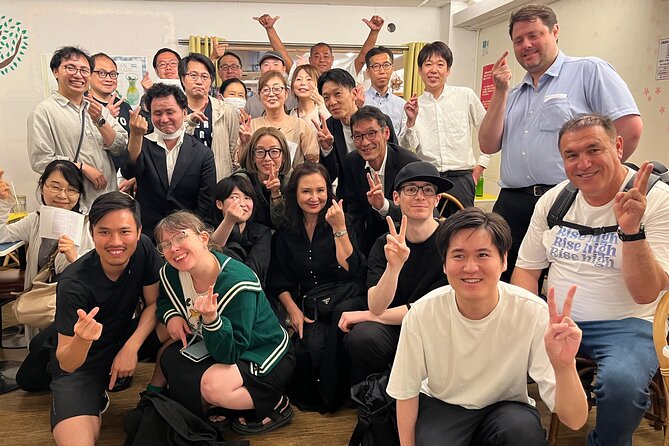
Stop studying, start chatting. This Tokyo language exchange is built for action, not awkward waiting, with rotating conversations and seat switching so you keep practicing Japanese or English. I also like the seasonal games and cultural challenges, which turn small talk into something you can actually do together. One thing to consider: because it is designed to move fast and meet everyone, you may not get long, slow one-on-one time with one person.
You meet at Sakura Cafe and Restaurant in Sendagi (Bunkyo City) and the whole session runs about 1 hour 45 minutes. It is only $10 per person, and the group stays small, with a maximum of 20 and usually more than 10. Coffee and dinner are not included, so plan to eat beforehand or keep expectations simple.
Key Things I’d Highlight Before You Go
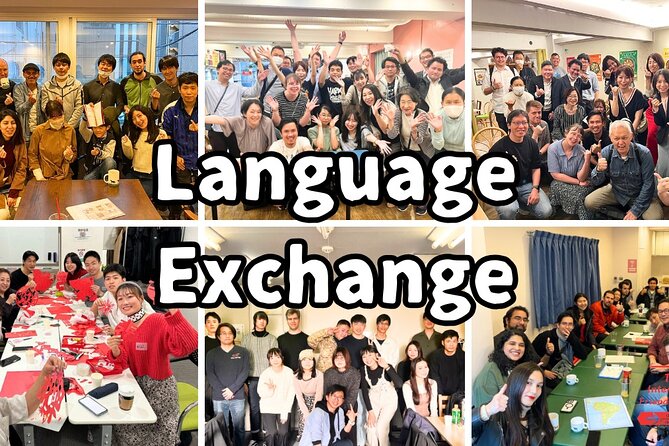
- Rotating conversations that prevent awkward silences: you are encouraged to keep moving through new partners.
- Seat switching plus meeting everyone: you do not get stuck with the same small circle all night.
- Seasonal games and cultural challenges: every session feels different, so you are not repeating the same script.
- A deliberate participant mix (40% Japanese, 60% tourists or expats): it is structured for real language practice.
- Small group size (max 20): it stays social, but you are not lost in a crowd.
Why This Language Exchange Works Better Than Most
Most language exchanges fail in one way: they become polite, quiet, and stuck. Here, the format is designed to avoid that. You get rotating conversations and you switch seats, which pushes you to talk again and again with new people instead of waiting for someone to say something.
The second big win is the mix of people and the session style. With Japanese participants at around 40% and the rest made up of tourists and expats at 60%, you are more likely to find the right balance of patience and enthusiasm. You can practice in a natural flow, not just with one kind of partner.
The third consideration is pacing. The session is built to keep changing. If you prefer quiet, low-pressure chats over a long stretch, you might feel a little rushed. But if you want momentum and variety, that same structure is exactly what you came for.
You can also read our reviews of more tours and experiences in Tokyo.



Sakura Cafe in Sendagi, Your Starting Point in Tokyo
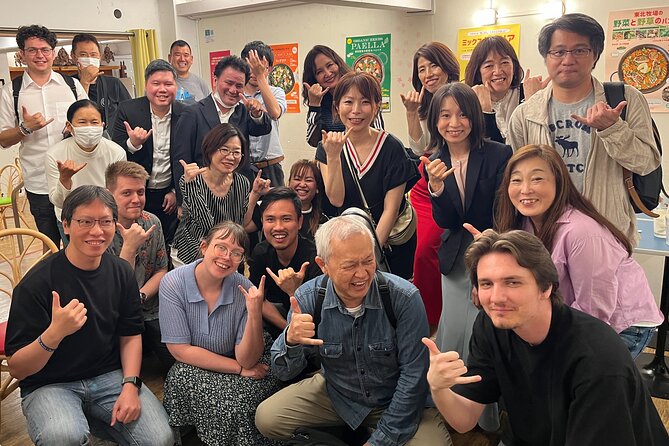
The meet-up location is サクラカフェ&レストラン日暮里3-chōme-43-15 Sendagi, Bunkyo City, Tokyo 113-0022. It runs back to the same point at the end, so you do not have to plan extra transportation tricks after the session.
This is a practical choice for a language night. You have a fixed start and finish, it is near public transportation, and you can keep your plans simple. Also, because you receive a mobile ticket, you do not need to worry about printing or forgetting paper.
What I like about picking a cafe-style setting is that it usually makes it easier to break the ice. Even if you feel shy at first, the environment tends to support short conversations. The drawback is that cafes can also get noisy. If you are the type who struggles in a crowded soundscape, come ready to ask people to repeat and keep your volume up.
The Flow of the Night: Rotating Conversations and Seat Switching
The heart of this experience is the “no awkward silences” design. Instead of pairing off and hoping conversation happens, you keep changing partners. You also switch seats and meet everyone during the session.
For language practice, that is actually smart. You get repeated chances to:
- start a conversation from scratch
- correct yourself on the fly
- try new words with someone who is fresh to your level
It also reduces the social pressure. If one conversation stalls, you are not stuck. Someone new is coming, and the language you need is usually the kind you already know, plus a bit you can pick up from context.
Practical tip: go in with a few ready phrases, the kind you can use with almost anyone. Think about simple topics like where you are visiting from, what you like doing in Tokyo, or what you want to practice. This helps you jump in fast when the rotation happens.
The possible downside is attention span. If you stop paying attention during the seat switch moments, you can lose your place. So watch for transitions and keep your phone tucked away unless you are using it for quick reference.
Surprise Seasonal Games: How They Keep Your Japanese or English Moving
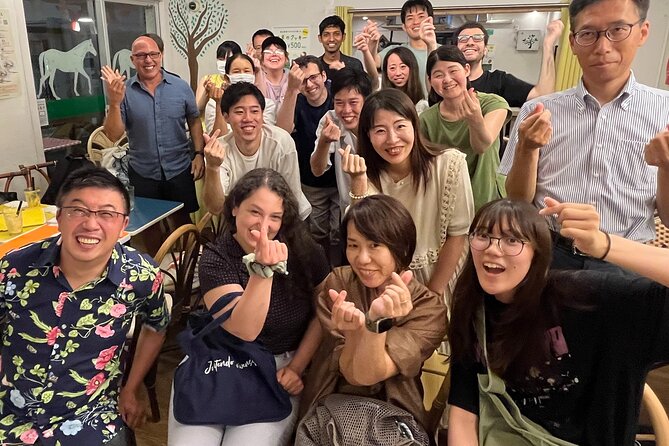
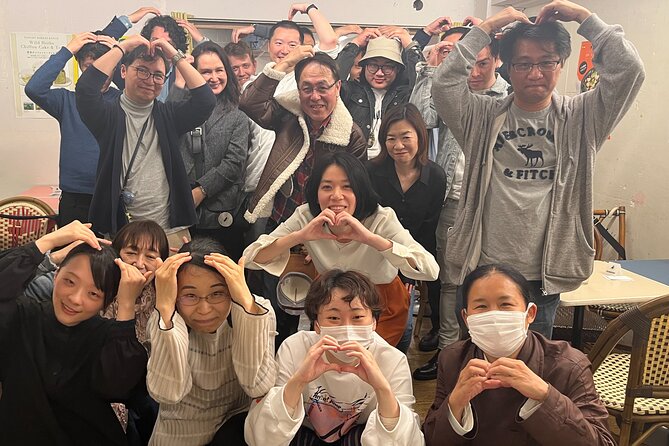
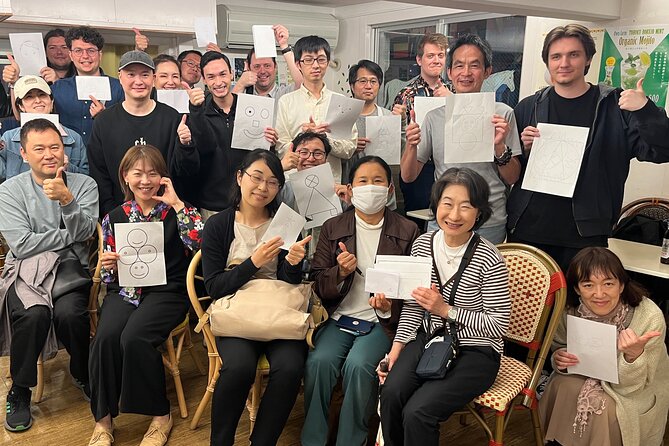
This experience promises seasonal games and activities, and that means the session is meant to feel fresh each time. The point is not just entertainment. Games are a language engine. They push you to respond quickly and use the language in action, not just in theory.
When conversations are left to chance, people often default to safe topics or short answers. With structured games, you get more chances to:
- ask simple follow-up questions
- react and negotiate rules
- learn vocabulary through what you are doing
Because the exact activities are described as a surprise, you should treat the night like a conversation with momentum, not a lesson you can study for. If you like planning, you might feel slightly uncertain beforehand. But if you enjoy social learning, that uncertainty is part of the fun.
If you are worried about your level, do not be. The format is built for mixed participants, including tourists and expats. Your job is not to perform perfectly. Your job is to participate, try, and keep the exchange going.
Who You’ll Meet: A Structured Mix of Locals, Expats, and Tourists
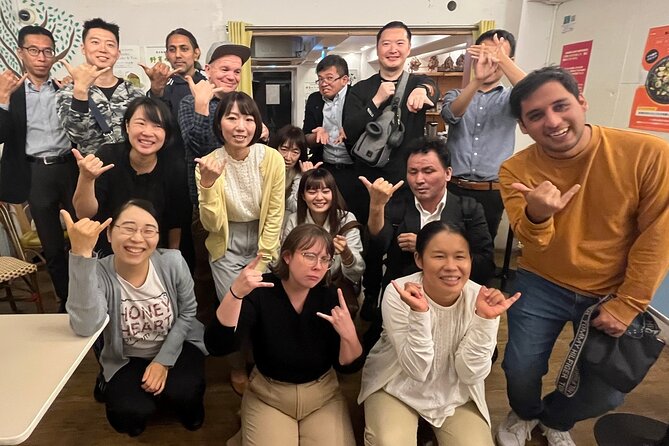
One of the most useful details is the participant balance. You will see around 40% Japanese and 60% tourist or expats. That is a helpful ratio because it lowers the chance that everyone is waiting for the same one bilingual person to carry the conversation.
Also, the experience states more than 10 participants usually join each time. That matters. With a dozen people or more, the rotation becomes real, and you actually practice with multiple voices and accents.
What you should do with that mix:
- If you are practicing Japanese, ask questions that a Japanese speaker can answer naturally about daily life or local culture.
- If you are practicing English, encourage your partner to explain concepts in their own way, not only to translate.
Consideration: mixed groups can vary a lot in confidence. Some participants will be outgoing and talkative, while others will be more cautious. The rotating structure helps you avoid being stuck in a quiet corner.


What’s Included, What Isn’t, and How to Plan Your Budget
The listed price is $10 per person, and it covers all fees and taxes. That is the main reason this is good value. Language exchange events can cost more in bigger cities, especially when they include guided interaction and keep groups controlled.
What is not included is also clearly stated:
- coffee and/or tea
- dinner
So eat beforehand if you want a relaxed experience. If you plan to grab a drink during the night, bring a little extra cash or check whether you can order at the cafe.
One more practical point: the average booking window is 48 days in advance. That likely means popular dates get filled. If you have a flexible schedule, you can still book later sometimes, but if your trip is tight, I would secure a spot early.
How to Get the Most From a 1 Hour 45 Minute Session
This is a short night, and that is good. You do not need to commit to a whole half-day. But you should treat it like a sprint, not a marathon.
Here is how to maximize the 1h45 you have:
- Arrive a few minutes early so you can settle in before the first rotation.
- Keep your questions light and specific. People respond better when the topic is concrete.
- When you do not understand, ask again with simpler words. It is better than pretending.
- After each mini-conversation, try one small improvement. For example, reuse a phrase you heard from the previous partner.
If your goal is Japanese, expect your partners to be friendly, but your progress comes from repetition. With seat switching, you get that repetition quickly. If your goal is English, the same logic applies, you just guide the flow with clear, simple language.
Small Group Size, Surprise Format: The Tradeoffs You Should Know
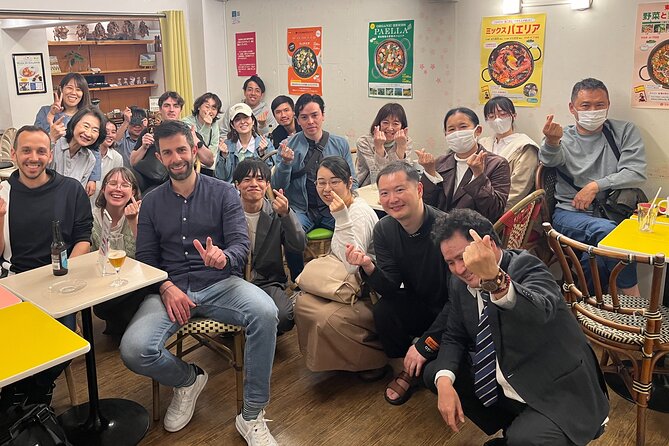
This session has a maximum of 20 travelers, which keeps the activity from feeling like a lecture or a huge mixer. With more than 10 participants, you still get variety, but you are unlikely to feel invisible.
The surprise factor cuts both ways. You are promised “every event is a surprise,” which is exciting. It also means you cannot rely on the night being calm or predictable. If you are the kind of traveler who wants a steady routine, you might feel thrown off.
My advice: go for the social structure. This is less about getting one perfect conversation and more about getting many practical ones.
If You Like This Style of Social Learning, Look at Their Sake Workshop Too
The organizer behind this activity also runs an English sake tasting workshop. In that kind of event, the standout points are the knowledgeable guidance, a cozy venue and friendly atmosphere, and a well-controlled pace that mixes explanation with tasting. Some participants describe trying a range of sake and learning how it is made and how to think about flavors like sweetness, acidity, and aroma.
Important note: that is a separate kind of event. The language exchange experience you are considering here does not list sake or drink tasting as included. Still, if you like the idea of guided culture plus conversation, it is worth checking what topics are on offer on the dates you will be in Tokyo.
Should You Book This Language Exchange in Tokyo?
Book it if you want an efficient way to practice Japanese or English with a structured group that avoids awkward silence. The rotating conversations, seat switching, and surprise games are built for people who learn by doing, not by sitting quietly and hoping.
Skip it only if you strongly prefer long, slow conversations with one partner, or you dislike unpredictable activities. Since the session is about momentum, it is not a cozy, stay-with-one-friend type of night.
Given the small group size, the low price for guided social practice, and the mix of Japanese plus international participants, I think this is a smart pick for many visitors to Tokyo. If you want a real chance to speak while meeting new people, this one is designed for that.
FAQ
How long is the language exchange?
It lasts about 1 hour 45 minutes.
How much does it cost?
The price is $10.00 per person.
Is the ticket mobile or printed?
You’ll receive a mobile ticket.
Where does the experience meet?
The meeting point is サクラカフェ&レストラン日暮里3-chōme-43-15 Sendagi, Bunkyo City, Tokyo 113-0022, Japan. It ends back at the same location.
How big is the group?
The activity has a maximum of 20 travelers, and typically more than 10 participants join each time.
What is included in the price?
All fees and taxes are included.
Is coffee, tea, or dinner included?
No. Coffee and/or tea and dinner are not included.
Can I cancel for free?
Yes. You can cancel for a full refund if you cancel at least 24 hours before the experience starts.













