
Review · NIKKO DAY TRIPS
Nikko: Day Tour from Tokyo in Spanish – Spanish
Nikkō in a single day is a smart plan. This Spanish-guided tour strings together the big sights, from the UNESCO-area atmosphere of Nikkō to the art and legends of its shrines and temples, with a guide who keeps things lively and clear. I especially like the close, friendly guidance and the way the schedule builds in a gentle flow between walking and guided stops, plus the skip-the-line entry that helps you spend more time looking and less time waiting. One thing to consider: it is not set up for everyone, since it is not suitable for wheelchair users and it does not work for unaccompanied minors, and you will be doing a fair amount of on-foot walking.
I also like the human touch. Guides such as Nerea, Laura, Ori, and Isma are repeatedly praised for explaining Japan in a way that makes the place click, and for keeping groups moving even when people move at different speeds.
The possible drawback is mainly practical: temple entry fees and your meals are extra, so the final cost depends on how you plan for tickets and lunch.
Key takeaways before you go
- Spanish live guide that explains what you are seeing, not just what it is called
- Reserved-seat express trains round trip between Tokyo and Nikkō
- Skip-the-line access via a separate entrance at major sights
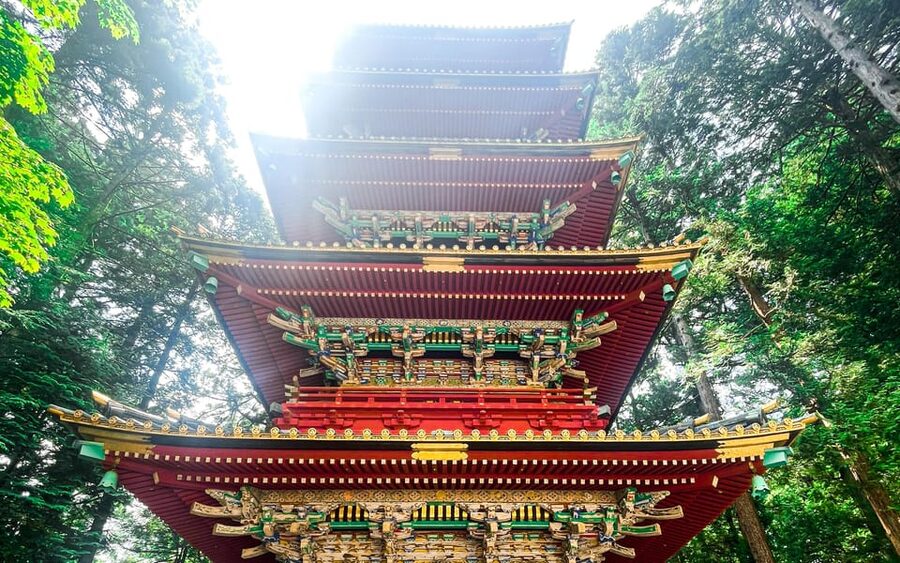
- Big-ticket sites packed in: Shinkyō Bridge, Futarasan complex, and Tōshōgū
- Eco-minded tour approach plus a guide who offers tips for the rest of your trip
- Optional hotel pickup for a smoother start in the morning
Why Nikkō feels like a story when it’s guided in Spanish
Nikkō is one of those destinations that can feel overwhelming if you arrive, point at a map, and hope for the best. This tour works because it gives you words, context, and a route that makes sense. You start in Tokyo, take the express train to Nikkō, and then the day becomes a sequence of guided moments tied together by local legends and cultural meaning.
The Spanish format matters more than you might think. Even when you know a few Japanese terms, you will usually understand details better in your own language, especially when a guide is connecting symbols, architecture, and stories. That is where you get more out of places like Shinkyō Bridge and Tōshōgū, which are famous for being visually impressive and culturally loaded at the same time.
You can also read our reviews of more tours and experiences in Nikko.
Price and what you pay for at $254 (and what is extra)
At $254 per person, this is not a bargain-basement day trip, but it is also not just a ticket to ride a train. The price includes:
- A guided excursion to Nikkō in Spanish
- An 8-hour tour (listed duration is 510 minutes)
- Round-trip express trains with reserved seats
That reserved-seat detail is practical value. It reduces stress when you travel from Tokyo, and it helps your day stay on schedule.
What is not included:
- Temple tickets (¥1,900)
- Food and drink
- Any transportation beyond the express trains
There is also a date-based note about the express trains being included in the price depending on when you booked. If you are booking later, you should double-check what your specific booking includes, so you do not get surprised by train costs.
Bottom line: you are paying for convenience, reserved seats, and a full-day guided route. You are paying extra for the temple admissions and your lunch.
Morning start in Asakusa: the meeting point and how the day begins
Your day begins at a clear, easy-to-find spot in Tokyo. The meeting point is in front of the façade of the Asakusa Tourist and Cultural Information Center. Your guide waits there with a name tag that reads NIPONEANDO.
If you chose hotel pickup, your guide will meet you at your hotel reception. Either way, the goal is the same: remove uncertainty and get you to the station without burning time hunting people down.
This matters on a day trip. When you have limited hours, every minute you do not spend figuring out logistics is a minute you can spend looking at bridges, shrines, and temple details.
The reserved-seat express train ride: use the time well
The train time is listed at 105 minutes each way. That is real travel time, but it can also be your decompression window. Once you are on a reserved-seat express, you can sit down and get your bearings for the day.
If you want to be extra prepared, this is a good time to:
- Review the key stops (Shinkyō Bridge, Futarasan complex, Tōshōgū)
- Decide what you want photos of most
- Keep your daypack light, since large luggage is not allowed
The tour then lands you in Nikkō for a guided run through the highlights.
Shinkyō Bridge walk: from main street to the Bridge of the Gods
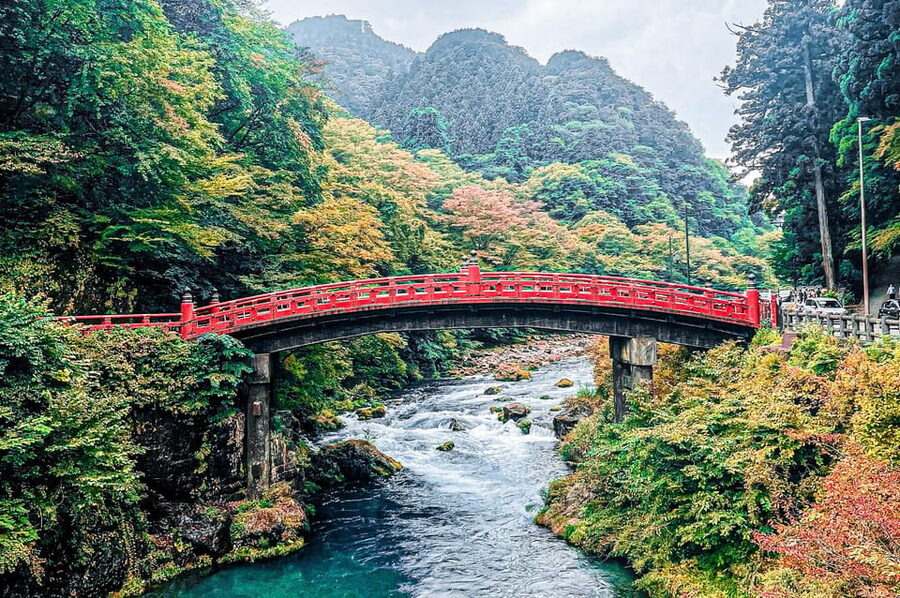
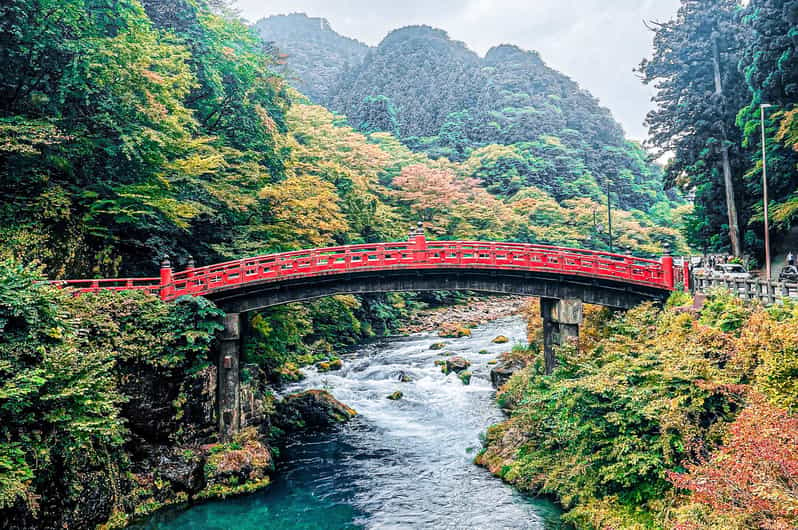
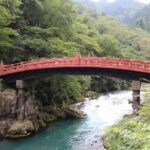
Once in Nikkō, the day moves with purpose. You walk along the main street until you reach Shinkyō Bridge, known as the Bridge of the Gods, one of the most famous bridges in Japan.
This stop is more than a photo opportunity. A guide can explain why Shinkyō matters within the larger spiritual layout of the area, and why you will see it treated as a landmark rather than just a bridge you pass.
The schedule gives you a guided visit at Shinkyō (15 minutes) and includes short on-foot segments before and after. That pacing is ideal if you like moving steadily, not waiting around, and still getting interpretation so you know what you are looking at.
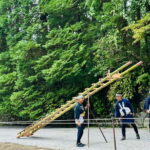
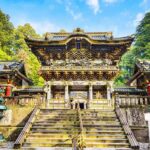
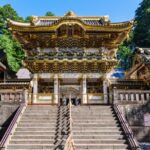
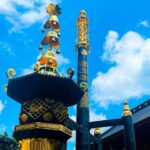
Futarasan complex: temples and shrines with legends attached
After Shinkyō, you move into the Futarasan complex area. This is where legends and place-based stories do the heavy lifting. The tour is designed so that you do not simply tick off names, you hear stories and understand the spiritual framing.
You also get guided time at Nikkōzan Rinnoji Temple (25 minutes). This is a good mix point in the day. Earlier you had the bridge as a big visual anchor, and now you shift into temple spaces and the kinds of details that reward a calm, guided look.
What I like about this structure is that it reduces the usual day-trip problem: people rush through the most famous landmark and then end up too tired to appreciate the next place. Here, the day transitions from bridge to complex, then onto the main shrine, so your attention stays intact.
Tōshōgū Shrine: where the art and the meaning meet
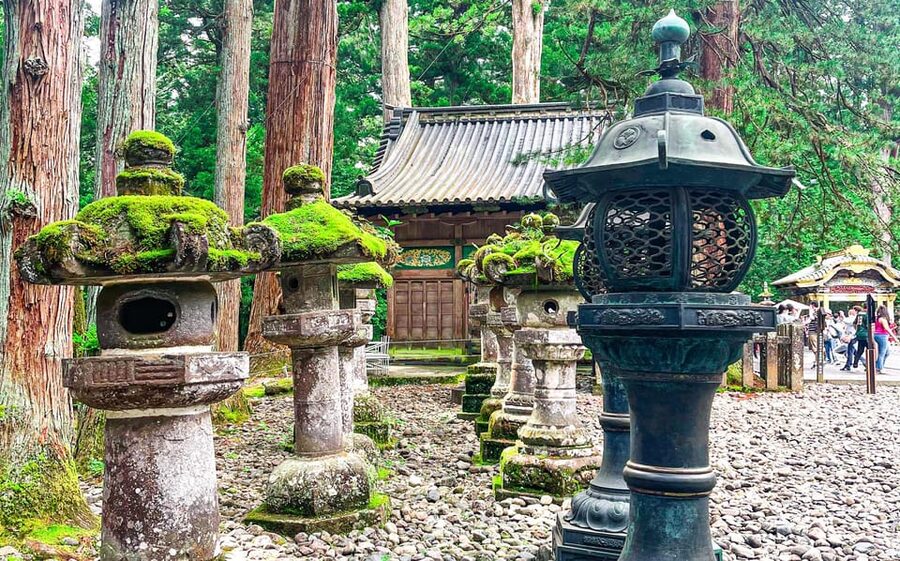
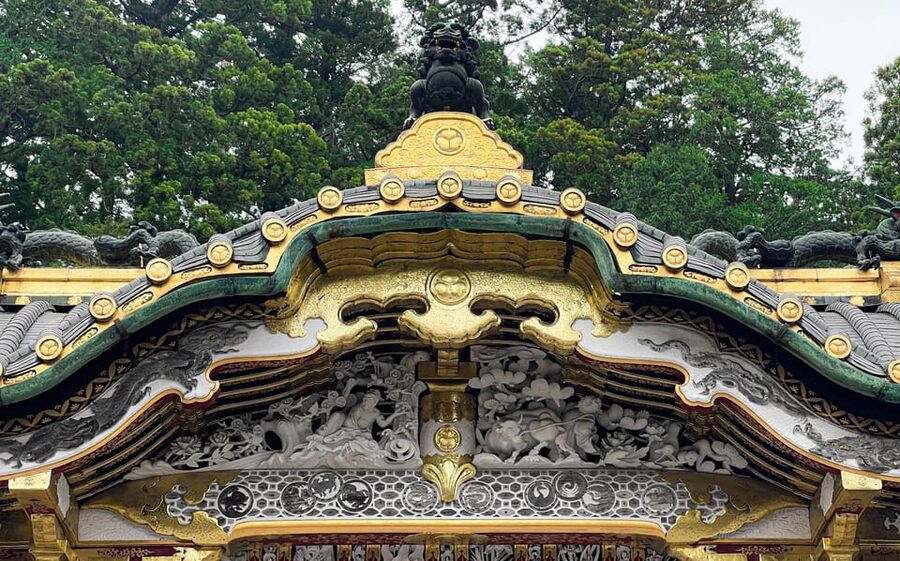
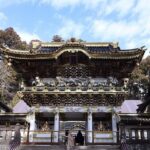
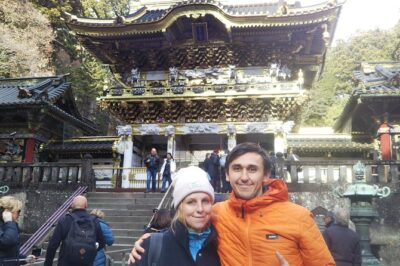
The highlight of the route is Nikkō Toshōgū Shrine, with a long guided visit (95 minutes). This is the stop that most people come for, and it is also the stop that can benefit the most from a guide.
Tōshōgū is described as one of the most beautiful shrines in Japan, and you will feel why when you are there. It is the kind of site where details matter, but details are hard to spot and interpret if you are just wandering. A Spanish guide gives you a framework to notice what you might otherwise miss.
You also get skip-the-line access through a separate entrance. That is pure practical value. When you are investing a full day, you want your energy going into viewing, not queueing.
One more scheduling note: the tour includes short walks between segments (like the on-foot time after Rinnoji and after Tōshōgū). That keeps you moving, but it also suggests that you should wear shoes that can handle steady walking and waiting in outdoor or temple-adjacent areas.
Lunch break in Nikkō: plan for food to be your choice
You get a break time and lunch window of 1 hour. Lunch and drinks are not included, which is actually helpful if you prefer a specific style of meal, or if you want to avoid food choices that do not work for you.
The tour’s structure gives you time to recharge before the final stretch, including a short walk (20 minutes) back before heading to the station.
If you want the most stress-free lunch, go in with a plan:
- Decide what kind of meal you want before you arrive
- Keep your receipt or note of where you ate, so you can meet up easily
- Stay aware of the group return time, because the schedule is built around the train ride back to Tokyo
The rhythm of the tour: how guides keep a group together
A day tour lives or dies by pacing. This one includes multiple guided segments and small walking transfers, so your guide has to keep timing while also responding to questions.
Guides such as Nerea, Laura, Ori, and Isma are praised for being friendly and for explaining details with care. In particular, Nerea is specifically noted for adapting to small-group differences in pace and planning so everyone finishes happy. Laura is described as giving clear explanations and solving doubts, and Ori is mentioned for explaining not only Nikkō but also everyday Japan topics that help you understand what you see elsewhere.
That matters because Nikkō is not just a set of buildings. It is part of a broader cultural picture. When your guide adds everyday context, the shrine art and temple layouts stop feeling like random decoration and start feeling like meaningful symbols.
What the environmental approach means in real terms
The tour is described as environmentally friendly. You probably should not expect a single dramatic environmental feature, but it tells you something about the operator’s mindset. In practice, eco-minded tours often mean fewer wasted movements, thoughtful group flow, and an emphasis on responsible travel habits.
The biggest practical benefit for you is the way the day is structured to run efficiently from station to sights, with reserved seats and a clear guided route.
Who should book this Nikkō Spanish day tour
This tour is a strong fit if you want:
- A Spanish live guide and a guided day built around major Nikkō spiritual sites
- A full itinerary with context, not just free time
- Low-stress logistics from Tokyo thanks to reserved-seat express trains
- The convenience of skip-the-line entry
It is likely a less good fit if:
- You need wheelchair access, because it is not suitable for wheelchair users
- You rely on hearing accommodations, since it is not suitable for hearing-impaired people
- You have large luggage, because large bags are not allowed
- You are traveling with an unaccompanied minor, because unaccompanied minors are not allowed
Also, consider your stamina. The schedule includes several guided stops plus on-foot segments and walking transfers, so you should be comfortable standing and walking for much of the day.
Should you book this Nikkō day tour from Tokyo in Spanish?
Yes, I think you should book it if you want a guided, high-confidence day that focuses on the core Nikkō sights: Shinkyō Bridge, Futarasan-area temples and shrines, and especially Tōshōgū Shrine with a long, guided visit and skip-the-line entry.
Make the decision based on what you care about most:
- If you value language comfort, the Spanish live guide is a huge win.
- If you value time and logistics, the reserved-seat express trains and structured stops are the reason this tour makes sense for a day trip.
- If you are cost-sensitive, remember that temple tickets (¥1,900) and lunch are extra, so you should budget for that.
If you like your travel days organized but not rushed, and you want Nikkō explained clearly in Spanish, this is a very practical way to do it.
FAQ
Is this tour offered in Spanish?
Yes. It includes a live tour guide who speaks Spanish.
How long is the Nikko day tour from Tokyo?
The duration is listed as 510 minutes.
What is included in the price?
The tour includes the Spanish-guided excursion to Nikkō and round-trip express trains with reserved seats.
Are temple tickets included?
No. Temple tickets cost ¥1,900 and are not included.
Is lunch included?
Lunch time is included as a break, but food and drink are not included.
Where do we meet the tour guide in Tokyo?
Meet in front of the façade of the Asakusa Tourist and Cultural Information Center. The guide will be waiting there with a name tag that reads NIPONEANDO.
Do I get skip-the-line entry?
Yes. You can skip the line through a separate entrance.
Is pickup from my hotel available?
Pickup is optional. If selected, the guide picks you up at your hotel reception and wears a name tag indicating NIPONEANDO.
Can I bring large luggage or bags?
No. Luggage or large bags are not allowed.
Is this tour refundable?
It offers free cancellation up to 24 hours in advance for a full refund.
More Tours in Nikko
More Tour Reviews in Nikko
Not for you? Here's more nearby things to do in Nikko we have reviewed
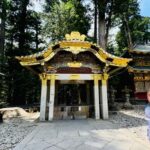
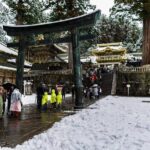
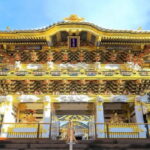
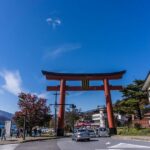
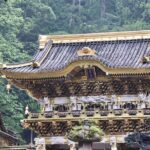
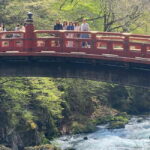
Nikko Day Trips, side by side.
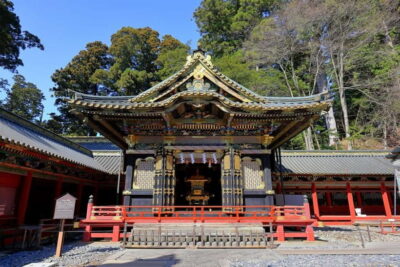 ★ 4.6Nikko: Kegon Falls, Lake Chuzenji & Toshogu TempleFrom $891,577 reviews
 ★ 4.5Nikko Toshogu Shrine and Kegon Waterfall TourFrom $841,266 reviews
 ★ 5.0Nikko Full-Day Private Tour with Government-Licensed GuideFrom $155259 reviews
 ★ 4.9From Tokyo: Nikko World Heritage Site Private Full-Day TripFrom $483243 reviews
 ★ 4.3Nikko: Edo Wonderland Edomura Cultural Theme Park TicketFrom $35205 reviews
 ★ 4.8Nikko World Heritage Private Day Trip Hotel Pick-upFrom $390145 reviews
From Tokyo: Nikko World Heritage Sight Full Day Private TourFrom $362127 reviews
★ 4.8Nikko World Heritage Private Day Trip Hotel Pick-upFrom $390145 reviews
From Tokyo: Nikko World Heritage Sight Full Day Private TourFrom $362127 reviews
 ★ 4.9Nikko – Beautiful Full-Day Personal and Private TourFrom $364119 reviews
This tour also belongs to