
Review · ASAKUSA TOURS
Samurai Sword & Sushi Experience with Chef Live Shows in Asakusa
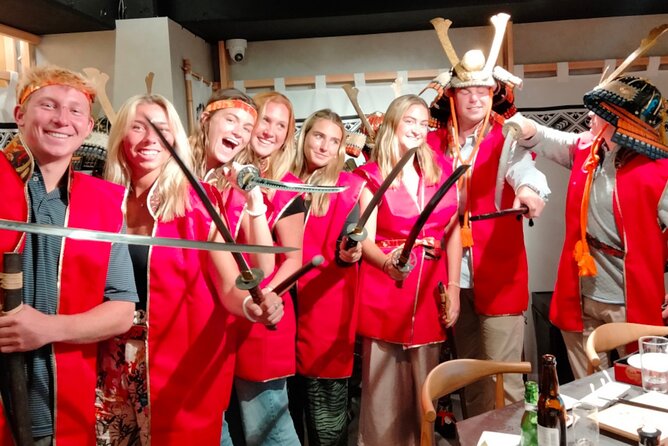
Samurai armor meets sushi class. This Asakusa experience pairs a samurai-style photo moment with an interactive sushi workshop where a chef teaches techniques you can actually repeat at home. I like that it stays small, so you get real instruction while still getting the fun, theatrical vibe.
My favorite part is the hands-on teaching, including interactive nigiri making and items cooked right in front of you like dashimaki. The tasting is built to be a real food experience too, with a spread of quality fish plus premium options such as Wagyu beef, caviar, and crab. One possible drawback: you are eating multiple sushi varieties in one sitting, and extra drinks beyond water and green tea cost extra.
Key things to know before you go
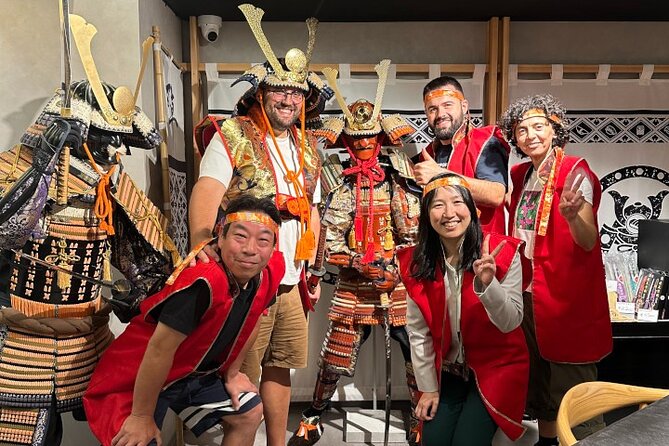
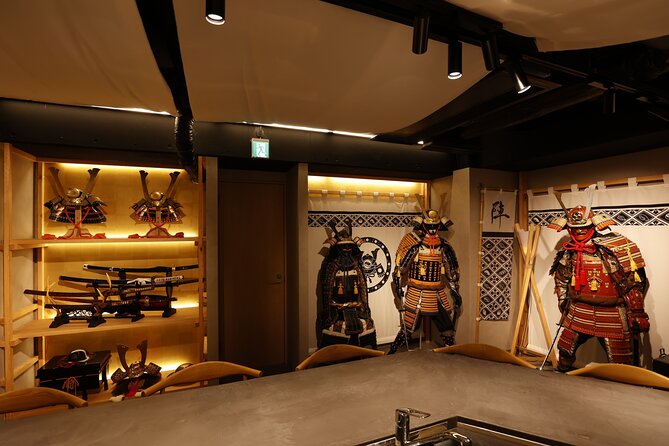
- Samurai armor and photo ops happen at the start, with swords and traditional decor as your backdrop
- Interactive sushi instruction led by a Japanese sushi chef, with you making sushi during the class
- Dashimaki grilled in front of you, so you get action, not just watching
- Small group size, maximum 12 travelers, which makes the class feel personal
- Tasting lineup of 10 types plus alpha, with premium bites like Wagyu, caviar, and crab
- Very convenient location, about 1 minute from Asakusa Station and 3 minutes from Sensoji Temple
Why the JIN-Asakusa Shogun course is a Tokyo two-in-one
This is the kind of Tokyo activity that saves you time. Instead of splitting your day between a “culture thing” and a “food thing,” you get both in one smooth block. You start in a samurai-themed space, then switch into cooking mode with a sushi chef who teaches you step by step.
The best value angle here is not just that you eat sushi. You also learn how sushi is built, what to pay attention to, and how techniques matter, so the experience has a carryover effect after you go home.
At about 2 hours, it fits nicely between other Asakusa plans. And because it’s capped at 12 travelers, you usually get more attention than you would in bigger classes.
You can also read our reviews of more tours and experiences in Tokyo.



Samurai armor photos: what the first part is really about
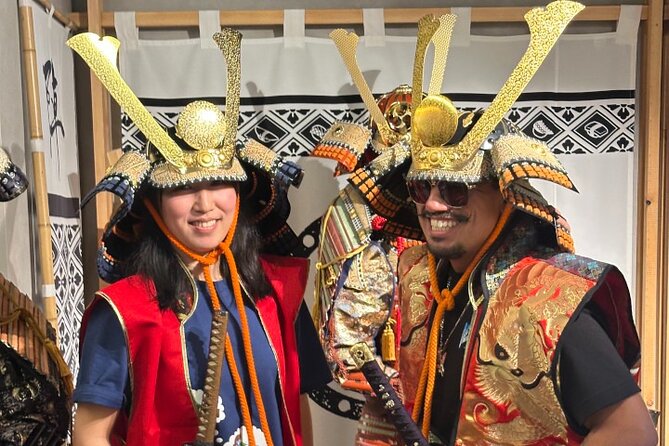
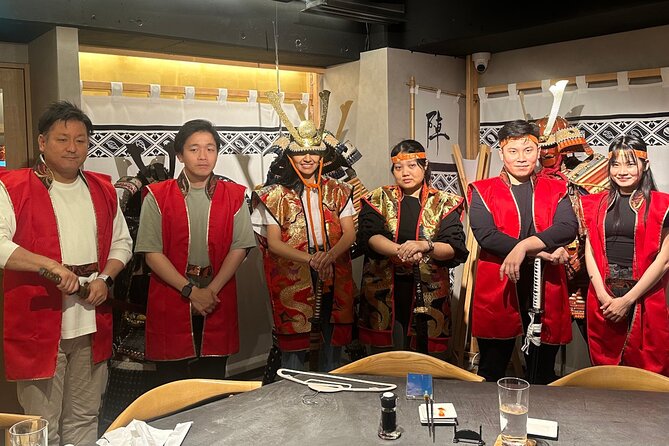
The opening segment is basically your “Tokyo costume moment,” but with a real theme tied to the setting. You dress in authentic-style samurai armor in a room filled with armor and swords, which makes the photos look like you stepped into a movie set.
Even if you are not usually into costumes, this first step is worth it because it sets the tone for the whole experience. You are not just eating in a restaurant, you are entering a themed workshop where the culture is part of the activity.
Practical tip: wear easy-to-handle clothing for the photo part, since you will be changing into an outfit. And if photos are your goal, give yourself a little extra focus right at the beginning so you are not rushing when you later get busy with sushi prep.
Sushi chef instruction: making nigiri and dashimaki in front of you
Once the samurai photo time is done, the class shifts to food training. You get a sushi chef who demonstrates and then guides you as you make sushi yourself. The teaching is interactive, not passive, so you do real work at the counter instead of just watching from a distance.
One standout detail is dashimaki, grilled right in front of you. That matters because it adds a “live cooking” element to a class that could have been all handcrafting. You get to see how heat and timing affect texture and finish, then you carry that awareness into what you build next.
You also get instruction that is described as clear and in English. In other words, you should not feel lost even if your Japanese is limited.
A useful mindset: treat the chef’s instructions like a checklist. Focus on what you do, not how fast you do it. Sushi technique is very repeatable once you know the key steps.
The tasting lineup: premium sushi bites plus Wagyu, caviar, and crab
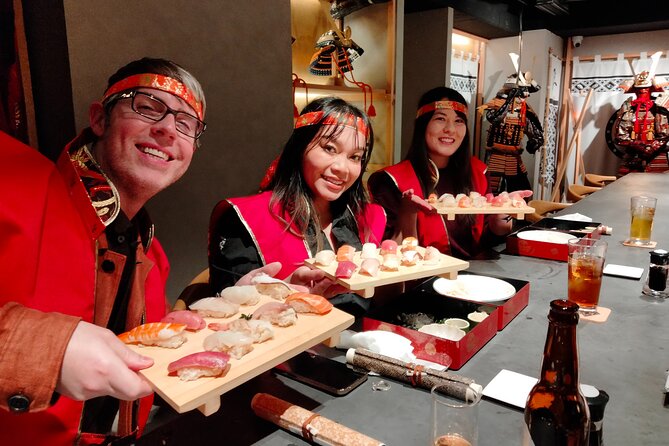
After learning and making, you eat. And you do not just get one or two pieces. The course includes sushi items totaling 10 types plus alpha, with premium ingredients called out such as tuna and salmon, and options that can include Wagyu beef, caviar, and crab.
What makes this part valuable is variety. If you are new to sushi, it helps you understand what different toppings and preparations taste like side by side. If you already like sushi, this is a convenient way to compare textures and flavors without spending the time ordering a bunch of items one by one.
One more practical angle: this is a class that encourages you to come hungry. You will be learning, then tasting, so plan your day so you are actually ready for multiple bites.
Games, trivia, and the small group size (max 12)
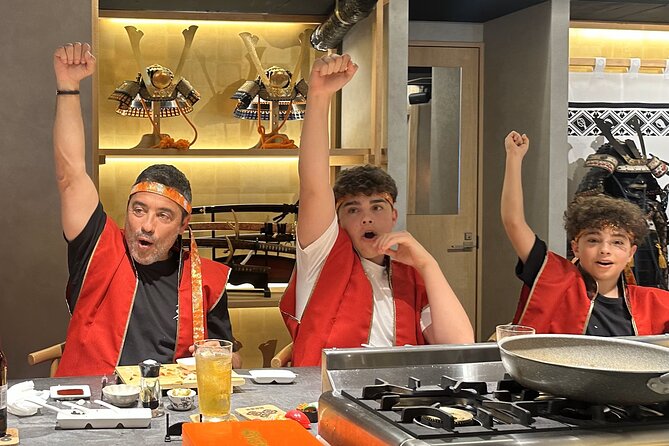
A lot of Tokyo cooking classes are either very formal or very casual. This one tends to land in the middle, with energy that keeps you engaged while you learn. Some of that energy comes from games and trivia challenges during the class.
Because the group is small (maximum 12), those games and hands-on moments do not feel like filler. You are more likely to be pulled in, get answers, and keep moving through the activity without standing around.
From the way the experience is described, the staff also plays a big role in the atmosphere. Names like Taisho (sushi master) and Saung show up in kind comments from participants, and that signals a team that tries to make the class feel welcoming rather than stiff.
If you like classes where people are friendly and the room feels relaxed, this is a good match.



Where it is in Asakusa, and why that location matters
The meeting point is at JIN-ASAKUSA 陣-浅草 Japan, 111-0033 Tokyo, Taito City, Hanakawado, 1-chōme 10-14 (CREAL浅草スカイビュースクエア), 4F.
Location convenience is a real deal in Asakusa. It is about 1 minute walk from Asakusa Station and about 3 minutes walk from Sensoji Temple. That means you can build this into a classic Asakusa day without fighting long commutes or complicated transfers.
The venue is also described as having a panoramic view of Skytree, which is a nice bonus if you want one more memorable visual before or after the class.
Simple planning tip: if you are doing Sensoji and the Nakamise shopping street, schedule this so you are not rushing afterward. Two hours goes fast, especially when you are learning and tasting.
Price and what you actually get for $49.54
The listed price is $49.54 per person, and it runs about 2 hours. At first glance, cooking classes can look pricey in Japan, but here the value case is stronger than it sounds.
Why: your price includes meal costs, service charge, and consumption tax. You are also not paying separately for the experience components you would normally have to buy as add-ons, like food, hands-on instruction, and the themed samurai outfit photo segment.
What you should budget for: additional drinks are not included, except water and green tea. If you like ordering cocktails or other drinks during meals, keep that in mind so your final bill matches your plan.
Overall, I think this lands in good value territory if you want a food experience that feels more “learn and eat” than “eat and leave.” If you only want one small sushi snack, a class like this may not make sense. But if you want to learn technique and leave full, the pricing is easier to justify.
Who should book this sushi and samurai experience
This is a strong choice if you want an Asakusa activity that is:
- Hands-on, with instruction while you make sushi
- Visually fun, with samurai armor dressing and photo time
- Food-focused, with multiple sushi types plus premium tasting options
- Easy to slot into a sightseeing day thanks to its station and Sensoji closeness
It is also family-friendly based on participant experience described for kids and teens. The class format includes games and active participation, which tends to hold attention better than a lecture-style lesson.
You might want to think twice if:
- You dislike sushi and do not want to eat multiple varieties
- You prefer a restaurant meal where you choose exactly what you order, rather than tasting a set lineup
If you are a beginner, you are also likely to enjoy it. The experience is designed around teaching technique, not assuming you already know what you are doing.
Should you book this tour or skip it
I would book it if your goal is a memorable Asakusa day that mixes culture, comedy-level fun (in the games and class energy), and real sushi learning. The best part is that you are not leaving with only photos. You are leaving with technique you can use later.
Skip it if your sushi interest is low or you are trying to keep food simple and minimal. This is a class where you eat a lot of sushi variety as part of the experience, so your appetite matters.
If you want a clear decision rule, use this: if you would enjoy dressing up, learning sushi building steps, then sampling premium bites like Wagyu, caviar, and crab, this fits. If you would rather just taste a couple items and walk away, look for a lighter meal plan.
FAQ
How long does the Samurai Sword & Sushi Experience last?
It runs for about 2 hours.
How many people are in the group?
The experience has a maximum of 12 travelers.
Where do I meet for the experience?
Meet at JIN-ASAKUSA 陣-浅草 Japan, 111-0033 Tokyo, Taito City, Hanakawado, 1-chōme1014 CREAL浅草スカイビュースクエア 4F.
Is it close to Asakusa Station and Sensoji Temple?
Yes. It is about 1 minute walk from Asakusa Station and about 3 minutes walk from Sensoji Temple.
What’s included in the price?
The price includes meal costs, service charge, and consumption tax.
Are drinks included?
Water and green tea are included. Additional drinks are not included.
What will I make during the class?
You will join an interactive sushi-making section with a sushi chef who instructs you, and you can also see dashimaki grilled in front of you.
What kinds of sushi do you taste?
The course includes 10 types plus alpha of sushi. Options mentioned include Wagyu beef, caviar, and crab, along with sushi made with high-quality fish such as tuna and salmon.
Can I cancel for a full refund?
Yes. You can cancel for a full refund up to 24 hours before the experience starts. If you cancel less than 24 hours before, the payment is not refunded.
More Tour Reviews in Tokyo
Not for you? Here's more nearby things to do in Tokyo we have reviewed












Asakusa Tours, side by side.
 ★ 4.8Japanese Dance Cabaret Theater Asakusa-Kaguwa TicketFrom $492,270 reviews
 ★ 4.7Meiji Shrine, Asakusa, Skytree Bus Tour and CruiseFrom $1221,986 reviews
 ★ 4.9Roll and Authentic Sushi Making Class in AsakusaFrom $581,957 reviews
 ★ 4.8Asakusa Walking Tour with Sensoji Temple VisitFrom $221,583 reviews
 ★ 5.0Tokyo Asakusa Rickshaw TourFrom $421,375 reviews
 ★ 4.5Tokyo Panoramic 1 Day: Meiji Shrine, Asakusa, Odaiba and SKYTREE®From $851,222 reviews
 ★ 5.0Tokyo Go Kart: Asakusa, Skytree, and Akihabara **IDP MUST**From $99988 reviews
 ★ 4.7Asakusa, Skytree & Akhihabara Go-Kart City ExperienceFrom $96761 reviews
This tour also belongs to