
Review · TOKYO SAMURAI EXPERIENCES
Samurai Swordsmanship and Sound Meditation in nature
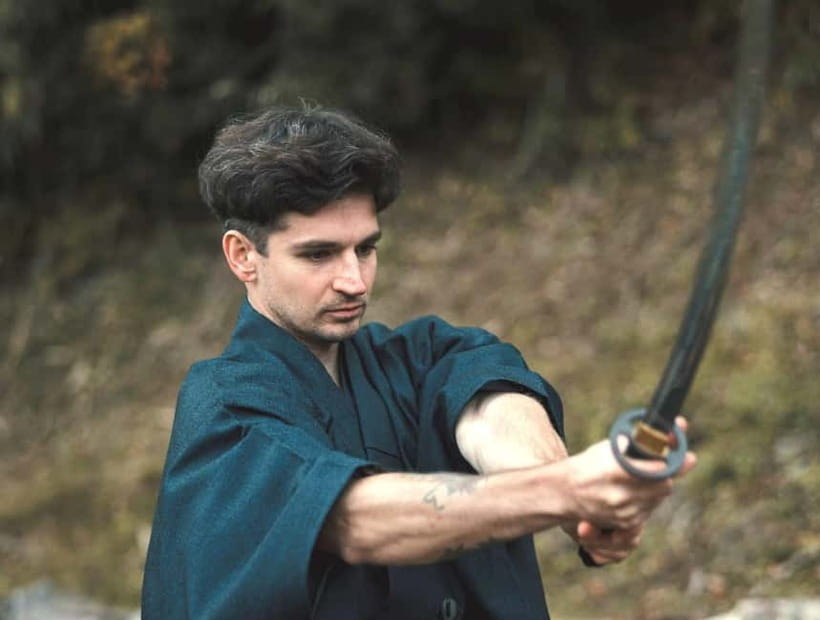
A sword lesson by running water. This is one of the rare Japan experiences that pairs Yusuke-level sword instruction with sound meditation using traditional instruments in a natural setting. I really love how the teaching stays practical, respectful, and easy to follow, even if you’ve never held a Japanese sword before. I also like that the music is not just background, it guides your breathing and attention. The main drawback to plan around is that you do standing meditation and sword practice, so you need a decent level of mobility and comfort with being on your feet.
You’ll change into kimono and hakama, then head straight to a private river for a purification ritual that feels calmer than any museum lesson. I like the structure here, you move from cleansing to focus to technique, instead of bouncing randomly between activities.
This half-day experience runs about 210 minutes for a small group of up to 10, and you practice with an unsharpened sword before the real cutting moment. If you want a quiet, cultural, body-based experience more than a city tour, this one fits nicely.
Key highlights worth planning for
- Swordsmanship taught by a tournament champion with deep family ties to samurai heritage
- Sound meditation by the river using flutes, drums, and other traditional instruments
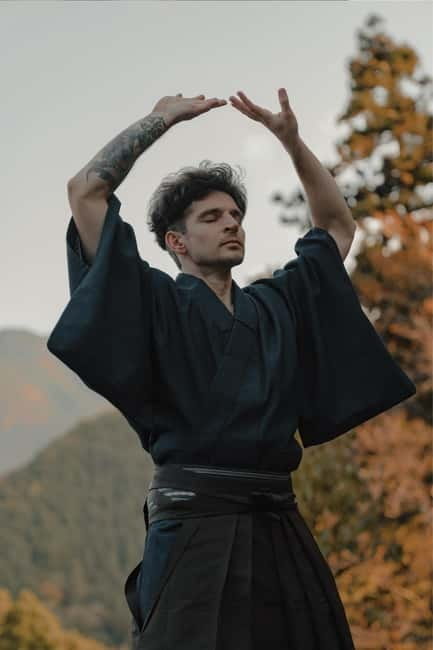
- Kimono and hakama outfit time plus photo moments in a scenic natural venue
- Purification ritual with prayer to the eight million gods and water cleansing
- Respectful sword etiquette and basic moves you can actually remember
- Authentic performance that includes sacred dance and on-the-spot musical improvisation
Honoring the sword and the river: why this experience hits differently
Japan has no shortage of samurai-themed activities. What makes this one different is that it treats sword practice like a form of personal training, not a show you watch from the sidelines.
Yusuke is the kind of instructor who seems to care about your process. He is a winner of the All Japan Swordsmanship Tournament, and he has performed as a representative of Japan in movies, TV shows, and on official Olympic-channel programming. He is also an heir to a real samurai family line, which shapes the tone of everything you do. It is not about cosplay. It is about posture, attention, and respect for the weapon.
Then you switch gears from movement to listening. The sound meditation uses traditional instruments like flutes and drums, and (in the same spirit of sound healing) also includes elements such as sound bowls and koshi, plus singing from Yoshino. You are not asked to be an expert. You’re asked to show up, breathe, and let the sounds do their work.
You can also read our reviews of more tours and experiences in Fujinomiya.

Meeting at Uenohara Station and getting out of the city
You meet at Uenohara Station, the first floor of the south exit rotary. Look for the white car. Uenohara is about an hour from Shinjuku by train, and around 2.5 hours from Narita Airport, so yes, you’re leaving the Tokyo bubble.
Once you’re picked up, you head to the private venue. The day feels intentionally staged so you have less time thinking about logistics and more time settling into the experience. Reviews also mention a river access route that involves a steep incline down to the water, which means sturdy shoes and a calm pace help.
You’ll also be in a small group, capped at 10 participants. That matters. It keeps the instruction personal and gives you time to practice without feeling rushed.
Kimono and hakama first, then the river purification with prayer
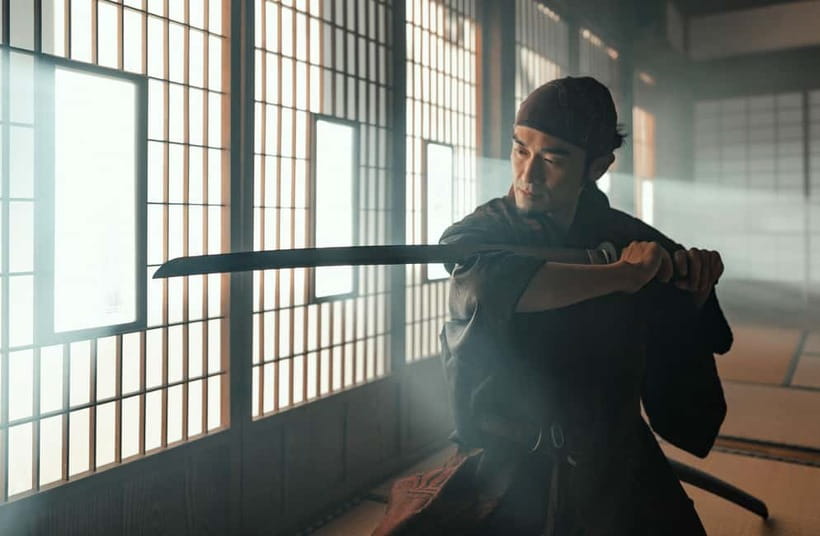
Right after you arrive, you get dressed. You’ll put on kimono and hakama, the traditional clothing associated with samurai. This isn’t just for looks. It changes how you move, how you stand, and how seriously you take the ritual steps that follow.
Then comes the purification. You use the pure water of a beautiful private river, and you also do a purification sword moment that includes reciting a prayer to the eight million gods. This sequence is a quiet mental reset. You’re not starting with technique. You’re starting with clearing your head and setting an intention.
Practical tip: wear comfortable clothes underneath so you’re not wrestling fabric during the changing process. You will be outdoors, moving between spots, and standing for stretches of time. Also bring water, because even “zen” days can make you thirsty once you’re walking and concentrating.
Sound meditation by traditional instruments, plus improvised music
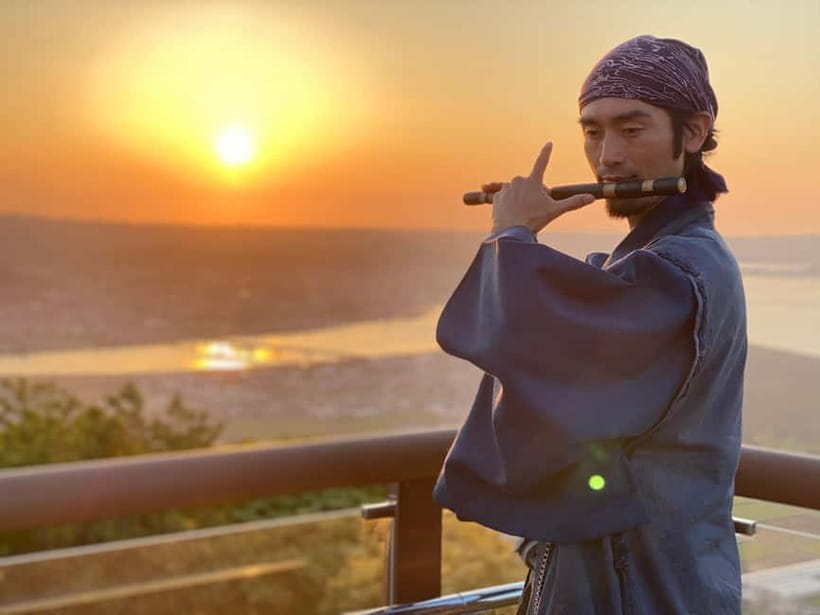
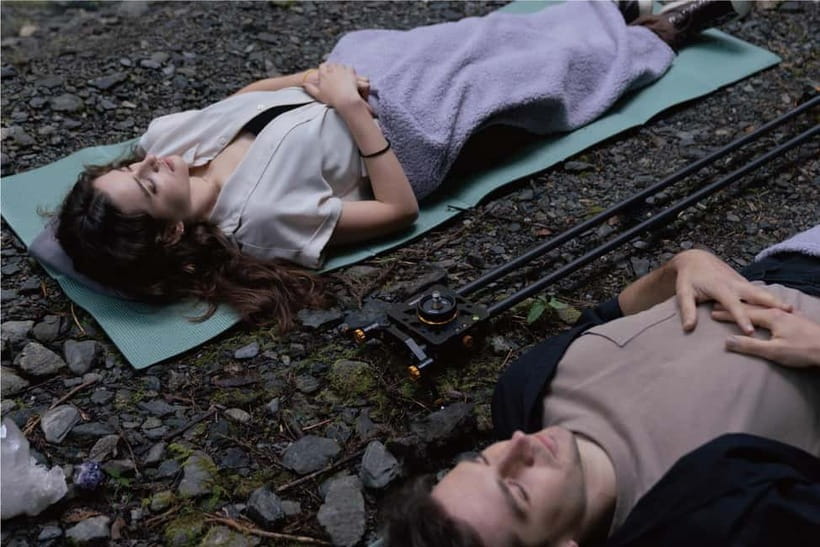
After cleansing, the experience shifts from ritual into listening. Sound meditation happens while you take in the tones of traditional Japanese instruments. Expect flutes and drums, with improvised music performed on the spot.
Yoshino plays a big role in the sound side. In descriptions from the day, the sound healing includes elements like sound bowls, drums, koshi, flute, and vocal singing. The effect you’re aiming for is simple: slow your breathing, drop your mental noise, and let the sound patterns help you find stillness.
Here’s what I think is especially valuable for most visitors: you don’t need to understand Japanese music theory. You just need to stay present. It’s a rare combo in Japan, a cultural performance that also functions like guided therapy for attention.
If weather changes, the experience may be held indoors. Either way, the point stays the same: you are using sound to tune your mind and body, not just watching someone play.
Standing Zen in nature: short, real, and demanding if you ignore your body
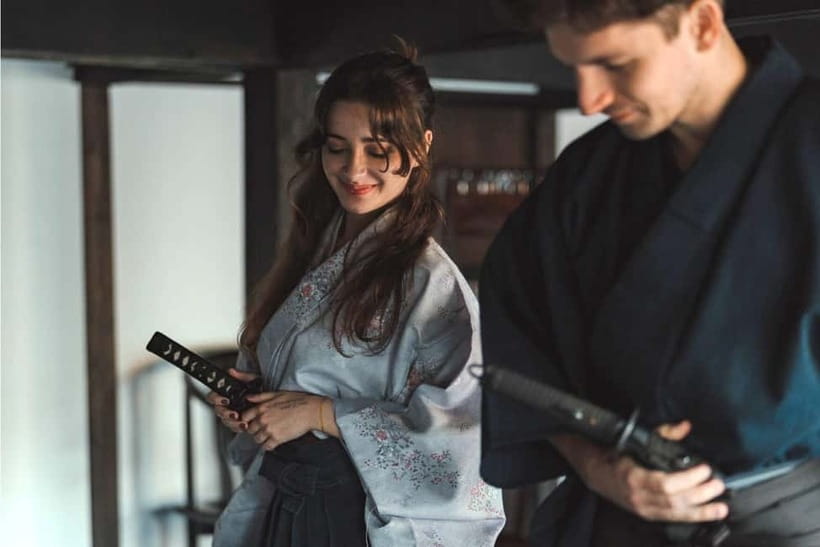
Between sound meditation and sword practice, you do standing Zen meditation while feeling nature. This is where you learn whether you actually like standing still.
It doesn’t have to be long to feel challenging. Your legs work, your focus tightens, and you notice every little discomfort. If you have back problems, this is not suitable. If you’ve been sitting all day on transit, arrive ready to move and stretch gently beforehand.
I like this part because it connects the “spiritual” vibe to something physical and grounded. You feel the air, hear the river, and notice how your thoughts behave when you stop doing and start simply being.


Swordsmanship practice with an unsharpened sword, plus basic moves
Then you get to the part most people came for: swordsmanship.
You handle a sword that is unsharpened for practice, which is smart for a first-timer. You’ll learn basic movements and how to hold and move with proper care. Importantly, you also learn respect and etiquette around the sword. That shows you the mindset behind the technique, not just the steps.
In the experience, there’s also instruction on initial basic moves, and you practice them in a way that builds from stance to motion. It’s not a bootcamp, but it is structured. The group stays small, so Yusuke can correct posture and timing.
Physical note: physical fitness is required for swordsmanship practice. That doesn’t mean you need to be an athlete. It does mean you should expect controlled arm work and stance changes, and you should feel comfortable with being steady and coordinated.
The real cutting moment and how the demonstration teaches more than it shows
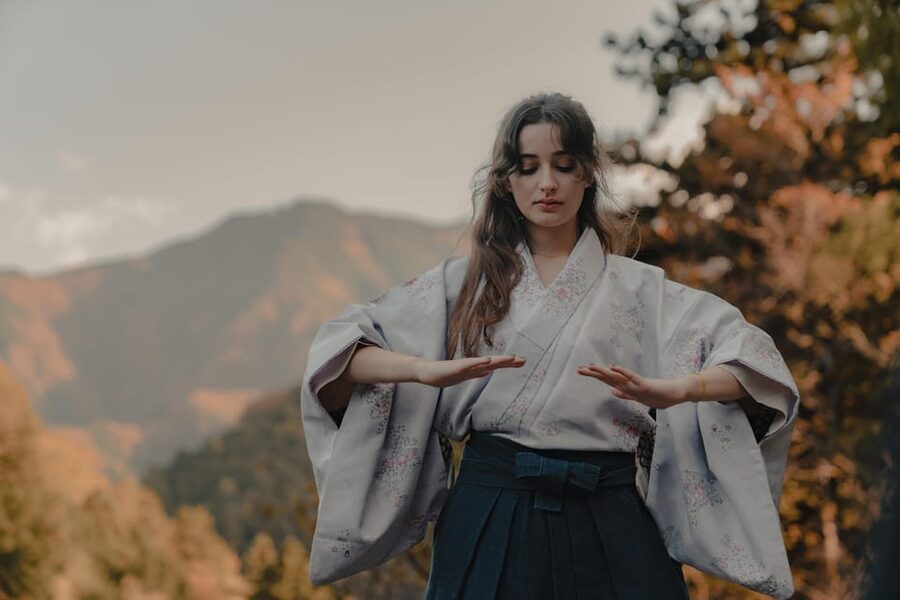
Along with sword practice, the experience includes a real sword cutting experience. That part can feel intense, but the day keeps a calm tone and shifts your role into focused participation.
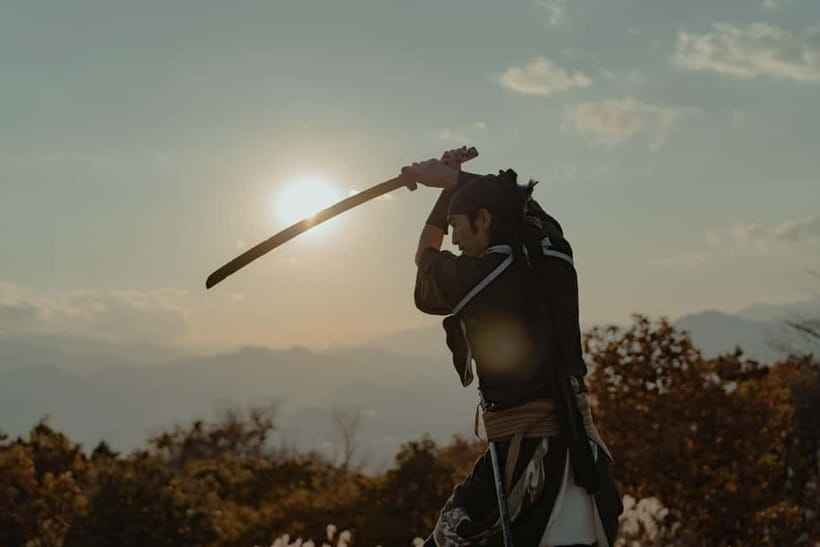
Then you also watch Yusuke’s sword performance, including an authentic sword dance and sacred dance elements. This isn’t a random flourish. It ties back to what you practiced earlier: timing, spacing, control, and respectful presence.
One reason this lands well for first-time visitors is that the demonstration gives context. Seeing the performance helps you understand why sword basics matter. The dance touches people emotionally, and that is exactly what you’re supposed to feel, not just admire.
If you’re the type who likes cultural experiences with a story, pay attention during the performance. The music and movement are linked, and the day’s theme is consistent: purification, focus, technique, expression.
Photos and tea: how to make this day feel complete
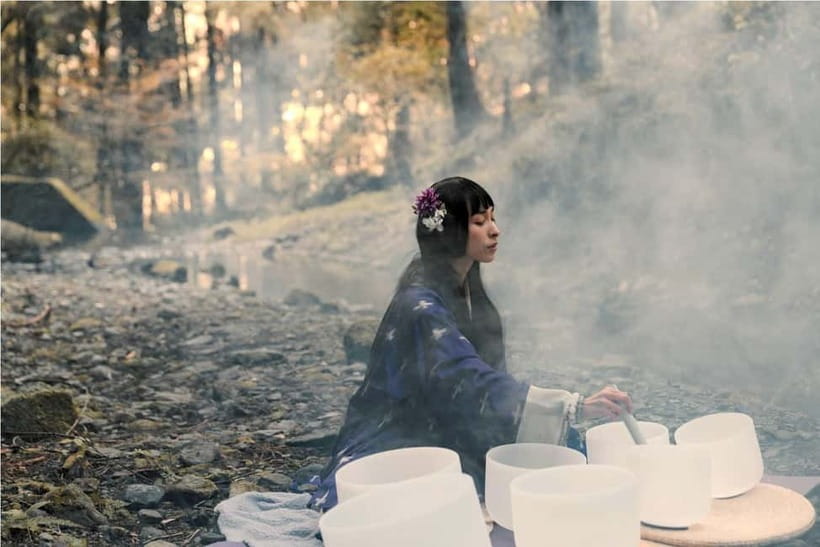
After the practice and performance, you get time for photographing and you’re served tea. This is a practical closing that turns the experience into a memory you can actually keep.
The kimono and hakama look great in natural lighting, and the river setting makes photos feel more like travel art than a staged souvenir shop moment. Bring your camera, and be ready for a bit of moving around.
If you’re sensitive to pacing, know that the experience is designed to move in phases, not in chaotic bursts. You get enough time to adjust, practice, and settle. It also ends without you feeling like you rushed out the door to catch the next train immediately.
Price and value for a 210-minute, small-group cultural experience
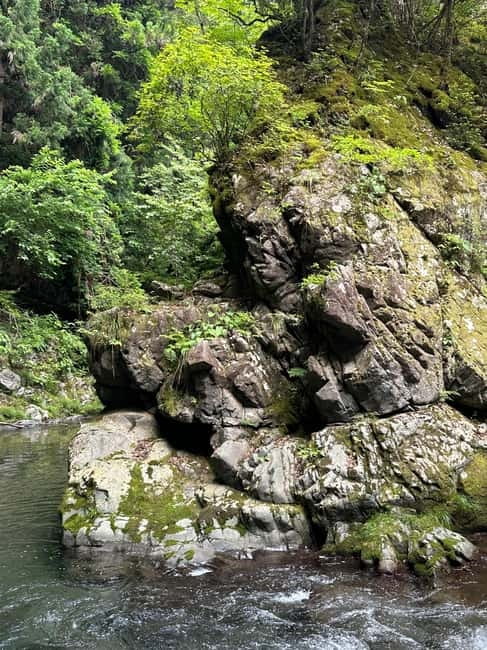
At $64 per person for about 210 minutes, this is priced like a serious activity, not a casual add-on. The value comes from the combination of things that are usually separate:
- A small group limit of 10, with hands-on instruction
- Kimono and hakama rental
- Sword practice with an unsharpened sword plus a real cutting experience
- Standing Zen and sound meditation with traditional instruments
- A performance that includes sacred dance, plus on-the-spot musical improvisation
- A private river setting and a photo moment
If you try to do these as separate activities on your own, you’d spend more in transport time, guided time, and ticket costs. The out-of-the-way location also matters. This isn’t something you could easily recreate with a self-guided audio tour.
One more value point: the day is led by someone who’s both a performer and a competitor, and the sound component is actively played and shaped in real time. That makes it feel alive, not packaged.
Who should book, and who should skip this one
This experience is a great fit if you want:
- Hands-on samurai basics, not just a lecture
- A calm, nature-centered reset from busy Tokyo life
- A cultural activity where sound matters, not just visual spectacle
- A small group setting where you can ask questions in English or Japanese
I think you should skip it if:
- You have back problems
- You are pregnant (not suitable)
- You’re traveling with kids under 12 (not suitable)
- You dislike standing still and active movement (standing Zen and sword practice are part of the day)
Also, avoid alcohol and drugs for the session, and no smoking is allowed.
Should you book Samurai Swordsmanship and Sound Meditation in nature?
If you’re choosing between another samurai museum stop and something that uses your body and senses, I’d lean strongly toward this. The mix of swordsmanship basics, purification in a private river, and sound meditation with traditional instruments is rare, and it’s the kind of experience that tends to become a lifelong memory rather than a highlight you scroll past later.
Book it if you’re curious, steady on your feet, and you like cultural practice that feels sincere. Pass if you want a low-activity sightseeing day, or if standing and sword movement would be uncomfortable.
You’ll leave with more than photos. You’ll have a sense of how samurai training connects to breathing, sound, and attention, in a way that’s hard to get anywhere else in Japan.
FAQ
How long is the experience?
The experience runs for 210 minutes, which includes pick-up and drop-off. It is described as about 4 hours total.
Where do I meet the group?
Meet at the rotary on the first floor of the south exit of Uenohara Station. The group is waiting in a white car.
How many people are in the group?
It is a small group limited to 10 participants.
What is included in the price?
Kimono and hakama rental, swordsmanship practice with an unsharpened sword, a real sword cutting experience, standing Zen meditation in nature, sound meditation, a performance of samurai art and sacred dance, and a photo shoot opportunity are included.
Is transportation included?
No. Transportation to and from the activity location is not included.
What should I bring?
Bring a camera and water. Wear comfortable clothes, and plan to have comfortable clothing underneath the kimono and hakama.
Is this activity suitable for children?
Children under 12 are not suitable for this experience.
Is it suitable for pregnant travelers or people with back problems?
Pregnant women are not suitable, and people with back problems are not suitable.
Will the experience be outdoors the whole time?
Depending on the weather, the event may be held indoors.
Are there any rules I should know before going?
Smoking is not allowed. Alcohol and drugs are not allowed.
More Tour Reviews in Fujinomiya

Not for you? Here's more nearby things to do in Fujinomiya we have reviewed
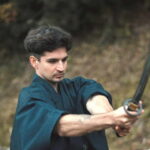
Tokyo Samurai Experiences, side by side.
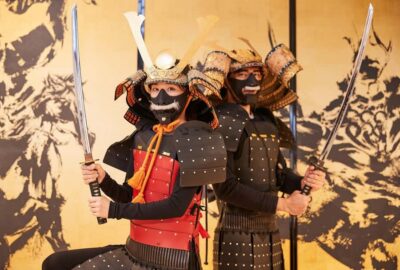 ★ 4.6Samurai Ninja Museum Guided tour and ExperienceFrom $271,010 reviews
 ★ 5.0Samurai Sword & Archery Class from Samurai DescendantFrom $193603 reviews
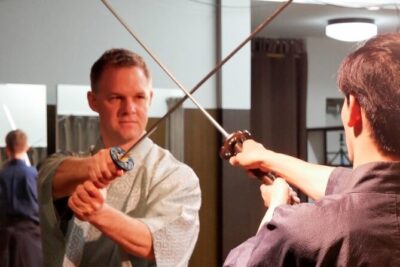 ★ 5.0Best Samurai Experience in TokyoFrom $65458 reviews
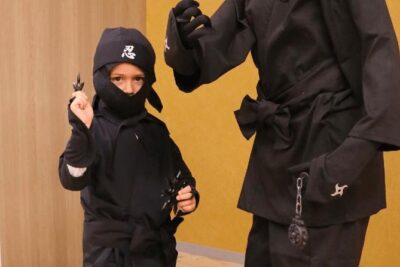 ★ 5.0Ninja Experience (Family Friendly) at Samurai Ninja Museum TOKYOFrom $47441 reviews
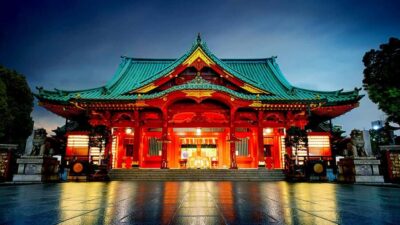 ★ 4.6Samurai Entertainment Night Show in Kanda ShrineFrom $41417 reviews
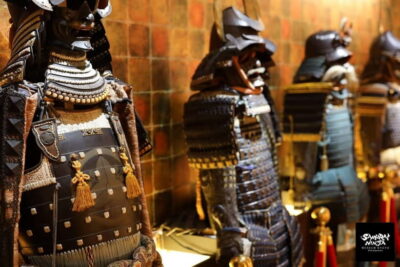 ★ 4.8Samurai Ninja Museum Asakusa: Samurai Sword Lesson & TourFrom $63306 reviews
 ★ 5.0Ninja Samurai 2-hour hands-on lesson by Japanese master in TokyoFrom $86194 reviews
 ★ 5.0Samurai Sword Experience (Family Friendly)at SAMURAI MUSEUM TOKYOFrom $65168 reviews
This tour also belongs to