
Review · TOKYO SAMURAI EXPERIENCES
Ninja Experience (Family Friendly) at Samurai Ninja Museum TOKYO
Ninja training in Tokyo is surprisingly practical. This family-friendly session turns folklore into hands-on fun with a ninja treasure hunt and a photo shoot moment at the Samurai Ninja Museum in Asakusa.
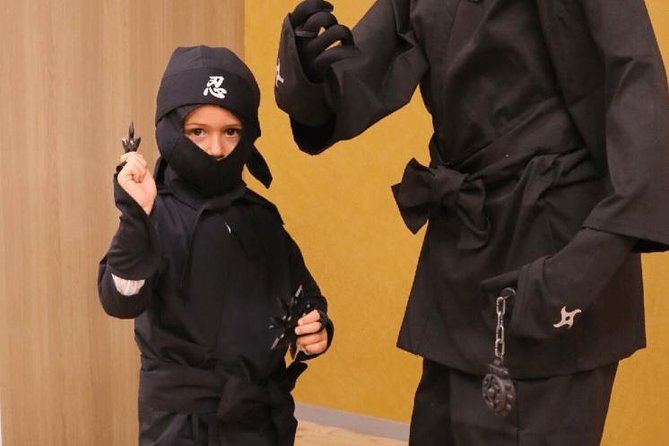
I especially like that the costume part is handled for you, so ninja outfit rental is included and you are not scrambling for add-ons. I also like the mix of history talk plus active practice, including weapon training with ninja stars and other props.
One thing to consider is that small groups can still feel busy if kids from nearby parties get into the same activity space. I’d plan to keep a close eye on your child and follow the guide’s pace.
Key highlights at Samurai Ninja Museum TOKYO
- Dress-up transformation included so kids get in character fast, without extra rental fees
- Ninja star and weapon practice that makes the session feel like a real mini training course
- Treasure hunt game that turns what you hear into something you can do with your hands
- Photo shoot with a themed background for easy, memorable pictures
- Small-group format capped at 20 travelers, with some sessions noted as up to 4
Ninja Training for Families: What the 75 Minutes Actually Covers
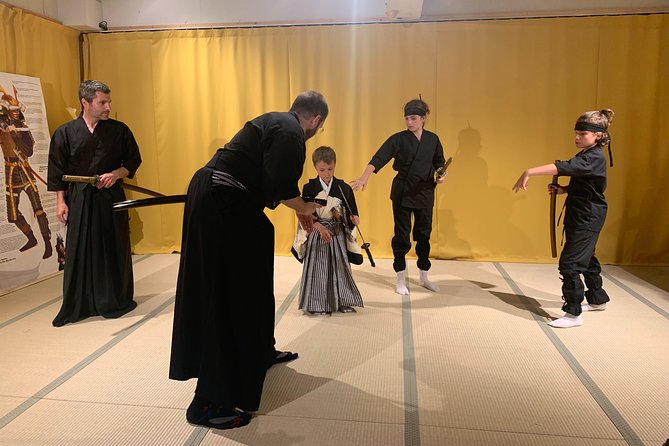
This is a compact, 1 hour 15 minutes experience that keeps moving. You start at Samurai Ninja Museum Asakusa, then work through a sequence built around costume, a short intro, practical games, and a final treasure-hunt-style challenge.
For me, the value is that it is not just sitting in a museum. You get the fun stuff kids usually want (dressing up and posing for photos) plus the structured parts adults appreciate, like learning about tools and weapons associated with ninja and samurai folklore and history.
Because the format is hands-on, it is also a good choice when your Tokyo plans need something that does not depend on long outdoor walking.
You can also read our reviews of more museum experiences in Tokyo

Checking In at Samurai Ninja Museum Asakusa and Getting Dressed
You meet at Samurai Ninja Museum Asakusa in Taito City, near public transportation. The experience ends back at the meeting point, so you are not left figuring out how to get back across the neighborhood.
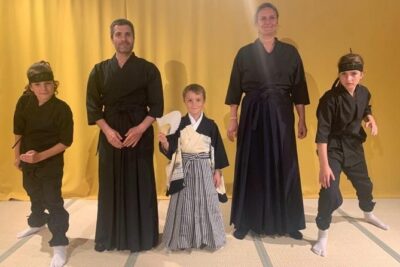
Once you arrive, the staff help you choose and put on the traditional ninja attire. This is a big deal for families because it lowers friction: you do not need to bring costumes, and kids can shift right into play mode.
The session also notes that children under 3 cannot join the ninja experience, though they can enter the venue. And children must be accompanied by an adult, so plan to stay with your child throughout the activities.
From Ninja Lore to Real Tools: Weapons, Armor, and Skills
The staff walk you through what makes ninja stories so enduring in Japan. You learn the idea of ninjas as covert agents, trained from an early age, with training that covered martial skills and techniques tied to infiltration and movement in stories.
In practical terms, this part matters because it sets the rules for the games that come next. When you understand the purpose behind the props, the weapon practice and treasure hunt feel less random and more like a guided challenge.
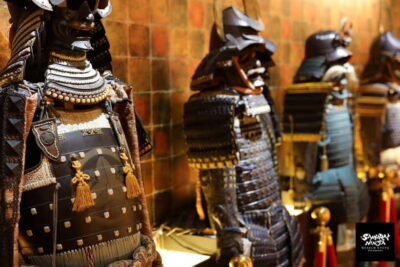
You will also see authentic weapons and armor as part of the museum element. That mixture of “here is what the objects are” plus “here is how it connects to the ninja world” is what keeps the experience interesting for both kids and adults.
Throwing Stars and Other Weapon Practice (Hands On)
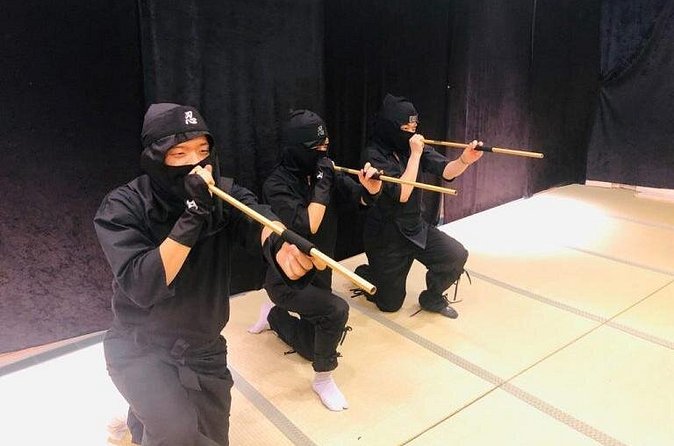
This is where the experience earns its keep. You do ninja training using ninja stars and other weapons as part of the activities. It is a controlled, kid-friendly way to try weapon concepts without turning the session into chaos.
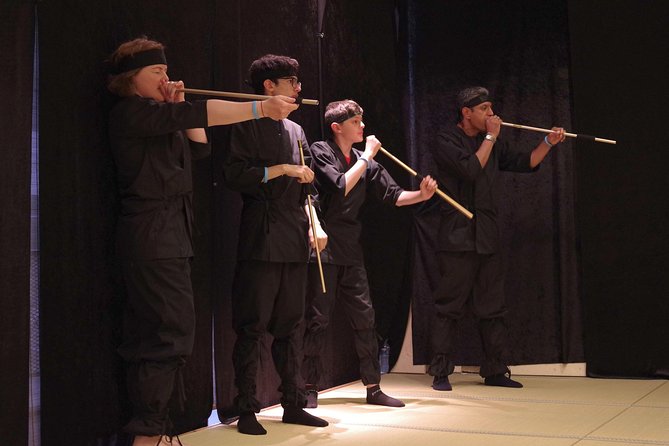
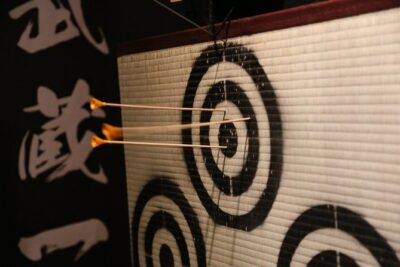
From past sessions, I’d expect stations that include both throwing-style props and launcher-style equipment, such as a blow pipe. There are also games described with darts and stars, which tells me you are not just throwing once and moving on, you are rotating through simple challenges.
The tour info also flags a moderate physical fitness level. That usually means you should be comfortable standing, moving between stations, and participating actively, but you do not need to be an athlete. It also helps to bring an adult who can keep kids focused on safety and instructions, especially for younger children.
One practical note: the experience has a small cap, but you may still be grouped with other families. If your child is easily overwhelmed, position yourself close to your guide and keep your expectations realistic for a shared, active setting.
A Photo Shoot Built for Kids Who Love Costume Moments
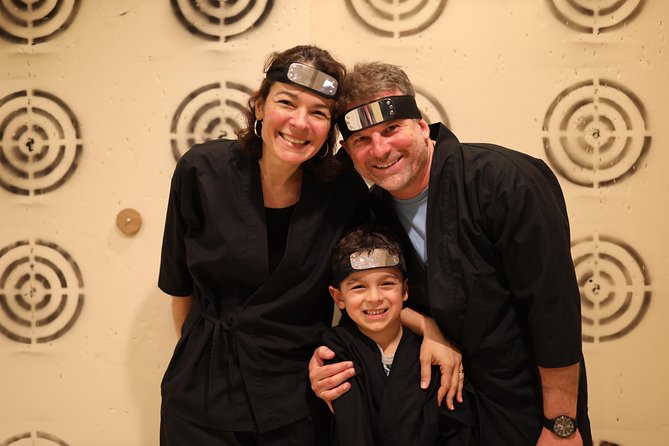
If your family likes themed photos, you will probably love this part. After training and learning, you get a photo shoot while dressed as a ninja, with a background meant to look like you stepped out of Japanese folklore.
This is one of those simple activities that makes the whole hour feel like an event. Kids get to be in character, adults get a clean, planned photo opportunity, and you come away with pictures that feel like Tokyo, not just another museum selfie.
The guide and staff are interactive, and the photo setup is designed to be straightforward for families. Plan on using this time to grab a few different shots, especially for children who take a moment to warm up.





The Ninja Treasure Hunt: Turning Facts into a Game
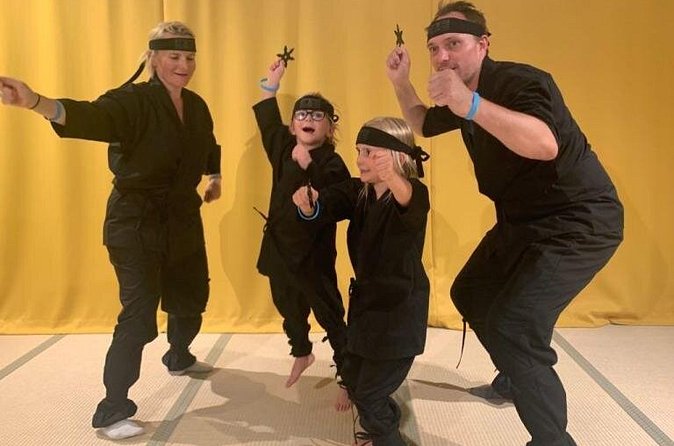
The interactive highlight here is the ninja treasure hunt included in the experience. This is the part that helps the learning stick because it turns information into actions: you look for clues, follow prompts, and work through challenges as a team.
For kids, this is the difference between “I listened” and “I did something cool.” For adults, it is a way to stay engaged without needing to memorize details.
The hunt is also naturally paced, since it is woven into the flow of the session rather than being a separate, complicated quest. If your child has trouble sitting through long explanations, the treasure hunt gives them a reason to pay attention earlier.
And since the experience is structured and time-limited, you avoid the common problem of kids getting bored halfway through a museum visit.
Price and Group Size: Is $47.92 Good Value?
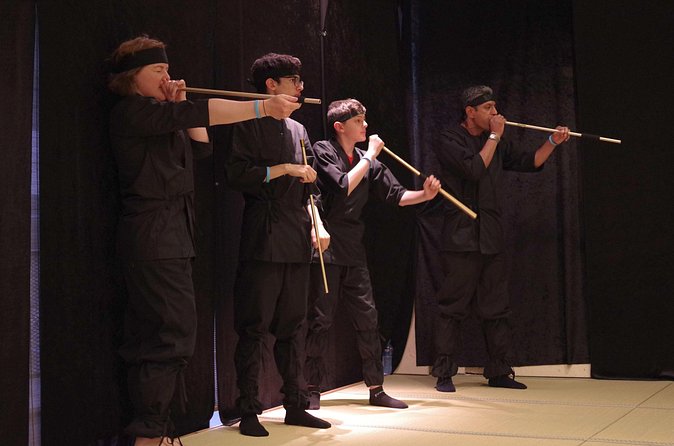
At $47.92 per person, the biggest question is what you get for the money. Here, you get more than a museum entry: costume dressing, hands-on ninja training using stars and other weapons, a photo shoot, and an included treasure hunt.
You can also treat the costume and photo shoot as “built-in extras” that would normally cost time and money on your own. The tour info specifically calls out that ninja costume rental is included, which is exactly what you want when you are traveling with kids.
Group size matters a lot for family activities, and this one is capped. The data states a maximum of 20 travelers, and it also notes a smaller maximum of 4 travelers for the experience. Either way, the ceiling is low enough that kids can stay part of the action instead of being shoved into a slow, crowded queue.
Add in the stated 1 hour 15 minutes duration, and you get a realistic “one-and-done” plan that fits into a busy Tokyo itinerary without eating your whole afternoon.
Practical Tips: How to Prepare and Who This Suits Best
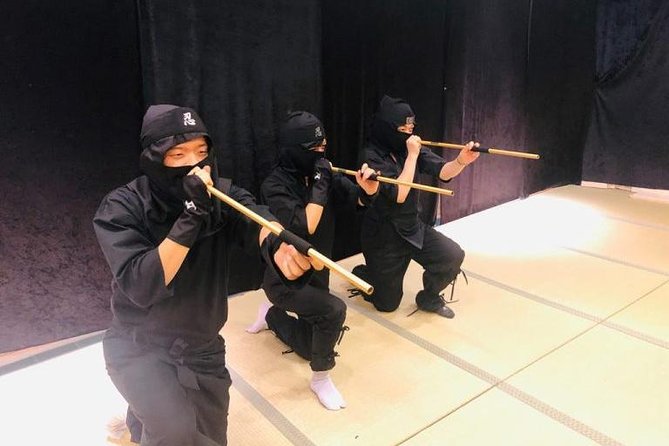
Here is how to make the experience smoother once you are in Asakusa.
First, come with a flexible attitude. This is a family-friendly, interactive session with multiple stations, so the best results come when you let your child follow instructions and move with the group rather than expecting a totally quiet, one-on-one lesson.
Second, bring the right energy for a moderate-activity format. The session is not described as strenuous, but it does expect participation, standing, and some movement between activities.
Third, plan around age. Children under 3 cannot join the ninja experience, and children must be accompanied by an adult. If your kid is the kind of learner who likes games and props, this fits well. If your child prefers books and quiet museums, you might find the hands-on training and treasure hunt more stimulating than you expected.
Lastly, remember transportation is not included. You are meeting at Samurai Ninja Museum Asakusa, and you should plan transit time to get there comfortably before your session starts. The meeting location is near public transportation, which helps.
Should You Book Ninja Experience at Samurai Ninja Museum TOKYO?
Book it if you want a short Tokyo activity that mixes costume fun, hands-on weapon practice, and a treasure hunt in one guided package. At this price, the included outfit, the photo shoot, and the interactive stations are what make the value feel fair for families.
I would skip or reconsider if your child is easily overstimulated in group settings, or if you prefer a quieter museum-only pace. Also, if your child is under 3, the ninja experience itself is not available, though the child can enter the venue.
If your family loves playful learning and you want a memorable, kid-powered story to take home from Asakusa, this is a strong match.
FAQ
How long is the Ninja Experience?
It runs about 1 hour 15 minutes.
Where do we meet for the experience?
You start at Samurai Ninja Museum Asakusa Tokyo, 1-8-13 Nishiasakusa, Taito City, Tokyo 111-0035, Japan.
How much does it cost per person?
The price is $47.92 per person.
Is there a mobile ticket?
Yes, it includes a mobile ticket.
What is included in the experience?
You wear a ninja outfit, do ninja training using ninja stars and other weapons, and take part in a ninja treasure hunt. A photo shoot while dressed as a ninja is also included.
What is not included?
Transportation to and from attractions is not included.
What are the group size limits?
The activity has a maximum of 20 travelers, and it also notes a maximum of 4 travelers.
Can my child under 3 join?
Children under 3 cannot join the ninja experience, though they can enter the venue. Children must be accompanied by an adult.
How physically demanding is it?
It recommends travelers have a moderate physical fitness level.
Can I cancel for a full refund?
Yes. You can cancel up to 24 hours in advance for a full refund.
More Museum Experiences in Tokyo

More Tour Reviews in Tokyo
Not for you? Here's more nearby things to do in Tokyo we have reviewed












Tokyo Samurai Experiences, side by side.
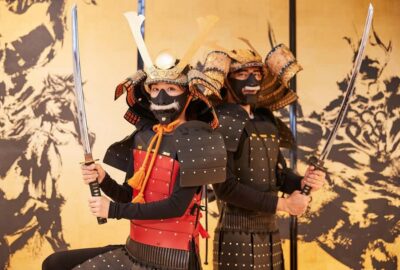 ★ 4.6Samurai Ninja Museum Guided tour and ExperienceFrom $271,010 reviews
 ★ 5.0Samurai Sword & Archery Class from Samurai DescendantFrom $193603 reviews
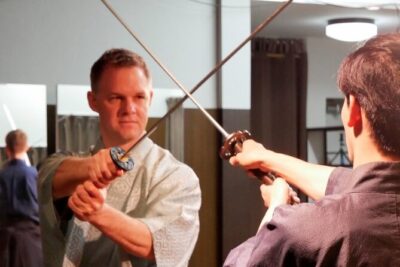 ★ 5.0Best Samurai Experience in TokyoFrom $65458 reviews
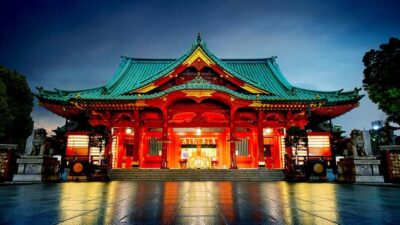 ★ 4.6Samurai Entertainment Night Show in Kanda ShrineFrom $41417 reviews
 ★ 4.8Samurai Ninja Museum Asakusa: Samurai Sword Lesson & TourFrom $63306 reviews
 ★ 5.0Ninja Samurai 2-hour hands-on lesson by Japanese master in TokyoFrom $86194 reviews
 ★ 5.0Samurai Sword Experience (Family Friendly)at SAMURAI MUSEUM TOKYOFrom $65168 reviews
 ★ 4.9Best Samurai ExperienceFrom $63124 reviews
This tour also belongs to