
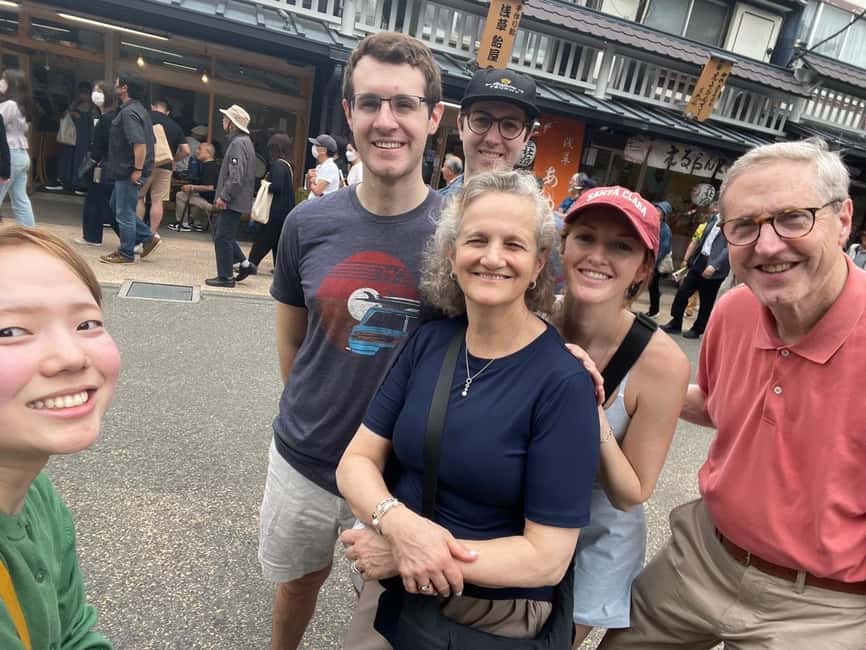
Review · ASAKUSA TOURS
Tokyo: Beyond Asakusa to Kappabashi Kitchen Town
Lanterns, knives, and hoppy alley drinks in two hours. This tight route from Asakusa to Kappabashi Kitchen Town feels like you get three sides of Tokyo at once, and I love that the tour includes hands-on fortune-telling and purification instead of just pointing at things. I also like how you move from temple history to the no-nonsense after-work vibe of Hoppy Street. One drawback is the schedule is fast, so you will need to shop with a plan since food and drinks cost extra.
You start at Starbucks by Kaminarimon, then follow a guided path through Asakusa’s key gates, shopping lanes, and religious spaces before ending in the kitchenware maze. The guide is live and can speak multiple languages, and the walking time is short enough to fit even busy days.
In practical terms, wear comfy shoes and bring cash for whatever you want to buy on Nakamise and in Kappabashi. If you do not want to participate in cultural rituals, you may prefer skipping the hands-on parts and only watching what you are comfortable with.
Key things I’d bet on before you book
- Real participation, not spectator-only: you learn the steps for drawing, reading, and tying your fortune paper, then join the purification ceremony.
- Asakusa’s gate-to-gate flow: Kaminarimon to Hozomon to Senso-ji keeps the story easy to follow.
- After-work culture on Hoppy Street: you get context for Hoppy, kushikatsu, and why people gather in those narrow alleys.
- Kappabashi for cooks and shoppers: the kitchen town focuses on tools you associate with pro kitchens, plus plastic food displays.
- A short, focused half-afternoon: 2 hours is enough to hit the highlights without taking over your whole day.
- Guides matter here: recent guides were praised for clear language and teaching with stories, which helps you spot details you would miss alone.
From the Starbucks by Kaminarimon to Asakusa’s gate loop
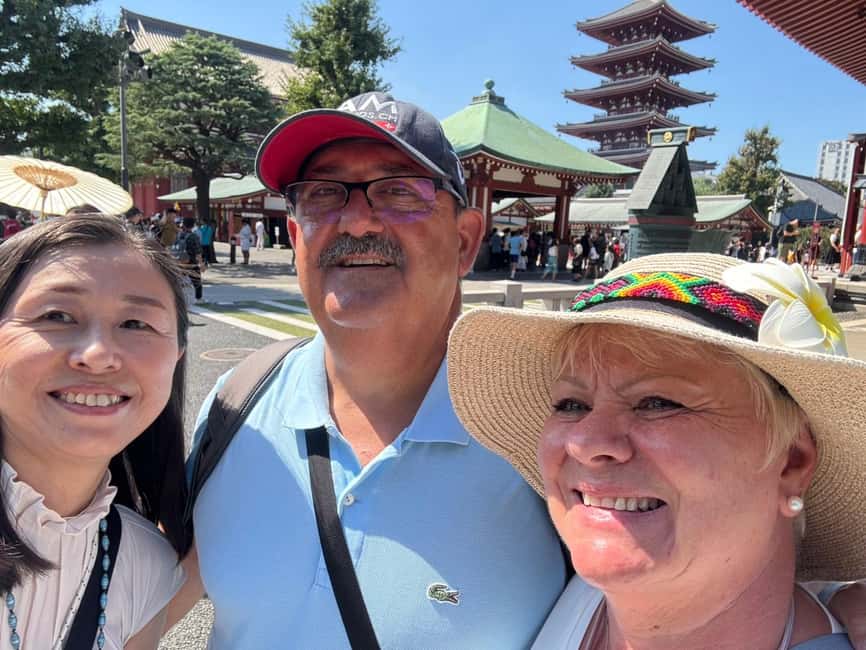
This tour starts at the Starbucks in Asakusa near Kaminarimon Gate. The meeting coordinates are 35.7113392, 139.7961047, and your guide will hold a paper with the tour name. That start matters because Kaminarimon is the visual anchor of Asakusa. It is the place you use to get your bearings, and it immediately signals that you are in the old-school Tokyo zone.
Once you’re grouped up, you begin moving through Asakusa’s main layers in a logical order. You do not hop randomly between landmarks. You walk the same corridors visitors usually do, but your guide helps you connect what you are seeing to what it means.
The group rhythm is built for a 2-hour window. That is great for time efficiency, but you should expect a steady pace. If you love lingering for photos at every corner, you will need to manage expectations and let the guide’s timing carry you.
You can also read our reviews of more tours and experiences in Tokyo.



Kaminarimon Gate and Nakamise Shopping Street, the Edo-era warm-up
You start by Kaminarimon Gate, the famous red lantern entrance that has greeted visitors for centuries. The guide explains why this gate is so symbolic, not just decorative. I like this kind of start because it turns the landmark into a story you can recall later when you are walking through the rest of Asakusa.
Then you head into Nakamise Shopping Street, often described as one of Japan’s oldest shopping streets, with roots reaching back to the Edo period. This is where the tour shifts from “big architecture” to “everyday Tokyo.” You get time to browse, and you also learn what to look for in traditional snacks and handcrafted souvenirs.
Practical tips you can use here:
- If you want snacks, decide early what you will try so you do not lose time comparing everything.
- For souvenirs, set a target category (kitchen items, food-themed trinkets, small souvenirs) before Kappabashi, because the choices multiply fast later.
The one tradeoff with Nakamise is that it can feel busy. Your guide helps you avoid aimless wandering, but the street is still a street with regular pedestrian flow.
Hozomon and the Asakusa fortune ritual, steps you do yourself
A standout part of this tour is that it treats spiritual traditions as something you learn, not just something you watch from the edge. After passing the gate area, you encounter Hozomon Gate, which houses Buddhist treasures. Your guide explains the gate’s role as a spiritual doorway, then you continue deeper into the temple grounds.
The tour then moves into the fortune-telling portion. This is where you get the most hands-on cultural experience. You are taught how to properly draw your fortune, how to read it, and how to tie your fortune paper. Many people only observe this ritual. Here, you participate, which usually means you remember the steps later and actually understand what you’re doing.
After that, you join the sacred cleansing moment at the purification fountain. You also experience the incense ritual as part of the ceremony, with guidance on the spiritual significance. The key value is practical understanding. You are not left guessing how or why people act the way they do.
One consideration: if you are uncomfortable participating in religious rituals, you may still enjoy the architecture and history, but the participation component may feel like too much. If you are fine with respectful involvement, this section is one of the best reasons to pick this tour.
Sensō-ji Temple, the 628 AD origin, and the Buddhist-Shinto neighbor effect
The core landmark is Sensō-ji Temple, founded in 628 AD. Your guide explains how it endured wars, disasters, and urban changes while maintaining its spiritual essence. That survival theme matters because it helps you read the space like it has a past you can feel, not just a photo spot.
What I like here is that you get context in plain language. Instead of only reciting dates, the guide connects history to what you see now. When a site has existed that long, details matter, even when you are moving quickly.
There is also a Shinto shrine adjacent to the Buddhist temple area, and you experience the coexistence of Japan’s two major religions through their different architectural styles. If you have never seen how Japan blends these traditions in the same neighborhood, this moment often “clicks.” You stop thinking of religions as separated boxes and start seeing them as lived, neighboring practices.
You also get photo stops along the way, so you can capture key views without turning the walk into a full sightseeing marathon.
Hoppy Street, Rokku Street, and why the after-work vibe feels different
After temples and old shopping lanes, the tour shifts to nightlife culture with purpose: Hoppy Street. This narrow alley is lined with izakaya, and the guide explains how Japanese after-work social drinking works. You get context for Hoppy, which is a local beer-like beverage, and you learn about kushikatsu, a popular snack paired with drinks.
Even if you do not drink, this part is valuable because it teaches you how to read the mood of a place. Izakaya culture is not just about food and alcohol. It is about people staying close, talking, and sharing small plates. Your guide’s explanation helps you understand why the alley feels like a community hub even when it is loud and crowded.
Then you walk through Rokku Street, described as a historic entertainment quarter that once rivaled major theater districts in Tokyo. Today it mixes old and new Japanese popular culture. I like this stop because it acts like a bridge between “traditional Tokyo” and “Tokyo right now.” In a short tour, it prevents the day from feeling one-dimensional.
The only caution is simple: nightlife alleys can get tight. If you hate crowded spaces, you might find this segment more comfortable with a calm pace and shorter photo stops.



Kappabashi Kitchen Town, the chef-grade shopping finale
The ending is what many people hope for: Kappabashi Kitchen Town, famous for kitchenware shops where professional chefs and restaurateurs have shopped for over 100 years. This is not a generic souvenir strip. It is a destination for tools.
You browse authentic Japanese kitchen knives crafted by generations-old smithies. Even if you never buy a knife, it helps to see how craftsmanship is presented in real shop settings. You also see hyper-realistic plastic food displays, which are common in Japan, but looking at them in a kitchen-focused zone makes the whole display culture feel more intentional.
The tour also emphasizes that you are seeing the kind of tools used in Japan’s finest restaurants. That framing matters for your expectations. This is not cosplay cookware. It is the real language of Japanese kitchens, the stuff chefs recognize and use.
What you can realistically do here:
- If you want a practical purchase, focus on one item category (knives, kitchen accessories).
- If you want something small, look for food-themed souvenirs and compact kitchen-related gifts.
- If you want to browse without buying, treat it like a museum of Japanese cooking culture, but in retail form.
The Kappabashi portion is the best time to use a shopping strategy because you will walk past many shops quickly. You are also better off deciding what you want before you stand in front of the most tempting displays.
Price and value: $17 for 2 hours, what you actually get
At $17 per person for a 2-hour guided walk, the value comes from what is included, not just the route. This is a guided walking tour with cultural immersion activities, including:
- Purification ritual participation
- The fortune-telling ritual (with instruction on drawing, reading, and tying the fortune paper)
- Guided exploration of Hoppy Street
- A guided tour of Kappabashi Kitchen Town
Food and drinks are not included, and personal shopping is on you. That is normal for a market and nightlife area, and it is actually a plus. You can keep the tour affordable while still making choices about what you want to eat or drink.
Where the price feels fair is in the “learned time.” A guide helps you understand what is happening during rituals and why certain areas matter. Without that context, you can still visit these places on your own, but you will likely miss why the steps matter and what to pay attention to in the kitchens.
Who should book this tour, and who might not love it
I think this tour is best for you if:
- You like cultural learning that is hands-on, not just lectures
- You want a compact day plan that covers Asakusa, temple spaces, nightlife culture, and kitchen shopping
- You enjoy guided context for things you would otherwise walk past
You might consider skipping it if:
- You dislike participation in religious rituals, even with respectful instruction
- You want a slow, unstructured walk with lots of free time for browsing
- You prefer meals to be included, since food and drinks are not part of the package
Should you book this Asakusa to Kappabashi route?
If you want Tokyo flavor without planning a complicated day, I would book it. The combination is smart: you get iconic Senso-ji history and the practical “how to do the ritual” parts, then you shift to Hoppy Street for after-work life, and you end at Kappabashi where kitchen culture becomes tangible.
The guides named in recent feedback, like Sanae for French-speaking groups and Shun for English-speaking groups, were praised for clear communication and using examples and personal stories to make the history easier to remember. That teaching style is exactly what makes a short tour feel worth it.
Just go in with one mindset: this is a guided sprint. If you embrace that, you will leave with more than photos. You will have a better sense of what each place means, and you will shop smarter at Kappabashi.
FAQ
Where is the meeting point?
Meet your guide in front of the Starbucks in Asakusa, by Kaminarimon. The listed coordinates are 35.7113392, 139.7961047.
How long is the tour?
The tour duration is 2 hours.
What is the price?
The price is listed as $17 per person.
What does the tour include?
It includes a guided walking tour, cultural immersion activities, purification ritual participation, exploration of Hoppy Street, and a tour of Kappabashi Kitchen Town.
What is not included?
Food and drinks are not included, and personal shopping expenses are also not included.
Is the fortune-telling ritual something I just watch?
No, you participate. The guide teaches you how to draw, read, and tie your fortune paper.
Do we do a cleansing ritual?
Yes. The tour includes the sacred cleansing ceremony at the purification fountain, plus an incense ritual.
Do you visit both Buddhist and Shinto sites?
Yes. You visit Sensō-ji Temple and also experience the nearby Shinto shrine area and its different architectural style.
What languages are available for the live guide?
The guide is available in English, Spanish, French, Chinese, Korean, Portuguese, Japanese, and Russian.
What should I bring or wear?
Wear comfortable shoes for walking, and bring cash for personal shopping. Be prepared for cultural rituals and participation.
More Tour Reviews in Tokyo
Not for you? Here's more nearby things to do in Tokyo we have reviewed












Asakusa Tours, side by side.
 ★ 4.8Japanese Dance Cabaret Theater Asakusa-Kaguwa TicketFrom $492,270 reviews
 ★ 4.7Meiji Shrine, Asakusa, Skytree Bus Tour and CruiseFrom $1221,986 reviews
 ★ 4.9Roll and Authentic Sushi Making Class in AsakusaFrom $581,957 reviews
 ★ 4.8Asakusa Walking Tour with Sensoji Temple VisitFrom $221,583 reviews
 ★ 5.0Tokyo Asakusa Rickshaw TourFrom $421,375 reviews
 ★ 4.5Tokyo Panoramic 1 Day: Meiji Shrine, Asakusa, Odaiba and SKYTREE®From $851,222 reviews
 ★ 5.0Tokyo Go Kart: Asakusa, Skytree, and Akihabara **IDP MUST**From $99988 reviews
 ★ 4.7Asakusa, Skytree & Akhihabara Go-Kart City ExperienceFrom $96761 reviews
This tour also belongs to