
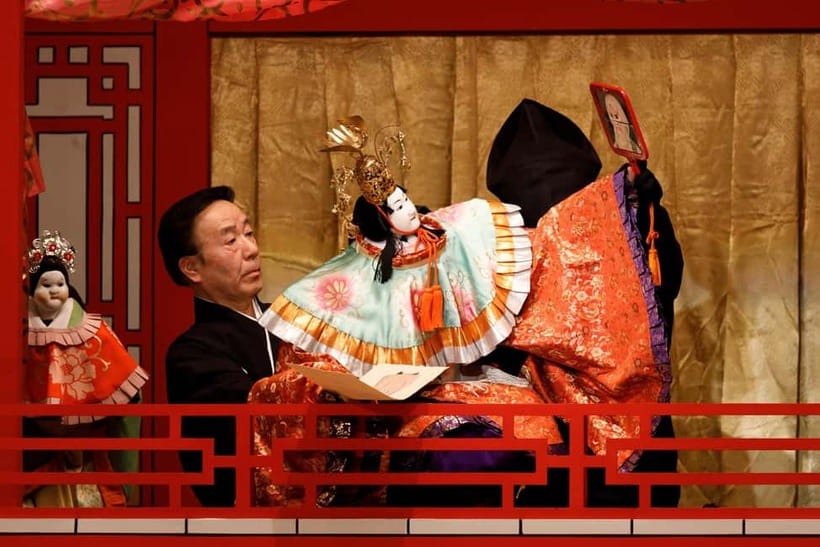
Review · TOKYO CITY TOURS
Tokyo: KABUKI, BUNRAKU, etc. presented by National Theatre
Kabuki and Bunraku feel different when the sound is natural. This National Theatre Japan program brings top traditional performers to the stage, with English audio support and a format that avoids loud speaker narration. I love that it is live, full of craft, and meant to be watched with your full attention.
Two things I like a lot are the English easy-to-follow audio guide for Kabuki and Bunraku, and the fact that the performances rely on the actors, music, and puppetry rather than heavy amplification. One possible drawback is timing, the show can run from 75 minutes to about three hours, and it is not built for constant sightseeing breaks.
Key Points You Should Know Before You Go
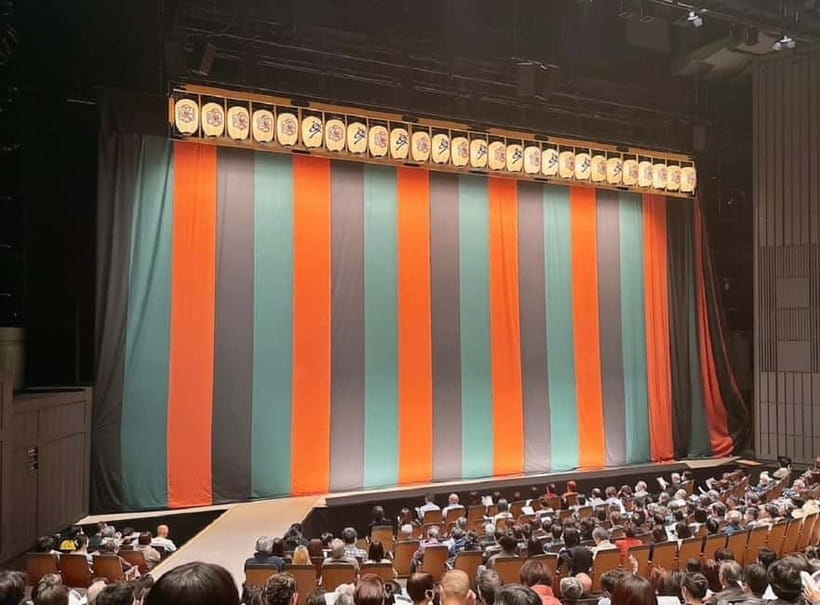
- National Theatre Japan energy, but with a live, intimate performance vibe that is made for listening and watching, not for party chatter
- English audio guide for Kabuki and Bunraku, plus free English explanation for Hogaku segments
- Yokohama venue, not Hanzomon, so plan transit carefully to KAAT Kanagawa Arts Theatre
- Speaker-free feel, you hear performance voices and shamisen clearly, with translation handled separately
- Content depends on your date, so read the option title for what you will actually see
- No photos, no video, keep it quiet, so be ready for a true theatre mindset
Why This National Theatre Program Feels Different Than Usual Theatre in Tokyo
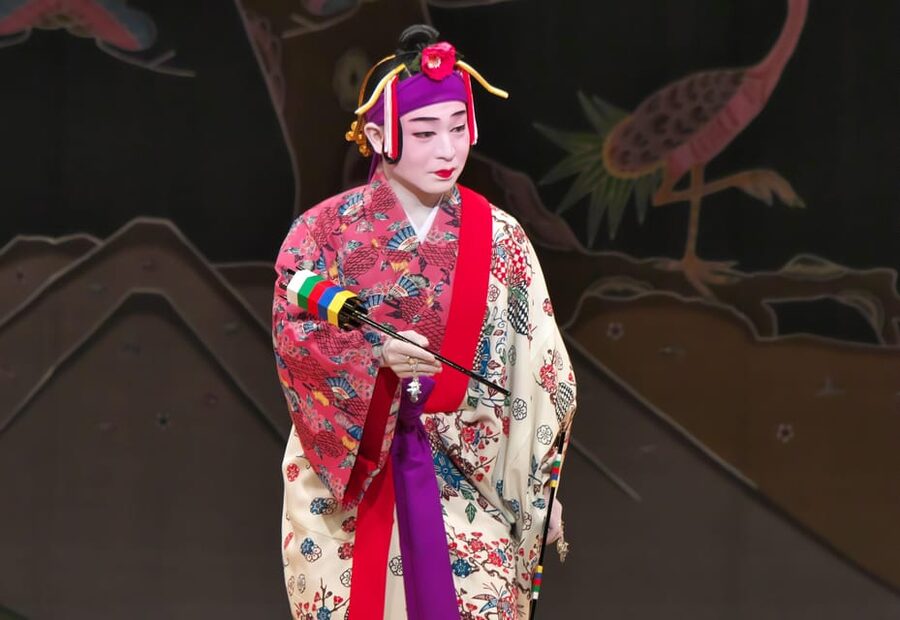
This show has one big strength: it treats classic Japanese performing arts like art, not like background entertainment. Kabuki, Bunraku, and Hogaku all have centuries of technique behind them, and the staging lets you notice details instead of drowning you in commentary.
I also appreciate the practical design for non-Japanese speakers. Kabuki and Bunraku include an English audio guide, and the Hogaku concert comes with a free English explanation sheet, so you are not stuck guessing what the story is doing minute to minute.
The quiet, almost old-school theatre feel matters. One of the highlights here is experiencing a live performance by top-notch performers without loud speakers, which makes the voices, shamisen, and movement sound more real and less mediated.
You can also read our reviews of more tours and experiences in Tokyo.



Yokohama Venue Confusion: KAAT Kanagawa Arts Theatre, Not National Theatre Hanzomon
Here is the catch that can trip you up. This program is presented by National Theatre Japan, but the venue is not the National Theatre in Hanzomon, and the hall can vary by date. For your ticket, the meeting info points to KAAT Kanagawa Arts Theatre in Yokohama, so treat that as your truth.
Getting there is fairly easy once you pick the right station. The nearest options listed are Nihon-odōri Station (MM05) on the Minatomirai Line (about a 5-minute walk from Exit 3 or 4) and Motomachi-Chukagai Station (MM06) on the same line (about an 8-minute walk from Exit 1). From Shibuya, plan around 45 minutes by train if you go via Minatomirai Line connections.
One more logistics note that I would not ignore. You need to exchange your GetYourGuide ticket voucher for a theatre-issued ticket at the entrance on the day of the performance. They will ask for the name used for the reservation, so have it ready.
If you care about seating, know that seating positions are left to the theatre. The good news is that the show format and audio guide system are designed so you can still follow what is happening even without prime seats.
Kabuki, Bunraku, Hogaku: What You Are Actually Watching
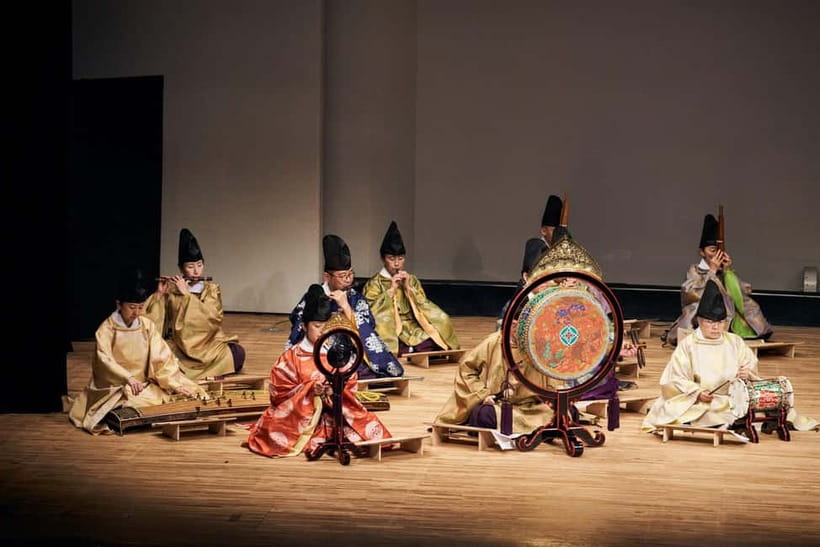
This experience can include different classical performing arts depending on the date. That means your best move is to check the option title for which segment you will see, because the content changes.
Kabuki: Drama With Music and Dance
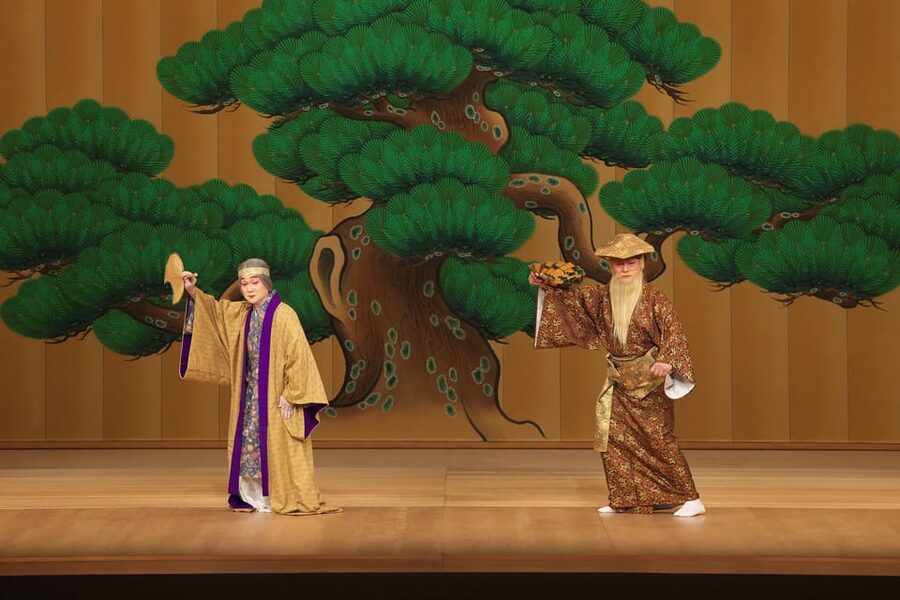
Kabuki is the dramatic theatre that blends music and dance into storytelling. It has action, clear emotional beats, and a visual language built from movement, costume, and stage rhythm. Even if you only catch the main narrative points, it is the kind of performance where your brain starts reading the signals quickly once you stop looking for modern cues.
Bunraku: Puppet Theatre for Adults
Bunraku is traditional puppet theatre, and it is designed for adults in a serious, story-driven way. What makes it special is the teamwork on stage: narrative recitation, shamisen music, and puppetry synchronized into one performance. Expect the narrator’s powerful voice, the dynamic shamisen lines, and puppet movement that feels precise rather than decorative.
If your program includes Bunraku, this is one of the best ways to see it outside of Japan locals-only contexts. One review note even hinted that some dates may run a special show format, so you might find differences in what is shown. That is exactly why the option title matters.



Hogaku: Traditional Music With Snow-Themed Melodies
Hogaku here focuses on melodies connected to snow, with a spotlight on Yuki no Aikata. In the Jiuta song tradition, “Yuki” refers to snow, and the music includes a long shamisen interlude that ties into scenes featuring falling snow. You do not need to be a music scholar to enjoy it, but you do need patience, this is more listening than plot.
The English Audio Guide and Explanation Sheets, How They Help
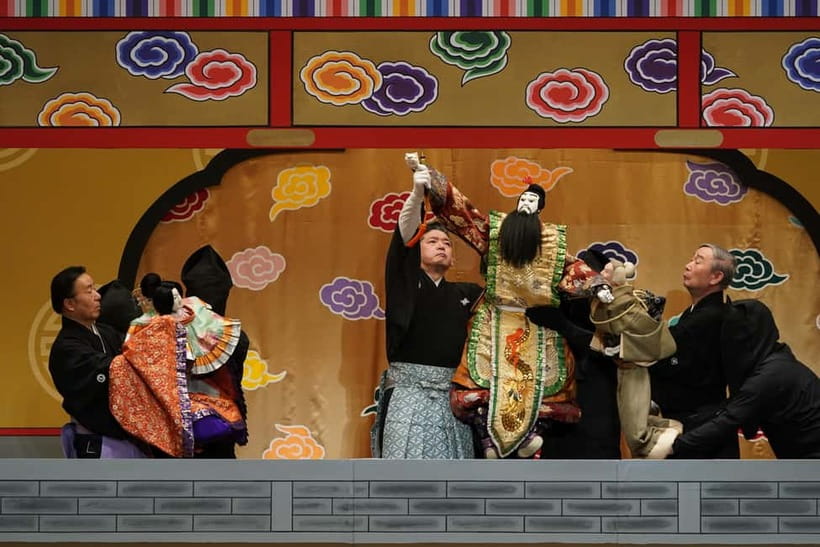
This is where the experience becomes truly workable for non-Japanese speakers. For Kabuki and Bunraku, you get an English audio guide designed to be easy to follow. Reviews highlight that this audio track is essential, especially if you want to track the story while also watching the actors and puppets.
For Hogaku, you get a free English explanation sheet instead of an audio track. That sheet approach works well for music, because it gives you context without forcing you to split attention between narration and sound.
One careful detail I would plan around. The audio guide is English only, and it is not a literal translation of every line. It gives an overview of the main points so the performance voices, acting, and timing stay intact.
You will likely have a brief adjustment period. A couple of reviews noted it can feel strange at first to hear translation in one ear while listening to performers with the other, but then you adapt. If you walk in expecting a word-for-word subtitle vibe, you may feel slightly shortchanged. If you treat it like story context, it works well.
Timing, Theatre Etiquette, and the Flow of the Show
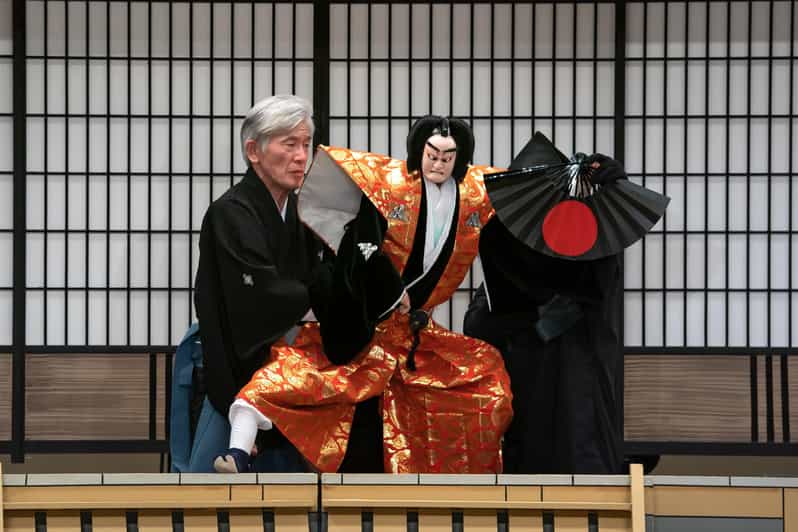
The show length is listed as 75 minutes to 3 hours, based on which segment you get on your date. That range is important because three hours is enough time to feel like you are fully inside one world, not just sampling culture between dinner stops.
Plan your arrival with calm in mind. You will need time to exchange your voucher at the entrance, then get oriented in the theatre. One practical tip from the experience notes is that arriving a little early helps, because preliminary explanations happen before the show begins and you will catch them at a better pace.
Now the rules. No smoking, no pets (assistance dogs are allowed), no alcohol or drugs, and no making noise. Most importantly, no video recording and no photography inside.
These rules are not there to be annoying. They protect the sound and concentration of a performance that relies on subtle timing, voice projection, and musical texture. If you want the best first impression, treat it like a quiet concert or ceremonial event, not like a sightseeing attraction.
If your program includes intervals, you should plan for the reality that you might need to stay seated for the next portion. One note mentioned drinks not cooling down before you had to return to your seat, so if you bring coffee for the break, expect that theatre timing will make you rush a bit.
Price and Value: Is $37 Good for This Kind of Performance?
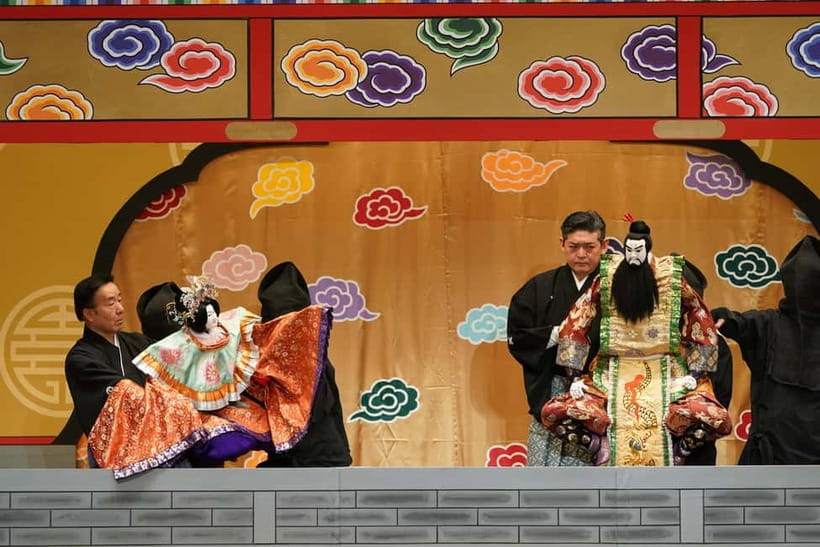
At $37 per person, this is a fair price for a few reasons. First, you are paying for live theatre with high-level performers and an official presentation by National Theatre Japan. Second, you get English support that is built into the experience, not something you scramble for on your phone.
You are also not paying for a big, obvious tourist show package with extra loud narration. The highlight here is experiencing the performance with no loud speakers, which means you get a more natural, theatre-like sound environment, and you are not competing with extra volume.
The value question really comes down to one thing: how much time you are willing to trade for focused cultural watching. If you have a packed itinerary with only a day or two in the Tokyo area, three hours can feel like a big chunk. If you are in Japan for several days and you like theatre and music, it is easier to justify as one of your main cultural events.
Who This Works For, and Who Might Find It a Tough Fit
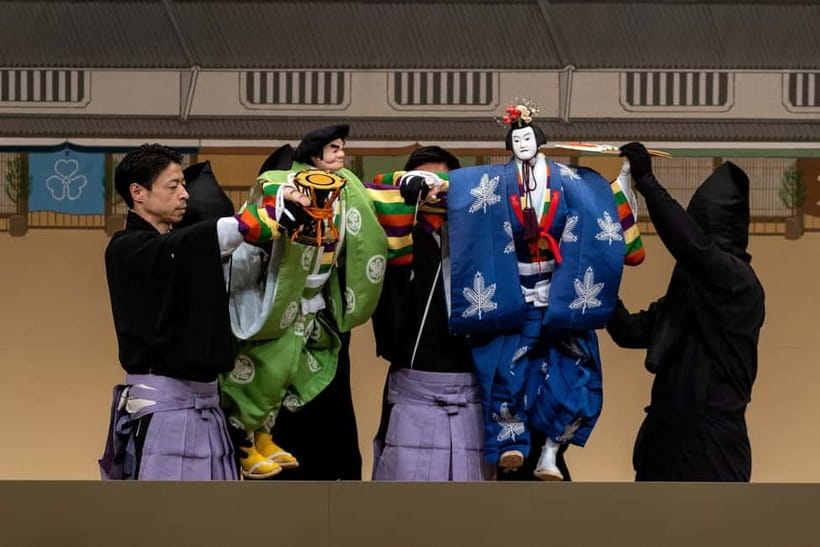
This show is best for you if you want classic Japanese arts with real craft, not a simplified performance made for tourists. I especially think it suits people who enjoy theatre, storytelling, music, or puppetry.
It also works well if you are a non-Japanese speaker who still wants depth. Multiple reviews specifically praise the English guidance as a key factor, and that matches the way this program is structured.
If you are traveling with very young kids, you might want to reconsider. One review pointed out that it can feel lengthy and slow-paced, and that even noise can be poorly received. If your child is comfortable with quiet, seated attention for a couple of hours, it can be fine, but if not, choose a shorter day activity.
Also be aware of your expectations for translation. This is not a full subtitle experience. You get context, not every word, so you get the richest experience when you allow the performance itself to carry emotion and meaning.
Should You Book This National Theatre Performance in Yokohama?
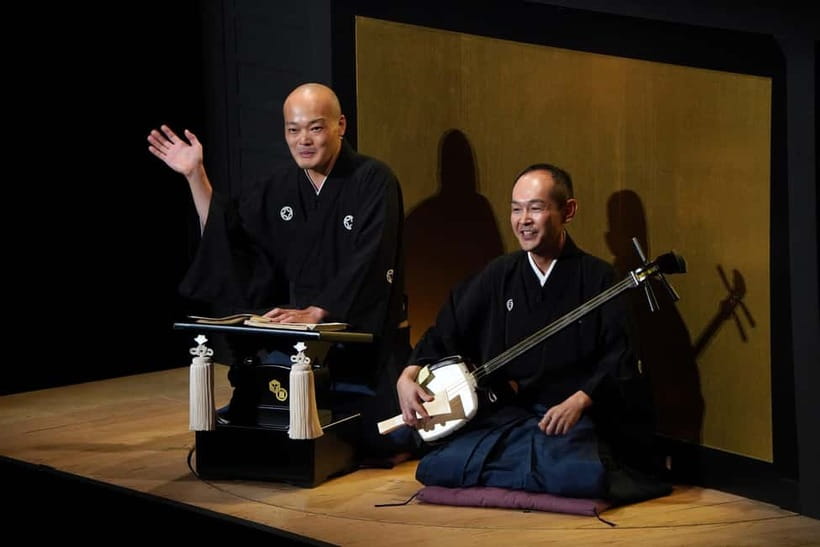
Book it if you want a serious taste of Kabuki, Bunraku, or Hogaku with built-in English support and a proper theatre setting. The combo of speaker-free performance, trained performers, and English audio or explanation materials is a strong value at $37.
Skip or postpone if you only have room for quick highlights, because the show can run up to about three hours and asks for quiet attention. Also, make sure you confirm what content you are seeing for your date, since the program can vary.
FAQ
Where is the performance venue for this ticket?
The venue is KAAT Kanagawa Arts Theatre in Yokohama. The nearest stations listed are Nihon-odōri Station and Motomachi-Chukagai Station on the Minatomirai Line.
What English support is included?
English audio guide is included for the Kabuki and Bunraku performances. For the Hogaku concert, there is a free English explanation sheet.
How long is the show?
The duration is listed as 75 minutes to 3 hours, depending on the performance and start time.
Can I take photos or record video inside?
No. Photography inside and video recording are not allowed.
What performances might I see?
The program can include Kabuki, Bunraku, and Hogaku, and the exact content varies by date. The content is listed in the option title.
Do I need to exchange my voucher for a theatre ticket?
Yes. To enter the theatre, you must exchange your GetYourGuide ticket voucher for a ticket issued by the theatre at the entrance on the day of the performance.
More Tour Reviews in Tokyo
Not for you? Here's more nearby things to do in Tokyo we have reviewed












Tokyo City Tours, side by side.
 ★ 5.01-Day Tokyo Bus TourFrom $12914,250 reviews
 ★ 4.5TOKYO SKYTREE® Admission ticketFrom $1311,192 reviews
 ★ 4.6teamLab Planets TOKYO Digital Art Museum Entry TicketFrom $259,779 reviews
 ★ 4.0Mt Fuji & Hakone Cruise, Drum Show Bullet Train 1 Day from TokyoFrom $1497,413 reviews
 ★ 5.0Shinjuku Food Tour (13 Dishes at 4 Local Eateries)From $866,603 reviews
 ★ 4.4Tokyo Mt Fuji 5th St & Hakone Cruise Bus Tour w/Bullet TrainFrom $1545,024 reviews
 ★ 5.0Flagship 2-Hours Official Street Go-Kart Tour – Tokyo Bay ShopFrom $644,974 reviews
 ★ 4.5From Tokyo: Mount Fuji Full-Day Sightseeing TripFrom $684,970 reviews