
Review · TOKYO CITY TOURS
Tokyo: Learn to play traditonal songs on Tsugaru Shamisen
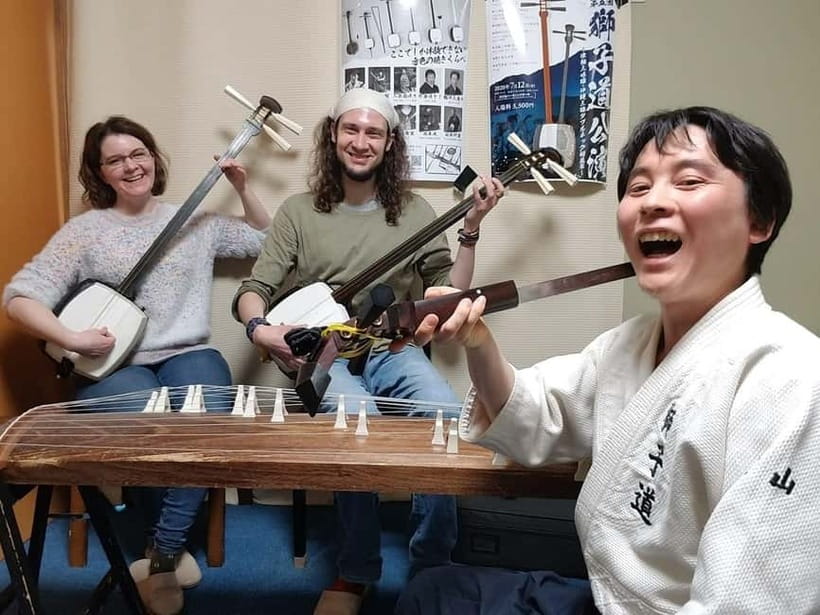
Tsugaru shamisen sounds fast and fearless. This one-hour lesson near Shinjuku gives you hands-on coaching to make that sharp, clear Tsugaru sound, plus the context for why it feels so different from Western instruments. I love how the class is taught by Kouzan Oyama, a master of the Oyama school of Tsugaru shamisen and a double champion from the Tsugaru Shamisen World Cup in 2018 and 2019.
I also like that you do more than watch technique, you practice and play a song you choose. You can ask for your preferred piece at the start, and you get chances to take photos and videos of your performance together with the instructor. One thing to consider: at just 1 hour, you’ll likely leave with a solid starting ability and a taste of the craft, not full mastery of a complex repertoire.
Key things you’ll notice in this Tsugaru shamisen lesson
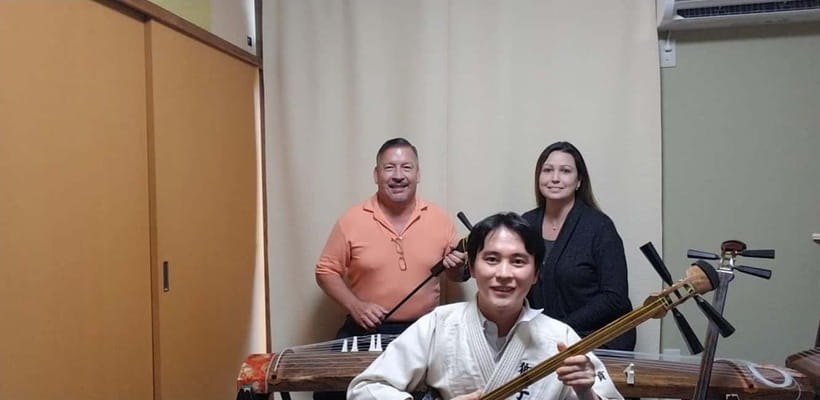
- Kouzan Oyama instruction, including demonstrations using techniques tied to the Oyama style
- You play a song, either your requested choice or a traditional Japanese folk song
- Instrument secrets explained, including the three-string setup and what the shamisen is made of
- Tsugaru plus other styles, with listening to different shamisen types, including Okinawa sanshin
- Performance media time, photos and videos of your playing with the instructor alongside your practice
Tsugaru shamisen: why it hits your ears so hard
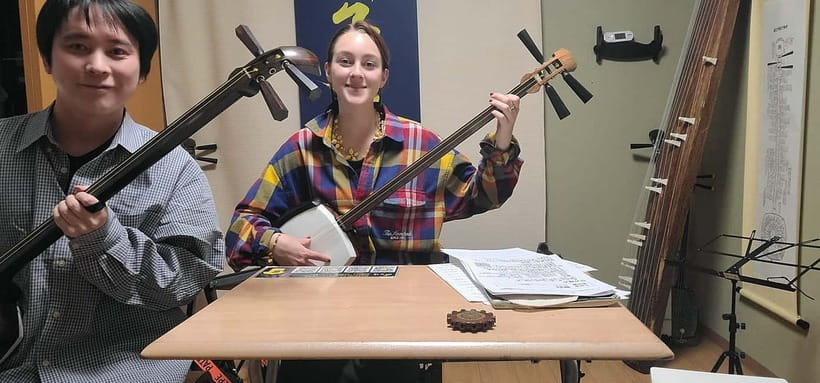
The shamisen is a traditional Japanese three-stringed instrument, kind of like a banjo in spirit, but with a very different voice. The sound is sharp and clear, with a bite that can remind you of sea waves and strong wind. In this lesson, the focus is Tsugaru style, which is known for a powerful vibe and fast, energetic playing.
What I find useful is that the instructor doesn’t treat this like a museum talk. He connects the sound you hear to the instrument itself, and then to the movements you’ll use to create it. You get to feel how a small change in approach can shift the tone from flat to lively.
The class also addresses something many people miss when they try to learn music on vacation. You’ll learn about differences in sound-producing between Western and Japanese musical instruments, so you understand what you’re doing, not just what to copy.
You can also read our reviews of more tours and experiences in Tokyo.



Finding the right teacher near Shinjuku
This happens in Tokyo near Shinjuku, which is convenient if you’re basing yourself in the city center. More important than the neighborhood is who teaches you.
You’ll work with Kouzan Oyama, a master of Oyama style Tsugaru shamisen. He’s also listed as a double champion in the Tsugaru Shamisen World Cup for 2018 and 2019, so you’re not learning from someone who only knows the theory. The lesson is taught in English, and you can ask questions as you go.
In the sessions described, he also uses written materials, including books he has written himself. That matters for first-timers, because you leave with something you can refer to later, not just muscle memory and a few scattered tips.
And because it’s a private group format, you’re less likely to get lost while the instructor repeats the basics for the entire room. You get more time for your own questions and corrections.
Your one-hour practice plan, from first contact to your performance
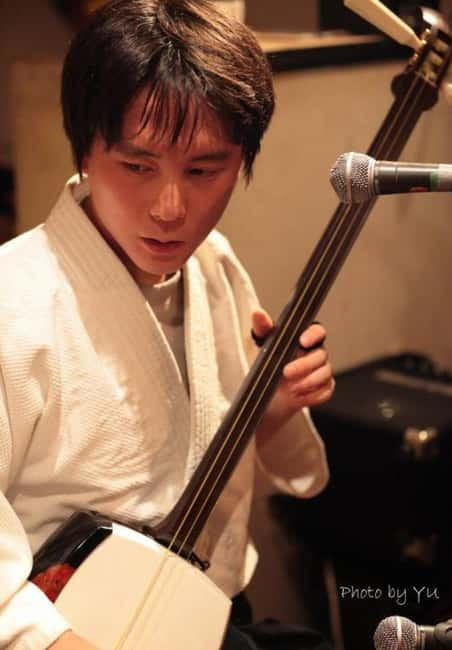
The lesson is short on purpose: 1 hour is enough time to get oriented, learn a method, and then apply it right away. It tends to move quickly, so go in ready to focus.
You start with the instrument itself. You’ll learn the basics of shamisen setup, including its three-string design and what it’s made of, and you’ll get an explanation of how Tsugaru style creates that distinctive sound. Then the instructor demonstrates techniques while explaining what’s happening. This is where the class feels like training, not a casual show.
Next comes the hands-on portion: you practice producing the Tsugaru sound with guided instruction. The instructor walks you through various techniques involved in shamisen performance, and he performs for you during the lesson so you can connect your practice to the real thing. In the experience notes shared, people appreciated that he was patient and helped them get familiar with the instrument quickly.
Then you work toward a song. If you request one at the start, you’ll aim for that piece. If you don’t have a specific song in mind, you’ll practice a traditional Japanese folk song. Either way, the goal is to get you playing by the end of the hour, not just learning the first step.
Finally, you get time for photos and videos of your performance together with the instructor. That small piece of structure is surprisingly motivating. It gives you a clear end point and a way to remember what you managed in a single session.
Picking your song: request time and what you should do
The most satisfying part of the lesson for many people is that you can practice a song of your choice. You’ll want to think about that before you arrive, because your request at the beginning helps the instructor shape what you’ll work on during the hour.
If you already have a favorite traditional Japanese tune, this is your chance to test-drive it on a Tsugaru shamisen with expert guidance. In one session described, a learner was able to play the Sakura song after one class, which gives you a sense of how targeted the teaching can be.
If you don’t have a song in mind, you’ll practice a traditional Japanese folk song. That can actually be easier for first-timers, because the instructor can choose something that fits the lesson’s time frame and gives you clear milestones.
Practical tip: pick a song you care about enough to listen to more than once. Even if you can only play part of it well at first, your interest will help you stick with the practice afterward.
Tsugaru style, and the bonus sounds of Okinawa sanshin
Tsugaru shamisen is the star of the show in this class. You’ll hear and practice the lively, fast-paced character that makes Tsugaru style so memorable. But you’re not stuck inside one style bubble.
The lesson includes listening to various types of shamisen, including Okinawa sanshin. That contrast is useful because it helps you hear that different regions and performance traditions shape the sound. You start to notice how the same three-string idea can still yield very different musical personalities.
This also helps with something travel brain often does. You see an instrument in one form, you assume that’s the whole story, and then you leave feeling like you barely scratched the surface. Here, you get a small map of the shamisen world so you can keep exploring after you’re back on your own.
If you’re the type who likes to understand what you’re hearing, this part of the lesson is a big win. If you’re more focused on the physical act of playing, you can still enjoy it as context while you practice.



The koto cameo, and why cross-instrument comparisons help
Some sessions include more than shamisen. In the experiences shared, Kouzan Oyama also plays the koto and performed for the group, then taught a short tune. Even if it’s framed as a side moment, it can sharpen your listening.
Why does that matter? Because one stated goal of the class is learning the differences in sound-producing between Western and Japanese musical instruments. Hearing the koto alongside shamisen gives your ear another reference point, and you start to understand how instruments with different mechanics still communicate the same musical ideas.
The best part is that it doesn’t feel like a random detour. It reinforces the lesson’s central message: sound is physical. When you understand the physical source, your playing improves faster.
Photos, videos, and how to practice after the lesson
You’ll take photos and videos of your performance with the instructor. That’s not just a souvenir move. It gives you a quick way to check what your hands and body were doing when the tone sounded right.
After class, I’d treat the recordings like feedback. Watch once to see your posture and timing. Listen once just for the moments that sounded closest to what you were shown. Then practice those parts, not the whole song at random.
Because the instructor has books he wrote that can be used during the class, you can also review those materials afterward to keep your momentum. That turns the session from a one-day memory into a skill you can build.
If you’re worried you’ll forget everything, don’t. One reason people say the class flies by so quickly is that it’s structured: you learn a technique, you apply it, and you perform it. You’ll have a clear checkpoint to return to later.
Price and value: is $59 worth it in Tokyo?
At $59 per person for a 1-hour lesson, this is not a cheap activity. But it’s also not priced like a scripted tourist show.
You’re paying for several things that are hard to replicate on your own. You get hands-on coaching on a specific instrument style, in Tsugaru style rather than generic shamisen talk. You also get the instructor’s performance demonstrations, plus explanation in English about what the instrument is made of and how its sound is produced.
The value increases when you look at the competition credentials. Kouzan Oyama is not described as a casual teacher. He’s a master of the Oyama school and a World Cup double champion. In plain terms, that kind of background changes how quickly you get useful corrections.
The one-hour time limit is both the cost control and the tradeoff. You can’t expect long-term training, but you can expect a concentrated start. If your goal is to learn how Tsugaru shamisen works in one lesson, and then carry that forward on your own, the price feels more than fair.
Who should book this Tsugaru shamisen class
This lesson fits best if you want a direct, learn-by-doing experience with a real teacher. It also works well if you’re staying around Shinjuku and want something culturally specific without spending hours on travel.
You’ll likely enjoy it if:
- you like traditional Japanese music and want to hear it from the inside
- you want to play a song, not just learn trivia
- you want clear English instruction with demonstration-focused teaching
- you’re comfortable with a short, fast-paced class and prefer action over lectures
It might not be ideal if you’re looking for a long training block. The lesson gives you a starting point in a short window, so if your goal is to become performance-ready in a day, you should plan for follow-up practice elsewhere.
Should you book this Tsugaru shamisen lesson near Shinjuku?
Yes, if you want a real instrument experience in Tokyo that doesn’t waste time. The main reason I’d recommend it is simple: you practice Tsugaru shamisen techniques, you play a song by the end, and you get explanations that connect sound to method.
Book it especially if you can request a song you actually care about. That personal hook makes the short class feel meaningful, and it gives you a concrete tune to revisit later.
If you’re on the fence, decide based on your expectations. Treat this as a focused introduction to Tsugaru shamisen performance, led by Kouzan Oyama, with photos and videos as your proof of progress. For $59 in one hour, that’s a very tangible souvenir, one your hands will remember.
FAQ
Where in Tokyo does the shamisen lesson take place?
The lesson is near Shinjuku in Tokyo.
How long is the Tsugaru shamisen lesson?
It lasts 1 hour.
What is the price per person?
The price is $59 per person.
Is the lesson taught in English?
Yes, the instruction is in English.
Can I choose what song I learn?
Yes. You can request a song of your choice at the beginning of the lesson. If you do not request one, you will practice a traditional Japanese folk song.
Do I get photos or videos of my performance?
Yes, you can take photos and videos of your performance together with the instructor.
Is this activity wheelchair accessible?
Yes, it is wheelchair accessible.
More Tour Reviews in Tokyo


Not for you? Here's more nearby things to do in Tokyo we have reviewed












Tokyo City Tours, side by side.
 ★ 5.01-Day Tokyo Bus TourFrom $12914,250 reviews
 ★ 4.5TOKYO SKYTREE® Admission ticketFrom $1311,192 reviews
 ★ 4.6teamLab Planets TOKYO Digital Art Museum Entry TicketFrom $259,779 reviews
 ★ 4.0Mt Fuji & Hakone Cruise, Drum Show Bullet Train 1 Day from TokyoFrom $1497,413 reviews
 ★ 5.0Shinjuku Food Tour (13 Dishes at 4 Local Eateries)From $866,603 reviews
 ★ 4.4Tokyo Mt Fuji 5th St & Hakone Cruise Bus Tour w/Bullet TrainFrom $1545,024 reviews
 ★ 5.0Flagship 2-Hours Official Street Go-Kart Tour – Tokyo Bay ShopFrom $644,974 reviews
 ★ 4.5From Tokyo: Mount Fuji Full-Day Sightseeing TripFrom $684,970 reviews