
Review · TOKYO CITY TOURS
Tokyo: Learn Traditional Origami with a Local
Fold paper, learn Tokyo stories. In a 90-minute class in Shinjuku, you fold classic designs with Manami, a Tokyo native who’s been practicing since age 3. I love the step-by-step guidance that keeps even beginners on track, and I also love how each figure comes with a clear story about meaning and Japanese culture. One possible drawback: this is mainly built for beginners, so if you already fold confidently, the options may feel a bit too easy.
You’ll pick designs from a pre-set menu of skill levels, then choose matching paper for each one. Most people leave with 3 to 5 finished pieces tucked into small take-home bags, plus water and snacks to keep you comfortable. If you can find the meeting point on the 5th floor, this workshop is a relaxing way to get hands-on with Japan.
Key things to know before you go
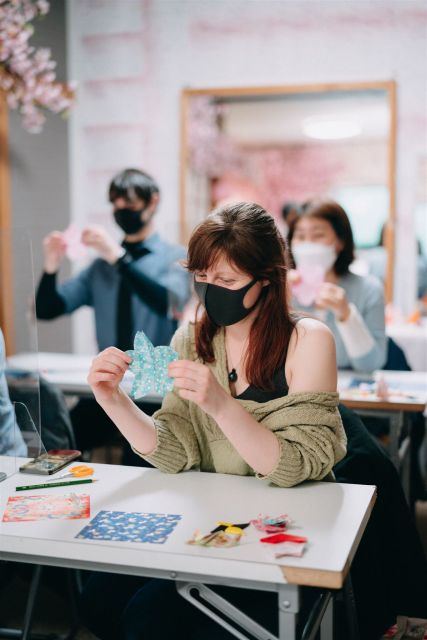
- Manami teaches in English, with patient, personal coaching while you fold
- You choose your own designs, typically making 3 to 5 shapes in the session
- Traditional and modern papers are provided, and you select paper for each piece
- The class is paced for beginners, not advanced folders
- You get culture with the craft, including symbolism tied to specific shapes
- Materials are included, like paper, scissors, pens, and take-home bags
Finding FEEP Shinjuku Higashi-guchi and getting oriented fast

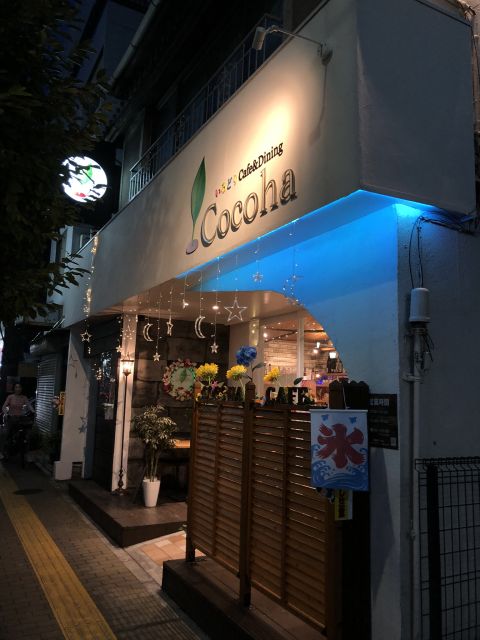
The class meets at FEEP Shinjuku Higashi-guchi, in Shinseido Bldg., on the 5th floor. The nearest station is Shinjuku-sanchome (M09, F13, S02). You can also reach it from the east gate of JR Shinjuku.
FEEP is a shared workspace with lots of small booths. The entrance is locked, so once you reach the 5th floor, you’ll want to message the host so you can be let in.
Tip that saves stress: give yourself an extra 10 to 15 minutes in Shinjuku. The area is easy to walk through, but signage can still make you second-guess your route.
You can also read our reviews of more tours and experiences in Tokyo.



Meet Manami, a lifelong folder from East Tokyo
Your instructor is Manami Watanabe, from East Tokyo. She started learning origami at age 3, so this is not a casual hobby for her, it is part of her everyday identity.
What really matters for you is her teaching style. The class is designed so you don’t guess at steps. You get clear demonstrations, then you follow along fold-by-fold, with lots of encouragement to ask for help.
And it shows in the results people tend to walk out with. Several recent participants highlighted that she stayed patient even when someone struggled with the fold lines, and she helped them fix the paper before moving on.
Choosing your origami menu: what you’ll make in 90 minutes

This workshop is built around choice. Manami will start by showing you a range of origami designs with different difficulty levels. Then you select the ones you want to make, aiming for 3 to 5 completed pieces during the session.
If you’re a beginner, that’s a good thing. You won’t be thrown into one hard project and left to suffer through it alone. You’ll have multiple chances to succeed.
Recent people reported making designs like:
- Paper crane
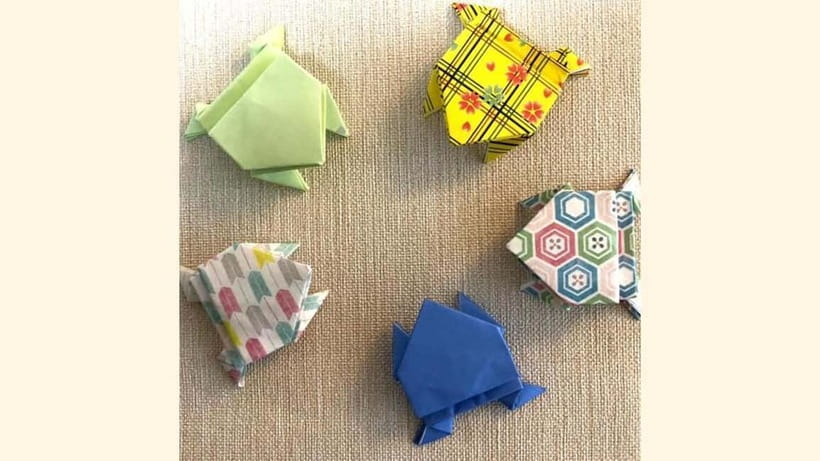
- Jumping frog
- Lotus flower
- Samurai helmet
- Open box
A practical note: the origami options are not customizable on site. So pick the designs you like when Manami lays them out, even if you had another idea in mind before you arrived.
Paper matters here: traditional sheets and modern picks
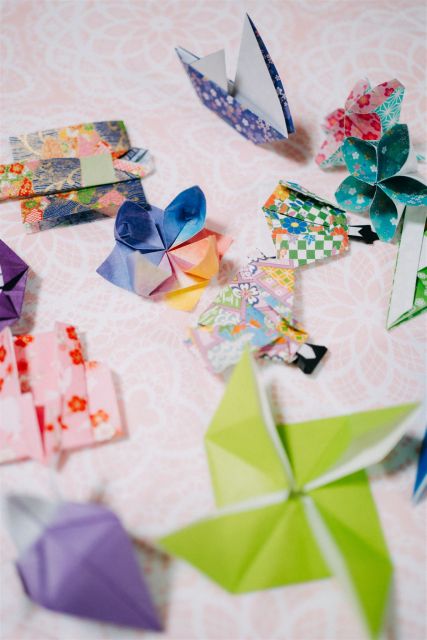
You’re not just folding generic craft paper. The class provides a selection of traditional and modern origami paper, including sheets with beautiful designs.
For each shape, you pick the paper you want to use. That means your final pieces look more personal, and the colors and patterns can help you keep track of orientation while folding.
You also get the basics for finishing:
- Scissors
- Pens
- Small bags to bring your work back
- Water and some snacks
That take-home bag detail is surprisingly important. Origami looks delicate, and having a proper way to store finished pieces right away makes it much easier to enjoy the rest of your day.
The workshop flow: what happens step by step
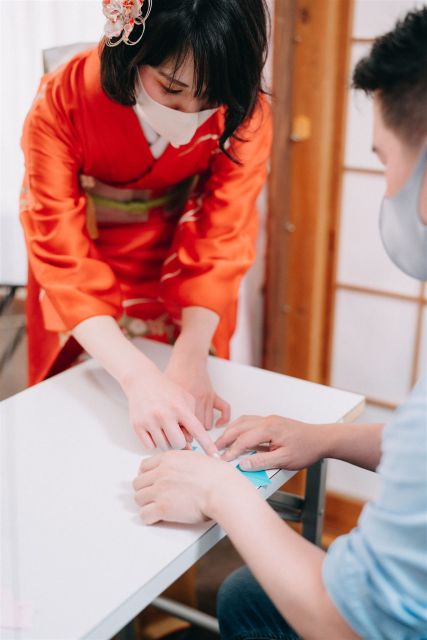
Expect a calm, structured 90 minutes rather than a rushed “copy this diagram” situation. The session typically moves in the order below.
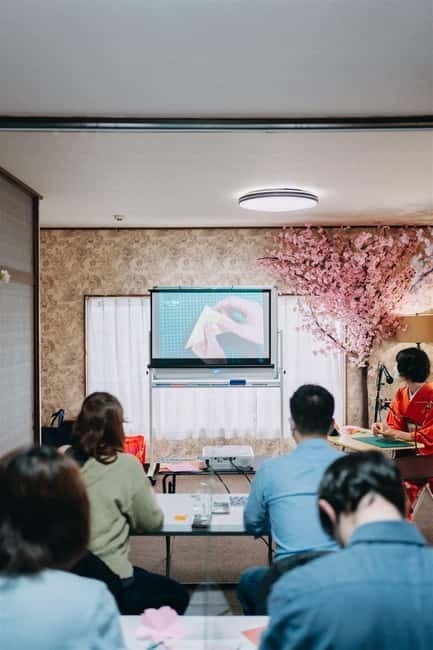
First, Manami introduces the design options and what to expect from each one. You’ll learn what the final piece is supposed to look like, and she’ll point out the kind of folds that show up repeatedly.
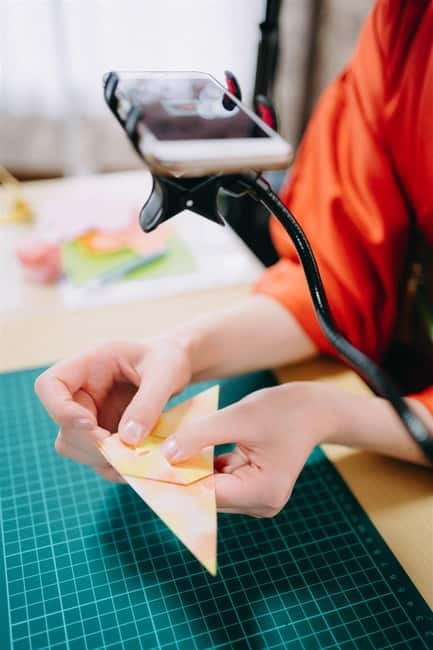
Next comes the folding itself. You’ll work along with her step-by-step instructions. If your fold lines are off, you can ask for help while you’re still at the stage where it’s fixable.
Then you complete your selected pieces one by one. As you finish, you’re able to snap selfies with your creations if you want, so your finished origami becomes a real souvenir rather than something you shove into a bag and forget about.
By the end, you should have several shapes that you can keep on a shelf or pack safely for home.



The cultural layer: stories and meaning behind each shape
The craft is the hook, but the meaning is the payoff.
Manami shares the history and cultural significance behind what you’re folding. Some shapes have well-known symbolism, and you’ll hear it explained in a way that connects to Japanese culture rather than just repeating trivia.
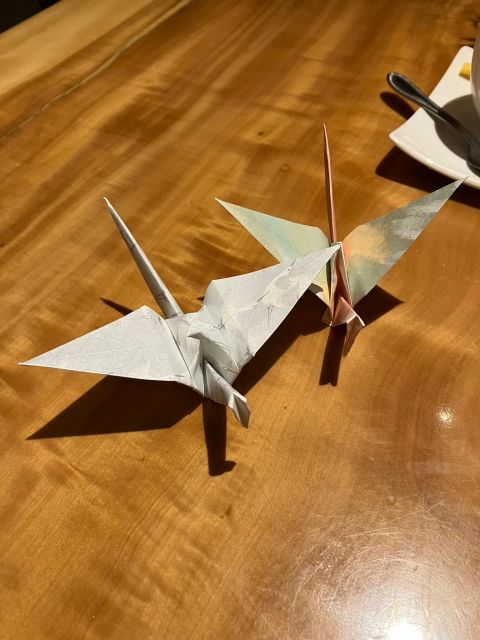
For example, multiple people talked about how she explained the significance of the origami crane. She also weaves in stories tied to her own background, including what origami means to her family and childhood.
One big value for you: those stories make the folds memorable. Instead of thinking, I made a frog, you’ll remember what it represents and why this simple paper ritual still matters.
And that turns a class from a one-time activity into something you can keep reflecting on while you’re traveling.
Price and value: is $58 reasonable in Shinjuku?
At $58 per person for 90 minutes, this isn’t a cheap souvenir stop. Still, I think it can feel worth it if you care about doing something with your hands, not just watching it happen.
Here’s what you get for the price, based on what’s included:
- An English-speaking instructor who can coach your folds
- Traditional and modern paper choices, so your pieces don’t look identical
- Tools included (scissors, pens)
- Take-home packaging (small bags for your finished work)
- A culture component that explains the meaning of the shapes
- Water and snacks so you’re not scrambling for a bite
If you’ve ever tried to learn origami from books or videos, you know the problem. You can follow a diagram and still mess up at the one step that matters. This class solves that with coaching, patience, and feedback while the paper is still easy to correct.
One consideration: some participants felt it was a bit pricey. That’s fair if you’re expecting a long, detailed workshop. But if your goal is to make several solid pieces with a real teacher, it often lands as good value.
Who this origami class fits best (and who should skip it)
This experience is ideal if you want:
- Beginner-friendly instruction with step-by-step help
- A quiet, low-stress activity during your Tokyo days
- A chance to make multiple designs instead of one long project
- Cultural context, not just folding tricks
It also works well across group types. People have booked with adult kids, couples, small families, and mixed groups. For families, a key strength is that Manami takes time to make sure kids keep up, and she offers encouragement when someone struggles.
Who might want to choose another activity:
- If you fold already at a high level, you may find the paper folding options too easy, since the class is mainly built for beginners.
- If you have very specific origami requests, note that customization on site isn’t available.
Safety and policy points to know:
- Kids under age 7 are not allowed.
- The class does not allow alcohol and drugs.
- It is wheelchair accessible.
- If anyone in your group needs special care, you should let them know in advance so the venue can be changed if needed.
Practical tips for a smoother class day
A few small things help you get the most out of the session.
First, bring comfortable clothing. You’ll be focused at a table for the full 90 minutes.
Second, go in with a flexible mindset about design choice. Manami will present options, and you’ll likely enjoy the class more if you pick what’s available and then put effort into making it look great.
Third, don’t stress about being slow. The point is that you can ask questions and keep up with the steps. Several people highlighted that Manami’s patience is a big part of why their pieces turned out well.
Finally, if you’re prone to getting lost in big stations, set yourself up for success. Use the station directions, but also plan extra time to find the locked building entrance on the 5th floor.
Should you book this Tokyo origami class?
If you want a hands-on Tokyo experience with a real teacher, I’d say book it. This class hits a sweet spot: beginner-friendly structure, English instruction, and multiple designs you can take home in a short session.
It’s especially worth it if you like the idea of learning the cultural meaning behind what you make, not just collecting a photo. You’ll leave with folded paper you can display, plus the calm satisfaction that comes from getting something right through step-by-step guidance.
Skip it only if you are already an advanced folder who needs complex custom designs. Otherwise, for most people, Manami’s patient coaching and the story-driven approach make the $58 feel justified.
FAQ
Where is the meeting point in Tokyo?
The class meets at FEEP Shinjuku Higashi-guchi, in Shinseido Bldg. 5F, Shinjuku 3-29-11, Shinjuku-ku, Tokyo.
What station should I use?
The nearest station is Shinjuku-sanchome (M09, F13, S02). You can also access the area from the east gate of JR Shinjuku station.
How long is the origami class?
The experience runs for 90 minutes.
What language is the instruction?
The instructor teaches in English.
What is included in the price?
Included materials are origami paper (traditional and modern varieties), scissors, pens, small bags to bring your work back, plus water and some snacks.
What designs will I make?
You’ll choose from a selection of origami patterns with varying skill levels. The goal is usually to make 3 to 5 shapes during the session.
Can I get a refund if I need to cancel?
Yes. There is free cancellation up to 24 hours in advance for a full refund.
More Tour Reviews in Tokyo


Not for you? Here's more nearby things to do in Tokyo we have reviewed












Tokyo City Tours, side by side.
 ★ 5.01-Day Tokyo Bus TourFrom $12914,250 reviews
 ★ 4.5TOKYO SKYTREE® Admission ticketFrom $1311,192 reviews
 ★ 4.6teamLab Planets TOKYO Digital Art Museum Entry TicketFrom $259,779 reviews
 ★ 4.0Mt Fuji & Hakone Cruise, Drum Show Bullet Train 1 Day from TokyoFrom $1497,413 reviews
 ★ 5.0Shinjuku Food Tour (13 Dishes at 4 Local Eateries)From $866,603 reviews
 ★ 4.4Tokyo Mt Fuji 5th St & Hakone Cruise Bus Tour w/Bullet TrainFrom $1545,024 reviews
 ★ 5.0Flagship 2-Hours Official Street Go-Kart Tour – Tokyo Bay ShopFrom $644,974 reviews
 ★ 4.5From Tokyo: Mount Fuji Full-Day Sightseeing TripFrom $684,970 reviews