
Meiji Jingu quiets the city fast. This is a short Tokyo pop culture and tradition tour that pairs Meiji Jingu serenity with Harajuku’s fashion chaos, then lets you drift into Omotesando for a smoother landing. It is designed to be doable even if you are short on time, without feeling like you skipped the point.
What I like most is how the tour treats the shrine with respect, with guides sharing stories and explaining Shinto beliefs and rituals. The second big win is the Harajuku side, where your guide gives you the cultural context behind Takeshita Street’s youth fashion and kawaii street scene. The tour also ends at Omotesando Hills, which is a nice way to step out of the loudest neighborhood and into something more airy.
The main drawback to keep in mind: Harajuku here is more of a guided walk through the streets than a deep lecture on modern Japan. If you want lots of everyday-life talk beyond the shopping lanes, you might wish there was a bit more of it.
Key things to notice before you go
- Meiji Jingu is the star, with a focused hour and guidance on proper shrine customs
- Harajuku comes with context, not just photo stops on Takeshita Street
- Two distinct Tokyo moods in one smooth loop, calm forest shrine to candy-colored street style
- Ending at Omotesando Hills helps, so you can keep exploring without immediately reboarding the subway
- Multiple language options, so you can choose English, Japanese, Spanish, Chinese, or French
A 2-hour mix of Meiji calm and Harajuku style
This is the kind of Tokyo tour that makes sense when your schedule is packed. In just two hours, you get contrast: one hour at a sacred Shinto shrine surrounded by a man-made forest, then one hour in Harajuku’s youth fashion zone, with the finish at Omotesando Hills.
It works especially well for first-time visitors because it covers two of Tokyo’s most recognizable faces. Meiji Jingu gives you the quiet, historical Tokyo. Harajuku gives you the playful, youth-driven side people come to photograph.
The price is simple at $36 per person, and the structure is also simple: you are paying for a live guide and a tight route that takes you to the right places in limited time. Since food and drinks are not included, you are free to snack on what you actually want in Harajuku rather than being guided into one fixed menu.
You can also read our reviews of more tours and experiences in Tokyo.



Finding NewDays near Harajuku Station and getting started
Your meeting point is easy to spot once you know what to look for: in front of NewDays at Harajuku Station, near the Omotesando Exit. Your guide will be holding a sign, so you should not have to play guessing games.
This matters more than it sounds. Tokyo stations can be maze-like, and starting late or lost can quickly steal minutes from a short tour. Arriving a little early helps you get the basics sorted, then you can settle into the walk without stress.
Because the tour is designed as a compact loop, you will want comfortable shoes. You are walking through shrine grounds and busy shopping streets, and the whole point is to experience two neighborhoods without wasting time.
Meiji Jingu: forest shrine serenity and respect-first guidance
Meiji Jingu is where the tour earns its name. The shrine sits in a tranquil, man-made forest in the middle of the city, and your guide leads you through the grounds with stories and context.
You get an hour at Meiji Jingu, and the focus is not only scenery. The guide shares background tied to Emperor Meiji and Empress Shoken, plus guidance on Shinto beliefs and rituals. That is the difference between seeing a shrine and understanding how to act inside one.
In particular, the tour’s respectful tone is something people praise. Guides such as Ayuko and Taka-san have been specifically appreciated for explaining proper customs, so you can visit the shrine with confidence instead of awkward guessing. Even if you are not a religion person, this is useful. It helps you understand what is going on, and it helps you blend in rather than disrupt.
One practical tip: keep your voice level down. A shrine visit is not the time to do the loud, joke-loud group vibe. Follow your guide’s cues and you’ll get the calm atmosphere that makes Meiji Jingu worth the detour.
Shinto beliefs and ritual basics you actually use on-site
The tour does not drown you in academic explanations. Instead, it gives you just enough background so the place clicks as you are standing there.
Expect your guide to cover Shinto beliefs and rituals at a level that helps you behave appropriately. That can include how to approach the area respectfully, what the rituals signify, and why the shrine’s atmosphere is part of the experience.
This is where the guide quality really shows. When your guide is careful, the shrine feels welcoming. When they are not, it can feel like you are just being herded around. The strong praise for guides like Masa points to a thoughtful approach, especially around learning what to do and why it matters.
Harajuku’s Takeshita Street: kawaii fashion with cultural context
After the quiet reset of Meiji Jingu, Harajuku hits like a color burst. The tour’s second hour takes you to Takeshita Street, the hotspot for youth fashion, kawaii culture, and street snacks.
This is not just a wandering photography session. Your guide explains the cultural context behind Takeshita Street’s charm, so you can better interpret what you are seeing. That matters because Harajuku can look like random trend overload if you do not have any framing.
Guides such as Kobu have been called out for keeping the walk fun, and that is the sweet spot here. You are moving through a lively area, so the guide’s job is to keep the energy upbeat while also giving you a little meaning.
Food and drinks are not included, but that is actually a benefit. You can buy what appeals to you, whether you want something sweet or something savory, without feeling like you have to justify a preselected snack.
Practical note: Harajuku streets can be tight. You will get the most out of it if you stay flexible, keep moving with the group, and do not block storefront entrances while you check your photos or decide what to eat.



Omotesando Hills finish: a more elegant landing after the crowds
The tour ends at 表参道ヒルズ, Omotesando Hills. This is a smart finish point because it changes the tempo one last time.
Omotesando is known for its tree-lined avenue, modern architecture, and designer boutiques. Even if you are not shopping, it feels like a cleaner transition out of Takeshita Street’s intensity. You can take a breath, grab a coffee, or continue exploring at your own pace.
This ending also helps your day planning. Instead of leaving you stranded in the middle of a side street, you get a recognizable area where it is easy to keep your Tokyo route going.
Price and value: what $36 buys you in real life
At $36 per person for two hours, this tour is priced for people who want efficient Tokyo highlights. You are paying for a live guide and a guided route that connects Meiji Jingu, Takeshita Street, and the Omotesando Hills finish.
What is not included is just as important: food and drinks are on you. For many travelers, that is the right trade-off. Harajuku is where you want to pick your own snack. You also avoid the common problem where a tour snack feels like a forced add-on.
If you are traveling with limited time, you are basically buying a shortcut to better understanding. You are not just walking from A to B. You are getting stories about Emperor Meiji and Empress Shoken, plus Shinto belief and ritual context, plus background for why Harajuku looks the way it does.
And if you like flexibility, this experience offers free cancellation up to 24 hours in advance for a full refund, plus a reserve now and pay later option. That can be handy when you are juggling train timing, weather, or a day that is running early or late.
Guide languages and the quality that shows up on the walk
A big plus here is language coverage. The live guide can run in English, Japanese, Spanish, Chinese, or French. That makes the experience more accessible, especially if you want real explanations rather than just a silent stroll.
The best part, though, is how guidance changes the whole tone. Reviews highlighted guides who were kind and mindful, and who answered questions clearly. Names like Ayuko, Kobu, Taka-san, and Masa came up in praise, particularly around teaching the right shrine customs and making the tour feel attentive instead of rushed.
When a guide is good, you spend more time looking at the world and less time wondering what you are supposed to do.
Who this tour suits best
I would point this tour at travelers who want a structured two-hour experience without committing to a half day. It is a good fit for first-time Tokyo visitors who want both tradition and pop culture in one loop.
It also suits people who do not want to plan every stop. The route is set: Meiji Jingu first, then Takeshita Street, then Omotesando Hills to close the day.
If you are very focused on modern Japan beyond street style, you may find the Harajuku hour more visually driven than discussion heavy. In that case, you can still enjoy it, but pair it with other activities later that focus specifically on daily life.
If you are traveling with kids, Harajuku tends to be a naturally fun match because it is playful and colorful. Even so, the shrine portion needs a calmer pace, so a guide who keeps the group respectful helps families enjoy both sides.
Should you book this Tokyo Pop Culture and Tradition Tour?
Book it if you want a quick, high-contrast taste of Tokyo that includes real explanation at the shrine and useful framing in Harajuku. The Meiji Jingu hour is where you get the most payoff, because you learn how to approach the place respectfully instead of treating it like a photo backdrop.
Skip it or reconsider if your main goal is a deep, long-form discussion of modern Japanese culture. This tour is compact, so the Harajuku portion is more about walking through the streets and seeing the scene than about long conversations.
If your schedule is tight and you want one guided experience that connects tradition + trend, this is a strong choice.
FAQ
Where is the meeting point for the tour?
The tour meets in front of NewDays near the Omotesando Exit of Harajuku Station. Your guide will be holding a sign.
How long does the Tokyo tour last?
The tour lasts 2 hours.
What are the main stops on the route?
You visit Meiji Jingu, then Takeshita Street in Harajuku, and the tour ends at Omotesando Hills.
What is included in the price?
The price includes the tour guide fee.
Are food and drinks included?
No. Food and drinks are not included.
Which languages are available for the live tour guide?
The live guide is available in English, Japanese, Spanish, Chinese, and French.
Is free cancellation available, and can I pay later?
Free cancellation is available up to 24 hours in advance for a full refund. There is also a reserve now and pay later option.
More Tours in Tokyo


More Tour Reviews in Tokyo
Not for you? Here's more nearby things to do in Tokyo we have reviewed







Meiji Shrine Tours, side by side.
 ★ 4.7Meiji Shrine, Asakusa, Skytree Bus Tour and CruiseFrom $1221,986 reviews
 ★ 4.5Tokyo Panoramic 1 Day: Meiji Shrine, Asakusa, Odaiba and SKYTREE®From $851,222 reviews
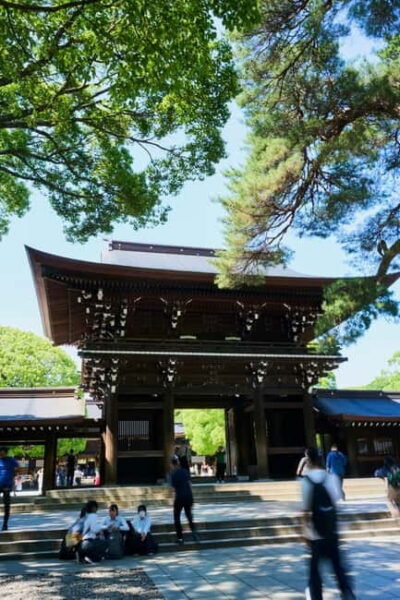 ★ 4.9Meiji Shrine Walking Tour — Shinto & Imperial SystemFrom $23266 reviews
 ★ 5.0Meiji Jingu Shrine and Shinto Culture Walking TourFrom $19245 reviews
 ★ 5.0Meiji Shrine and Shinto Culture Walking TourFrom $18225 reviews
 ★ 5.0Meiji Shrine Walking Tour — Shintoism & Imperial SystemFrom $21209 reviews
 ★ 5.0Tokyo Morning Tour : Meiji Shrine, Asakusa and Fish MarketFrom $72102 reviews
 ★ 5.0Full Tokyo: Meiji Shrine, Imperial Palace, Asakusa & SkytreeFrom $3978 reviews
This tour also belongs to