
Review · TOKYO CITY TOURS
Tokyo : Yanaka and Nezu-Old Traditional Town Cultural Experience
Old Tokyo, with real breathing room.
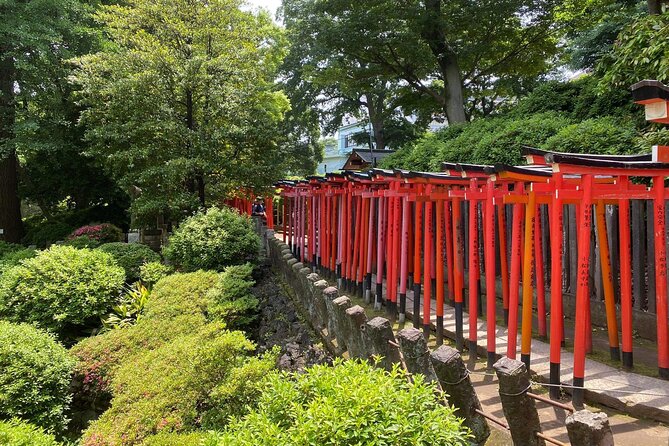
This Yanaka and Nezu cultural walk is all about slowing down in neighborhoods most first-timers skip, while you pass temples and old-town architecture tied to the Meiji, Taishō, and Shōwa eras. Nezu Shrine sets the tone early with its torii-lined approach, and the route keeps you moving through quiet residential streets before you land at the local shopping pulse of Yanaka Ginza.
I especially like two things: the way the guide connects what you see to everyday practice, like how to pray and what to expect at the shrine, and the relaxed pacing that leaves space to actually look and ask questions. The group is capped at 9 travelers, so you are not stuck in a moving crowd. One possible drawback to consider is that some stops are brief, so if you want long, independent time inside each place, this format may feel a little tight.
Why Yanaka and Nezu feel like Tokyo’s real old self
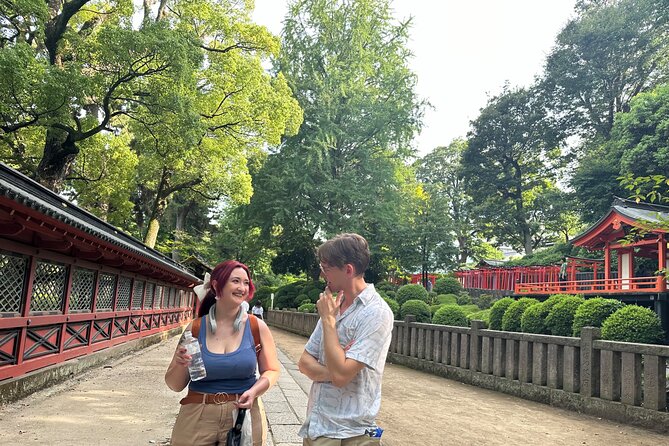
Yanaka and Nezu are a handy antidote to the usual Tokyo rush. Instead of chasing the biggest sights, you are walking through old neighborhoods where streets, houses, and small shops still look shaped by generations. The tour threads that feel together with stops that are spiritual, scenic, and everyday.
You also get a guided lens. The experience is designed to help you read the area beyond postcard facades, including etiquette around shrines and temples. And because it is a small group, your questions do not get lost in the noise.
Key highlights worth showing up for
Nezu Shrine torii approach and fortune practice: You learn how people pray, write a wish, and receive a fortune.
Small-group pace (max 9): Enough time to stop, look, and listen without feeling herded.
Scenic pauses that you can photograph: Yuyake Dandan (sunset staircase) and a quick look at the Himalayan cedar tree.
Old-meets-new walking route: Remnants from the Meiji, Taishō, and Shōwa periods, plus local residential streets.
Local shopping street close to the end: Yanaka Ginza, with street snacks, desserts, and souvenirs introduced by your guide.
You can also read our reviews of more tours and experiences in Tokyo.



Meeting at Nippori and keeping the day easy
You start at Nippori Station, specifically at 2 Chome-19 Nishinippori in Arakawa City. That matters because it is a practical meetup point: Nippori is well connected, and you do not need a deep knowledge of Tokyo logistics to get there.
The total duration is about 3 hours 30 minutes. That is enough time to see a lot of different textures of Yanaka and Nezu, but it still feels like a half-day you can stack with other plans afterward.
Nezu Shrine: torii steps, wishes, and a calmer way to look
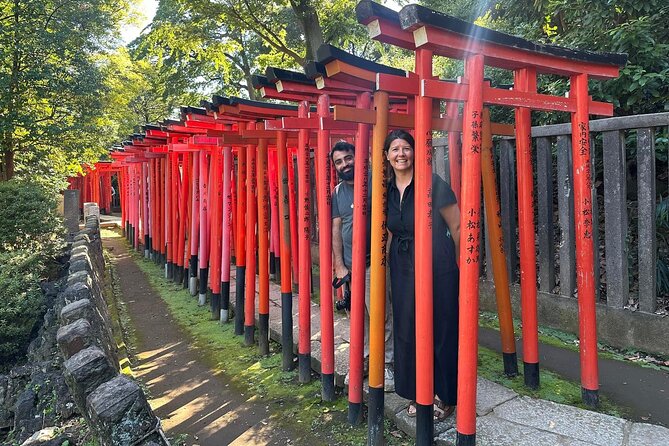
The tour begins at Nezu Shrine, a historic shrine known for a picturesque torii-lined pathway. This is not a quick glance stop either. You spend around 30 minutes here, which is just the right amount of time to slow your brain down and actually follow what is happening in front of you.
The key value is guidance on the basics of shrine worship. You learn how to pray, how people write a wish, and how fortunes work here. Even if you have visited shrines before, having a guide explain the etiquette reduces that awkward feeling of not knowing where to stand or what to do.
Practical note: this is a standing and walking-focused stop, so wear shoes you are comfortable in. The shrine is beautiful, but you are there to move through it.
Tennoji Temple: a short pause with a big focal point
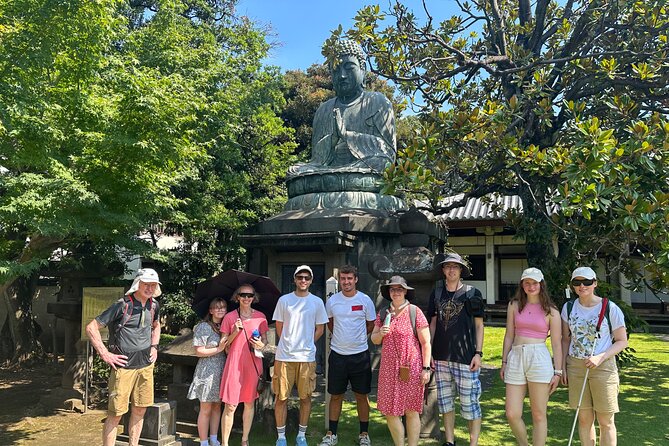
Next is Tennoji Temple, one of the older temples in the Yanaka area. The stop is short, about 5 minutes, but it is structured around a specific focal point: a large bronze seated image of Buddha.
A short temple stop can feel like a compromise on paper, but it works here because the guide uses the brief time for context. You get a calm moment in an old temple setting, plus a mention of garden views around the area, which helps you shift from street noise to quiet attention.
Yanaka District: old building remnants and small-shop textures
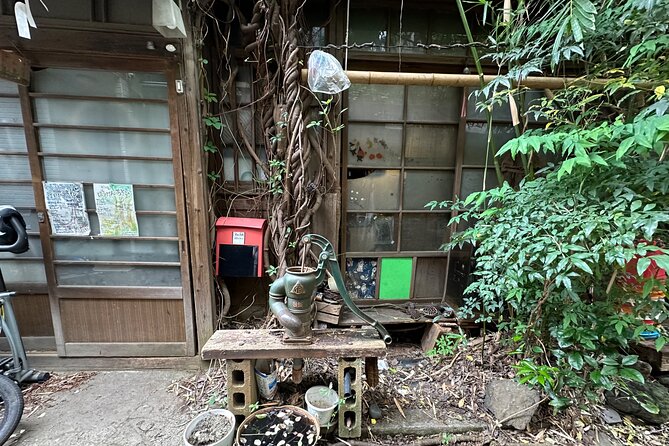
Then you move into Yanaka District for about 50 minutes. This is where the tour starts to feel like a walk through time. You see remnants of buildings spanning the Meiji, Taishō, and Shōwa eras, and you get traditional old small shops that have been passed down.
This is the kind of stop that pays off if you like details that do not scream for attention. You are not only looking at architecture. You are also watching how local commerce shows up in small spaces.
If you come expecting a museum-style route, you might feel you are walking through “just neighborhoods.” That is exactly the point. The guide helps you read what you are seeing, which makes it more than sightseeing.



The residential Nezu walk: old houses and new changes side by side
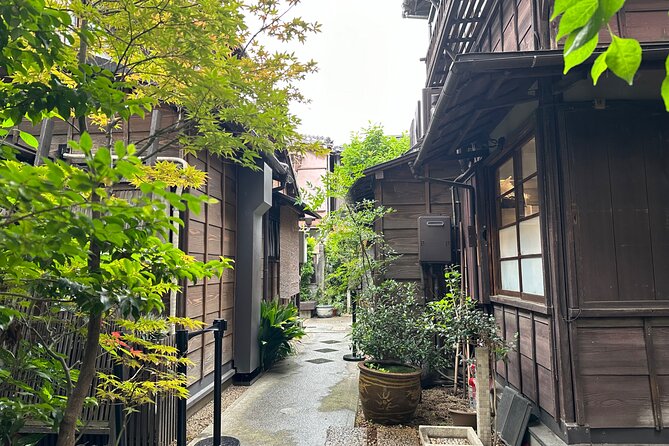
After Yanaka District, you take a slower local walk in Nezu, about 30 minutes. This portion is less about iconic landmarks and more about everyday neighborhood life. The tour emphasizes that you will see local old and new houses and shops.
This is one of my favorite types of guided walking experiences because it teaches you how to notice transitions. You start recognizing what counts as “old” in this part of Tokyo, and what counts as “new,” and how they share the same streets without needing to announce themselves.
Yanaka Cemetery: scenic Tokyo, with an unusually peaceful mood
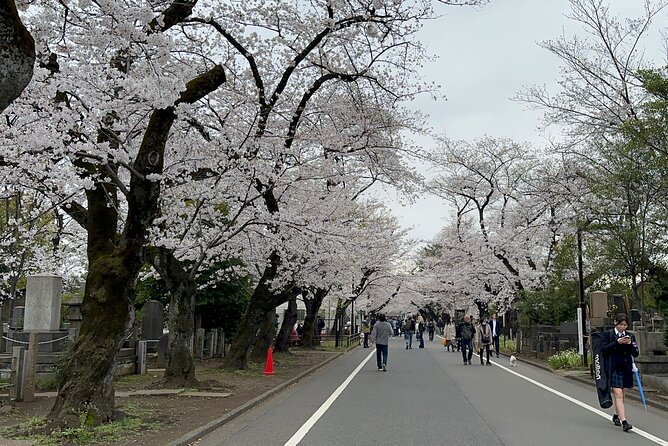
You then visit Yanaka Cemetery for about 20 minutes. Cemeteries in Tokyo can be surprising, and this one is described as one of the largest and scenic in the city. It also includes burial grounds of important figures, which gives the place weight.
What makes this stop valuable in a guided tour is tone. Your guide steers you toward respectful viewing, and the cemetery becomes a quiet break from shopping streets and photo stops. Even if cemeteries are not your usual highlight, the setting often changes your pace in a good way.
One consideration: cemeteries can be emotionally heavy for some people. If that is not your thing, treat the time here as a calm reflection stop rather than something to “get through.”
Cedar tree, then Yuyake Dandan: the photo moments with purpose
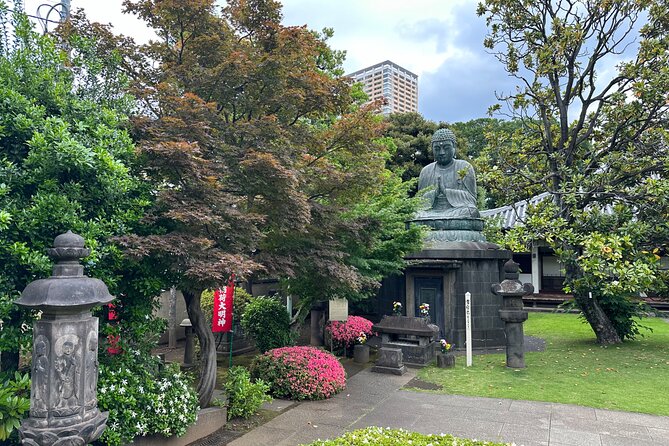
After the cemetery, you pass by a 100-year-old Himalayan cedar tree. It is not billed as a long stop, but these small “pause and look” moments add variety to the walk. They also help you understand the neighborhood’s age, not just its buildings.
Then comes Yuyake Dandan, known as the sunset staircase. You get a very short stop, about 2 minutes, and it is clearly a photo-focused moment. Still, it is worth your attention because the staircase offers a view over Yanaka Ginza street.
If you love photos, go in ready. Two minutes disappears fast, especially if you take time to frame shots. If you hate rushing, quickly decide: do you want one solid photo or a bunch of angles?
The 200-year-old bath house turned art gallery
Another quick pass you will make is a 200-year-old bath house that has turned into an art gallery. It is the kind of sight that makes you think, even when you are moving.
This stop works well because it is not trying to be a lecture. You simply see the building’s old function echoed in a new use. That’s a very Yanaka and Nezu theme: the past is not preserved in a bubble. It is repurposed.
Ueno Sakuragi Atari: wooden shopfronts and a locally styled market feel
You then visit Ueno Sakuragi Atari, which takes about 15 minutes. This area features wooden houses turned into shops, and the admission for this stop is included.
This is a good “switch” after the spiritual stops and quiet residential walking. Instead of focusing on reverence, you now focus on everyday commerce and texture: small shopfronts, narrow spaces, and the kind of local market browsing that feels different from big commercial streets.
Yanaka Ginza shopping street: snacks, desserts, and souvenirs guided
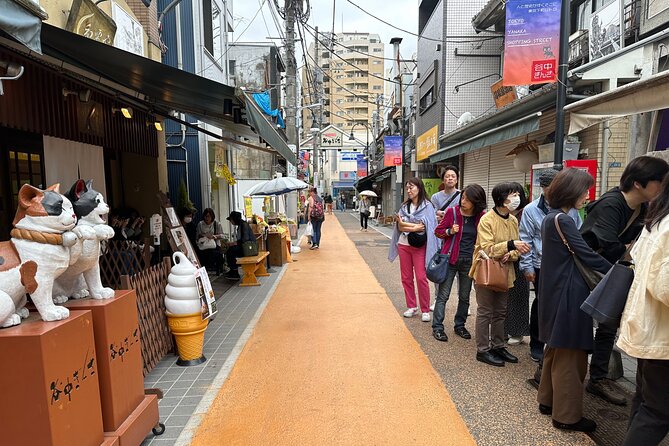
The tour ends at Yanaka Ginza Shopping Street, with about 10 minutes for the final stretch. Your guide introduces popular local street foods, Japanese desserts, and Japanese souvenirs.
Even though the time here is short, it is structured so you can make quick choices. This is where the tour stops being only about looking and turns into practical use: you learn what to eat and what to bring home without wasting time guessing.
If you have dietary limits, keep in mind that this is framed around street snacks and sweets. You can still browse for souvenirs, but your menu options might be narrower in the moment.
Price and value: why $39.41 can feel fair
The price is $39.41 per person for about 3.5 hours. On a Tokyo pricing map, that is in the “reasonable guided walk” category.
What makes it feel like good value is the mix of things you get that are hard to assemble alone:
- A small group (up to 9), which usually means better interaction.
- A guide-led route that connects shrines, temples, and old-town streets into one coherent experience.
- Most admissions are listed as free, while at least one activity stop has admission included.
Also, it is worth noting that booking tends to happen fairly ahead of time, with an average booking window of about 38 days. If you are traveling during a popular season or you want your first-day plan locked in, it is smart to reserve early.
The guiding factor: why a good guide changes the whole walk
In the feedback, one guide named Sui is repeatedly praised for being engaging and extremely knowledgeable, with good English and enthusiasm. The strongest theme is not just facts, it is how the guide explains etiquette and practical details at temples and shrines.
That is a big deal in Japan. When you know what to do, you feel calmer. You also respect the places better.
If you care about learning how things work on the ground, this tour format fits. You are not just collecting photos. You are learning what those photos mean in daily life.
Who this Yanaka and Nezu tour is best for
This is a strong match if you:
- Want an old Tokyo experience without the main-tourist crowd energy.
- Like walking tours that are slow enough to ask questions.
- Enjoy cultural stops that include both spirituality and neighborhood life.
- Are traveling with only a few hours to spare and want a compact, meaningful route.
It may be less ideal if you want only big-name attractions, or if you prefer long stops where you can wander independently for an hour at each location.
Quick practical tips before you go
Bring comfortable shoes. This is a walking route with multiple stops, including stairs near Yuyake Dandan.
If you are planning your day, treat the tour as a morning or early afternoon anchor, since it ends back at the meeting point and leaves you time to continue exploring nearby on your own afterward.
Should you book this Yanaka and Nezu Old Traditional Town Cultural Experience?
Yes, if you want a guided, small-group walk through Tokyo’s quieter older neighborhoods and you like learning the “how and why” behind what you see. The $39.41 price works best when you value the guide and the structure, especially for shrine and temple etiquette.
Skip it only if you are chasing major headline attractions, or if you dislike short photo-time stops like Yuyake Dandan.
If you are the type who loves side streets, old shopfronts, and calm moments between sightseeing, this is the kind of tour that sets a better tone for the rest of your Tokyo trip.
FAQ
How long is the Yanaka and Nezu cultural experience?
It lasts about 3 hours 30 minutes.
How many people are in the group?
The tour has a maximum of 9 travelers.
Where does the tour start and end?
It starts at Nippori Station (2 Chome-19 Nishinippori, Arakawa City, Tokyo) and ends back at the meeting point.
Is a mobile ticket used for this experience?
Yes, the tour includes a mobile ticket.
Are entrance fees included?
Many stops list free admission. Ueno Sakuragi Atari has admission included. Other listed stops note free admission as well.
What stops are included during the walk?
The route includes Nezu Shrine, Tennoji Temple, Yanaka District, Nezu neighborhood, Yanaka Cemetery, Yuyake Dandan, Ueno Sakuragi Atari, and it ends at Yanaka Ginza Shopping Street. You also pass by a 100-year-old Himalayan cedar tree and a 200-year-old bath house turned into an art gallery.
Is it close to public transportation?
Yes, it is near public transportation.
Are service animals allowed?
Yes, service animals are allowed.
What is the cancellation policy?
You can cancel for a full refund up to 24 hours in advance of the experience start time, with free cancellation available.
More Tour Reviews in Tokyo
Not for you? Here's more nearby things to do in Tokyo we have reviewed












Tokyo City Tours, side by side.
 ★ 5.01-Day Tokyo Bus TourFrom $12914,250 reviews
 ★ 4.5TOKYO SKYTREE® Admission ticketFrom $1311,192 reviews
 ★ 4.6teamLab Planets TOKYO Digital Art Museum Entry TicketFrom $259,779 reviews
 ★ 4.0Mt Fuji & Hakone Cruise, Drum Show Bullet Train 1 Day from TokyoFrom $1497,413 reviews
 ★ 5.0Shinjuku Food Tour (13 Dishes at 4 Local Eateries)From $866,603 reviews
 ★ 4.4Tokyo Mt Fuji 5th St & Hakone Cruise Bus Tour w/Bullet TrainFrom $1545,024 reviews
 ★ 5.0Flagship 2-Hours Official Street Go-Kart Tour – Tokyo Bay ShopFrom $644,974 reviews
 ★ 4.5From Tokyo: Mount Fuji Full-Day Sightseeing TripFrom $684,970 reviews