
Review · ASAKUSA TOURS
Tokyo:Calligraphy &Make your original folding fan in Asakusa
Turning ink into something personal is calming. In Asakusa, you practice Japanese calligraphy with an English speaking instructor, learn the mindset behind hiragana, and then finish with a custom folding fan that carries your writing home. I especially like the focus on posture and ink control, because it makes a noticeable difference fast, and the session ends with green tea plus a postcard to yourself that helps the experience stick. One consideration: you’ll want clothes that can get a little stained, since ink is part of the process.
For the price, this workshop feels like good value because it is not just watching. You get hands on brush time on thin paper for about 30 minutes, guided by examples and instruction, plus the kind of take home souvenir you actually want to keep and use. The full length can run from 30 to 90 minutes depending on your pace and the option you book.
Key things to know before you go
- Mindset of hiragana, not just brush tricks, so your writing feels more intentional
- Posture coaching and the right amount of ink, taught in a practical way
- Traditional ink melting using water and solid ink sticks
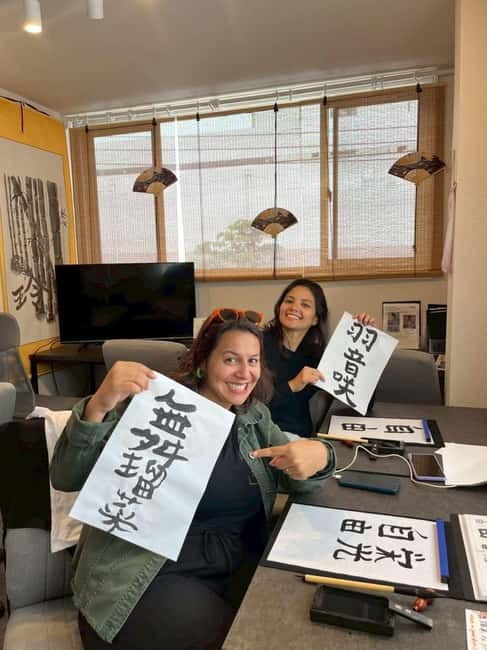
- Guided practice for basic techniques, then a chance to choose a design you like
- Green tea and a postcard to yourself, turning class time into a memory you can read later
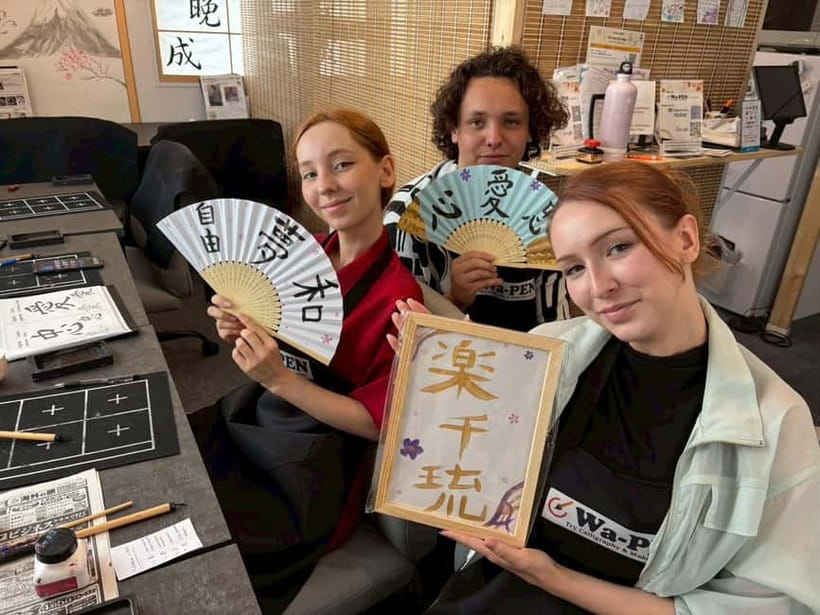
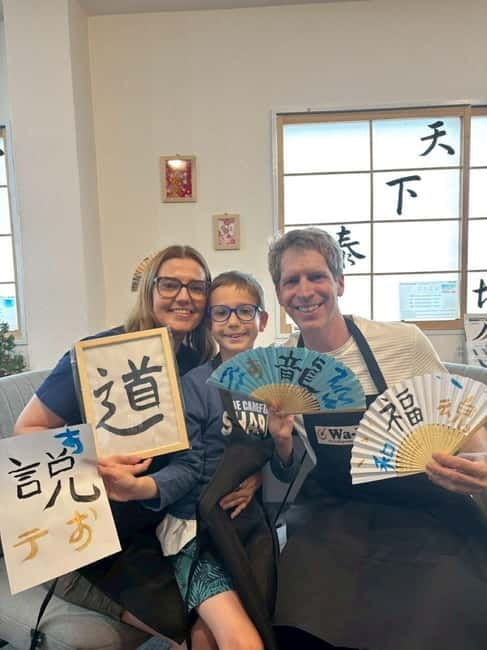
- A folding fan made with your calligraphy, so your souvenir is truly one-of-a-kind
Asakusa Basics: fitting the workshop into your Senso-ji day
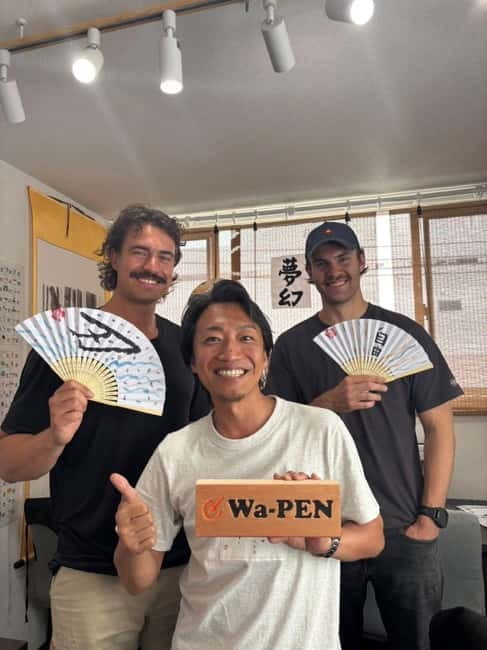
This calligraphy class takes place in Asakusa, the part of Tokyo that makes you slow down. The meeting point can shift based on which option you book, but the coordinates you’re given put you in the Honshu, Tokyo area close to the famous temple neighborhoods. That location matters because it makes the workshop easy to pair with a morning or afternoon walk around Asakusa and Senso-ji, rather than treating it like an awkward detour.
You’ll want to plan for a hands on session, not a quick photo stop. The workshop is built around practice time, including traditional materials like brush and ink, plus paper you write on. That means the atmosphere is more focused than what you’ll find on the busiest temple streets.
One more practical point: you cannot bring food or drinks into the session. In plain terms, go in ready to learn, then enjoy tea during the workshop when they provide it.
You can also read our reviews of more tours and experiences in Tokyo.



What you learn: hiragana mindset, kanji practice, and the why behind the strokes
The class starts with the story behind Japanese calligraphy. You’ll learn some of the history of Japanese calligraphy, but the best part is what it translates into for your hand and your brain. You’re not just copying symbols, you’re getting the idea behind the way hiragana connects to daily life and expression, and how that mindset shows up in the strokes.
You also work through multiple techniques. The workshop describes practice covering basically 8 techniques with guide paper and expert support. That matters because calligraphy can feel random until you understand that good writing is a set of repeatable movement choices: how you start, how you curve, how you lift, and how much ink you put down.
If you want something personal, the class is set up to let you practice for a result you care about. You choose from a sample book or you can order your favorite design with help from the staff. Some people use the session to write their name in kanji, and it helps them understand what the characters mean, not just how they look.
Brush, ink, and posture: the practical lessons that make your writing improve
Most calligraphy workshops either explain too much or rush you too fast. This one emphasizes the fundamentals in a way that actually helps you write better during the class.
First, you learn posture and attitude. You’ll get instruction on the right way to sit and hold yourself for calligraphy, plus the correct way to manage your fude, the Japanese brush. The instructor also covers the right ink amount, which is a huge deal. Too much ink and strokes blur. Too little and the writing looks weak or patchy.
Then comes the tactile part: you use water to melt traditional solid ink sticks for calligraphy. That step turns ink into a process you can control, not something that just appears on the table. You also learn brush usage as you practice techniques on guide sheets.
The class includes practice writing for about 30 minutes on thin paper. That thin paper changes the experience because it forces you to commit to each stroke. It also makes the guidance feel real, since you can see your ink flow and brush pressure right away.
And here is the part I like for first timers: you are allowed to keep going until you are satisfied with your work. That reduces the usual stress of being rushed to finish something you are not happy with.
Picking your design: how guided practice turns into your final piece
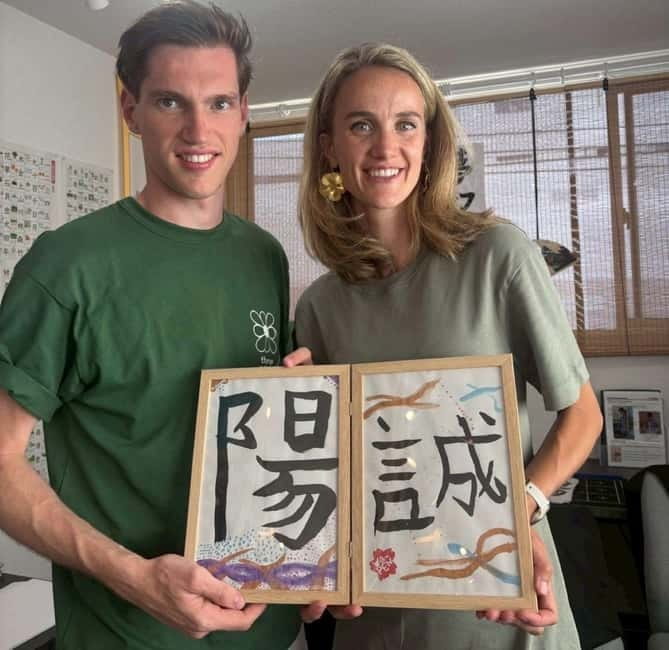
Once the basics are covered, you pick your favorite design. The process is set up in a way that prevents decision fatigue. You can choose from a sample book, and if you have a specific idea, you can order it with staff help.
You’ll then practice your chosen design until it feels right. The workshop aims for a final result you want to take home, not just a practice sheet you forget about. The staff supports you as you repeat strokes, and you get tips on what to fix as you write.
A small but meaningful detail: you practice with guide paper first. That means you are not forced to guess where to place every line, which is especially helpful if you have never used a brush before. The guides help your eyes learn the proportions, and then your hand can focus on movement.
When it is time to finalize, you can set your expectation appropriately. Calligraphy is not about perfect copying on the first try. It is about putting energy into the strokes so the writing looks alive and intentional. This workshop is paced for that.
Tea break and a postcard to yourself: turning practice into a keepsake memory
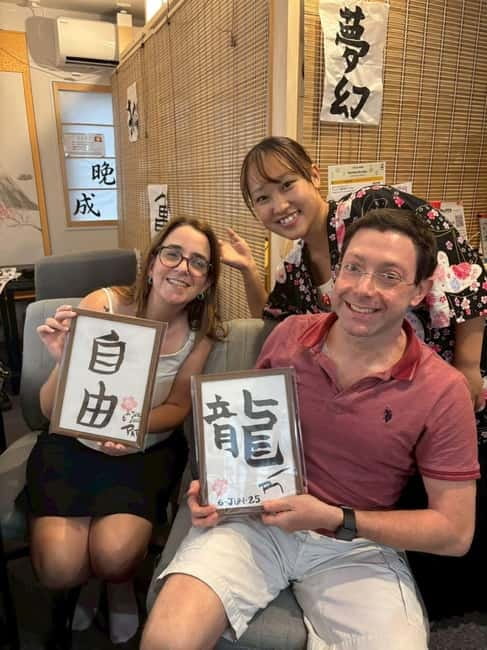
After your main calligraphy practice, you get a cup of green tea. It works as a reset for your body after focusing on posture and fine hand movements. In a city where you might walk for hours, this kind of pause feels genuinely refreshing.
Then you write a postcard to yourself. You explain your emotions after calligraphy and send that message forward to when you’re back home. That is a simple idea, but it makes the class more memorable than a standard souvenir purchase.
Why this works: you connect the art to your mindset in the moment. Instead of only taking home a fan, you take home your own words about what you felt while learning. It is the difference between a photo you scroll past and a message you actually read later.


Making your original folding fan in Asakusa
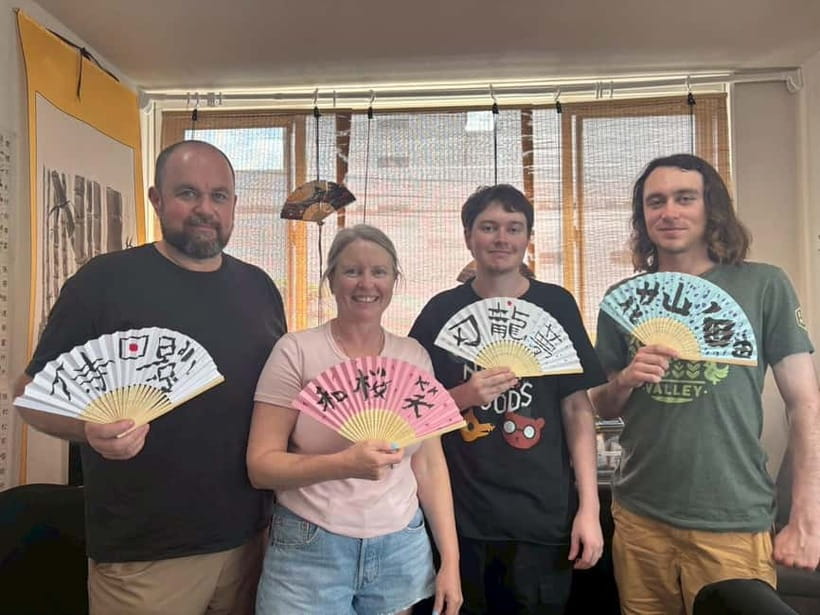
The last step is where your class becomes a physical souvenir you can use. You make an original folding fan with your calligraphy on it. The fan turns writing into something practical and travel-friendly, which matters because Tokyo souvenirs can otherwise become shelf clutter.
This is also where the workshop’s pacing makes sense. You practice the strokes first, then apply your chosen design. That order gives you confidence when you transfer your work onto the fan, rather than trying to figure out the brush while also assembling a craft.
In terms of what you’ll walk away with, you should expect a keepsake that looks personalized, not mass produced. That one-of-a-kind result is the real payoff, especially if you love crafts but want something with cultural depth.
One note to keep expectations clean: the workshop description mentions calligraphy plus the fan. Printing calligraphy onto a T-shirt is listed as not included, and clothes fees are also noted as separate if you want that option.
Price and time: what $16 buys, and why it feels fair
At $16 per person, this workshop is priced like an easy win. You are not paying for a theater show. You are paying for guided instruction, traditional materials, and hands-on practice time plus the fan and postcard experience.
Duration can range from 30 to 90 minutes depending on the option booked and your pace. In practice, that time range is a feature, not a problem, because calligraphy takes time to settle into. If you’re quick, you’ll likely finish sooner. If you want to practice until it feels right, the session supports that.
You also get English instruction, which is a big value point for Japan experiences. When the explanations are clear, your learning goes faster, and you spend less energy guessing.
One scenario to watch: if you choose the Henna Tattoo options, the calligraphy experience is not included. So the price and what you actually do can change depending on the package you select. Read your option name carefully so you get the calligraphy and fan you’re expecting.
What to bring, and how to stay comfortable during the session
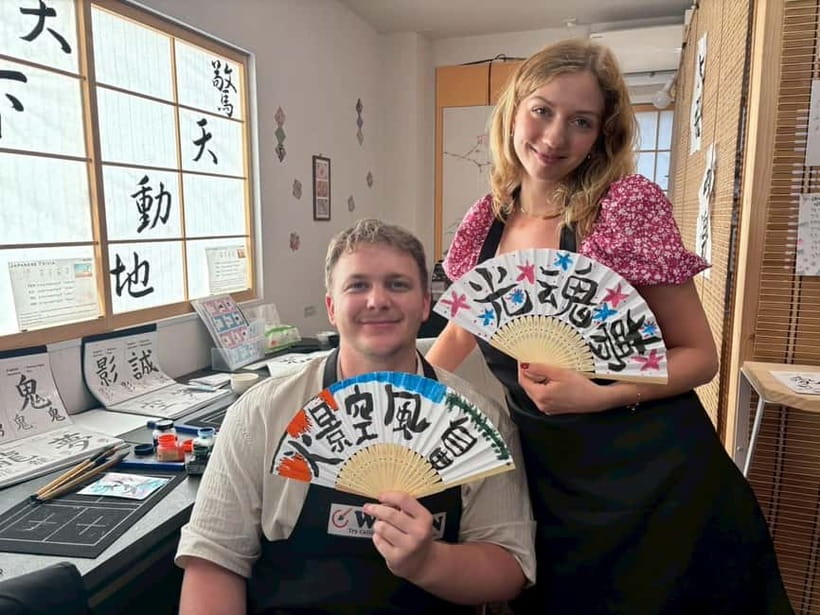
This class is simple, but you still need to dress for ink. Wear comfortable clothes that can get a bit dirty. Even with aprons available, you should assume there is some risk of ink specks on sleeves or cuffs.
You might also want to plan your day around it. Since there is no food and drinks allowed during the session, eat beforehand. Then let the green tea be your only planned refresh in the workshop.
Another small comfort consideration: calligraphy uses steady posture. If your body tends to get sore from sitting upright, consider stretching beforehand and wear shoes that do not make you overheat or feel restricted. The workshop itself focuses on posture coaching, so you’ll likely adjust once you begin, but your comfort going in helps.
Pets are not allowed, and assistance dogs are allowed. Also, the workshop is noted as not suitable for wheelchair users, so you’ll want to find another option if mobility is an issue.
Who this is best for in Tokyo, and who should skip it
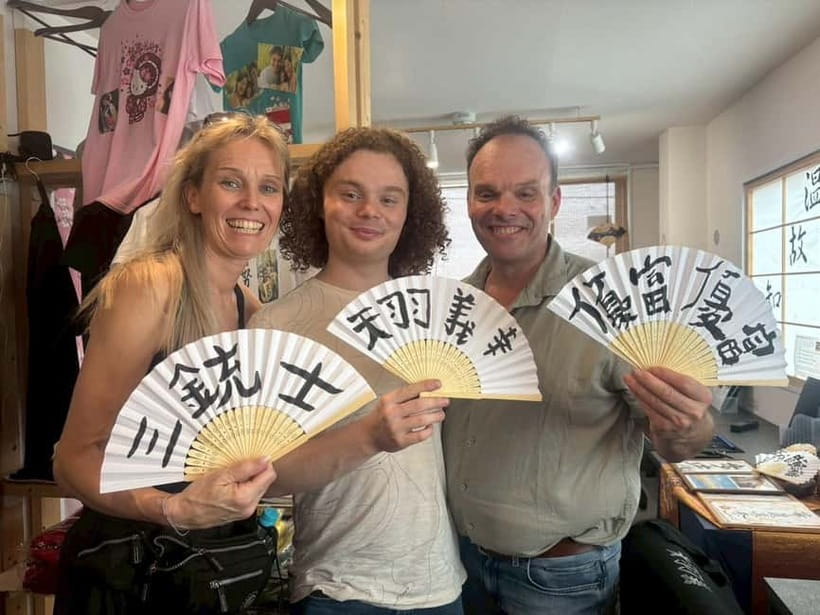
This workshop fits a wide range of travelers because it is hands-on but not intimidating. I’d steer you toward it if you want a break from walking and looking, and you prefer learning something with your hands instead of just consuming sights. People who want a creative, relaxing afternoon often get what they came for here.
It is also a strong pick for pairs and family groups. The workshop feels friendly for people of different ages, including kids, as long as they can sit comfortably and handle a brush. The instructor support style is part of the appeal, especially if you are worried about doing everything wrong at first.
Skip it if you need wheelchair access. Also skip it if you want a workshop with zero mess. Ink is part of the experience, and even with aprons, your clothes and table manners should be treated as ink-safe.
Should you book this Asakusa calligraphy and fan workshop?
Book it if you want a real Tokyo craft with meaning, not just a quick activity. The best reasons are practical: you get guided posture and technique coaching, you practice for about 30 minutes, you make a custom folding fan, and you add a postcard to yourself so the day follows you home.
If you are on a tight schedule, the 30-minute end is appealing, but you still need to show up ready to focus. If you’re the type who likes to linger and refine, the longer option window is a plus because the class supports practicing until you are satisfied.
If you hate the idea of getting a little ink on your clothes, or if mobility is a concern, you should look for a different activity. Otherwise, for $16 in Asakusa, this is one of those Tokyo experiences that feels both calming and genuinely memorable.
FAQ
How long does the Tokyo calligraphy and folding fan experience take?
The duration is listed as 30 to 90 minutes, depending on availability and the option booked.
How much does it cost?
It is $16 per person.
Is the workshop taught in English?
Yes, the instructor provides instruction in English.
What is included in the experience?
Included items are history of Japanese calligraphy, posture and attitude coaching, traditional ink melting, brush usage and techniques, practice with guide paper, custom design practice, a postcard activity, and green tea. The folding fan is also part of what you make.
What should I bring or wear?
Wear comfortable clothes. You should expect ink transfer risk, and the workshop notes that aprons are ready.
Are pets allowed?
Pets are not allowed, but assistance dogs are allowed.
What if I choose the Henna Tattoo option?
If you select the Henna Tattoo options, the calligraphy experience is not included.
More Tour Reviews in Tokyo
Not for you? Here's more nearby things to do in Tokyo we have reviewed






Asakusa Tours, side by side.
 ★ 4.8Japanese Dance Cabaret Theater Asakusa-Kaguwa TicketFrom $492,270 reviews
 ★ 4.7Meiji Shrine, Asakusa, Skytree Bus Tour and CruiseFrom $1221,986 reviews
 ★ 4.9Roll and Authentic Sushi Making Class in AsakusaFrom $581,957 reviews
 ★ 4.8Asakusa Walking Tour with Sensoji Temple VisitFrom $221,583 reviews
 ★ 5.0Tokyo Asakusa Rickshaw TourFrom $421,375 reviews
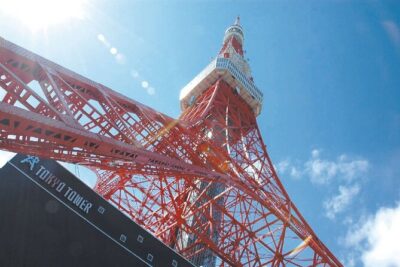 ★ 4.5Tokyo Panoramic 1 Day: Meiji Shrine, Asakusa, Odaiba and SKYTREE®From $851,222 reviews
 ★ 5.0Tokyo Go Kart: Asakusa, Skytree, and Akihabara **IDP MUST**From $99988 reviews
 ★ 4.7Asakusa, Skytree & Akhihabara Go-Kart City ExperienceFrom $96761 reviews
This tour also belongs to