
Review · MOUNT FUJI TOURS
Tokyo:Sea of Mount Fuji, Hakone Ropeway, Ōwakudani, Enoshima
One-day trips to see Mount Fuji feel like a gamble, but this one is packed with strong scenery anyway. I like the pirate ship on Lake Ashi because it turns the classic torii view into an actual cruise, not just a roadside photo. I also love the Owakudani black eggs stop, where the volcanic steam and sulfur air make it feel like you really reached Fuji’s world. The main drawback to plan around is weather, because fog or clouds can hide the mountain from multiple viewpoints.
The best part is the “three angles of Fuji” feel in one day: from the lake, from the volcano zone, and later toward the ocean at Enoshima and Sagami Bay. You also get real structure with a guide, round-trip transfers from central Tokyo, and timed stops so you are not bouncing between ticket counters all day.
This is also a long, full schedule. It is built for people who enjoy moving from place to place, and who can handle some waiting for the best views. If you want a slow, wandering day with lots of unplanned detours, you might feel a bit rushed.
Key things you’ll notice on this day
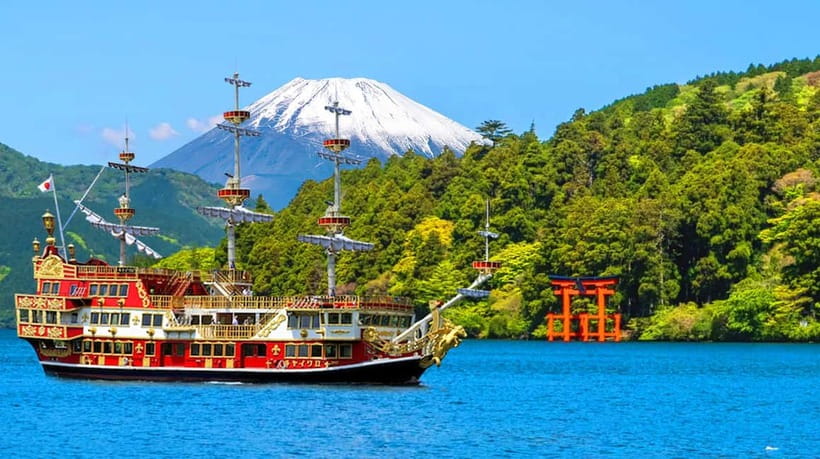
- Pirate ship photo time on Lake Ashi, including the red torii view from the water
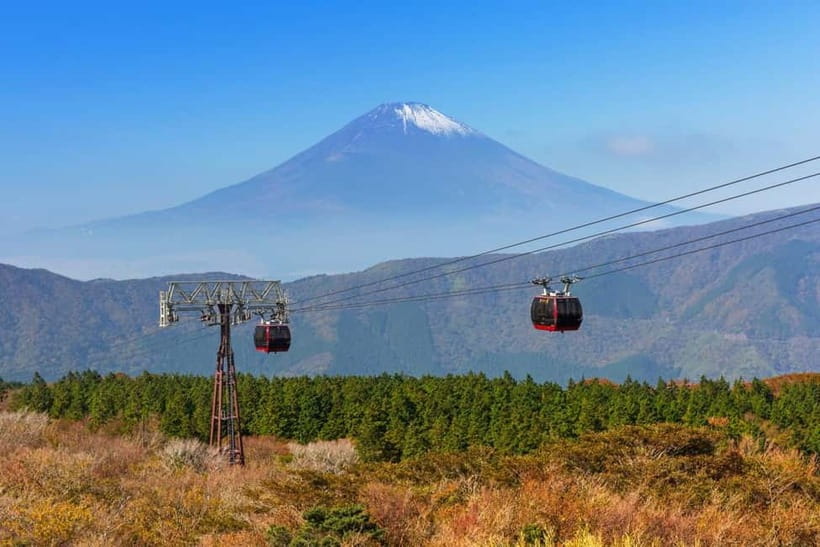
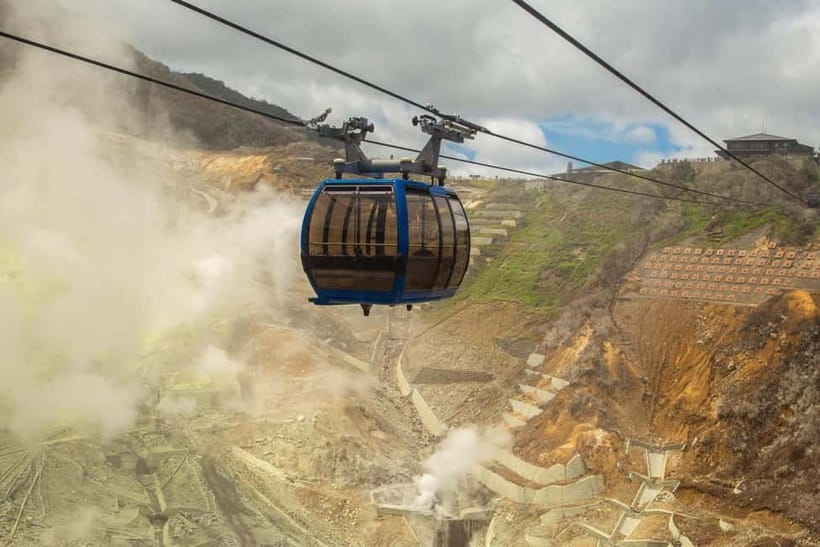
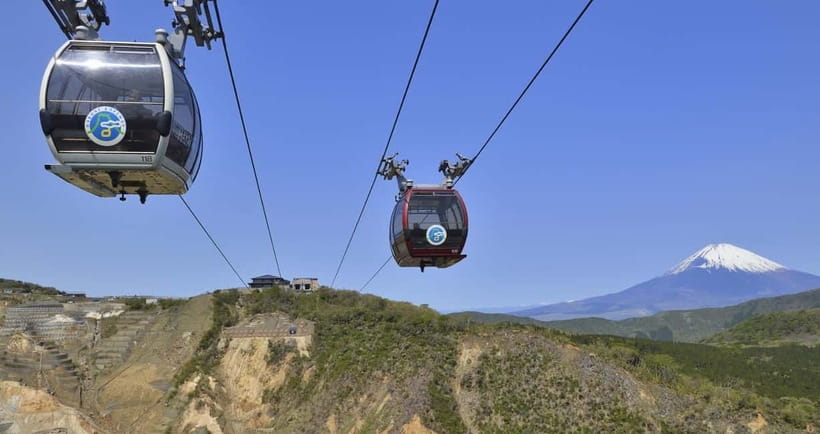
- Hakone Ropeway above Owakudani steam, with a chance to spot Mount Fuji from the horizon line
- Kuro-tamago black eggs, hard-boiled in sulfur springs, with the local seven-years-longer-longevity legend
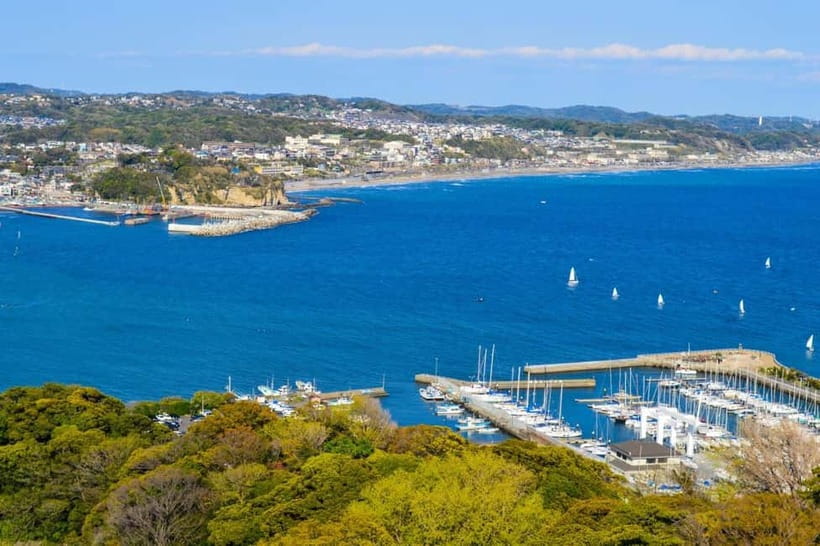
- Enoshima’s Sea-Mount Fuji viewpoint, where Fuji can appear across the bay on clear days
- Sagami Bay ocean photo stop, adding a different color of water after the geothermal stops
A one-day plan that hits Fuji from lake, volcano, and ocean
This tour makes sense if you are in Tokyo and want Fuji without doing a complicated multi-day self-planned route. You start with a water view, climb into geothermal territory, then shift to seaside culture on Enoshima and the wider Sagami Bay coast.
I like that the day is organized around sightlines. You are not just visiting attractions, you are repositioning your eyes: lake first, volcanic valley second, then ocean later. That matters, because Mount Fuji is often partially visible, even when it is not fully framed, and these changing locations give you more chances.
It also helps that the day is timed. Stops are short but purposeful, which keeps the schedule moving while still letting you step out for photos and a bit of walking.
You can also read our reviews of more tours and experiences in Tokyo.



From central Tokyo to Hakone and Enoshima: comfortable, but expect a full day
Meet up is in central Tokyo, with three starting location options based on what you book. You get round-trip transfers by comfortable vehicle with A/C, and the trip is listed as about 10 hours total.
That comfort matters more than it sounds. Hakone traffic can be unpredictable, and the itinerary includes a lot of moving parts like cruises and ropeway timing. People in past groups also noted that the ride time is real, so having a small plan for yourself helps, like bringing snacks and staying hydrated.
A big practical plus is the guide support. Many guides are described as very organized about keeping people together and on time, with clear meeting instructions before you set out. For example, Aki is called out for sending detailed meeting times and locations ahead of the tour, which reduces stress on a day that already has a lot happening.
Also, most food and shops around the stops may not take credit cards, so carry some cash. Your guide can help you purchase tickets for the pirate cruise and ropeway if you need help, but the card detail is still on you.
Lake Ashi and the pirate ship cruise: the torii view becomes a moving panorama
Lake Ashi is the opening act for a reason. This volcanic lake has that classic Hakone picture: mountains framing the water, and often Mount Fuji in the distance on clearer days. The red torii gate rising from the shallows is the symbol people come for, and seeing it from the water gives it more scale.
Your timing here is tight on purpose. You have a photo stop at Lake Ashi for about 20 minutes, then you board the Hakone sightseeing cruise for around 25 minutes. If you choose the option that includes the cruise, you are set. If not, you will need admission for the pirate ship separately, and your guide can help.
On the cruise, the biggest value is the open deck. You get fresh lake air and wide angles that are hard to match from shore. The ship’s pirate theme also makes the ride feel like an event, not just transit, and the view can look like a sky reflection across the water.
Reality check: Lake Ashi can be gorgeous even without a perfect Fuji silhouette. Several past experiences noted that when weather was mixed, they still enjoyed the cruise and the overall Hakone scenery, even if Fuji was cloudy or only partially visible.
Hakone Ropeway over Owakudani: steam, sulfur air, and a Fuji silhouette chance
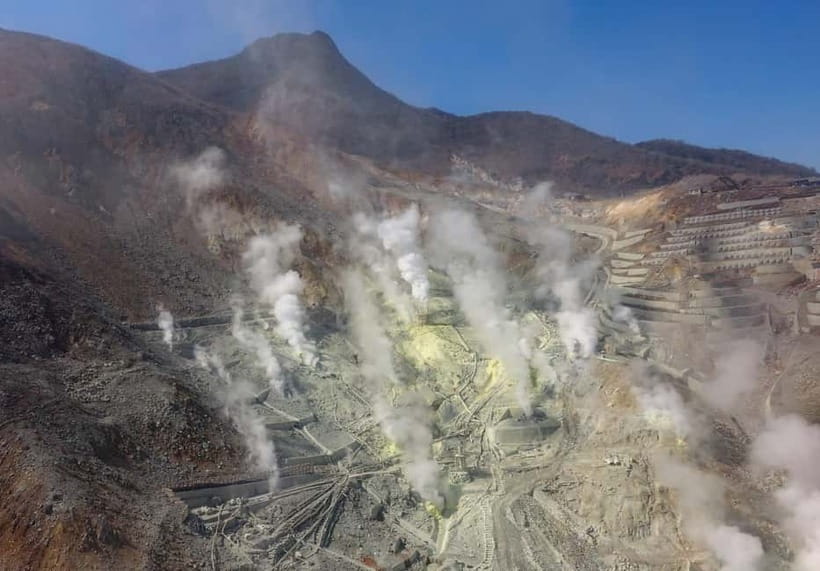
Next you go up. The Hakone Ropeway is about a 25 minute ride, and it is the part of the day where the scenery shifts from postcard flat water to active volcanic terrain.
As you rise, you see Owakudani’s geothermal activity: steam drifting from cracks in the earth and that unmistakable sulfur scent. The view from above is the point, because it gives you a better sense of the valley’s scale and why this place is such an important Hakone stop.
The tour is set so that you are not stuck waiting around for hours. You get a photo stop in Owakudani for about 30 minutes, which is enough time for quick wandering, photos, and the food moment that people come for.
There is also a practical note built into the activity: if you cannot take the sightseeing boat or the ropeway, the tour mentions an available bus option. So the day is structured with a backup plan, which is helpful if mobility issues affect your ability to do the full route.
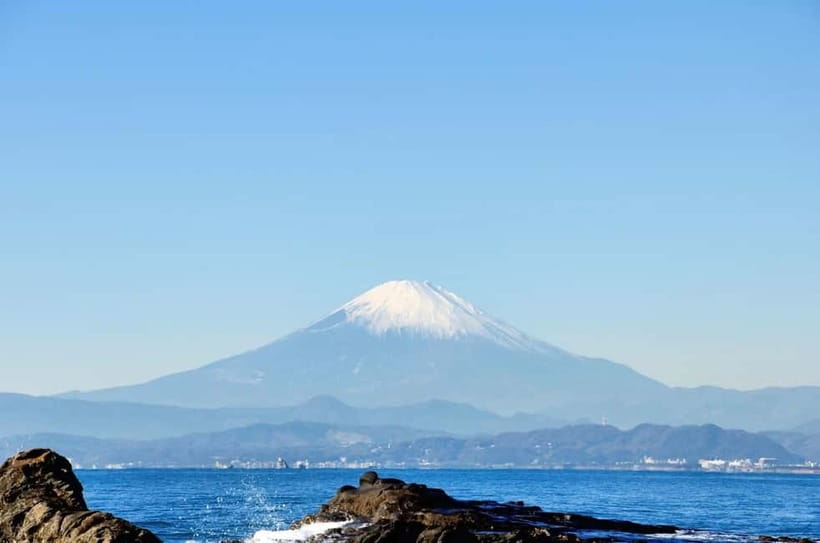
Mount Fuji can sometimes appear on the horizon from this area, but visibility is weather-dependent. If the mountain is hidden today, you are still getting the volcanic visuals, steam, and the sense of being near an active geologic zone.
Owakudani black eggs: the sulfur valley snack with a longevity legend
Owakudani is famous for kuro-tamago, black eggs. These are hard-boiled eggs cooked in sulfur springs, which turn them dark. The legend says eating one adds seven years to your life, and you will see this story repeated everywhere in Hakone.
What makes the black egg stop worth your time is not just the snack. It is the link between food and the environment. You are literally eating something made possible by the volcanic heat and sulfur springs. It feels different from normal souvenir eating.
The tour timing gives you a short window, so I suggest you treat it like a focused moment:
- take a few photos around the steam zones
- then eat your egg calmly, not while rushing
- keep water handy, because sulfur air plus cold weather can be a lot
If you are thinking, is this touristy? Yes, a bit. But that is also why it works: it is an easy, memorable cultural bite during a place that already feels unreal.



Enoshima: Sea-Mount Fuji views and a shrine walk with snacks
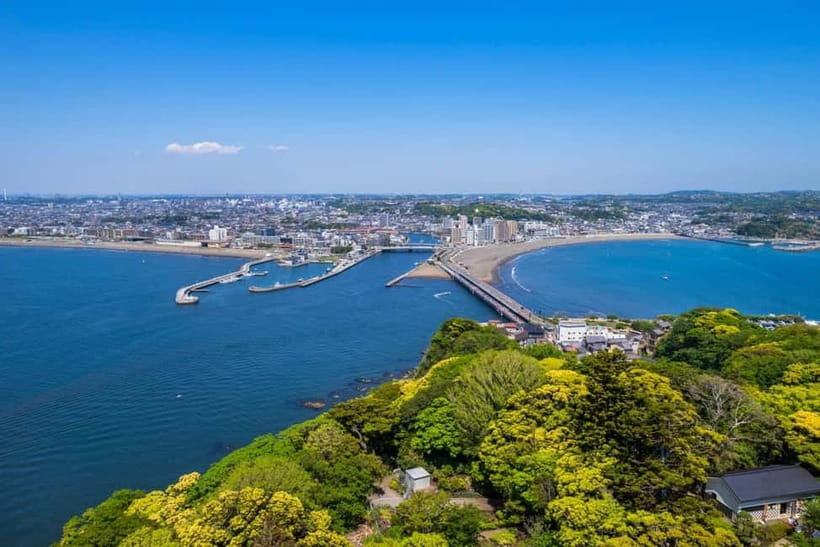
Enoshima changes the mood fast. After steam and cable cars, you get salt air, sea views, and an island full of shrines and small food streets.
You have about 30 minutes of free time on Enoshima Island. This is enough to do a quick circuit, grab a snack, and head toward the main lookout area. On clear days, Mount Fuji can appear on the horizon in the famous Sea-Mount Fuji style, with the mountain visible across the water.
The tour also includes structured shrine stops, so you get both the scenic look and the cultural layer:
- Enoshima Shrine, Hetsunomiya (about 20 minutes)
- Enoshima Benzaiten Nakamise Dori (about 30 minutes)
- Bronze Torii of Enoshima Shrine (about 10 minutes)
- Zuishinmon Gate (about 10 minutes)
Benzaiten is part of why Enoshima feels a little different from many other island shrine areas. The walk is not just about seeing buildings, it is about moving through a shrine-centered street and finding the small side things like food stands.
Food is a big part of this stop. You can look for fresh seafood like anchovy bites, seaweed rolls, and there is even Shonan milk ice cream mentioned as a local treat. If credit cards are spotty at small shops, the cash tip matters even more here.
One scheduling consideration: Enoshima free time is only about 30 minutes. Some people wished for more time to wander the island streets and eat more slowly. If you love food browsing and longer strolling, you may want to plan your next day in that area, or at least add a bit of extra strolling when your group time allows.
Sagami Bay photo stop: finishing on open ocean light
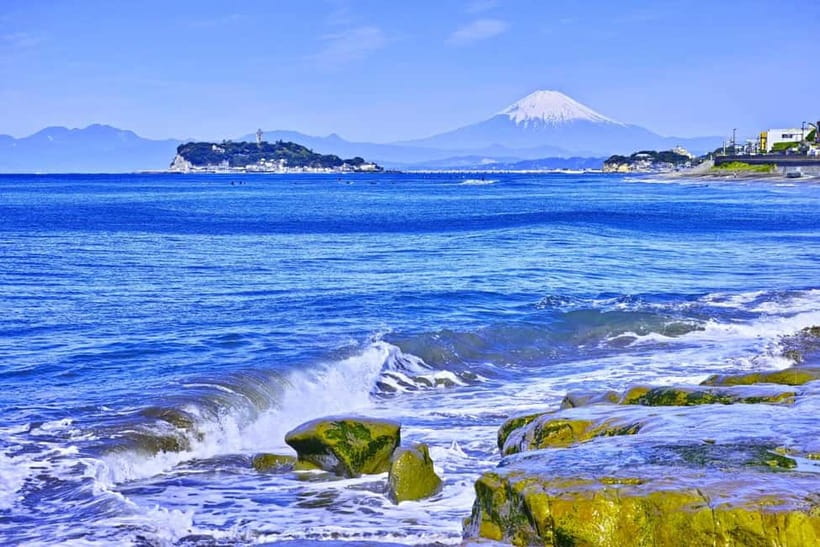
After the island, you end with a Sagami Bay photo stop for about 20 minutes. This is a quick hit, but it helps the day feel complete because you go from geothermal heat to bright coastal water.
The key value here is variety. The day can start to feel like one big Japan scenic theme, but the bay stop adds a different water color and a more open horizon.
If clouds roll in earlier, this is still a helpful place to reset your expectations. Even when Fuji is not obvious, ocean light can still look beautiful in photos.
What the guide and timing do for you (and who you might get)
This tour is often praised for how smoothly it runs. The comfort of the bus, the on-time feeling, and the way the guide keeps the group together show up again and again.
You might get a guide like Kishida, who is described as sweet and patient, with smooth communication. Or you could get Pin, noted for fun facts that make Japanese culture feel more connected to what you see. Some guides, such as Joey or Jimmy, are described as upbeat and very organized with timing, which matters when you have ropeway and cruise windows.
There is also mention of guides helping with photography tips, and at least one experience specifically calls out a guide taking photos like a professional. That is not guaranteed, but it gives you a hint about how hands-on some guides are.
One real practical tip: because the itinerary is scheduled tightly, bring snacks and water for the long bus sections. Even in a well-run tour, you will still spend significant time in transit, and you cannot always count on finding the exact food you want.
Price and value: how $50 can make sense here
At about $50 per person for a 10 hour day, the value comes from what is included. The big items covered are:
- professional English and Chinese speaking tour guide
- comfortable A/C vehicle
- round-trip transfers to and from the meet up location
- all taxes, parking fees, toll fees, gas fees, environmental fees
What is not automatically included can depend on which option you choose. Hakone sightseeing cruise admission and the Hakone Ropeway ticket are listed as not included unless you select those options. If you select the package that includes them, the day starts to look like a bargain compared with paying each segment separately, especially when you factor in the guided structure and transport.
This is also a value tour if you are staying near central Tokyo and do not want to coordinate trains and ticket queues. The time saved is real, and the “three stops, three viewpoints” approach reduces the chance you miss the best angle of Fuji.
The best way to judge value for you: if you want a single organized day that covers Lake Ashi, Owakudani, and Enoshima, this is an efficient way to do it. If you only care about one segment, you might prefer a smaller, cheaper option.
When Mount Fuji is hidden, does the day still work?
Fuji visibility is never fully in your control. The tour itself warns that weather affects views, and in past experiences, people sometimes saw Fuji clearly and sometimes not at all.
The good news is that the day still holds together even without a perfect Fuji shot. The cruise on Lake Ashi can still look fantastic. Owakudani remains a true geothermal experience, steam and all. And Enoshima still delivers shrine atmosphere and sea air, plus food.
So if your priority is getting one iconic Fuji skyline photo, you should book with weather flexibility in mind. If your priority is a well-structured day in the Hakone plus Enoshima zone, you will likely still have fun.
Who should book, and who should skip this day
This day fits best for people who:
- want Mount Fuji chances from multiple angles
- like guided day trips that keep things organized
- are comfortable with a full schedule and repeated short stops
- do not mind cold weather, since the itinerary is outdoors in parts
It is not suitable for:
- pregnant women
- wheelchair users
- people with altitude sickness
- people over 70
If you fall into any of those categories, you should skip this specific tour and look for a different option that matches your needs.
Should you book this Tokyo to Hakone to Enoshima tour?
I think you should book it if you want a single day that mixes big scenery with a real cultural stop on Enoshima, without turning your travel day into a logistics project. The pirate ship cruise on Lake Ashi plus the Hakone Ropeway plus Owakudani black eggs is a strong combo, especially for the price when the cruise and ropeway admissions are selected.
I would hesitate if your schedule is tight for flexibility or if you are extremely photo-obsessed and cannot tolerate the possibility of clouds hiding Fuji. This tour is weather-sensitive, and even a well-run day cannot rewrite the sky.
If you like your travel days structured, with a guide who keeps everyone together and gives clear instructions, this one is a good bet. And if you want a day that ends with sea views instead of just another inland shrine, this itinerary has that nice final shift built in.
FAQ
How long is the tour?
The duration is listed as 10 hours.
How much does it cost?
The price is listed as $50 per person.
What does the tour include, and what might not be included?
Included are the professional English and Chinese speaking guide, A/C vehicle, round-trip transfers to and from the meet up location, and all taxes, parking fees, toll fees, gas fees, and environmental fees. Hakone sightseeing cruise admission and Hakone Ropeway admission are listed as not included unless you choose the corresponding option.
Where do I meet the guide?
You have three starting location options in central Tokyo, and the meeting point can vary depending on the option booked.
Will I be able to see Mount Fuji?
Visibility depends on weather conditions, so Mount Fuji is not guaranteed. The tour advises checking the forecast in advance.
What languages are the guides?
The tour guide is available in English and Chinese.
Is there anything I should not do during the tour?
Smoking is not allowed, and food is not allowed in the vehicle.
What is the cancellation and booking policy?
Free cancellation is listed up to 24 hours in advance for a full refund, and there is also a reserve now, pay later option.
More Tour Reviews in Tokyo
Not for you? Here's more nearby things to do in Tokyo we have reviewed












Mount Fuji Tours, side by side.
 ★ 5.0Mt Fuji and Hakone 1-Day Bus Tour Return by Bullet TrainFrom $16326,383 reviews
 ★ 4.0Mt Fuji & Hakone Cruise, Drum Show Bullet Train 1 Day from TokyoFrom $1497,413 reviews
 ★ 4.4Tokyo Mt Fuji 5th St & Hakone Cruise Bus Tour w/Bullet TrainFrom $1545,024 reviews
 ★ 4.5From Tokyo: Mount Fuji Full-Day Sightseeing TripFrom $684,970 reviews
 ★ 4.7Mt. Fuji Tour, Hakone Ropeway, Owakudani, Lake AshiFrom $544,002 reviews
 ★ 4.2Mt. Fuji 5th Station & Hakone Cruise 1-Day Bus TourFrom $1292,381 reviews
 ★ 4.7Mt Fuji Top 5 Spots Day Tour: Arakurayama Park,Oshino HakkaiFrom $532,066 reviews
 ★ 5.0Private Tour to Mt. Fuji and Hakone (Fully Licenced Operator)From $4971,910 reviews
This tour also belongs to