
Review · TOKYO SAMURAI EXPERIENCES
Tokyo Samurai Experience: Kyudo (Archery) and Swordsmanship
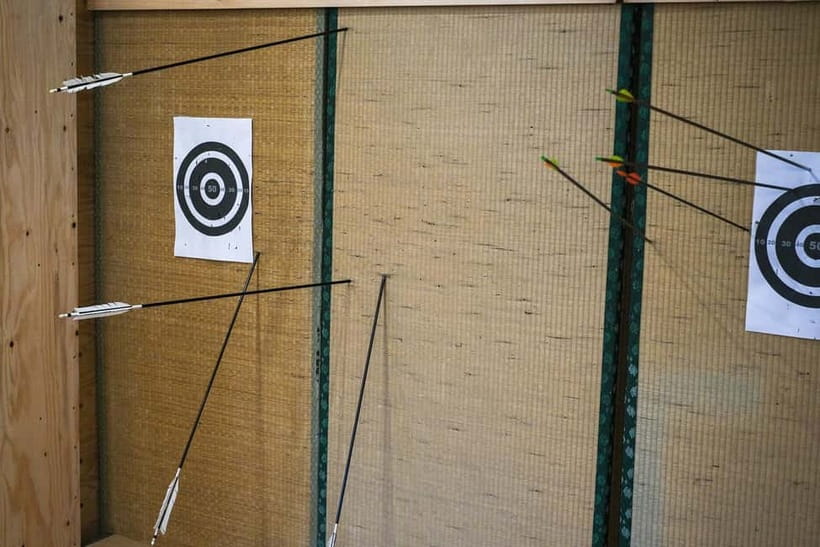
Samurai training sounds theatrical, and it works. You step into hakama and get hands-on practice with kyudo archery and katana basics, right in the Asakusa area. I like that it is structured like real training, but still relaxed enough that first-timers feel safe jumping in.
One possible drawback: it lasts just one hour, so you will leave wanting a bit more practice time on whichever skill grabs you most.
You also get a proper dose of story, not just posing for photos. The session includes a mini-game tied to your samurai rank, plus friendly guidance in English so you can follow each step without guessing.
Key Points You Should Know Before You Go
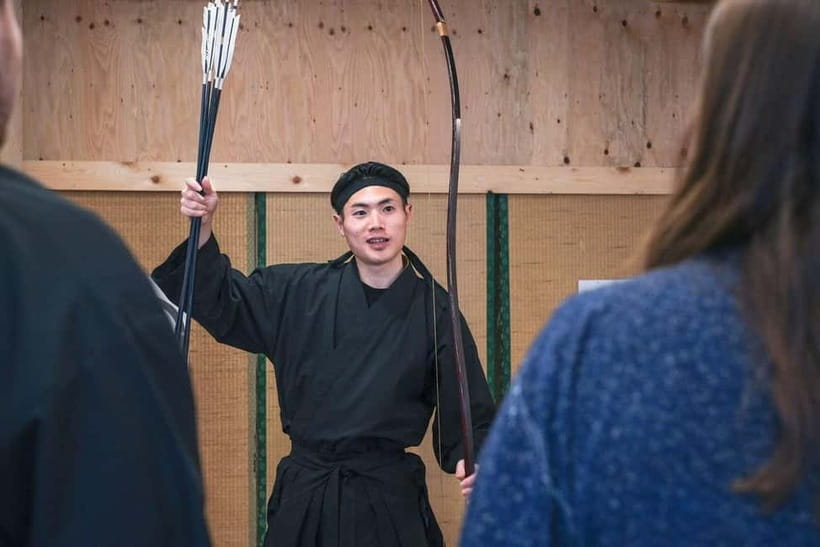
- Hakama outfit included: You change into traditional wear with multiple sizes, so most bodies fit comfortably.
- Kyudo plus katana in one session: You practice Japanese archery style and learn katana holding and a signature pose.
- A rank mini-game with a Shogun challenge: You compete with friends for a top position for a fun, low-pressure rivalry.
- Coaches who slow down for beginners: Names like Coach Mori and instructor Joe show up in feedback, and the vibe is patient and encouraging.
- Photos and video help: Staff assist with pictures so you leave with more than just memories.
- Snacks are part of the experience: You get Japanese snacks included during training and transitions.
Samurai Training in Asakusa: Hakama, Kyudo, and Katana in One Hour
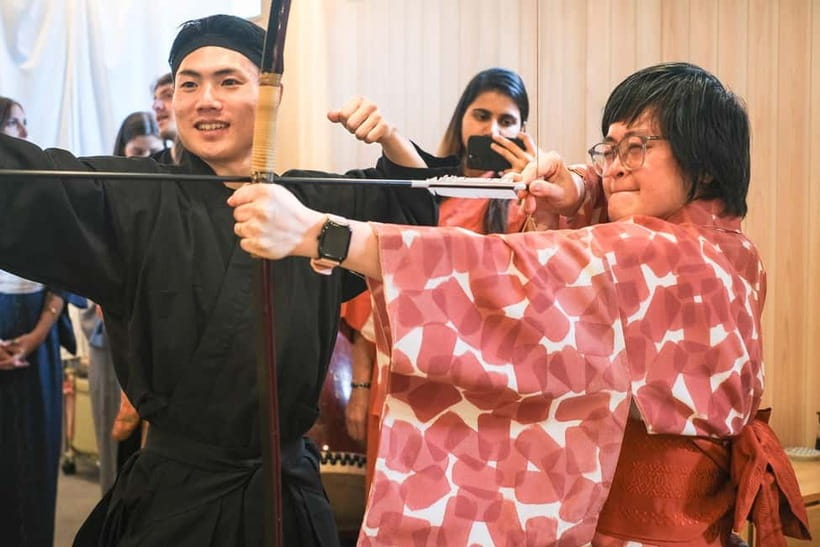
If you want a Tokyo activity that feels different from yet another temple stop, this is it. This experience in Asakusa blends three big “samurai” elements in a single, well-timed session: dressing the part, learning Japanese archery, and practicing katana forms.
I like the way it does not just tell you what samurai did. You actually do it. You start with the costume, then move into technique, then finish with a competitive game that helps you remember the core ideas. It is simple enough for beginners, but focused enough to feel real.
The best part for me is that your brain gets two tracks at once. One track is physical, where you rehearse posture and motion. The other track is cultural, where you connect what you are doing to samurai philosophy and tradition, so the movements make sense instead of feeling like a quick stunt.
You can also read our reviews of more tours and experiences in Tokyo.


Where to Meet and How to Get to the 5th Floor Fast
The meeting point is in Tokyo, Taito-ku, Asakusa, at 2 Chome 6-11 in the Heiwa Building. The directions are straightforward: take the elevator up to the 5th floor.
This matters more than people think. If you arrive late or confused, you lose the calm start that makes the whole thing enjoyable. Plan to arrive about 10 minutes early so you can get settled, change smoothly, and start on time.
It is also useful to know the activity runs with an English instructor, and staff are there to help you find the place if you have trouble. So you are not just dropped into a mystery corridor and told good luck.
Step 1: Changing Into a Hakama Outfit Without the Stress
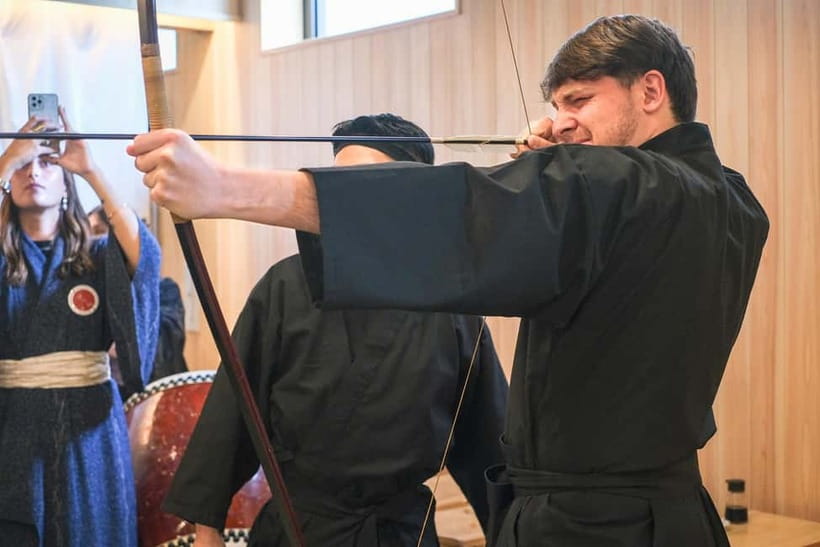
Right away, you switch into a samurai outfit set that includes hakama. This is where the experience goes from “tour” to “I feel like I am in it.”
They have lots of different heights and sizes available, which makes a big difference for comfort. If a costume barely fits, you spend the session tugging at fabric instead of paying attention to technique. Here, you should be able to move without constantly adjusting your clothes.
The outfit also helps you understand the posture side of samurai practice. When you are wearing something traditional, you naturally become more aware of your stance, your balance, and how you hold yourself. Even before you touch a bow or sword, you start training your body language.
Step 2: Samurai Background, Philosophy, and a Fun Rank Mini-Game
After you get settled, you receive an introduction to samurai history and traditions. The goal is not to lecture you. It sets the tone, then shifts you into a mini-game that determines your samurai rank.
I like this format because it turns attention into motion. Instead of sitting through a talk, you learn enough context to participate, then the game keeps the energy up.
If you lose the mini-game, do not panic. The experience frames it as a good setup, because the real training starts right after. That is a smart pacing choice. It keeps the activity from feeling like a single attempt, and it encourages you to focus on technique once the bow and katana time arrives.
Kyudo (Japanese Archery): Why It Feels Different From Western Archery
Kyudo is one of the highlights, and it makes sense. Japanese archery has a different approach from the version many people grew up seeing in the West. Here, you use a traditional Japanese bow, and you compete with friends for the general, shogun position.
The key thing to remember is that kyudo is not just about hitting targets. It is about form, control, and how you move through the shot. That is why instruction and posture matter so much.
You will probably notice three things as you practice:
- The stance and body alignment feel central.
- The process of drawing and releasing feels deliberate.
- Your rhythm matters more than raw strength.
Even if you have never held a bow before, you should be able to follow along. The session is designed for beginners, and the staff explain in a way that fits your level of English.


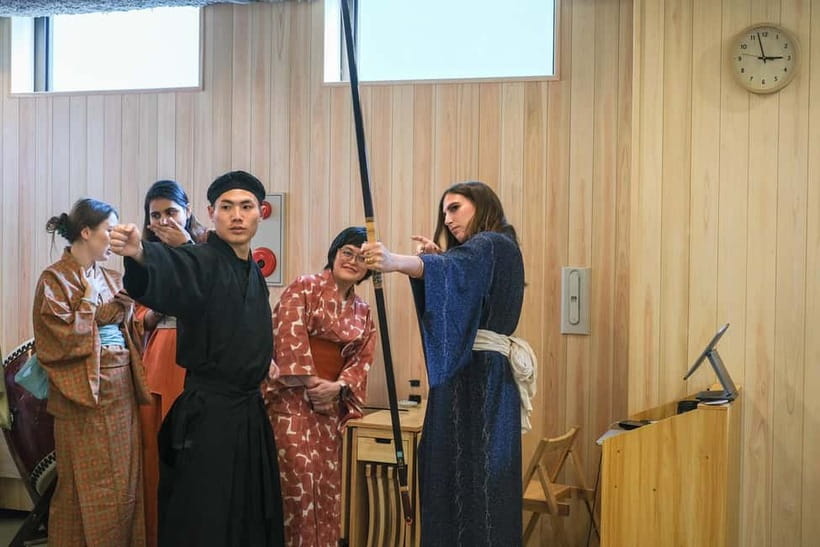
Step 3: Katana Basics, Single-Edged Sword Handling, and Signature Pose
After kyudo, you move into the sword part. You learn the techniques of using a single-edged sword (katana). Practically, this means the session focuses on the essentials: how you hold the katana and how you master key poses.
This is where the “strongest samurai” training angle becomes real. You are not just standing there doing a costume photo. You work on the way you hold the sword so it looks correct and feels stable.
I find katana practice fascinating for a simple reason. It turns the samurai vibe from costume to craft. A good pose is not random. It comes from alignment, grip awareness, and confidence in your stance. Even short training can make you feel more capable, because the instructions are direct and staff guide you through the movements.
Also, you will not need prior experience. That is a big deal, because sword training can intimidate people. Here, you are set up to succeed at a beginner level.
Compete for Shogun: The Rank Challenge With Friends
The fun mini-game is not purely symbolic. The session turns it into a competitive element during the kyudo portion, where you go head-to-head for the shogun position.
This is the part that makes the hour feel lighter. You are learning technique, but you are also social, and you can laugh at the moments where your shot does not match what your body planned. That kind of friendly competition is a perfect fit for groups, families, and anyone who wants a guided activity that still feels like an experience.
If you are traveling with friends, this is a great way to create shared momentum. You will be talking about your rank, your kyudo form, and your sword pose between rounds.
Photos, Video, Snacks, and English Support That Actually Helps
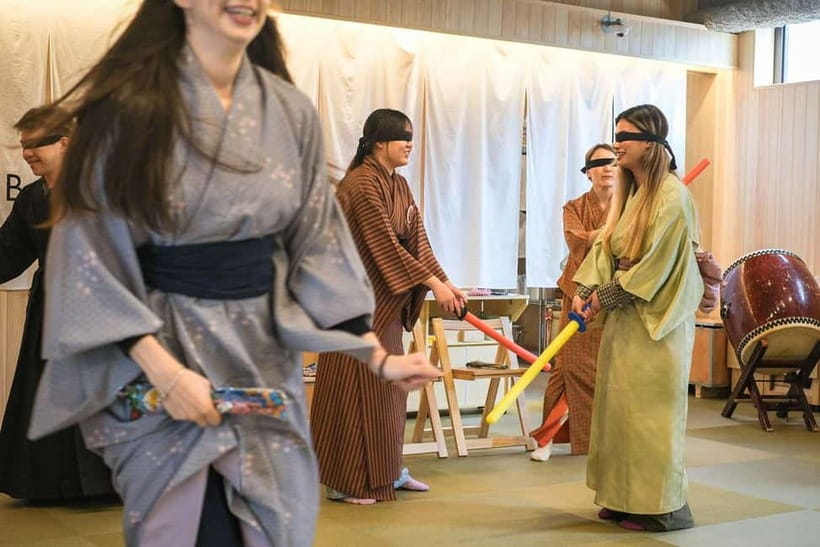
Let us talk about the stuff you see after the session, because it is part of the value. Staff help you take lots of pictures. Reviews also point out that photos and videos turn out great, which is exactly what you want from a Tokyo activity with costumes and poses.
You should also expect Japanese snacks to be included. That might sound small, but it helps you transition between parts of the training without needing to hunt for food nearby. In a busy area like Asakusa, that convenience is real.
One more practical win: bilingual staff. Explanations are adapted to your English level, and staff are described as fun, friendly, and patient. Coaches with names like Coach Mori and instructor Joe come up in feedback, and the theme is clear. The instruction is structured so you can understand quickly, then get back to practicing.
Meeting Your Physical Comfort Needs: Shoes, Clothes, and Pace
This is not a long hike or a multi-day course. It is an active hour, and you will move around during costume time and training. Wear comfortable shoes. Bring comfortable clothes so you can shift stance, bend slightly, and rotate your arms while holding the bow and katana.
If you want a smooth experience, pick clothing that lets you move without restricting your legs or shoulders. Also, avoid alcohol and drugs, which the activity lists as not allowed.
Wheelchair accessibility is noted, which is great for planning. Still, because the activity includes changing into traditional clothing and practicing posture, it is smart to think about mobility needs and how you will manage costume adjustments.
Price and Value: Is $96 Worth It?
At $96 per person for a 1-hour session, the price is not bargain-bin cheap. But for Tokyo, it sits in the category of activities that combine instruction, equipment, and a guided cultural experience.
Here is where the value comes from:
- You get equipment use for both kyudo and katana basics (traditional bow and katana).
- You get costume time with a hakama outfit set, not just a quick photo.
- You get instruction in English with bilingual support.
- You get snacks included.
- You get photo help with staff assisting with lots of pictures and video.
If you only wanted a photo with samurai clothes, you could probably find cheaper options. But this is more than a costume moment. You walk away with practiced posture, a better feel for kyudo style, and a story-based game tied to rank and philosophy.
So I see it as paying for guided practice plus the outfit and documentation package, not just a photo stop.
Who This Samurai Experience Suits Best
This works especially well if you are:
- Doing a Tokyo first-timer trip and want an Asakusa experience that feels hands-on.
- Traveling with kids or young adults, since the experience is family-friendly and beginner-focused.
- Looking for a group activity where you can compete a little, learn quickly, and laugh at mistakes.
- Interested in samurai culture beyond swords-as-props.
If you are an advanced martial artist hoping for hours of technical training, this will likely feel short. The hour is designed for accessibility, not for deep skill mastery. But for most visitors, that is exactly the point. You get a guided sampler with strong support.
Quick Practical Tips to Make Your Session Better
- Arrive about 10 minutes early so you can settle in and start without rushing.
- Wear comfortable shoes and moveable clothes, not fashion-restrictive outfits.
- Go in with the mindset of practice, not performance. The best results come from following the coach’s form cues.
- If you care about photos, lean into it. Ask staff for picture time during the pose segments, since they are helping you capture lots of angles.
- Bring your curiosity. The rank mini-game and the samurai background are there to help you understand what you are doing with the bow and sword.
Should You Book the Tokyo Samurai Kyudo and Swordsmanship Experience?
Book it if you want a high-value, guided, one-hour activity that turns samurai culture into something you physically do. The combination of hakama outfit, kyudo practice, katana holding and posing, plus staff-supported photos and snacks makes this a strong pick for Asakusa days.
Skip it only if you want a long, technical training session or if you dislike anything even remotely active. Otherwise, this is one of those Tokyo experiences where the time flies, you learn a few memorable techniques, and you leave with photos that do not just look good, they actually reflect what you practiced.
FAQ
How long is the Tokyo Samurai Experience?
The experience lasts 1 hour.
Do I need prior experience with archery or swordsmanship?
No prior experience is necessary.
What languages are supported?
The instructor provides English, and staff are bilingual to make explanations easier.
What should I wear or bring?
Wear comfortable shoes and comfortable clothes.
Where is the meeting point?
You meet at Tokyo, Taito-ku, Asakusa, 2 Chome 6-11 Heiwa Building, and you should take the elevator to the 5th floor.
Is it wheelchair accessible, and what is not allowed?
The activity is wheelchair accessible. Alcohol and drugs are not allowed.
More Tour Reviews in Tokyo
Not for you? Here's more nearby things to do in Tokyo we have reviewed







Tokyo Samurai Experiences, side by side.
 ★ 4.6Samurai Ninja Museum Guided tour and ExperienceFrom $271,010 reviews
 ★ 5.0Samurai Sword & Archery Class from Samurai DescendantFrom $193603 reviews
 ★ 5.0Best Samurai Experience in TokyoFrom $65458 reviews
 ★ 5.0Ninja Experience (Family Friendly) at Samurai Ninja Museum TOKYOFrom $47441 reviews
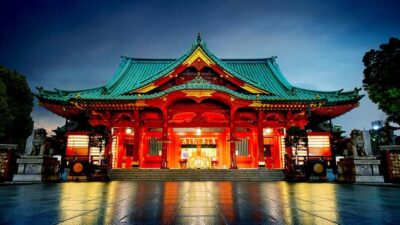 ★ 4.6Samurai Entertainment Night Show in Kanda ShrineFrom $41417 reviews
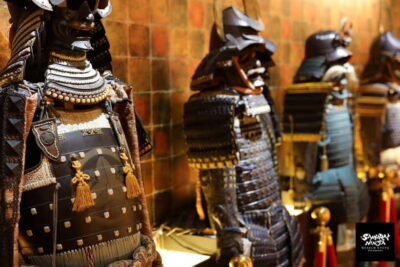 ★ 4.8Samurai Ninja Museum Asakusa: Samurai Sword Lesson & TourFrom $63306 reviews
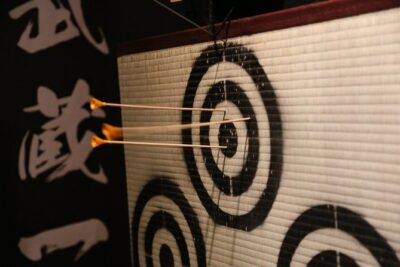 ★ 5.0Ninja Samurai 2-hour hands-on lesson by Japanese master in TokyoFrom $86194 reviews
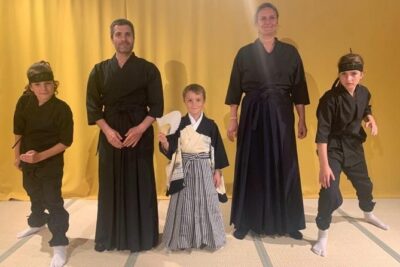 ★ 5.0Samurai Sword Experience (Family Friendly)at SAMURAI MUSEUM TOKYOFrom $65168 reviews
This tour also belongs to