
Review · TOKYO SAMURAI EXPERIENCES
Tokyo: Samurai Sword Academy in the Hometown of Last Samurai
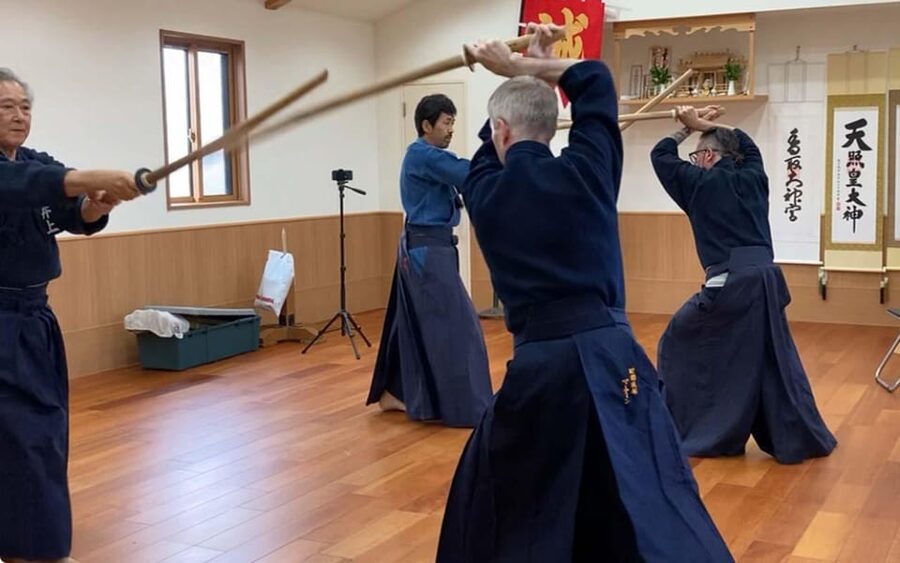
Two hours in a real dojo can change how you see swords. In Hino, the hometown tied to the Shinsengumi, you learn Tennen Rishin-ryu kenjutsu from descendants who still teach it today. The atmosphere feels less like a show and more like training.
What I like most is how seriously they teach basics before they let you swing. You start with footwork and posture, then move step by step toward sword work. Second, I really enjoyed getting to handle a Japanese sword, not just pose with one.
One consideration: this is physical and rule-based training, and it is not for everyone. If you have back or mobility issues, heart problems, recent surgery, vertigo, or you are bringing a kid under 18, you should not book.
Key highlights worth your attention
- Authentic Tennen Rishin-ryu dojo setting in Hino, tied to the Shinsengumi legacy
- Small group of up to 4, with patient, step-by-step coaching
- English and Japanese instruction, led by Masao Inoue
- Sword progression, from wooden practice tools to handling a Japanese blade
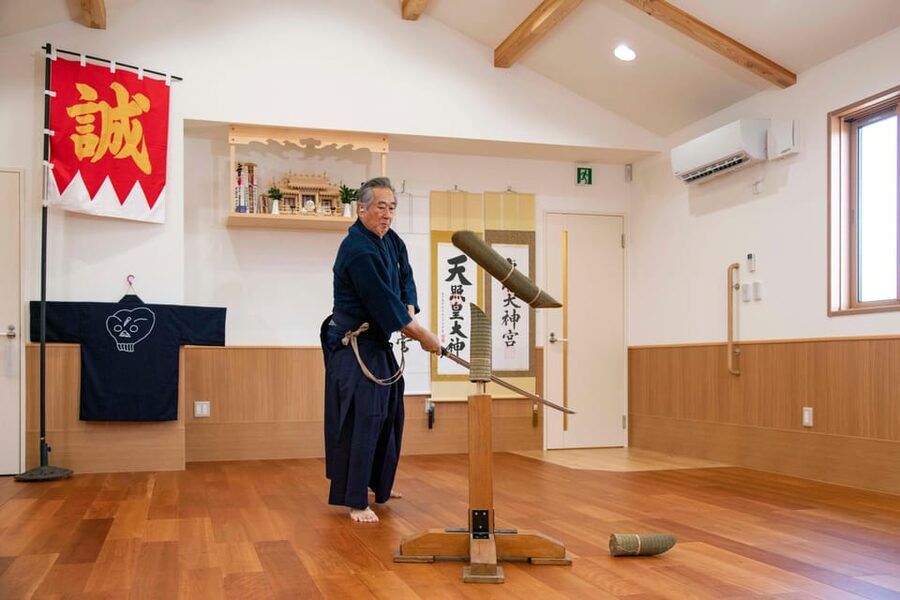
- Cutting and kata practice that feels connected to real training, not a gimmick
- A thoughtful Shinsengumi map and a final surprise, adding context after class
Hino, not Tokyo, is where the story clicks
If you are basing your trip in Tokyo, this class feels like a quick change of pace. You are still in Japan, still close enough to do in a day, but the setting shifts from city sightseeing to something older and more focused. Hino is tied to the Shinsengumi, the special-ops swordsmen formed at the end of the Edo period.
That context matters. Most sword experiences float between culture talk and stage combat. Here, the culture is built into the space and the training flow. Even the building you meet in sets the tone, because it links directly to the family that continues the lineage.
Also, you are not trying to learn swordsmanship from scratch with a crowd watching. With only a few participants, you get attention where it counts, like safe stance alignment and how to move your feet without injuring yourself.
You can also read our reviews of more tours and experiences in Tokyo.



Finding the dojo: Inoue Genzaburo Museum, second floor
Your meeting point is on the second floor of the Inoue Genzaburo Museum. From Hino Station on the JR Chuo Line, it is about a 5-minute walk. That is the kind of detail that makes a difference. You do not want to burn your class time hunting for the entrance while your body is already tired.
Plan to arrive a few minutes early. In a dojo setting, timing helps, because you will need a short setup moment for practice clothing and sword handling safety basics. Once you are there, you are guided into the class space rather than figuring things out alone.
Who teaches, and why the lineage feels real
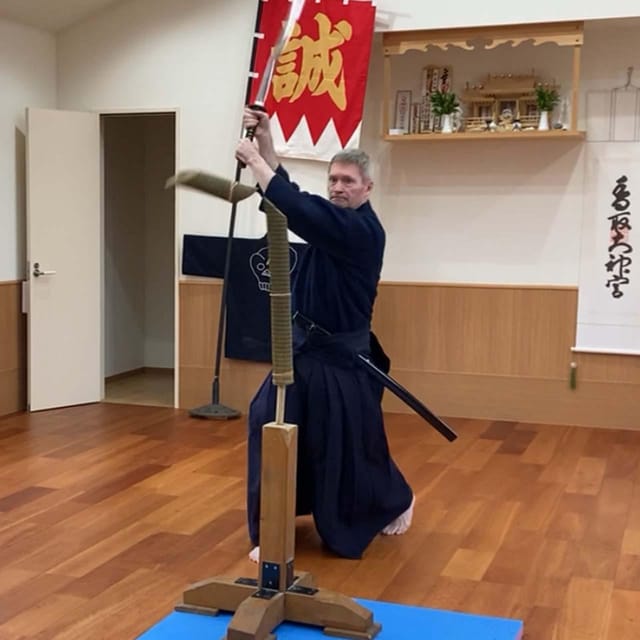
The program is led by Masao Inoue, chairman of the Tennen Rishin-ryu Hino Dojo. He is also a descendant of Genzaburo Inoue, an important figure connected to this lineage. That family connection is not just trivia. It shapes the way instruction is given, with seriousness about form and respect for what you are learning.
In a small group, you notice how the instructors correct details. They do not just say move your arms, they watch your foot placement, your posture, and your readiness. That is also why many people end up feeling safe while learning. The training is staged, so you can build skills without jumping straight into something complicated.
English instruction is available, and instructors also speak Japanese. So if you speak only basic phrases, you will still be able to follow. The coaching tone also helps, because the class aims for progress, not intimidation.
What you wear and what you handle in the 2 hours
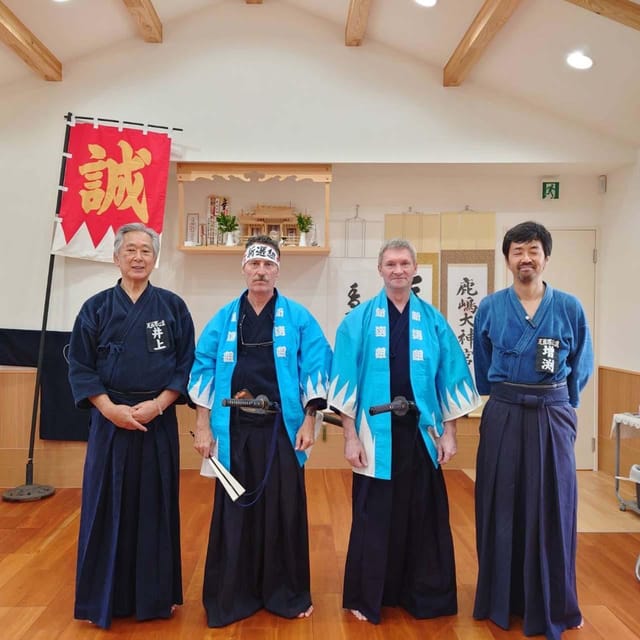
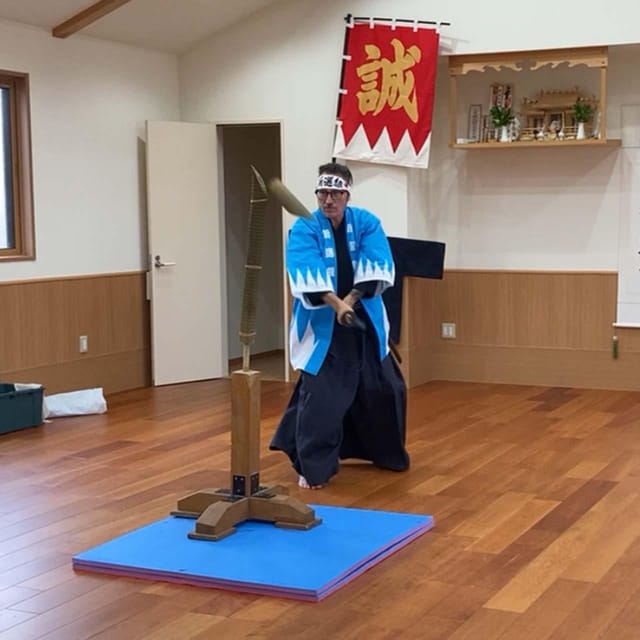
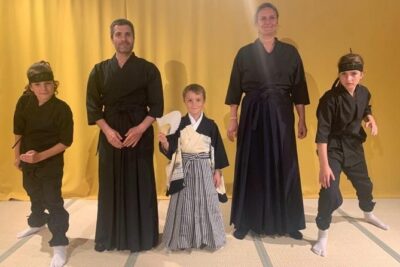
This is a hands-on dojo experience, and you get equipped. You wear dogi and hakama (practice uniform). You also receive dandara baori, tied to the Shinsengumi uniform look, so you are not just holding a sword, you are dressed for the role.
You will train with:
- a wooden sword for safe learning of form
- a Japanese sword for the real handling experience
The 2-hour structure is built around the idea that you learn better in stages. You do not just start with advanced movements. You get posture and footwork first. Then you move on to kata work and more interactive practice.
In some sessions, you also work on cutting practice. People describe it as a memorable moment that feels connected to actual training, not a photo op. If you are expecting a theater-style sword fight, keep your expectations aligned with dojo practice: careful movement, repeatable form, and skill-building.
Learning Tennen Rishin-ryu: posture, footwork, and the why behind it
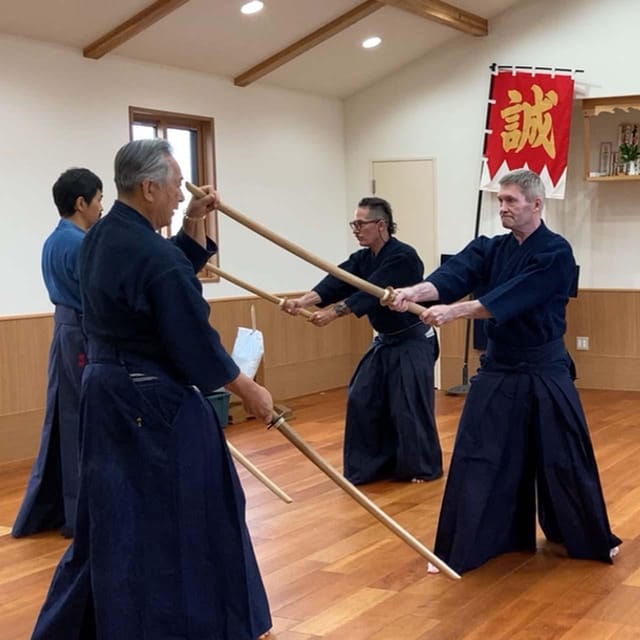
Tennen Rishin-ryu is rooted in Edo-period swordsmanship, and the dojo teaches it as a living tradition. In practice, that means you are not only copying moves. You are learning how the mechanics protect you and improve control.
What you focus on early tends to be the stuff that makes or breaks sword safety:
- proper stance and balance
- foot placement and how to shift without losing alignment
- posture that helps you move smoothly rather than muscling
That attention to the why is one reason people call this the real deal. When the instructor explains how foot placement prevents injury, the class stops being random practice. You start understanding how the system works, and the movements begin to make sense in your body.
You also get kata training, which is the structured pattern work. Even if you only learn a portion, kata gives you a framework. Later, when you do partner-style or drill-style practice, you can fall back on what your feet and arms should be doing.



The dojo atmosphere: serious training with friendly pacing
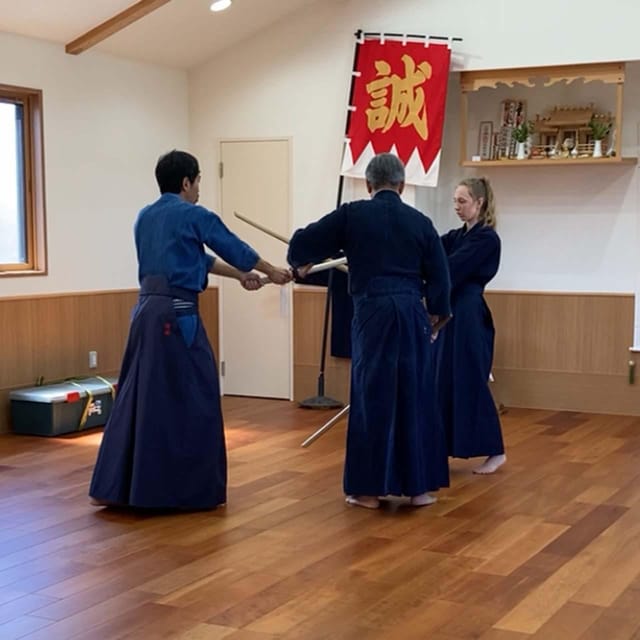
A lot of martial arts training is intense, but not all of it is welcoming to beginners. Here, the pacing seems designed for real learning. The instructors are serious about form, but they also guide you through the steps patiently.
You will likely notice:
- corrections happen in small, manageable pieces
- you are given time to reset and try again
- you practice in a way that feels controlled and safe
That matters because handling a Japanese sword is intimidating for many people at first. Even if you are physically capable, the tool changes your sense of risk. A well-run dojo makes you focus on precision instead of fear. That is the tone you get in this class.
The dojo space itself is part of the experience. Many people describe the training hall and equipment as top notch. More important than that, the whole environment feels like it has a purpose: training, not entertainment.
Cutting practice and the moments that stick with you
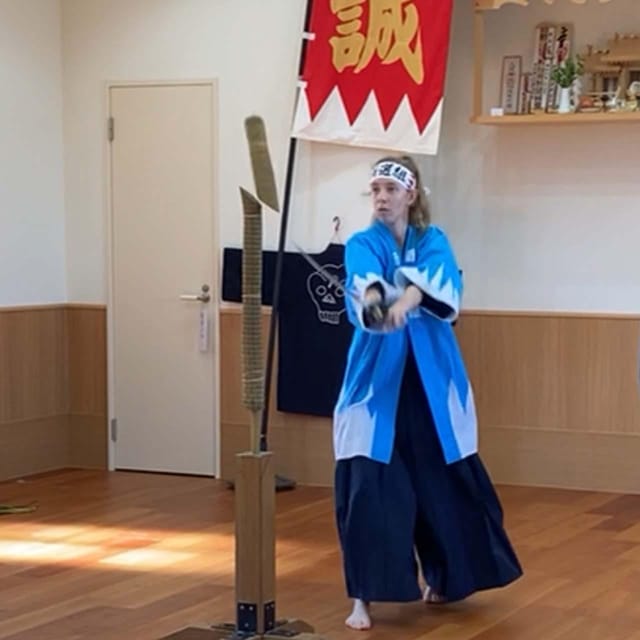
If you want the most memorable moment, it is usually the cutting portion and the feel of progressing toward it. Reviews mention cutting tatami mats as part of the experience, and some mention bamboo cutting as well. You should treat cutting as a skill process, not a guaranteed stunt.
Still, even when you are only partway through the training, handling the sword and going through kata puts you closer to what swordsmanship actually feels like. It is not just a swing. It is timing, stance, and control.
There is also usually more than just training time. Many participants mention a surprise at the end and receiving a Shinsengumi map showing key historical spots. That is a smart touch. When you leave with a map, the story does not end when you walk out the door. You can connect what you learned to places you can see later in the area.
Price and value: is $116 worth 2 hours with real instruction?
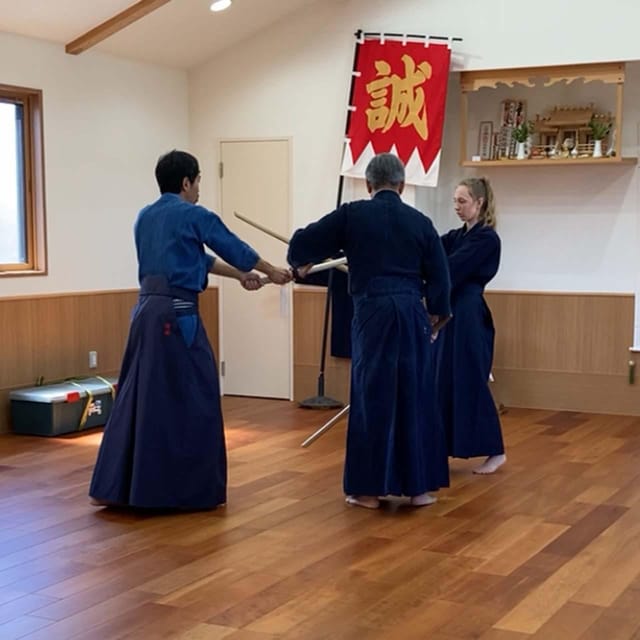
At $116 per person for a 2-hour class, you are paying for three things that cheap sword activities often skip.
First, you are buying close coaching. With a small group limited to 4 participants, the instructors can watch you and correct you. That is the difference between feeling like you did a craft session and feeling like you practiced a discipline.
Second, you are getting progression. Wooden sword first, then Japanese sword handling, plus kata and practice. If you only get photos or basic demonstration, the value drops fast. Here, the structure is what justifies the price.
Third, you are paying for authenticity tied to Tennen Rishin-ryu and the Shinsengumi hometown setting. When the class has a lineage behind it and the dojo environment supports training, it feels more legitimate. That is not something you can replicate with a generic sword workshop.
So, yes, it is not the cheapest thing you can do around Tokyo. But it does not feel overpriced for what you actually get: real instruction time, real tools, and a real dojo atmosphere.
Getting the most out of your session
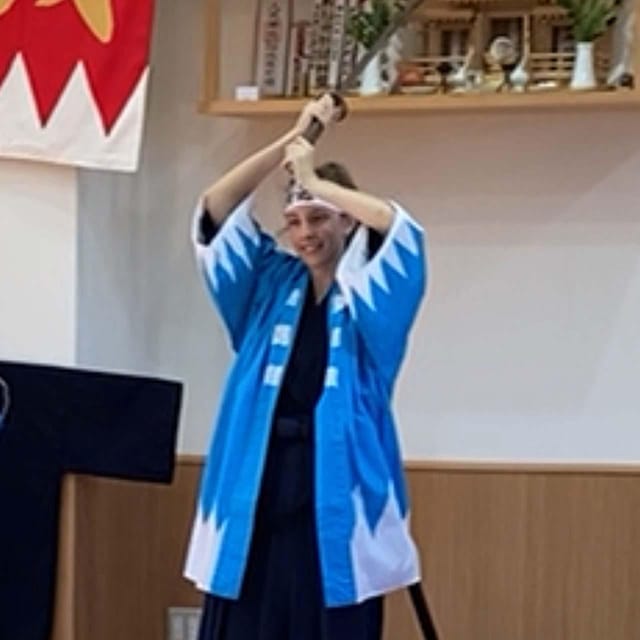
To enjoy this class, show up thinking like a student, not a tourist. Here are practical ways to make the 2 hours go smoothly.
- Wear comfortable clothing for getting dressed into the dogi and hakama.
- Keep your expectations focused on form and safety. The class moves by steps for a reason.
- Ask questions if you do not understand a correction. English instruction is available.
- Be ready for a workout feel. Sword training uses legs and core, even if you are not doing constant action.
Also, since the group is small, your pace matters. If you hesitate to learn, you slow your own progress. If you participate and reset when they instruct you to, you tend to enjoy it more.
Who should book, and who should skip this dojo class
This is best for:
- adults and older teens who want a hands-on samurai sword class
- travelers who care about authenticity and disciplined training
- people who want a small group experience, not a crowd
It is not suitable for a long list of medical or physical situations, including:
pregnant women, people with back problems, mobility impairments, wheelchair users, people with heart problems, people with vertigo, children under 18, people with a cold, people with altitude sickness, people over 75, people with recent surgeries, and people with low level of fitness.
If any of those apply, it is smarter to skip than to risk discomfort. Sword work is technical, and safety rules are part of the authenticity.
Should you book Samurai Sword Academy in Hino
I think you should book if you want a short, high-quality dojo-style class with a lineage connection and small group attention. The biggest draws for me are the staged learning, the patient instruction, and the fact that you handle a Japanese sword in a controlled setting.
Skip it if you want a casual souvenir experience, or if your body cannot handle stance and footwork training. Also skip if cutting practice would push you into stress. This class is serious about form, so you will enjoy it most when you can focus.
If you are the type who likes real skill building, this is one of the few Tokyo-area experiences that feels genuinely different from standard sightseeing. Take the train to Hino, arrive early, and treat the 2 hours like practice, not performance. You will leave with a better sense of what samurai swordsmanship was actually about.
FAQ
What is the duration of the Tokyo Samurai Sword Academy class?
The experience runs for 2 hours.
How much does it cost?
The price is $116 per person.
Where do I meet for the class?
Meet at the second floor of the Inoue Genzaburo Museum, about a 5-minute walk from Hino Station on the JR Chuo Line.
What will I learn and practice?
You learn Tennen Rishin-ryu swordsmanship. The experience includes swordsmanship practice, working with a wooden sword, and handling a Japanese sword. You also wear practice uniform and Shinsengumi-style attire.
What size is the group?
It is a small group limited to 4 participants.
What languages are available?
The instructor provides English and Japanese instruction.
Is it refundable if my plans change?
Yes, you can cancel up to 24 hours in advance for a full refund.
Is it suitable for children?
No, it is not suitable for children under 18.
More Tour Reviews in Tokyo
Not for you? Here's more nearby things to do in Tokyo we have reviewed












Tokyo Samurai Experiences, side by side.
 ★ 4.6Samurai Ninja Museum Guided tour and ExperienceFrom $271,010 reviews
 ★ 5.0Samurai Sword & Archery Class from Samurai DescendantFrom $193603 reviews
 ★ 5.0Best Samurai Experience in TokyoFrom $65458 reviews
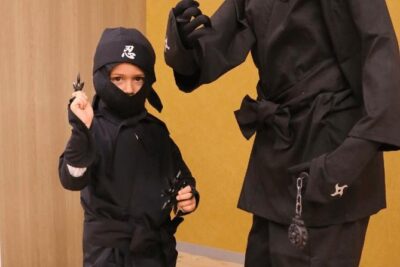 ★ 5.0Ninja Experience (Family Friendly) at Samurai Ninja Museum TOKYOFrom $47441 reviews
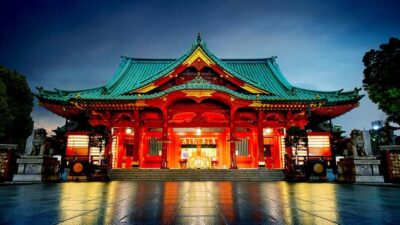 ★ 4.6Samurai Entertainment Night Show in Kanda ShrineFrom $41417 reviews
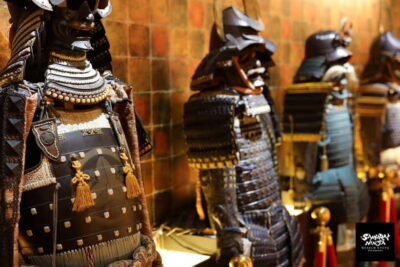 ★ 4.8Samurai Ninja Museum Asakusa: Samurai Sword Lesson & TourFrom $63306 reviews
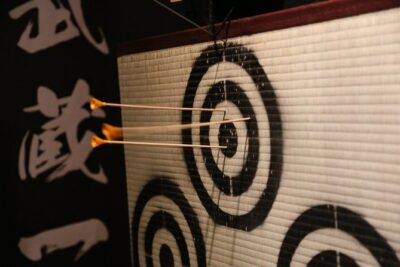 ★ 5.0Ninja Samurai 2-hour hands-on lesson by Japanese master in TokyoFrom $86194 reviews
 ★ 5.0Samurai Sword Experience (Family Friendly)at SAMURAI MUSEUM TOKYOFrom $65168 reviews
This tour also belongs to