
Review · SHIBUYA TOURS
Best Go Kart Experience in Shibuya Crossing with Iconic Photos
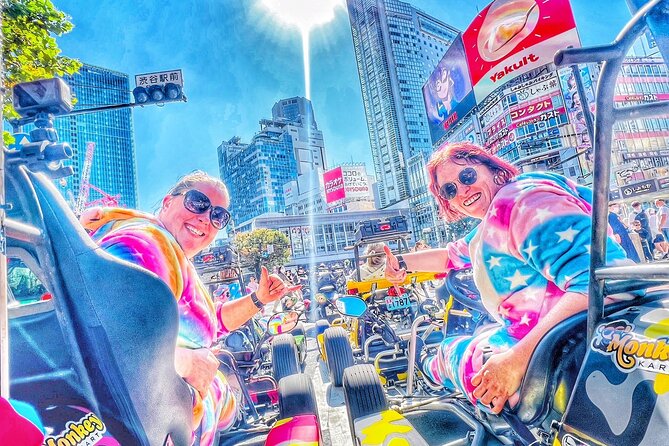
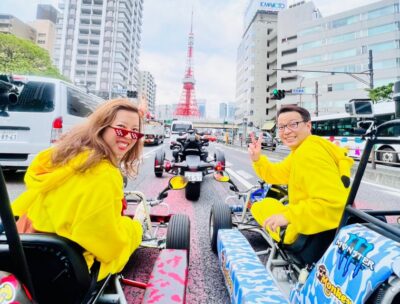
Shibuya, but make it karting. This Tokyo go-karting tour sends you through Shibuya Crossing and the Harajuku-Omotesando area in a tiny group, with a guide taking the photos for you. I love the combo of dress-up fun and real photo stops, plus the fact that you get clear, confidence-building driving guidance. One watch-out: the karts are loud, so this feels more like an action photo adventure than a deep, talk-heavy guided tour.
You meet at Monkey Adventure Kart Shibuya, get geared up, pick a costume, and roll out with your guide leading the route. Along the way you pass big names like Harajuku Station, Omotesando, Miyashita Park, Yoyogi Park, and end with the kind of Shibuya moment you’ll want to show your friends.
Key highlights at a glance
- Iconic Shibuya Crossing photos with a guide snapping pictures as you go
- Small-group format with a maximum of three participants per the tour description
- Costume selection that turns the ride into a proper Tokyo character moment
- Route includes Harajuku, Omotesando, Miyashita Park, and Yoyogi Park
- Printed photo keepsake plus locker and bottled water included in the price
Entering Shibuya Crossing by Go-Kart, in a Costume
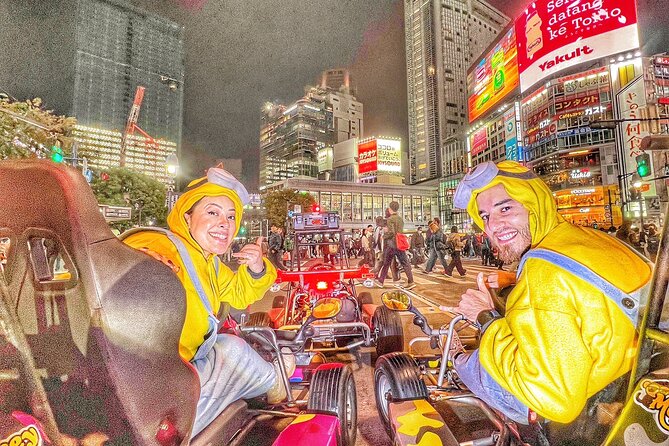
Let’s be honest, Shibuya Crossing is already a photo magnet. This experience adds the part most people never do: you drive it, you feel it, and your guide helps create the shots, not just the memory.
The vibe is playful, like you’re borrowing someone else’s movie set. You get dressed up before you start, and that costume choice alone makes the whole thing feel lighter, even if you’re nervous about driving in busy Tokyo streets.
I also like that the tour is built around motion. You are not standing around waiting for a bus or listening to a lecture. You keep rolling, you keep seeing, and you keep getting chances for memorable stops.
Possible drawback: if you want lots of commentary, you might be disappointed. The karts are loud, and one review specifically pointed out that it can be hard to hear over the engine noise, even close up.
You can also read our reviews of more photography tours in Tokyo
What Your Small Group Means for Your Ride
This is not a huge group parade. The tour info describes a small group capped at three people, and it also lists a maximum of four travelers. Either way, you’re not stuck far away from your guide or lost in the crowd.
That matters because go-karting in a dense city is all about cues. A smaller group means instructions land better, the guide can keep track of everyone, and you’re more likely to feel like you’re on the same page.
Safety and instruction show up in the reviews again and again. People mention guides who gave clear directions, kept the group together, and read traffic well. Names that come up include Lewis, Rakesh, Rafael, Jerome, Kazuki, Luis, Luna, Chris, Travis, Satar, Ken, Tom, and Issam. I can’t guarantee which guide you’ll get, but it does tell you the company hires for instruction, not just seat rental.
Your Pre-Drive Setup: Costumes, Safety Check, and Comfort
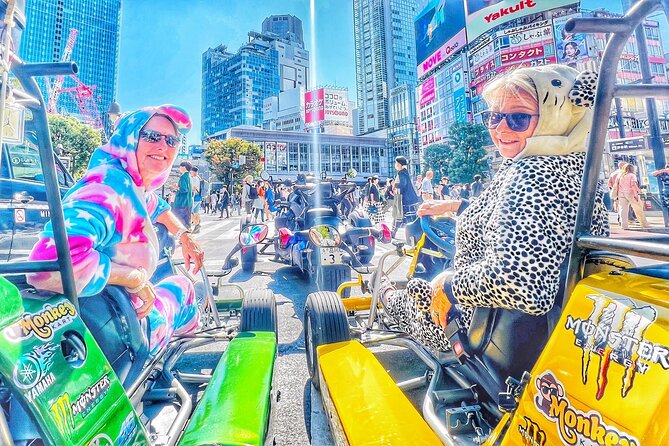
Before you hit the streets, you do the part that makes the ride feel smooth: you get set up on the karts and go through safety instructions. One review mentioned watching a short safety video before exploring, and that fits the way this kind of operation runs.
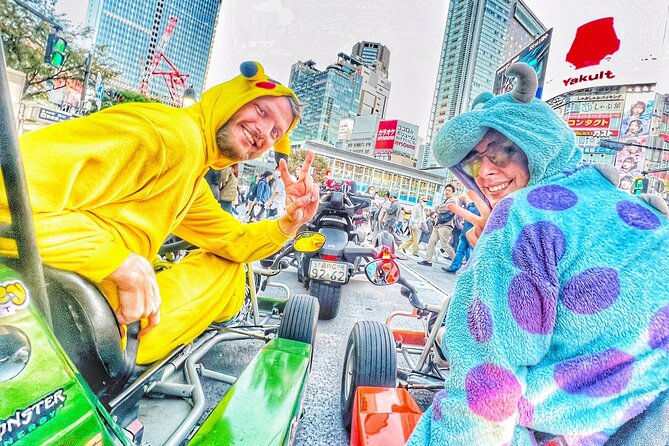
Then comes the fun part, costume selection. You choose from a set of options, and the theme is clearly playful. One review mentions Pikachu specifically, which gives you a sense that you can end up in something loud and cheerful, not just a boring outfit.
Two practical upgrades I’m glad are included:
- Locker access: helpful if you’ve got a bag, hoodie, or anything you don’t want bouncing around.
- Bottled water: Tokyo walking can run you dry fast, so it’s good they don’t make you buy it first.
If you’re doing a night ride, plan for temperature. One rider said it was cold and strongly suggested gloves. Tokyo nights can feel colder than you expect when you’re not standing still.
The Real Star: Shibuya Crossing, Stop-Quality Photos Included
Shibuya Crossing is the stop that sells the experience. But what makes it work is the photo plan. The tour includes guide-captured pictures, and you also get a printed keepsake photo.
You’re not just taking one quick snapshot while someone else watches traffic. The guide is actively creating those iconic frames, which is exactly what you want when you’re wearing a costume and zipping through a landmark people usually just watch from the sidewalk.
What you’ll feel here is energy. Shibuya is busy, even when you’re not in the middle of it. In a go-kart, you’re closer to the motion, closer to the sounds, and closer to the visual chaos. That’s the thrill.
If you’re the type who worries you’ll look awkward in photos, this actually helps. A guide guiding your stops and picture timing takes the pressure off.
Harajuku Station and Omotesando, When Fashion Meets Motion
After Shibuya, you roll through the Harajuku and Omotesando zone. The tour descriptions call out trendsetting Harajuku and the more sophisticated Omotesando avenues, and you can feel the shift as the streets change character.
This is where the ride stops being only a “look at the famous thing” moment and turns into an actual Tokyo street experience. Harajuku tends to feel youthful and visual. Omotesando often feels more orderly, with those long, stylish streets that look great in motion.
Two ways this section becomes valuable:
- You get context for where you’ll want to return on foot later.
- The drive gives you a quick mental map, so when you walk around later, you’re not starting from zero.
Some reviews mention the guide pointing out spots to revisit. That’s the best kind of bonus, because it turns a one-hour kart ride into a longer Tokyo plan.
Miyashita Park: A Break in the Action (and Another Chance to Look Around)
Miyashita Park is one of the listed stops, which tells you this route isn’t only “famous intersections and shopping streets.” It includes a park area, so you’re not constantly bouncing from one loud landmark to the next.
In practice, these park stops usually do two jobs. First, they give you a breather from the tight-city feel. Second, they create calmer framing for photos, so you’re not always shooting against the busiest possible background.
I like these mid-route pauses, even if they’re brief. They help you reset, check how you’re doing behind the wheel, and enjoy the ride rather than just surviving it.
Yoyogi Park Finish: The Streets Slow Down, Your Memories Don’t
Yoyogi Park comes up as a greenery stop. That’s a nice contrast to Shibuya’s chaos, and it changes how the last stretch feels.
Green space in Tokyo can be surprisingly calming once you’ve been driving through dense streets. You get a different kind of Tokyo look, the kind you usually associate with slower walks and casual people-watching.
And because you’re still on a kart, you keep the momentum of the day. You’re ending with the same sense of fun, not winding down into a waiting game.
The other underrated benefit is photos. If your route includes multiple photo moments across different neighborhoods, your set of pictures won’t all look like the same background.
Night Tours vs Day Tours: Choose the Lighting Mood
If you have the option, I recommend thinking about timing the same way you would for street photography.
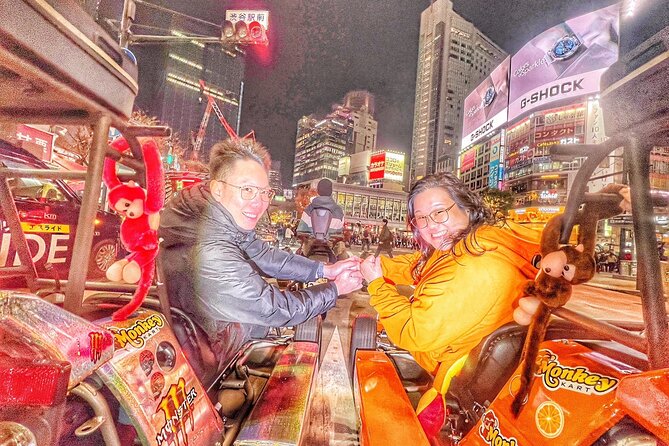
Several reviews specifically recommend doing it at night because the lights and busy streets make it more exciting. One rider called it better with city lights, and another mentioned a tunnel stretch with full throttle energy.
So here’s my practical take:
- If you want cinematic Tokyo glow and stronger visual punch, go night.
- If you prefer calmer driving conditions and more daylight context for navigation later, go day.
Either way, remember the cold factor. If you go at night, plan for chilly hands and bring gloves if you run cold.
Driving License Rules: The Part That Trips People Up
Let’s talk permits, because this is the one issue that can end your day before it starts.
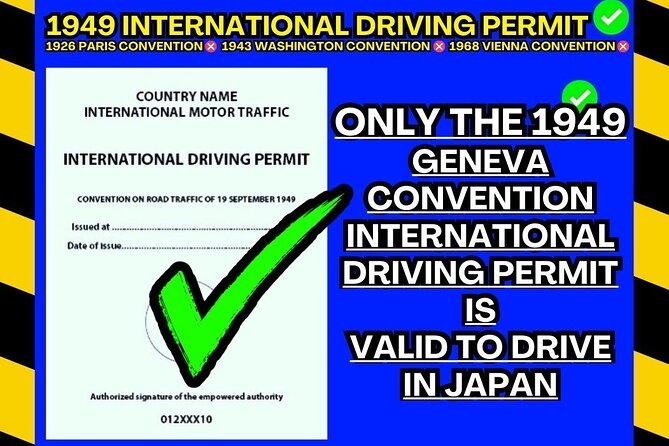
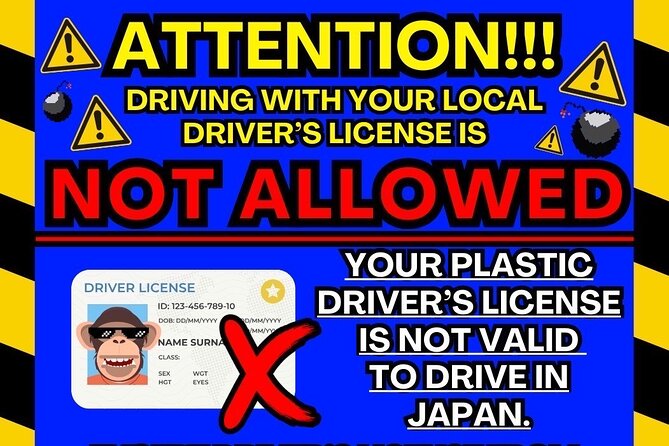
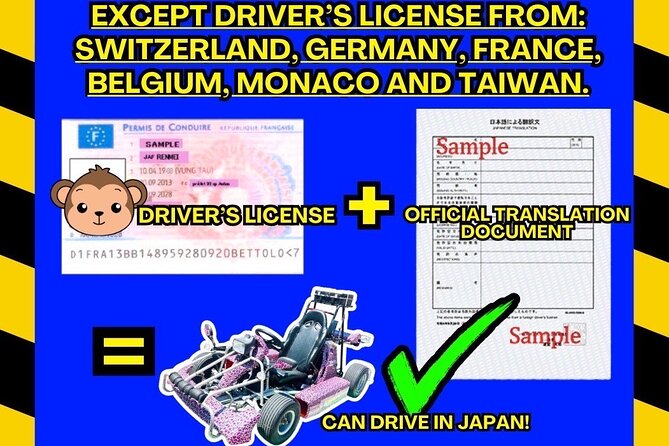
The tour requires a hard copy International Driving Permit (IDP) issued under the 1949 Geneva Convention, or an approved license that fits Japan’s rules. Online permits or permits based on the 1968 Vienna Convention are not recognized for driving in Japan under these rules.
The info also says you need the physical paper booklet. For some national licenses like France, Switzerland, Taiwan, Germany, Monaco, and Belgium, you need a Japanese translation and that physical copy can be obtained from JAF.
Some countries are not allowed to drive in Japan even with certain permit types, so you really do need to check if your home country issues the 1949 Geneva IDP.
Here’s my best advice: before you book, confirm you already have the correct hard copy IDP. One unhappy review said people rushed to the venue and were turned away due to missing the international license. That’s avoidable stress, and you do not want it.
Price and Value: Why $106.12 Can Feel Like a Deal
At $106.12 per person for about 1 hour 20 minutes, this isn’t bargain-basement. It’s still a premium activity.
But I see the value because so much is included:
- Go-kart and fuel
- Guide and instruction
- Costumes
- Pictures plus a hard copy printed photo
- Locker and bottled water
Also, you’re not paying for a separate professional photo session. The guide builds photo moments into the ride, and you walk away with something tangible.
The only clear add-on mentioned is an action camera option priced at ¥3,500 per person if you want that extra filming.
So if you’re comparing it to other Tokyo “once in a lifetime” activities, this lands in a good spot. You get the story, the visuals, and the physical fun, not just a ticket and a memory.
Who Should Book This Go-Kart Through Shibuya
This is a strong match if you:
- Want Shibuya Crossing photos that actually look like you were there driving
- Like the idea of dressing up, not just sightseeing
- Prefer a small group and a guide that keeps you moving
- Feel comfortable following instructions and driving carefully in traffic
You might skip it if you:
- Want a walking-style history tour with lots of narrative
- Hate the idea of engine noise making it hard to hear someone talking
- Don’t have the correct IDP documentation in hand
The best reviews describe it like a bucket list hit, especially for foreigners who want to say they drove in Tokyo while also feeling safe in a structured, guided format.
My Take: Should You Book the Monkey Adventure Kart Shibuya Ride?
I’d book it if your IDP situation is solid and you want a real Tokyo “only here” experience. The tiny group format, the costume setup, and the guide-captured photos are the three things that turn this from a fun rental into a proper memory machine.
Go night if you can, bring gloves if you run cold, and don’t over-plan for deep commentary. This is motion, photos, and driving fun first.
If you’re already on the fence, think of it this way: Shibuya is famous in photos. This gets you into the story behind the photo.
FAQ
Do I need an International Driving Permit to drive?
Yes. You need a hard copy International Driving Permit issued under the 1949 Geneva Convention (or other approved licenses that meet Japan’s requirements). The tour also states that other permit types, including those based on the 1968 Vienna Convention or online permits, are not recognized for this driving requirement.
What’s included in the price?
The tour price includes the go-kart, fuel, guide, pictures, costumes, locker, hard copy printed photo, and bottled water.
Is an action camera included?
No. An action camera is listed as not included, with an extra cost of ¥3,500 per person.
Where do I start, and does it end there?
You start at Monkey Adventure Kart Shibuya (Monkey kart Shibuya, 1F, 1-chōme-27-7 Higashi, Shibuya, Tokyo 150-0011, Japan) and the activity ends back at the meeting point.
How long is the experience?
It runs about 1 hour 20 minutes.
What happens if the weather is bad?
This experience requires good weather. If it’s canceled due to poor weather, you’ll be offered a different date or a full refund.
More Photography Tours in Tokyo
More Tour Reviews in Tokyo
Not for you? Here's more nearby things to do in Tokyo we have reviewed
Shibuya Tours, side by side.
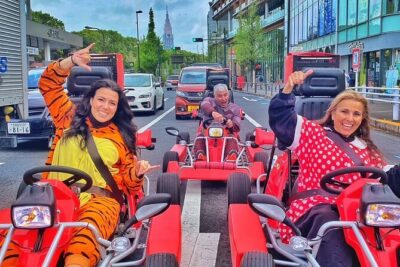 ★ 5.0Official Street Go-Kart in ShibuyaFrom $763,435 reviews
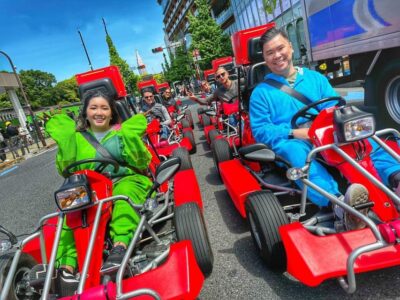 ★ 4.9Street Kart Experience in ShibuyaFrom $741,484 reviews
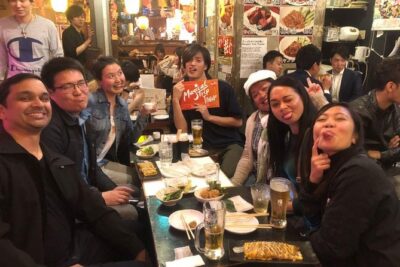 ★ 5.0Shibuya Meltdown Nightlife Tour: All-You-Can-Drink Bar HoppingFrom $1061,058 reviews
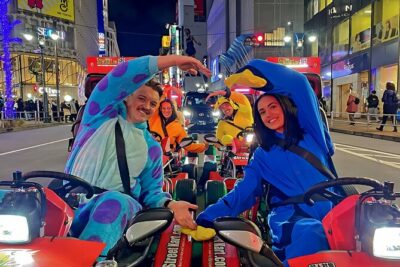 ★ 5.0Shibuya Official Street Go-Kart in Shibuya AnnexFrom $69972 reviews
 ★ 5.0Shibuya Food Tour (13 dishes and 4 Eateries)From $77770 reviews
 ★ 5.0Best of Shibuya Food TourFrom $217612 reviews
 ★ 4.8Shibuya Highlights Walking TourFrom $19601 reviews
 ★ 4.7Premium Go-Kart Tour with Tower & Shibuya CrossingFrom $116528 reviews
This tour also belongs to