
Review · TOKYO CITY TOURS
Tokyo Toilet Tour
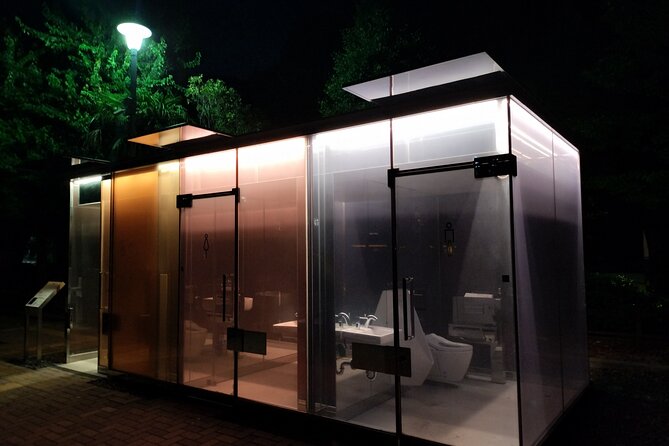
Tokyo gets a new lens: toilet design. This private Tokyo Toilet Tour turns a practical topic into a smart way to get oriented in Tokyo, especially if it is your first trip. You get a dedicated guide, a set of iconic architect-designed toilets, and a walk that threads through neighborhoods most people skip.
I love the private, customizable feel. It is built for first-timers, couples, families, and solo travelers who want guidance without the noise of a big group.
One consideration: you will do a lot of walking for about 3 hours 30 minutes, and lunch and private transport are not included. If you want to snack and rest often, plan around that.
Key things to know before you go
- Private guide, only your group: no blending into a crowd.
- Big-name architects: Shigeru Ban, Toyo Ito, Tadao Ando, Kengo Kuma, and others.
- Built for orientation: Shibuya, Harajuku, and Ebisu neighborhoods show up in a walkable route.
- Short, free-entry stops: each toilet stop is timed and admission is free.
- Mobile ticket: easier day-of check-in.
Why a Tokyo Toilet Tour is actually a great first-day plan
This is the kind of tour that makes you look up from your phone and notice the city. Tokyo is famous for design, and this route uses something everyone needs, but most people ignore, to teach you how Tokyo thinks about space, comfort, and public life.
The best part for first-timers is that the tour doubles as a neighborhood intro. Yoyogi, Shibuya, Harajuku, and Ebisu are not just names on a map here. They are connected by short walks, small parks, and side streets where the urban experience feels more local than touristy.
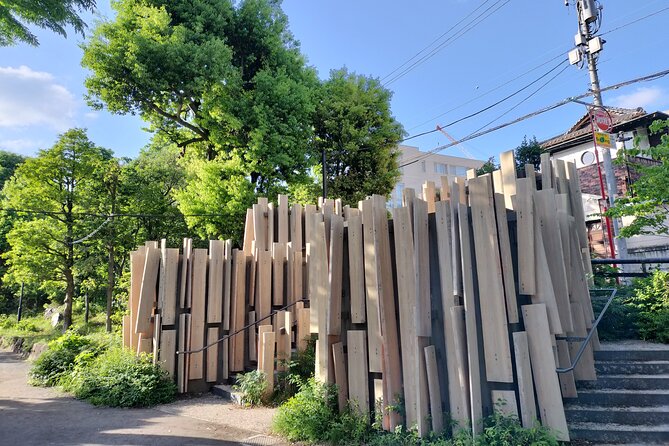
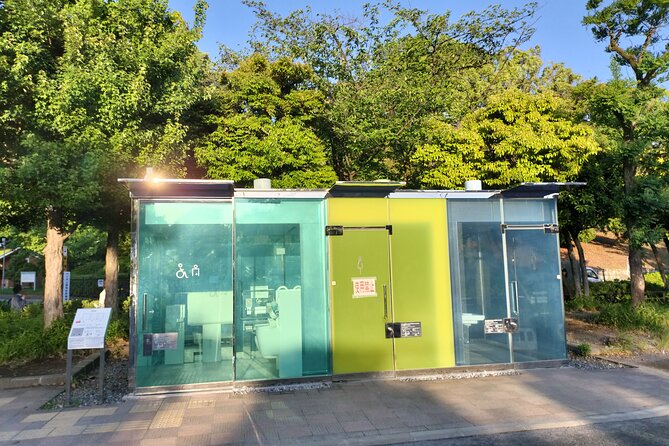
And the theme does not stay weird for long. Once you see how architects shape lighting, privacy, and flow, the toilets stop feeling like a joke and start feeling like a mini design museum you can actually use.
Price, group size, and whether it feels like value
The price is $223.34 per group for up to 4 people, and the tour runs about 3 hours 30 minutes. That matters because you are not just paying for entrances, you are paying for a private guide to explain what you are looking at and to keep the pacing comfortable.
For families and small friend groups, this can pencil out better than paying separately for a regular tour. For solo travelers, it is still worth considering if you like one-on-one context, because you get a guide who can adjust how fast you move and where you linger.
Also, this tour averages booking about 39 days in advance, which tells me it is not an afterthought. If your dates are fixed, I would book earlier rather than gambling on availability.
You can also read our reviews of more tours and experiences in Tokyo.



Start at Yoyogi Fukamachi Mini Park, end at Ebisu Station
The tour starts at Yoyogi Fukamachi Mini Park in Shibuya, then finishes at Ebisu Station on the JR Yamanote Line and Tokyo Metro Hibiya Line. That end point is handy because Ebisu is a major transport node, so you can continue your day with less hassle.
Because this is near public transportation and requires only moderate physical fitness, I treat it as a walking tour with breaks, not a marathon. Still, you will cover enough ground to feel it, especially if you stop for photos at every location.
If you like to build your day with momentum, plan to schedule something relaxed after Ebisu. Your legs will be ready, but your brain will want a slower pace after all that architecture talk.
The itinerary: Shibuya and Ebisu toilet design by major architects
This route is basically an outdoor architecture lesson, broken into timed stops. Each stop is free to enter, so your money goes toward a guide who can explain the design choices, not toward ticket lines.
Here is how the flow works, and what makes each location worth your time.
Stop 1: Yoyogi Hachimangu Shrine and the transparent cubicle
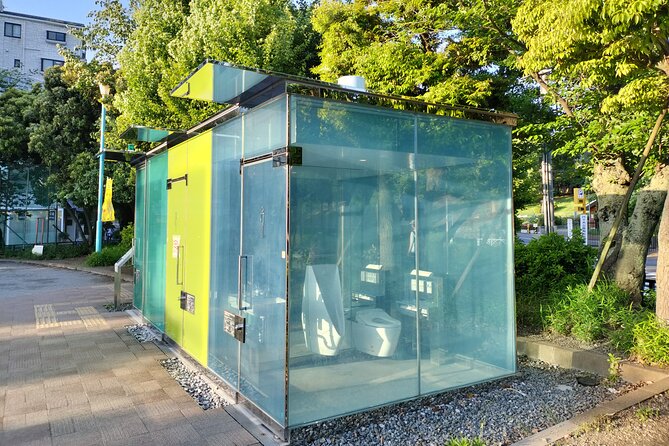
You start at Yoyogi Hachimangu Shrine, where you can see toilets designed by Shigeru Ban (with a transparent cubicle concept) and Toyo Ito nearby a small Shinto shrine area. Even the setting helps you understand why this tour works: sacred space, public convenience, and contemporary design all in close proximity.
If you are a fan of Perfect Days by Wim Wenders, this is the kind of stop that hits differently because it is connected to the movie’s vibe. The guide discussion also helps you see beyond the novelty and into the design idea: visibility, light, and how privacy can be handled differently in public architecture.
Time here is about 30 minutes, which is a good pace to look carefully without getting rushed.
Stop 2: Miyashita Park and Tadao Ando’s toilet design
Next you head to Miyashita Park, in the area between Shibuya and Harajuku. You will look at a toilet designed by Tadao Ando. The timing is about 30 minutes, and the location matters because the guide frames it as part of the broader redevelopment story of the last few years.
What I like about this stop is that it is not only about the architecture object. You also get a sense of how Tokyo keeps reshaping districts, while still placing everyday needs in well-thought-out environments.
If you enjoy watching how cities change, this is where the tour starts feeling like a real urban walking guide, not just a checklist of toilet designs.


Stop 3: Shibuya Crossing for the quick iconic crossing
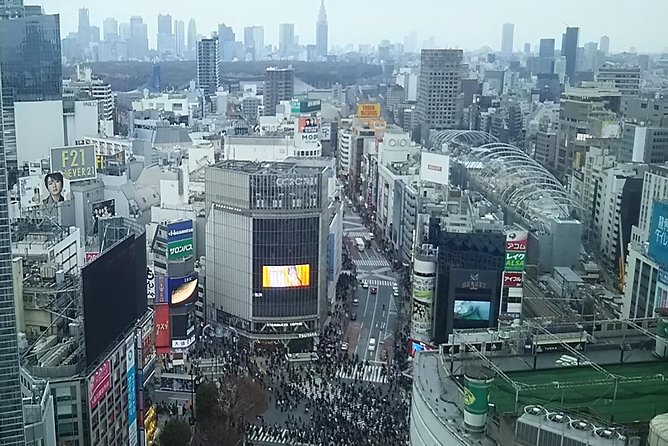
Then you cross at Shibuya Crossing. This stop is only about 5 minutes, and it is not technically part of the toilet design theme. Think of it as a visual reset button between the quieter park moments.
It also helps you break the walking rhythm. You get the iconic Tokyo moment without spending half your day stuck in the same intersection.
Stop 4: Nabeshima Shoto Park and Kengo Kuma in a quiet pocket
You move to Nabeshima Shoto Park, about a kilometer away from the main station, in a more residential-feeling area. Here you will see a toilet designed by Kengo Kuma. The stop is about 15 minutes, so it is more of a focused look than a long linger.
I like this part because it feels like Tokyo has a second personality, one that shows up when you walk a little off the main routes. You get the contrast: Shibuya energy outside, calmer streets inside the park.
This short timing is useful too. It keeps the overall tour from dragging, and it helps you save energy for the final neighborhood.
Stop 5: Ebisu neighborhood toilets by Maki, Sato, and Tamura
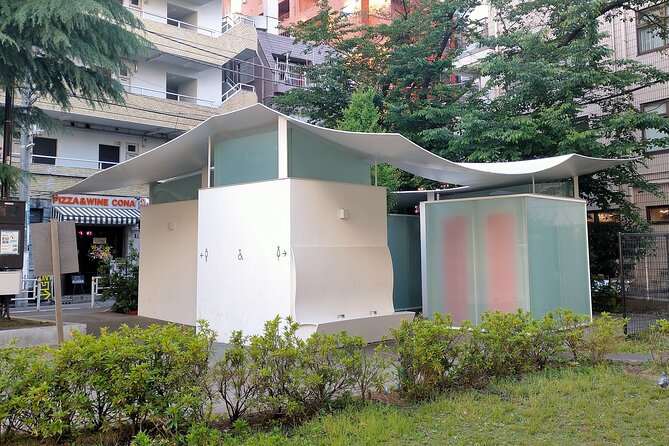
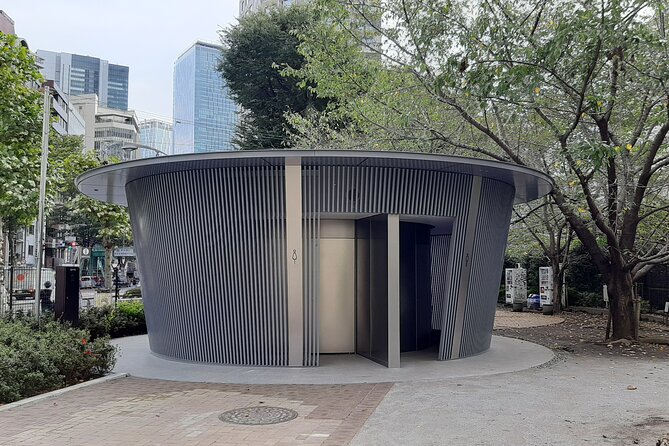
You finish in Ebisu, about one station south of Shibuya. The toilets here are by Fumihiko Maki, Kashiwa Sato, and Nao Tamura, and the stop lasts about 30 minutes.
Ebisu is a strong ending choice because it is lively in a more easygoing way than central Shibuya. It also sets you up to leave the tour at a station where you can head almost anywhere.
This final stop is where I find the architecture talk feels most grounded. You are in a real neighborhood, not a theme-zone. The design you are seeing also makes more sense once you have walked through multiple districts and compared how each area frames public life.
What makes the guide experience feel worth it
This tour is powered by the private guide, and that is where the value lands. You are not just walking from spot to spot. The guide links what you are seeing to design thinking and the logic behind it.
In the feedback I saw, guides like Ken stand out for being friendly and informative, with an especially strong ability to explain the Shibuya city project and the architects behind the toilets. That is important because without context, you might just think, neat design, then move on.
With context, you start noticing details you would have missed: how transparency affects comfort, how parks frame everyday use, and how different architects approach similar needs in very different ways.
And since it is only your group, you can ask questions in a natural way. If you want a slower look or you want extra time on one stop, a private setup gives you more flexibility than a fixed group route.
Practical tips to make the 3.5 hours easy on you
I treat this tour like a comfortable city walk with structured stops, so your main job is preparation.
First, wear shoes you trust. You are outside for most of the time, moving between parks and neighborhood streets, and the tour is built around short stops that reward steady walking pace.
Second, bring a small water bottle if you tend to get thirsty. The tour includes no lunch, so you will want to plan a snack either before or after.
Third, if you like photos, remember that some spots are right next to public areas. I suggest you keep it respectful, take your time during the stop window, and avoid blocking access.
Finally, because admission is free for the stops, you should treat the tour like an experience you buy for the explanations. If you show up curious, you will get a lot more out of it than if you are only chasing photos.
Who this Tokyo Toilet Tour suits best
This is a good match if you:
- Are visiting Tokyo for the first time and want a guided orientation through real neighborhoods.
- Like architecture, design, and how form affects daily life.
- Prefer private tours and do not want the feel of a crowded group.
- Travel as a couple, family, or small group of up to four.
It may not be your best pick if you want a classic highlights day focused on big monuments. This tour is themed on toilets, and the route is designed around architect-designed installations, parks, and neighborhood streets rather than major museum interiors.
That said, it is still a Tokyo day. You will see how districts connect, and you will finish in Ebisu with a stronger sense of where things are.
Should you book this Tokyo Toilet Tour?
If you like design and you want a Tokyo introduction that feels personal, I think this is an easy yes. The combination of a private guide plus a route through Shibuya, Harajuku, and Ebisu makes it more useful than a random architecture walk.
Book it especially if your group is up to four, because the pricing is per group, and that is where the value gets real. I would also book early if your dates are set, since it tends to get reserved about a month ahead.
If you think you will hate the topic, you probably will not enjoy it. If you are curious, this turns Tokyo’s everyday details into something you will remember for a long time.
FAQ
What is the price and group size for the Tokyo Toilet Tour?
The tour costs $223.34 per group and can accommodate up to 4 people.
How long does the tour last?
The experience is about 3 hours 30 minutes.
What is included in the tour price?
A private tour guide is included.
What is not included?
The tour does not include lunch or private transportation.
Where does the tour start and end?
It starts at Yoyogi Fukamachi Mini Park in Shibuya and ends at Ebisu Station on the JR Yamanote Line and Tokyo Metro Hibiya Line.
Is the tour private or shared?
This is a private tour, and only your group participates.
Do I need to be able to walk a decent amount?
The tour calls for moderate physical fitness level, so it is best if you are comfortable doing a walking-based route.
More Tours in Tokyo


More Tour Reviews in Tokyo

Not for you? Here's more nearby things to do in Tokyo we have reviewed












Tokyo City Tours, side by side.
 ★ 5.01-Day Tokyo Bus TourFrom $12914,250 reviews
 ★ 4.5TOKYO SKYTREE® Admission ticketFrom $1311,192 reviews
 ★ 4.6teamLab Planets TOKYO Digital Art Museum Entry TicketFrom $259,779 reviews
 ★ 4.0Mt Fuji & Hakone Cruise, Drum Show Bullet Train 1 Day from TokyoFrom $1497,413 reviews
 ★ 5.0Shinjuku Food Tour (13 Dishes at 4 Local Eateries)From $866,603 reviews
 ★ 4.4Tokyo Mt Fuji 5th St & Hakone Cruise Bus Tour w/Bullet TrainFrom $1545,024 reviews
 ★ 5.0Flagship 2-Hours Official Street Go-Kart Tour – Tokyo Bay ShopFrom $644,974 reviews
 ★ 4.5From Tokyo: Mount Fuji Full-Day Sightseeing TripFrom $684,970 reviews