
Review · MOUNT FUJI TOURS
Tokyo: Mount Fuji Must-see Attractions One Day Sightseeing Tour
Fuji in one day, with zero planning. This Mount Fuji sightseeing tour from Tokyo strings together the best-known view stops, plus a few cultural stops that make the day feel more like a guided day trip than a photo sprint. I especially like the round-trip transfers that spare you the public-transport juggling, and I like the live commentary, which helps you understand why each place matters instead of just snapping pictures.
The main thing to keep in mind is that Mt Fuji visibility is famously unpredictable. On overcast or cloudy days, you may still enjoy the scenery around the lakes and shrines, but you might not get the big clear mountain views everyone hopes for.
Key things that make this Mt Fuji day trip work
- Round-trip coach transfers from Tokyo remove the hardest part of day-tripping to the Fuji area.
- A tight, curated route across five Fuji-region highlights, including Chureito Pagoda and Oshino Hakkai.
- Live guided storytelling that adds context for shrines, views, and local history.
- Short stops that keep momentum, which is great if you want to see a lot, but you should expect to move on.
- Weather can change everything, so plan for partial views and bring layers.
Leaving Tokyo smoothly, then letting the day run on rails
The biggest value in this tour is the way it handles transportation. You board an air-conditioned coach and do not have to figure out trains, transfers, or schedules for a full day outside Tokyo. For many visitors, that alone is worth it. You also get a mobile ticket, which helps you keep things simple on the day.
The tour runs about 10 hours, and the group size is capped at 45 travelers. That number matters. Small enough to feel organized, large enough that the schedule stays moving. In practice, that means you should expect a clear rhythm, with limited time at each location, so you will spend your energy on walking, viewing, and listening rather than waiting around.
On the plus side, I like that the itinerary mixes obvious photo spots with a couple of places that feel more like living Fujikawaguchiko and Fujiyoshida-area culture than a theme-park run. You are not just chasing one view after another.
More Tokyo tours and experiences for the shortlist

Stop-by-stop: what you get at each Fuji-region highlight
This is a day designed for maximum variety. Here is how each stop fits, what to look for, and what to watch out for.
Saiko Iyashi no Sato Nemba: the traditional village reset
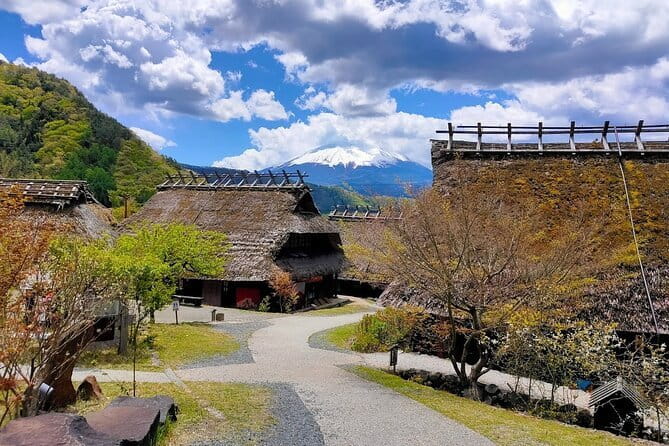
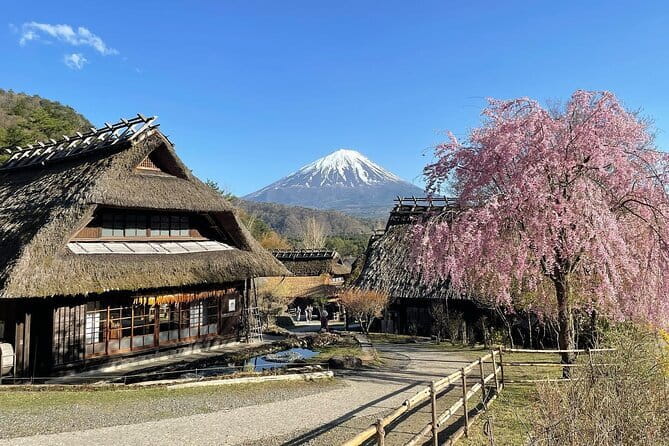
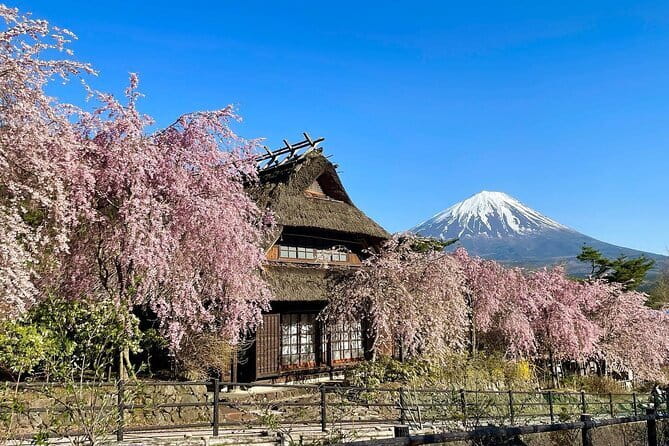
You start at Saiko Iyashi no Sato Nemba, a traditional Japanese village in Fujikawaguchiko Town. The idea here is simple. Before you chase the mountain views, you ground yourself in the local feel of the area. You get a historic, atmospheric setting that often frames Mt Fuji in the background when weather cooperates.
Admission is included, and the stop lasts about 1 hour. That is enough time to stroll at an easy pace, take photos without feeling rushed, and read the small context points if you want to understand what you are seeing.
One consideration: this is a village setting, so if it is chilly, windy, or wet, you will feel it more than you would at a scenic overlook. Dress for the outdoors early, not later.
Lake Kawaguchiko: your “most likely” Fuji-view moment
Next is Lake Kawaguchiko, often described as one of the shining view areas around Mt Fuji. The lake’s shoreline gives multiple angles for mountain views, and this is where your day starts to feel like classic Fuji country.
Time here is short, about 20 minutes. That means you should arrive ready to move quickly. Pick your preferred viewpoint fast, then stay flexible. If Mt Fuji shows up from the clouds, you will want your camera out immediately.
Also, note the practical part: this stop is listed as free admission. That is a nice break in a day that otherwise includes an included admission ticket earlier.
Oishi Park: seasonal flowers, changing colors
Then you head to Oishi Park, known for seasonal flower displays. The big idea is variety by season. Depending on when you go, you might see blooms like cherry blossoms, lavender, red leaves, kochia, or winter plantings such as snow and reeds. The tour is basically saying, “If you care about seasonal beauty, this is one of the easiest places to catch it.”
Time is about 25 minutes, also free admission. Because it is not very long, choose one or two viewpoints that match what you want most. If you are chasing the best mountain angle, keep your eyes up, because cloud cover can shift fast.

Kawaguchiko Natural Living Center: the red torii photo angle
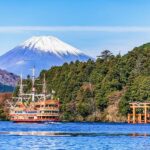
A quick stop follows at the Kawaguchiko Natural Living Center, where you can grab a view featuring a red torii blending with Mt Fuji. This is a classic composition spot. The charm is that it is a more specific, photo-friendly scene than a general viewpoint.
Time is about 10 minutes, and it is free admission. Ten minutes is tight, so do not plan on a long sit-down. Walk in, line up your shot, and if the mountain is visible, take the photo quickly, then do one more angle. If the mountain is hidden, you still get the torii structure and the lake-area context.
Arakurayama Sengen Park and the Chureito Pagoda: the famous postcard stop
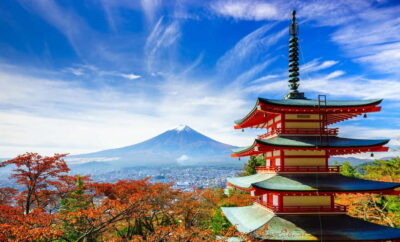
Now for the star photo moment: Arakurayama Sengen Park in Fujiyoshida City, with the Chureito Pagoda. This is widely recognized as a must-see if you want that iconic pagoda silhouette with Mt Fuji in the background.
The stop lasts about 1 hour, and it is free admission. I like giving this stop enough time to handle the practical reality. The viewpoints and paths can mean small bottlenecks, and if the sky improves, you want time to wait ten minutes and see if the mountain clears.
Important consideration: some people focus only on this pagoda. If weather is not great earlier in the day, this is the stop where the schedule can feel tight, especially if the mountain is late to appear. Plan your expectations around weather, not around the postcard.
Arakura Fuji Sengen Shrine: history you can feel in a short stop
Right after the park viewpoint, you go to Arakura Fuji Sengen Shrine, with roots that date back to 705, and a history of more than 1,300 years. The shrine is connected to prayers for well-being and family happiness, and there is also a link to the panic and responses society had during Mt Fuji eruptions.
Time here is about 15 minutes, and it is free admission. That is not a long visit for temple lovers, but it is enough to experience the vibe and understand the meaning behind the architecture and location.
If you like context, this is a place to listen closely to your guide during the walk and explanation. That short stop can become more memorable than you expect.
Oshino Hakkai: clear springs and a calm finale
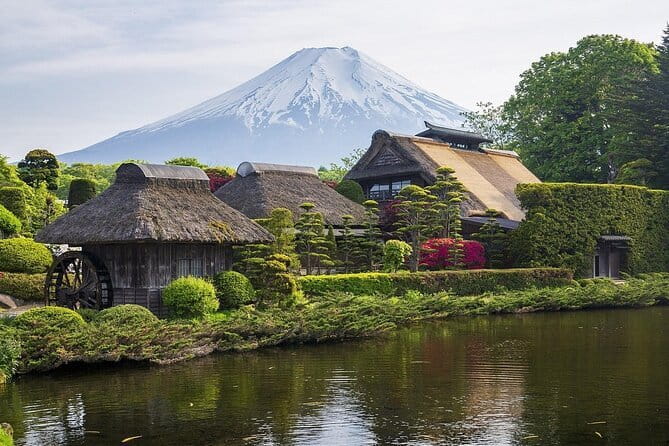
Finally, you reach Oshino Hakkai, a World Heritage Site known for eight clear springs formed by snow melt from Mt Fuji. The water is often described as sweet, and you can taste it for free.
This is one of the more relaxing stops. Time is about 1 hour, and admission is free. After hours of walking and viewing, I like that Oshino Hakkai gives you a calmer rhythm. You can slow down, browse the water basins, and enjoy the spring-fed atmosphere even when Mt Fuji itself is hidden.
One note from a practical angle: this stop can feel like it has more crowd energy at popular times. If you want the quietest photos, aim to walk a little to find your own angle rather than standing in the busiest view line.
How the guides change the experience, not just the facts
This tour is very much a guide-led day. The itinerary is solid, but the tone you get depends on who is holding the microphone and timing the transitions.
I like that multiple guides in the field are described as organized and energetic. Names that show up in past experiences include Kevin, Andrew, Maddy, and Yulina. You can expect clear explanations of what you are seeing, plus useful phrasing help. One guide is even noted for teaching Japanese words related to the areas you visit, which is a fun way to make the day feel interactive rather than passive.
A good guide also does something subtle: they help you keep your priorities straight. For example, when Mt Fuji visibility is unreliable, it helps to know which stops tend to give you the best odds and which ones are still worthwhile even if the mountain is faint. That kind of guidance makes a long day feel less like waiting.
Price and value: what you pay for, and what you still need to plan

At $60 per person, this is priced like a true day trip rather than a luxury private tour. The value comes from what is included:
- Air-conditioned vehicle
- All fees and taxes
- Admission is included for Saiko Iyashi no Sato Nemba
- Most other major stops are free admission
What is not included is lunch, plus other personal expenses. So you should budget for a meal somewhere along the route or plan to buy something quickly during a break. If you are the type who needs a sit-down lunch, this tour might feel a bit fast. If you are flexible, you can keep your energy up without derailing the schedule.
Also, because you are paying for transportation and timed access to multiple sites, the “hidden value” is time. You are not spending your day commuting back and forth across the region. You are spending it looking, learning, and walking.
The honest timing reality: you will move, and some stops are short
The itinerary is built for variety, not for long wandering. Several key stops are under 30 minutes, including Lake Kawaguchiko (about 20 minutes) and the Kawaguchiko Natural Living Center (about 10 minutes). Those short windows are a trade-off. You get a lot of famous places in one day, but you do not get “stay until the light is perfect.”
I think that works well if you:
- want a one-day introduction to the Fuji region,
- care about getting multiple views rather than one deep exploration,
- like having a plan when you are tired from Tokyo travel.
If you prefer slow travel, you might wish for more time at the spots you love most, especially Arakurayama Sengen Park and Oshino Hakkai. The schedule may also feel different if weather changes while you are on the road.
Weather, crowds, and comfort: the three things to prepare for
Two practical truths apply to just about every Mt Fuji day trip. First, weather can ruin the mountain view. Past experiences mention days when the group saw very little of Mt Fuji in the distance. In those cases, you will still enjoy lakes, shrines, and spring water, but do not assume you will get the classic clear mountain photo.
Second, crowds can be real. Some experiences describe a lot of people at popular stops. That is especially common around the iconic viewpoint areas where everyone wants the same angle. You can beat some of it by moving a bit away from the most obvious photo spots, then returning when the flow changes.
Third, comfort can vary by bus. One past note mentions an older coach without wifi and with a less-than-ideal feel. The good news is the tour does emphasize air-conditioned transportation and keeps the day structured. Bring water, and wear comfortable shoes.
Who should book this Mt Fuji tour?
This tour is a strong fit if you want:
- an easy, organized day escape from Tokyo,
- a route that covers Lake Kawaguchiko, Chureito Pagoda area, and Oshino Hakkai,
- a guide who gives live commentary so the stops feel connected.
It is also a good choice if you are in Tokyo for a short time and do not want to plan a complicated day trip. If you are traveling with a stroller or large luggage, the tour asks you to indicate that when booking, which can help smooth things out.
Should you book? My decision guide
Book it if you want a high-value, low-stress way to see the Fuji highlights in one day, and you are okay with short stops and weather uncertainty. The price makes sense when you factor in transportation plus multiple timed stops, with many areas that do not require extra admission.
Skip it, or consider another option, if you:
- are only interested in one exact viewpoint and want hours there,
- have very specific accessibility or timing needs that might not fit a moving schedule,
- plan a visit mainly as a weather-dependent photo mission, without flexibility.
If you do book, my best advice is simple: treat the day as a Fuji-region sampler. Even with partial views, the combination of lakes, shrine culture, and Oshino Hakkai’s springs gives you a memorable snapshot of why this area is so famous.
FAQ
How long is the Tokyo to Mount Fuji one day sightseeing tour?
It runs about 10 hours.
How much does the tour cost?
The price is $60.00 per person.
Do I need to buy tickets for each stop?
Admission is listed as included for Saiko Iyashi no Sato Nemba. Other listed stops have free admission.
Is lunch included in the price?
No, lunch is not included.
What stops are included on the itinerary?
The tour includes Saiko Iyashi no Sato Nemba, Lake Kawaguchiko, Oishi Park, Kawaguchiko Natural Living Center, Arakurayama Sengen Park (Chureito Pagoda area), Arakura Fuji Sengen Shrine, and Oshino Hakkai.
Are round-trip transfers included from Tokyo?
Yes, the tour includes round-trip coach transfers from the city.
What kind of transportation do you use?
You travel by air-conditioned vehicle.
Is the ticket digital?
Yes, the tour uses a mobile ticket.
How big is the group?
The tour has a maximum of 45 travelers.
What is the main thing to watch for with Mt Fuji sightseeing?
Mt Fuji visibility can be unpredictable due to weather and clouds.
More 1-Day Tours in Tokyo


More Tours in Tokyo

More Tour Reviews in Tokyo
Not for you? Here's more nearby things to do in Tokyo we have reviewed



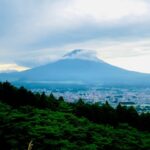

Mount Fuji Tours, side by side.
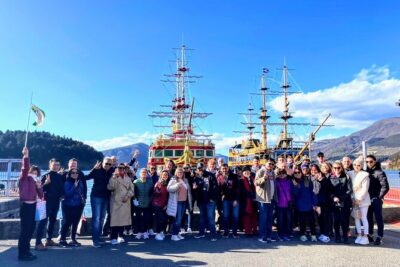 ★ 5.0Mt Fuji and Hakone 1-Day Bus Tour Return by Bullet TrainFrom $16326,383 reviews
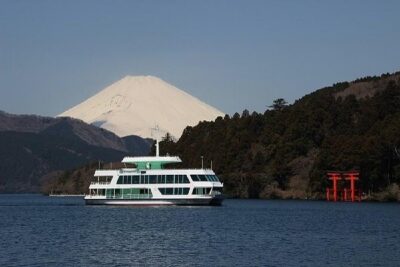 ★ 4.0Mt Fuji & Hakone Cruise, Drum Show Bullet Train 1 Day from TokyoFrom $1497,413 reviews
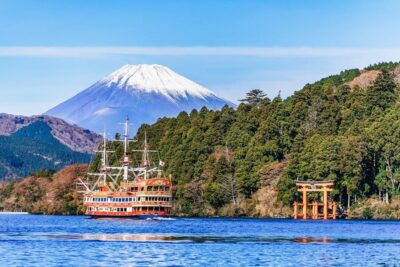 ★ 4.4Tokyo Mt Fuji 5th St & Hakone Cruise Bus Tour w/Bullet TrainFrom $1545,024 reviews
 ★ 4.5From Tokyo: Mount Fuji Full-Day Sightseeing TripFrom $684,970 reviews
 ★ 4.7Mt. Fuji Tour, Hakone Ropeway, Owakudani, Lake AshiFrom $544,002 reviews
 ★ 4.2Mt. Fuji 5th Station & Hakone Cruise 1-Day Bus TourFrom $1292,381 reviews
 ★ 4.7Mt Fuji Top 5 Spots Day Tour: Arakurayama Park,Oshino HakkaiFrom $532,066 reviews
 ★ 5.0Private Tour to Mt. Fuji and Hakone (Fully Licenced Operator)From $4971,910 reviews
This tour also belongs to