
Review · MOUNT FUJI TOURS
Mt. Fuji Highlight Photo Spots One Day Tour from Tokyo
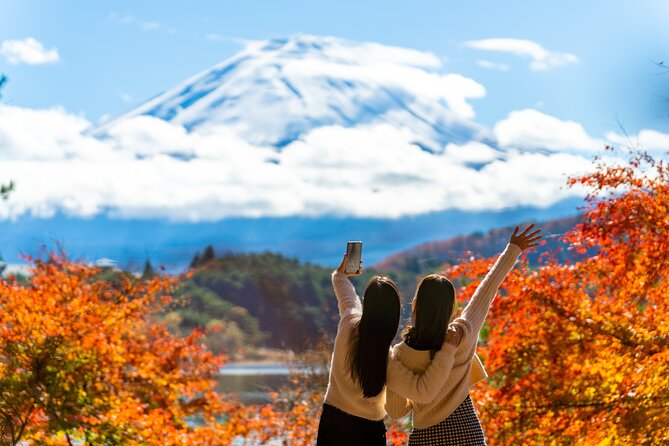
Fuji photos start with smart stops. This one-day trip is built for maximum views of Mt. Fuji from Tokyo, hitting several of the area’s most photographed angles in a smooth route, with a guide who shares context along the way. You’ll trade bright city lights for pagoda views, lakeside reflections, waterfall textures, and postcard scenes above tea fields.
I like the included round-trip transportation, because it saves you from planning trains and transfers when you just want the photos. I also love the photo-focused route, with short-but-productive time at each stop so you can collect multiple Fuji angles instead of waiting around for one perfect shot.
One thing to consider: the plan is weather-dependent and each stop is timed, so if your goal is long hikes or slow meals, you may feel a bit rushed and you’ll want to bring snacks.
Key things to know before you go
- Chureito Pagoda view at Arakurayama Sengen Park: the iconic Fuji-and-pagoda composition, especially special in cherry blossom season.
- Seven Fuji moments in one day: pagoda, nostalgic street views, a Lawson foreground photo stop, lake reflections, flowers, a waterfall, and tea fields.
- Mobile ticket plus multilingual support: you get English, Korean, and Chinese speaking staff to help keep things easy.
- Max group size of 60: big enough for comfort, small enough that you can still maneuver for photos.
- Meals are not included: keep energy up with snacks or a light lunch because lunch time is not provided.
Entering the Fuji Photo Zone: What This Day Trip Is Really Good At
This tour works because it focuses on what Mt. Fuji viewing usually needs from Tokyo: time, logistics, and a plan for visibility. Mt. Fuji can be shy in haze and clouds, so you want to be in the right area at the right time, not stuck figuring out public transit while the view disappears.
You also get a route that changes the “type” of view as you go. You’ll see Fuji framed by traditional architecture, then by streets and town signs, then by water, flowers, a waterfall, and finally tea fields. That variety matters because your photos will look like a story, not just one mountain shot.
The included round-trip transportation is the practical win. It’s one less stressor, and it frees you to focus on timing your shots and listening to the guide’s heritage notes.
More Tokyo tours and experiences for the shortlist
Arakurayama Sengen Park and Chureito Pagoda: Your First Big Hit
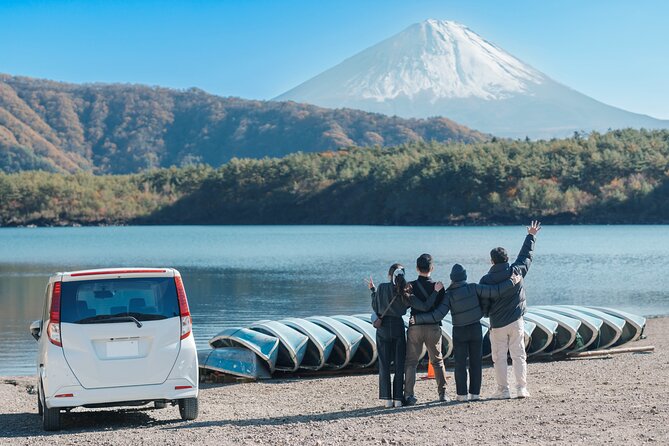
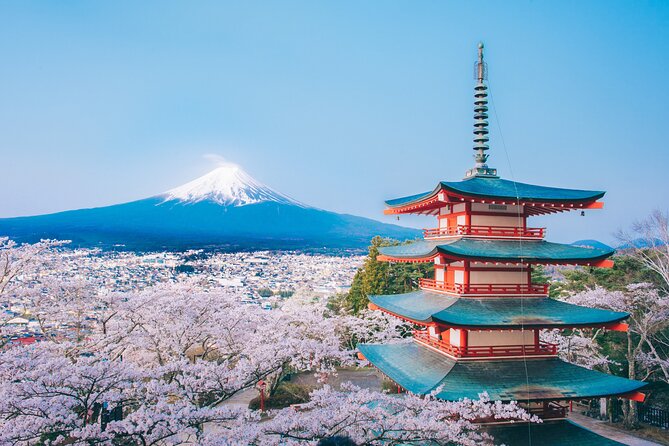
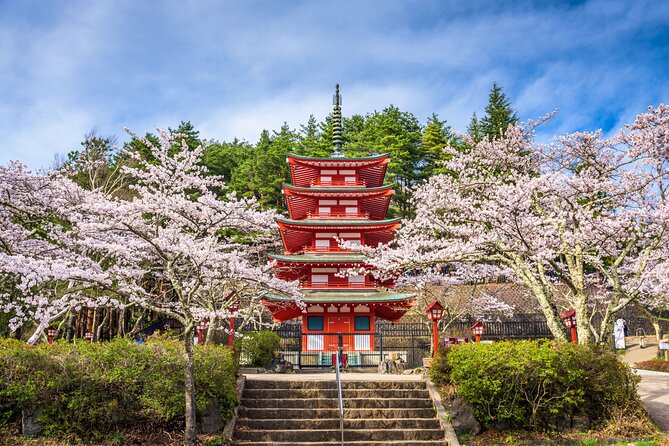
Your day starts at Arakurayama Sengen Park, a top spot for the famous view of Mt. Fuji with the Chureito Pagoda in the foreground. This is the kind of scene that’s instantly recognizable on postcards, and the setting makes sense once you’re there, with Fuji appearing behind the structures in a way that feels composed even without editing.
You’ll usually get about 40 minutes here, and that is enough time to do the first loop, find a photo angle, and then adjust when the light changes. In cherry blossom season, the park’s appeal climbs fast because the pagoda and blossoms create layers. Even outside that season, the framing is still strong, and Fuji tends to look dramatic against the park’s open lines.
The small drawback: at a famous photo stop, people cluster around the best angles. You’ll have to work for the shot, but with a guided group and short time slots, the pressure usually feels manageable.
The Nostalgic Honcho Street Stop: Quick Fuji Framing in Town
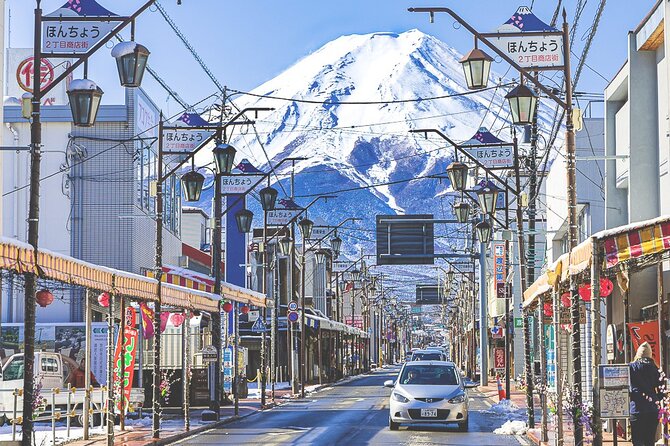
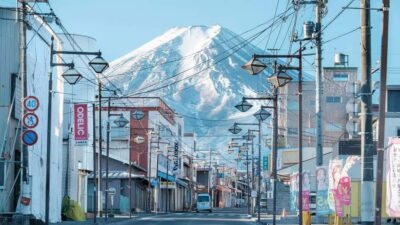
Next you’ll head to a parking lot area tied to Fujiyoshida Shiei Honmachidori, then walk toward Shimoyoshida Honcho Street for a different style of Fuji photo. This is a street-view experience, with classic signage and lantern-like details, plus the kind of electricity wires you only really see in Japanese towns.
It might not be as instantly “iconic” as the pagoda, but it’s a smart contrast. Fuji peeking over a lived-in street makes your photos feel more grounded and less like a single-theme poster. It’s also a good reset stop, because the walking is brief and the vibe is more relaxed than a viewpoint crowd.
You get about 40 minutes, and the value here is speed plus variety. Don’t overthink the angle, take a few shots early, then come back if Fuji clears for a moment.
The Lawson Foreground Photo Moment: A Silly-Looking Stop That Works
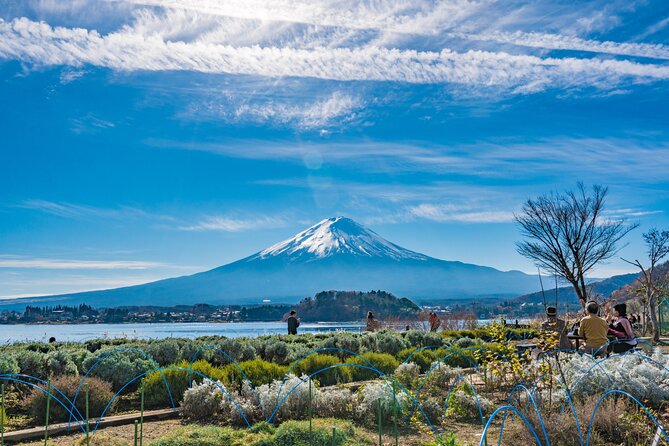
Then comes a quick, fun stop tied to Lawson Fujikawaguchiko Town Hall, where you can grab a postcard-style view of Mt. Fuji with the Lawson convenience store in the foreground. It sounds almost too specific, but that exact “everyday Japan” contrast is what makes the photo interesting.
This stop is only about 15 minutes, so treat it like a photo coffee break. You’re not going to have a long stroll here, and you’re not supposed to. Use the time to shoot, grab water if you need it, and move on.
This is also a reminder that Mt. Fuji tours are often about positioning, not just scenery. Different elevations and perspectives can make the same mountain look totally different.
Lake Kawaguchiko: The Reflection Test
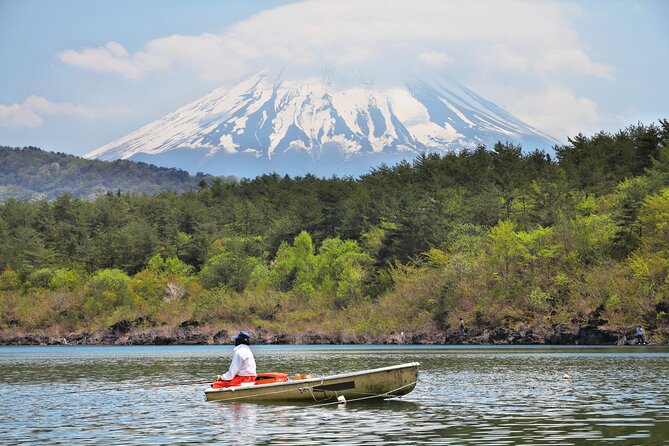
Now you reach Lake Kawaguchiko, part of the Fuji Five Lakes region, with about 20 minutes on the water viewpoint. This is where you start chasing the “reflection” feeling, because calm water can turn Mt. Fuji into a mirrored image.
Even when reflections are faint, the lake setting gives you breathing room and a clean horizon. That matters because your earlier stops are more “framed” by pagoda and streets. Here, you get open space and the chance to capture Fuji with a softer, more natural look.
Because this stop is included and timed, you’ll want to arrive ready. Bring your phone and camera fully set up, clean your lens if needed, and keep an eye on how cloud cover moves. A short weather shift can change the whole scene within minutes.

Oishi Park: Flowers Versus Fuji, and How to Photograph Both
After the lake, you’ll visit Oishi Park for another about 20 minutes. Oishi Park is known for Fuji views paired with seasonal flowers, and it’s especially associated with lavender fields in summer.
This stop is all about balancing two subjects: the mountain and the flowers in the foreground. The trick is to avoid shooting only Fuji while ignoring the plants, and also to avoid shooting only flowers without giving Fuji enough space. Move a little, don’t just stand at one spot and hope for magic.
If the flower beds are in bloom, the colors can make even a hazy day feel worth it. If clouds are heavy, focus on the shape of Fuji against the sky. You’re collecting options for later edits, and the variety helps.
Shiraito Waterfall: When You Need Texture, Not Just Views
Next is Shiraito Waterfall, with about 50 minutes. This stop is longer than many of the others because it’s not only about seeing Mt. Fuji, it’s about experiencing a national scenic spot with thread-like streams flowing from a curved basalt cliff.
Even on days when Fuji is partially hidden, the waterfall can still deliver. It adds motion, sound, and a different kind of “postcard moment” to your collection. If you’re thinking about what to do with your time besides chasing a clear peak, this is where the tour earns its keep.
One practical note: waterfalls often mean wet footing and more mist. Wear shoes you’re comfortable walking in, and keep your camera protected when you’re close.
Obuchi Sasaba Tea Fields: The Most Peaceful Fuji Frame
Your final scenic stop is Obuchi Sasaba, a tranquil tea plantation with about 40 minutes. This is one of the most serene Fuji views, because rows of green tea busily fill the foreground while the mountain sits above them like a backdrop.
This stop is famous for its postcard look, and you’ll feel why once you’re there. The tea rows create leading lines that guide your eye up toward Fuji. It’s also a nice contrast to the earlier crowds at the pagoda area, because the mood tends to feel calmer and more spaced out.
Timing matters here too. If the air clears near the end of the day, Fuji can pop in a way you didn’t see earlier. Keep shooting in short bursts, and don’t put away your camera just because the first minute is cloudy.
Transportation, Timing, and Group Size: How the Day Stays Smooth
The tour runs about 10 to 11 hours, with round-trip transportation included. That’s a long day, but it’s also exactly what you need for a full sweep around Mt. Fuji’s most photogenic areas from Tokyo.
The maximum group size of 60 also affects your experience. In a smaller group, you’re usually not fighting for space around the guide, and you can step aside to compose shots without feeling like you’re blocking a parade. You still get a crowd at the biggest photo stops, but the overall pace feels organized.
You should have moderate physical fitness. The walking is not described as a major hike, but there will be standing, walking between viewpoints, and moving around for photos. If stairs and uneven ground bother you, wear shoes that handle that.
Also, the guide may adjust timing due to traffic and weather, and vehicles cannot operate more than 10 hours. In plain terms, expect a flexible schedule. The tour should still hit the main stops, but the exact order or minute-by-minute pacing could shift.
Guide Help That Actually Matters for Photos
This tour includes insights about Japanese heritage from your guide, and that is more than background talk. Heritage notes can help you understand why a place is arranged the way it is, which often leads you to better photo framing. You stop thinking only about where to stand and start thinking about what each viewpoint is trying to show.
The human touch also shows up in guide support. In guide feedback, people specifically praised Yunan for sending exact start-point coordinates and helping with picture-taking. Others mentioned Ukei (K) for being informative and funny, plus K-san and Ok for caring attention and helping with photos.
You should still take charge of your own camera setup. But it’s reassuring to know the guide team tends to help when people get stuck, especially around meeting up at the starting area.
Price and Value: Is $78.82 Worth a Full Day of Fuji Stops?
At $78.82 per person, the value depends on what you would do if you planned this alone. If you try to assemble trains, buses, and multiple viewpoints on your own, the time cost can be brutal, and the stress cost is worse.
Here, you pay for a lot of friction removal:
- Round-trip transportation from Tokyo
- A planned route with multiple high-demand view areas
- Multilingual support (English, Korean, Chinese)
- Structured stop times so you can hit several angles in a single day
Most of the stops in the route list free admission for the viewpoint areas, and Lake Kawaguchiko is included. That means you’re paying mostly for the ride and guide coordination, not a stack of museum tickets. If that matches your travel style, the price is easier to justify.
The main extra cost is simple: meals are not included. The tour even suggests bringing snacks or a light lunch, because lunch time is not provided. If you budget a couple of convenience-store snacks and one meal stop, the day becomes much smoother.
What to Bring for Best Results (Not Just to Look Prepared)
For a photo-heavy day like this, I’d pack for quick changes:
- A fully charged phone and camera, plus a power bank
- Lens cloth or tissues (especially near water and misty spots)
- Comfortable shoes for standing and short walks
- A light layer, because mountain air can feel cooler than central Tokyo
- Snacks, since meals are not included and there’s no guaranteed lunch time
Also, plan your expectations for Mt. Fuji itself. On clear days, every stop feels like a win. On cloudy days, you’ll still get strong photos at places where the setting and textures are the main story, like Shiraito Waterfall and the tea fields.
Who Should Book This Tour, and Who Might Want Something Else
You’ll likely love this if:
- You want multiple Mt. Fuji photo angles in one day, without dealing with transit logistics
- You prefer guided structure with short, productive time at each stop
- You’re traveling with limited time in Tokyo but still want a “real Fuji day”
You might want to skip it, or choose a different style of tour, if:
- You want long hikes or extended time at one single viewpoint
- You don’t do well with timed stops and a schedule that can shift with traffic or weather
- You’re hoping for meals included, because you’ll need your own snack plan
Booking Recommendation: Should You Book This One-Day Fuji Photo Tour?
If your priority is efficient Mt. Fuji viewing from Tokyo, I think this is a strong choice. You’re getting a full day that’s built around the most photographable areas in the Fuji region, plus the practical comfort of round-trip transportation and multilingual staff.
The biggest reason to book is simple: the route gives you variety. You get the pagoda frame at Arakurayama Sengen Park, a street-scene twist in Shimoyoshida Honcho Street, an unexpected everyday photo at the Lawson stop, lakeside atmosphere at Lake Kawaguchiko, flowers at Oishi Park, texture at Shiraito Waterfall, and calm tea-field composition at Obuchi Sasaba. That’s a lot of “different Fuji” for one day.
The main reason to hesitate is also simple: weather and timing can change how much Fuji you see, and each stop is brief. If you can be flexible, dress for variable conditions, and bring snacks, the day has a high chance of delivering the photos you came for.
FAQ
How long is the Mt. Fuji Highlight Photo Spots One Day Tour?
The tour duration is about 10 to 11 hours.
What is the price per person?
The price is $78.82 per person.
What languages are spoken by the staff?
The staff includes English, Korean, and Chinese speaking support.
Is round-trip transportation included?
Yes. Round-trip transportation is included.
Are meals included?
No. Meals are not included. It’s recommended to bring some snacks or a light lunch since lunch time is not included.
Does the tour use a mobile ticket?
Yes. The tour features a mobile ticket.
What happens if the weather is poor?
The experience requires good weather. If it is canceled due to poor weather, you will be offered a different date or a full refund.
How many people are on the tour?
The tour has a maximum of 60 travelers.
More 1-Day Tours in Tokyo


More Tours in Tokyo

More Tour Reviews in Tokyo
Not for you? Here's more nearby things to do in Tokyo we have reviewed





Mount Fuji Tours, side by side.
 ★ 5.0Mt Fuji and Hakone 1-Day Bus Tour Return by Bullet TrainFrom $16326,383 reviews
 ★ 4.0Mt Fuji & Hakone Cruise, Drum Show Bullet Train 1 Day from TokyoFrom $1497,413 reviews
 ★ 4.4Tokyo Mt Fuji 5th St & Hakone Cruise Bus Tour w/Bullet TrainFrom $1545,024 reviews
 ★ 4.5From Tokyo: Mount Fuji Full-Day Sightseeing TripFrom $684,970 reviews
 ★ 4.7Mt. Fuji Tour, Hakone Ropeway, Owakudani, Lake AshiFrom $544,002 reviews
 ★ 4.2Mt. Fuji 5th Station & Hakone Cruise 1-Day Bus TourFrom $1292,381 reviews
 ★ 4.7Mt Fuji Top 5 Spots Day Tour: Arakurayama Park,Oshino HakkaiFrom $532,066 reviews
 ★ 5.0Private Tour to Mt. Fuji and Hakone (Fully Licenced Operator)From $4971,910 reviews
This tour also belongs to