
One day, two famous views, zero stress. This private Mount Fuji and Hakone tour strings together bucket-list stops with pickup from your Tokyo accommodation, plus guide commentary so the scenery has context. The pacing is made for people who are short on time, but still want real photo moments and a mix of nature and culture.
I love how it includes a full Hakone-to-Fuji flow in a single outing, instead of forcing you to juggle trains and transfers. I also like the photo-heavy stops like Chureito Pagoda and the Fuji viewpoints around Lake Kawaguchiko, where timing and framing matter.
The main catch is that this is a “see a lot” day. Expect short time blocks at each place, and the biggest add-on is that the Hakone Ropeway ticket is not included.
Key things I’d plan around
- Door-to-door pickup in Tokyo saves you the stress of getting out to Hakone and back
- Private group up to 3 keeps the day flexible for your pace and priorities
- Hakone Ropeway plus Owakudani gives you both airy views and volcanic reality
- Oshino Hakkai and Chureito Pagoda add culture and classic Mount Fuji framing
- Gotemba Premium Outlets turns the day trip into a practical shopping stop with Fuji views
One private day that actually fits Tokyo timing
This tour is built for people who land in Japan and think, I need Mount Fuji, but I only have one day to do it. It runs about 9 to 10 hours, with travel time included, and the big value is that the logistics are handled for you. You get pickup and drop-off from your accommodation in Tokyo, and you ride in an air-conditioned vehicle with modern, clean comfort.
Another plus is the “private” part. For a group of up to 3 people, you are not negotiating crowded buses, train schedules, or meeting points. That matters in practice, especially when heavy traffic can happen on the way out of the city. In the reviews, the guides named Hadi and Kahn are praised for being attentive and helpful even when the trip got delayed by road conditions.
One more detail that helps: you’ll use a mobile ticket, and confirmation happens at booking. That removes a layer of last-minute confusion.
You can also read our reviews of more private tours in Tokyo
What you’re really paying for: access, not just sightseeing
At $425 per group (up to 3), the price is not low in absolute terms. But it can be good value compared to what it takes to create your own full-day plan across Hakone, the Fuji area, and the Lake Kawaguchiko viewpoints.
Here’s where your money goes:
- Private transportation plus parking fees and highway tolls
- An air-conditioned vehicle
- A guide who provides commentary, so you’re not just hopping between photo spots with no context
What is not included is also important:
- Lunch
- Hakone Ropeway ticket
- Pirate ship ticket (listed as not included)
So if you want a stress-free day with door-to-door pickup and multiple key regions covered, the cost can make sense. If you’re the type who enjoys self-guided transit and you already know how to stitch routes together, you may find better value by building your own itinerary. For everyone else, this is a tidy package.
Hakone Ropeway: your first big view from the sky
The day starts in Hakone Ropeway, a ride that connects the Lake Ashi area to the Owakudani volcanic area. The point of this stop is the “in-between” perspective. You’re not stuck at ground level, and you’re not only getting Fuji-from-a-distance photos. You get an aerial route through Hakone’s dramatic terrain, which helps set the tone for what you’ll see next.
Plan for about 30 minutes here, and note that the ropeway admission ticket is not included. That means you should budget extra for this segment if you care about riding it rather than skipping it.
Pros:
- Quick but high-impact, especially for photographers
- It gives you a visual bridge from lake views into volcanic country
Consideration:
- Because it’s a ticketed add-on, your total day cost will rise once you add it in
Owakudani Valley: steam, sulfur, and real volcanic mood
Next is Owaku-dani Valley, known for its volcanic activity. You’re looking at a rugged setting with steam vents and sulfurous hot spring character. The time is about 40 minutes, which is enough to walk, look around, and get the dramatic angles you came for.
This is one of those stops where the guide commentary matters, because the visuals are intense, but the meaning behind them is easier with context. In a day like this, Owakudani works as a contrast to the calmer, postcard-friendly places later on.
Pros:
- Strong “Hakone identity” in a short time
- Great place to practice careful photo framing, since the terrain is steep and textured
Consideration:
- It’s outside and naturally active. If weather is poor, conditions can affect what you can see and how comfortable you feel moving around.
Oshino Hakkai: classic ponds and the kind of stop you enjoy
Then you move to Oshino Hakkai (the Village of Eight Ponds), a serene area tied to local legend. The stop time is about 40 minutes and entry is free for this segment.
This is a smarter-than-it-sounds break in the day. After volcanic scenery, Oshino Hakkai gives you a calmer pace and a chance to look at water, stone, and the rhythm of a smaller village area. In the reviews, people specifically mention enjoying the historic village feel and the food around the area, which matches the vibe of this kind of stop.
Pros:
- A tonal reset from volcanism to gentle, scenic sightseeing
- Good for a slower stroll and easier photos
Consideration:
- If you’re only chasing Mount Fuji close-ups, this is not the most direct “Fuji mega view” stop. Think of it as support scenery that rounds out the day.






Lake Kawaguchiko: where the timing affects your Mount Fuji photos
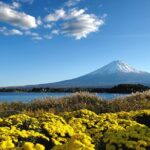
For Mount Fuji fans, the next segment is Lake Kawaguchiko, scheduled for about 40 minutes. Entry here is listed as free for the included stop, but the real value is the viewpoint access around the lake.
Lake Kawaguchiko is one of those locations where you feel the mood of the day quickly. If the sky clears, the lake area can deliver memorable Fuji views. If it’s cloudy, the lake still works, but the “Mount Fuji payoff” might be reduced.
The tour operator also notes that this experience requires good weather. If weather is poor, you are offered a different date or a full refund. That’s not a small detail. For a Mount Fuji day trip, the sky is the main ticket.
Pros:
- Often one of the best places to get Fuji framed with calm water
- Short enough that you’re still able to hit Chureito Pagoda later
Consideration:
- You cannot control visibility. Build some flexibility into your expectations and timing.
Chureito Pagoda: the Fuji photo everyone recognizes
After the lake, you go to Chureito Pagoda at Arakura Sengen Shrine. This is a 1 hour stop and marked free. It’s famous for the classic five-story pagoda view with Mount Fuji in the background, and in spring it’s also known for cherry blossoms.
Even if you’re not in peak blossom season, Chureito is a strong photography anchor. The pagoda is distinct, the shrine setting gives you texture, and the site is made for viewpoint sightlines. You get enough time to walk into the best angles and not feel like you’re sprinting.
Pros:
- A recognizable Mount Fuji framing that’s worth the time
- Enough time to choose angles without panic
Consideration:
- It’s popular. If you’re sensitive to crowds, your best strategy is to move with purpose and accept that you might have to wait for a clean shot.
Gotemba Premium Outlets: shopping with a Fuji bonus
To close out the day, you hit Gotemba Premium Outlets for about 1 hour. This is listed as free and it’s described as Japan’s largest outlet mall, with views of Mount Fuji while you shop.
Is this a cultural stop? Not really. But it is a practical one. If you’ve been thinking about bringing home a few clothing upgrades, accessories, or gifts, this is a convenient way to fold shopping into the return from Fuji country instead of adding another half day to your schedule later.
Pros:
- Useful if you want discounted shopping right after the sightseeing day
- Quick reset from walking outside to indoor browsing
Consideration:
- One hour passes fast at outlet malls. If you want deeper shopping time, you might wish you had an extra block.
How the customization works when your priorities are different
The additional info says you can select 5 places of your choice from the list. The itinerary you’re considering runs through multiple major stops, but the underlying idea is that your day can be adjusted to match what matters most to you.
Use that flexibility if:
- You care more about Hakone than the Lake Kawaguchiko area
- You want to spend longer on a single viewpoint-heavy stop
- You’d rather shift your day to avoid the segment you’re least interested in
Keep your expectations realistic. Even with customization, the overall timing is still about 9 to 10 hours, so it will never feel like a slow travel day. It’s a guided plan that trades depth for coverage.
The pacing: why this can feel perfect or a bit rushed
Each stop is short, from 30 minutes at the Ropeway to about 1 hour at Chureito Pagoda and 1 hour at Gotemba. The volcanic and scenic stops land around 40 minutes each.
That pacing is great if:
- You are on a tight itinerary
- You want the highlights without transferring trains
- You’d rather spend daylight on multiple icons than one location all day
It may feel limiting if:
- You want long hikes or extended time for multiple viewpoints at one site
- You plan to linger for long meals at every stop (since lunch is not included)
For a first-time Mount Fuji visitor, this format often hits the sweet spot. You get the big names, you get the variety, and your guide commentary helps you understand what you’re looking at while the car keeps moving.
Practical tips to get the most from the day
Here are a few grounded ideas for how to make this kind of full-day private tour work better in real life.
First, treat this as a camera and walking day. Even with a vehicle, you’ll spend time outdoors at each stop, so comfortable shoes matter.
Second, plan lunch on your own. Lunch is not included, so you’ll want to think about where you prefer to eat: around the village setting or near the outlet area. If you like that hands-on local-food vibe, build your lunch around the sightseeing rhythm rather than trying to “find the perfect restaurant” at the last second.
Third, be weather-smart. The tour requires good weather, and if it’s canceled due to poor conditions you get a different date or a full refund. That’s reassuring, but it also means you should avoid stacking this tour as an unmovable fixed point on your trip.
Fourth, use your guide. The reviews specifically highlight helpful, attentive service from guides like Hadi and Kahn. That’s your chance to ask quick questions in the moment, like what you should notice at Owakudani or where to focus your eyes at Fuji viewpoints.
Who this private Mount Fuji and Hakone tour is best for
This tour fits best if you:
- Want a one-day Mount Fuji and Hakone combination without navigating trains
- Travel in a small group, since it’s private for up to 3
- Like photo-friendly stops and want someone to keep the schedule moving
- Appreciate commentary that adds meaning, not just directions
It’s also a good fit for people who want a “best-of” day with a clear plan. If you already have deep knowledge of the area and you love slow travel, you might find the short time at each stop a little limiting. But for time-crunched visitors, this kind of coverage is hard to beat.
Should you book this tour?
I’d book this tour if you want a straightforward, private Mount Fuji and Hakone day with Tokyo pickup, a known route, and guide commentary that helps you make sense of what you’re seeing. The value is strongest when you compare it to the hassle of building your own day, because you’re paying for transportation, timing, and guidance, not just entry tickets.
I’d think twice if you’re mainly after one location with lots of free time, or if you hate ticket add-ons since the Hakone Ropeway ticket is not included. Also, remember the day depends on weather for best visibility, so keep it flexible in your overall trip planning.
If you can handle a highlights-style pace, this is a strong choice for first-time Mount Fuji visitors who also want Hakone’s volcanic contrast and a practical shopping finale at Gotemba.
FAQ
What is the duration of the Private Tour to Mount Fuji and Hakone with Gotemba Outlets?
The tour duration is about 9 to 10 hours.
How much does the tour cost and what group size is it for?
The price is $425.00 per group, with a maximum group size of up to 3 people.
Do you get pickup and drop-off in Tokyo?
Yes. Pickup and drop-off from your accommodation in Tokyo is included.
What tickets are included, and what costs extra?
The tour includes transportation and several listed inclusions, but the Hakone Ropeway ticket is not included. Lunch is not included, and a Pirate ship ticket is also listed as not included.
Can I customize which places we visit?
Yes. The additional info says you select 5 places of your choice from the list.
Is the tour dependent on weather?
Yes. The experience requires good weather. If it’s canceled due to poor weather, you’ll be offered a different date or a full refund.
More Private Tours in Tokyo
More Tours in Tokyo

More Tour Reviews in Tokyo
Not for you? Here's more nearby things to do in Tokyo we have reviewed












Mount Fuji Tours, side by side.
 ★ 5.0Mt Fuji and Hakone 1-Day Bus Tour Return by Bullet TrainFrom $16326,383 reviews
 ★ 4.0Mt Fuji & Hakone Cruise, Drum Show Bullet Train 1 Day from TokyoFrom $1497,413 reviews
 ★ 4.4Tokyo Mt Fuji 5th St & Hakone Cruise Bus Tour w/Bullet TrainFrom $1545,024 reviews
 ★ 4.5From Tokyo: Mount Fuji Full-Day Sightseeing TripFrom $684,970 reviews
 ★ 4.7Mt. Fuji Tour, Hakone Ropeway, Owakudani, Lake AshiFrom $544,002 reviews
 ★ 4.2Mt. Fuji 5th Station & Hakone Cruise 1-Day Bus TourFrom $1292,381 reviews
 ★ 4.7Mt Fuji Top 5 Spots Day Tour: Arakurayama Park,Oshino HakkaiFrom $532,066 reviews
 ★ 5.0Private Tour to Mt. Fuji and Hakone (Fully Licenced Operator)From $4971,910 reviews
This tour also belongs to