
Review · MOUNT FUJI TOURS
Private Mt Fuji, Hakone and Tokyo Tour – English Speaking Driver
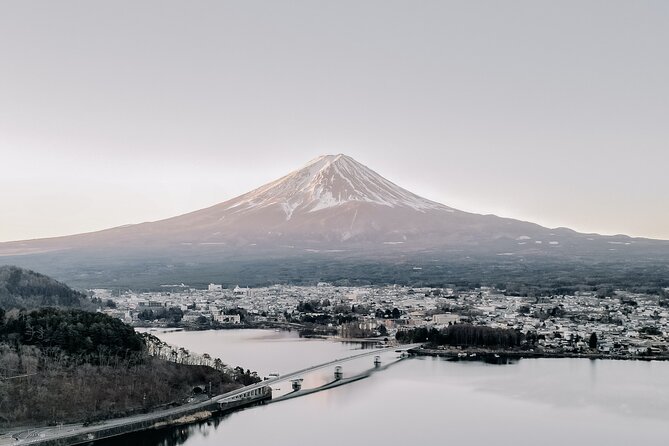
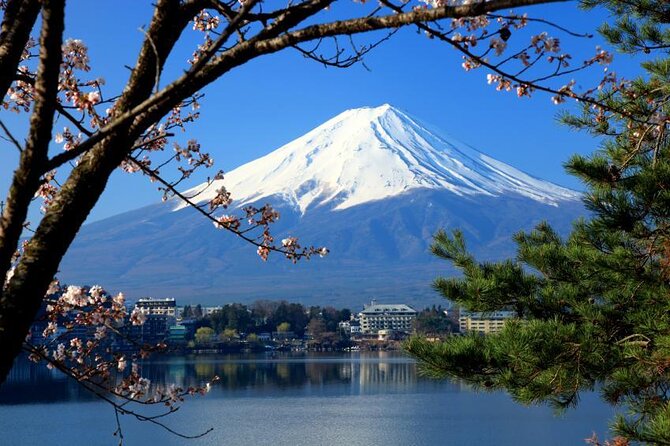
Fuji views can start before the city wakes up. This private day trip strings together Hakone hot springs scenery and Fuji viewpoints without the hassle of trains and transfers, using a comfortable car with door to door pickup when available. I especially like the way it lets you keep Tokyo energy for later, with the day’s big countryside hits starting early, and I like that your driver-guide can offer practical tips for what to do on the ground. One thing to consider is that Mt. Fuji visibility depends on weather, and if the 5th Station is not reachable you will be taken to the highest elevation point possible instead.
With a 7:00 am start and about 10 hours total including commuting, this is a full day, but it is also a very efficient one. You get a private group setup (up to 5 people per vehicle), mobile ticketing, and a route that balances classic scenery with a couple of flexible pauses, like Lake Kawaguchiko and Gotemba for a breather.
If you want a “big day” that feels smooth instead of chaotic, this tour fits. If you love public transit adventures or you are traveling solo on a tight budget, you might prefer building your own route.
Key things to know before you go
- A true private day for up to 5 people, so you can move at a pace that works for your group.
- 7:00 am start from Shinjuku, which is often when Mt. Fuji chances feel best.
- Driver-guide support with tips and recommendations, and optional add-on guidance if you want a deeper walkthrough.
- Ticket mix at stops, some are listed as free while others (like certain museums and viewpoints) are not included.
- Weather rules for Fuji access, the plan adapts if visibility or access is limited.
Why a private driver is the whole point here
Trying to do Mt. Fuji plus Hakone plus Tokyo in one day can turn into a juggling act. The main value of this tour is simple: you spend your energy looking out the window and walking around, not figuring out trains, platforms, transfer timing, and snack-chasing logistics.
Your driver-guide handles the driving and routing between major areas, and they also share local hints for the places you stop. That matters because some parts of the route are best experienced with a plan, like knowing where viewpoints are and how long you actually need at each area to avoid feeling rushed.
The itinerary also gives you a good “flow.” You start with Hakone’s sulfur springs, then move toward Fuji’s lakeside region and higher viewpoints, and end back in Tokyo at Shibuya Crossing if your drop-off location lines up.
You can also read our reviews of more private tours in Tokyo
Timing from Shinjuku: a 7:00 am start and a realistic 10 hours
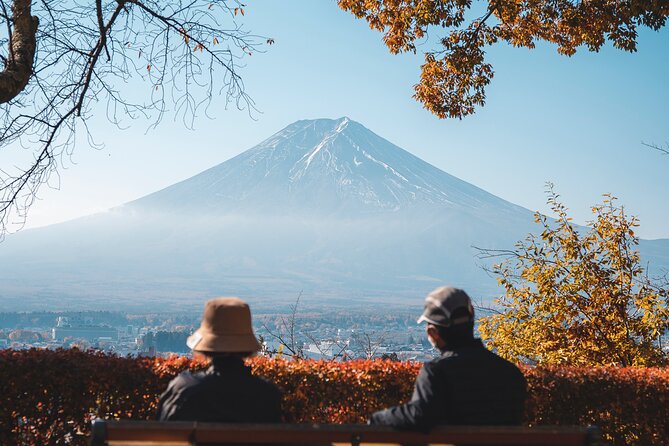
This tour starts at 7:00 am, with pickup near Shinjuku Station area (the listed meeting point is Shinjuku Station 3-chōme-38-1). It ends back at the meeting point, though Shibuya Crossing can be added if your drop off is nearby.
The total duration is about 10 hours including commuting. That sounds straightforward until you remember how time stretches when you account for traffic around Mt. Fuji and Hakone roads. The upside is that the day is structured so you can still hit the big highlights without skipping everything to fit one or two stops.
Practical tip for your day: eat something light before you go, because an early start tends to mean you will be too busy to hunt breakfast later. Also, bring a layer for the higher elevation areas. Even in good weather, it can feel cooler as you move toward Fuji viewpoints.
Owakudani Valley: black eggs and sulfur views
Your first stop is Owaku-dani Valley, a famous sulfur hot spring area in Hakone. You will explore a viewpoint via a ropeway, which is a smart way to get the lay of the land quickly without wasting time on long routes.
The headline here is Kuro-tamago, or black eggs. These are regular chicken eggs boiled in the valley’s natural hot springs, where the sulfur reacts and turns the shells dark. It is one of those food-and-place facts that sounds like a gimmick until you see the setting and understand why it matters.
This stop is listed as 45 minutes, and the admission ticket is marked as free. The likely reality is that you may still pay for any optional rides or items depending on how you choose to do the viewpoint, but the core stop itself is timed so you can move on without burning the day.
What to watch for: if it is windy or very misty, the ropeway views may be less dramatic. Still, Owakudani is interesting even on a less-clear day because the sulfur colors and steam give the valley its personality.
Hakone Open-Air Museum: outdoor art with mountain air
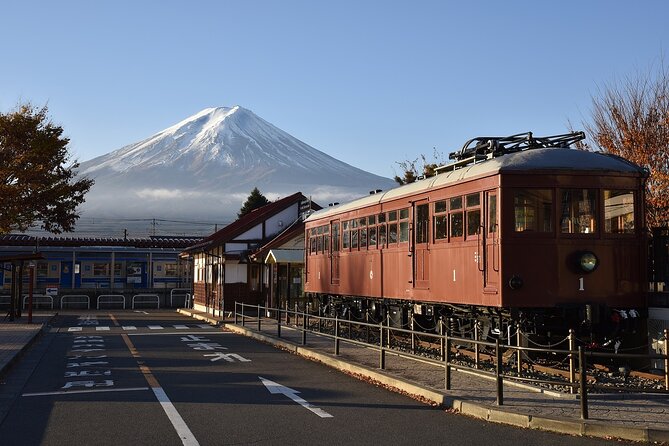
Next up is the Hakone Open-Air Museum, an outdoor sculpture gallery spread across a large mountain area. The big appeal is that it is art you can pace like a walk, not a room where you feel trapped behind timed tickets.
You get about 1 hour here. Admission is not included, so plan on paying separately if you choose to go in. That said, if you like art that plays with nature, this is an enjoyable contrast to the geothermal spectacle at Owakudani.
This is also a mental reset stop. After steam and views, you get greenery and pathways, and the museum layout encourages wandering rather than sprinting. If the weather is great, you will likely enjoy the outdoor setting even more.
Consideration: if you are not into sculpture or you prefer only “one big thing per stop,” you might find the museum time a bit long. But the museum is part of what makes the Hakone side feel more than a photo stop.
Oshino Hakkai: eight springs fed by Fuji
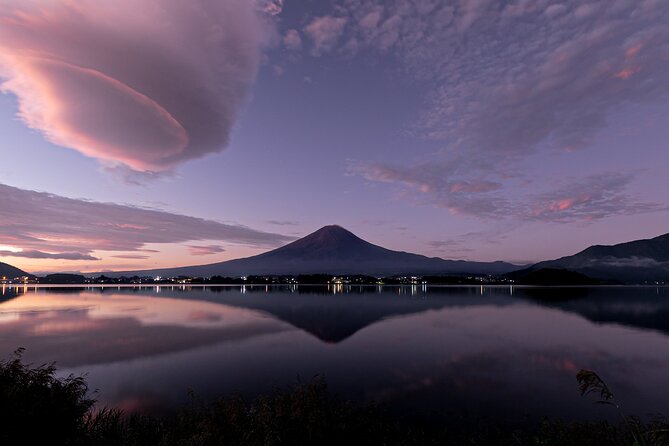
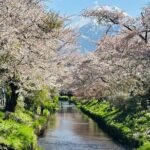
From Hakone, the route shifts to Oshino Hakkai, known for its eight springs. The idea is elegantly simple: the aquifer water sourced from Mount Fuji surfaces here and creates these springs.
You get about 45 minutes, and this stop is listed with admission ticket free. It is a good time box for what the area offers. You are not trying to conquer a huge museum circuit. You are moving between springs and enjoying the water setting.
This is also one of those places where you will probably notice how calm the atmosphere is compared with the busier viewpoints. Even if you are not a water-nerd, Oshino Hakkai gives you that “Fuji water in real life” feeling.
What to do with the time: slow down when you reach the springs, because the best views tend to come from small angles and quiet corners rather than one giant overlook.
More Tokyo tours and experiences for the shortlist

Lake Kawaguchiko: the easiest Fuji-lake daydream
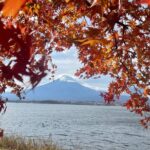
Next is Lake Kawaguchiko, one of the Fuji Five Lakes and the one with the most direct access from Tokyo. The stop is short, around 10 minutes, and it is listed with admission ticket free.
A 10-minute stop can sound like a quick drive-by, but in practice it works as a handoff between areas. You get that lakeside context, the chance to orient yourself for Fuji viewpoints, and then you move on while the day is still fresh.
This stop is essentially about location. Kawaguchiko is one of the easiest bases for seeing Fuji, and it helps explain why the rest of the day centers on this region.
If you want more time for photos, keep your expectations realistic: the tour times are designed to cover multiple major sites, not to linger all day by one lake.
Mt. Fuji Panoramic Ropeway near Lake Kawaguchiko
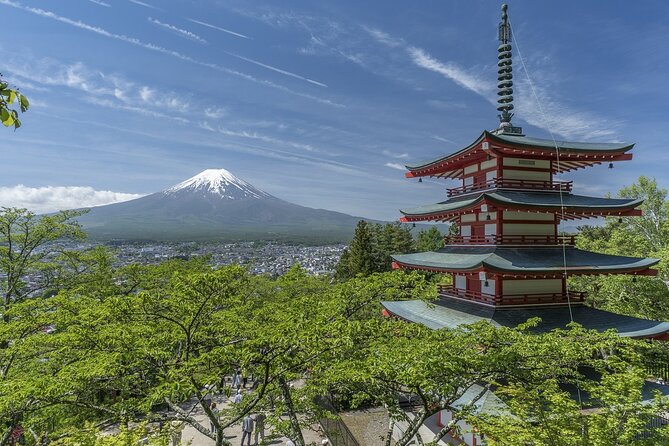
After Kawaguchiko, you head to the Mt. Fuji Panoramic Ropeway, which ascends about 400 meters from the eastern shore of the lake to an observation deck near Mount Tenjo. The stop is about 1 hour, and admission is listed as not included.
This is one of the places where the tour approach makes sense. A ropeway gives you altitude without the labor, and it can improve your odds of getting a better angle on the mountain.
What you will likely enjoy most is the layered view. You get the lake setting plus the mountain shape, which is harder to capture from ground level depending on mist and lines of sight.
Practical note: ropeways and observation areas can be affected by cloud cover. If the mountain is hidden at the moment you arrive, do not assume the day is over. Weather around Fuji can shift.
Mt. Fuji 5th Station: the atmosphere without the full climb
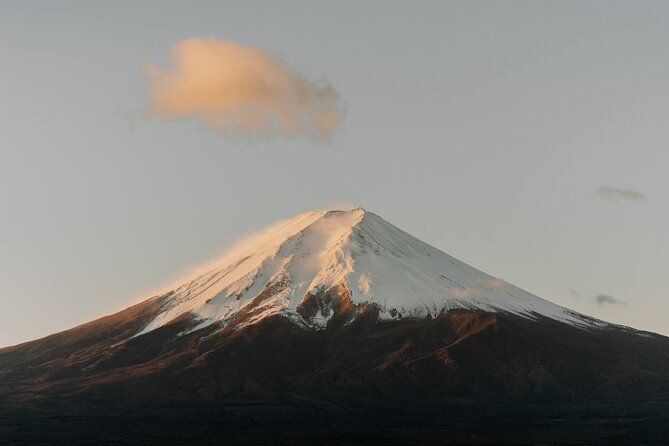
The tour’s biggest “wow” stop is Mt. Fuji 5th Station, often described as halfway up the mountain and the common starting point for climbers. You get about 2 hours, and admission is listed as not included.
Even if you are not hiking, this is where Fuji starts to feel real. The air feels different at higher elevation, and the atmosphere is part of the experience, with people preparing for climbs or taking in the view.
The tour also includes a key safety and realism note: if Mt. Fuji is not visible from the base or the 5th Station cannot be reached due to weather conditions, you will be taken to the highest elevation point possible. That helps you still get “the mountain day” even when visibility is poor.
If you want the most comfortable experience, pack for cool temperatures and bring something to protect your face from wind if it’s gusty. Also, plan your timing inside the station area so you are not stuck waiting in line at the end when the day’s schedule still has to carry you forward.
Gotemba Premium Outlets: a practical Fuji-area break
After Fuji viewpoints, you stop at Gotemba Premium Outlets. This is listed as about 2 hours, and admission ticket is listed as free.
This is not just about shopping. It is a convenient place to reset after a higher elevation stop. You have space to stretch, grab snacks or a meal, and buy essentials if you forgot something earlier (like gloves, warm layers, or simple weather protection).
It is also part of the value equation. A private car day with a tight schedule still needs a predictable break, and outlets are built for that.
If shopping is not your thing, you can still use the time strategically: take a longer bathroom break, refuel, and then rejoin the plan for Tokyo’s end-of-day scene.
Shibuya Crossing at the end: Tokyo energy on cue
The day closes with Shibuya Crossing, the world-famous scramble intersection outside Shibuya Station. The stop is timed at about 20 minutes, admission is listed as free, and it is included only if your drop off location will be nearby.
This ending makes sense emotionally. You start with mountain and lake quiet, then you come back into a loud, bright Tokyo moment. Even if you have already visited Shibuya earlier, this is an easy way to finish with a recognizable landmark.
What to expect in 20 minutes: you will likely want to do one or two quick photo angles and then move with the crowd. The best plan is to pick a direction to walk after you cross, so you do not get stuck recalculating your next steps.
Price and value: what $750 per group really means
The price is $750 per group, up to 5 people, for an about 10-hour private day. On paper, that sounds expensive until you do the math based on group size and the alternative costs.
Here’s the honest value picture. If you are traveling with 3 to 5 people, the per-person cost drops quickly. At that point, the real “extra” you are paying for is time and stress reduction: door to door transportation when available, no transit navigation, and an itinerary designed to hit multiple regions without you doing all the coordinating.
If you are solo or a couple, the value drops compared with public transit plus self-planning. But even for a smaller group, it can still be worth it if you hate complicated routing and want a smooth day that does not turn into missed connections.
Also, remember that some stops have admission not included (like parts of the Hakone and Fuji viewing options). So your total day cost will depend on which paid entries you decide to take.
My practical advice: treat this as a “comfort and time saver” purchase, not a budget entry. You are buying a guided driving plan with flexible access to the right places.
Weather, visibility, and how the plan adapts
This tour depends on conditions. It explicitly notes that good weather is required for Mt. Fuji plans. If Fuji is not visible from the base or the 5th Station cannot be reached due to weather, you will still be taken to the highest elevation point possible.
That is reassuring, because it means the day is not purely fragile. Still, it is worth setting your expectations. If clouds roll in and visibility is poor, you may not get the crisp postcard look you hoped for.
Another realistic factor: schedule changes can happen due to bad weather, traffic congestion, or other uncontrollable reasons. This matters because you are on a tight timetable with several stops. Your best move is to travel with flexibility, pack for changing temperatures, and keep your mood light if timing shifts by a little.
Who this private Fuji and Hakone day is best for
This is a strong match if you:
- Want Mt. Fuji and Hakone highlights in one day without transit stress.
- Are traveling with family or friends and can fill up a group of up to 5.
- Prefer a plan that keeps you moving but still gives enough time to enjoy each stop.
- Like the idea of having a driver-guide to offer tips, rather than only GPS directions.
It also makes sense if you are short on time in Tokyo and you want a “big scenery day” that does not require research and constant transfers.
If you are a hardcore budget traveler who enjoys public transit puzzles, or if you only care about one viewpoint and would rather linger, you might find the fixed stop timing limiting.
Should you book this private Mt. Fuji, Hakone and Tokyo tour?
I would book this if you want a comfortable, private, high-effort itinerary without doing all the planning yourself. The route is built around the most classic “see Fuji from multiple angles” rhythm, with Hakone’s geothermal start and Tokyo’s Shibuya finish.
Book with confidence if your group can take advantage of the up-to-5 pricing and you are okay paying separately for some attractions. Skip it if you are counting every yen, you expect perfect weather every time, or you want a slow, deep exploration of only one area.
If you do book, go in with a simple goal: get the mountain experience, enjoy Hakone’s sights, and come back to Tokyo with stories and photos that feel earned, not rushed.
FAQ
Is this a private tour?
Yes. It is a private tour/activity, and only your group participates.
How many people can be in the group?
The tour price is per group for up to 5 people. Groups larger than 5 can be facilitated for an additional cost.
How long is the tour?
The duration is approximately 10 hours, including commuting time.
What time does the tour start, and where?
The start time is 7:00 am. The listed start location is Shinjuku Station 3-chōme-38-1, Shinjuku City, Tokyo 160-0022, Japan. The tour ends back at the meeting point.
Is pickup offered from hotels?
Pickup is offered, with door-to-door transportation mentioned in the tour overview. The meeting point is near public transportation.
Do I need tickets for each stop?
Some stops are listed as admission free, while others are not included. For example, the Hakone Open-Air Museum is not included, and Mt. Fuji Panoramic Ropeway and Mt. Fuji 5th Station are not included. Other stops are listed as free.
Will I be able to see Mount Fuji?
The experience requires good weather. If Mount Fuji’s 5th Station will not be visible from the base or 5th station cannot be reached due to weather conditions, the tour will be taken to the highest elevation point possible.
What happens if weather or traffic affects the schedule?
Changes in schedule or visiting points are expected due to bad weather, traffic congestion, or other uncontrollable reasons.
Is Shibuya Crossing included?
Shibuya Crossing can be covered if your drop off location will be nearby.
What is the cancellation policy?
You can cancel for free up to 24 hours in advance for a full refund. If you cancel less than 24 hours before the start time, the amount you paid will not be refunded.
More Private Tours in Tokyo
More Tours in Tokyo





More Tour Reviews in Tokyo


Not for you? Here's more nearby things to do in Tokyo we have reviewed












Mount Fuji Tours, side by side.
 ★ 5.0Mt Fuji and Hakone 1-Day Bus Tour Return by Bullet TrainFrom $16326,383 reviews
 ★ 4.0Mt Fuji & Hakone Cruise, Drum Show Bullet Train 1 Day from TokyoFrom $1497,413 reviews
 ★ 4.4Tokyo Mt Fuji 5th St & Hakone Cruise Bus Tour w/Bullet TrainFrom $1545,024 reviews
 ★ 4.5From Tokyo: Mount Fuji Full-Day Sightseeing TripFrom $684,970 reviews
 ★ 4.7Mt. Fuji Tour, Hakone Ropeway, Owakudani, Lake AshiFrom $544,002 reviews
 ★ 4.2Mt. Fuji 5th Station & Hakone Cruise 1-Day Bus TourFrom $1292,381 reviews
 ★ 4.7Mt Fuji Top 5 Spots Day Tour: Arakurayama Park,Oshino HakkaiFrom $532,066 reviews
 ★ 5.0Private Tour to Mt. Fuji and Hakone (Fully Licenced Operator)From $4971,910 reviews
This tour also belongs to