
Review · MOUNT FUJI TOURS
Mt Fuji Private Tour with English Speaking Driver
Fuji feels close with your own driver. I really like the English-speaking driver and the air-conditioned vehicle for the long drive, and the big heads-up is that Fuji can disappear into clouds on the wrong day.
This is a low-stress way to get out of Tokyo for the day: you ride door-to-door, you can keep things relaxed, and you get a good mix of iconic viewpoints plus slower, local-feeling spots around Lake Kawaguchiko.
Key things that make this Mt Fuji private tour click
- English-speaking driver who works as your guide and helps you time photos and viewpoints.
- Comfort all the way out of Tokyo with a clean, air-conditioned vehicle.
- A full Fuji-area circuit that includes Arakura Fuji Sengen Shrine, Chureito Pagoda, Lake Kawaguchiko, Oishi Park, and Oshino Hakkai.
- Optional add-on for extra height, the Mt Fuji Panoramic Ropeway (ropeway fees are not included).
- Practical photo help from drivers who know good angles and will help capture group shots.
- WiFi hotspot when available, handy for maps and sharing.
Why this private Fuji day beats the usual Tokyo plan
Tokyo to Mt Fuji can feel like a math problem. You have trains, buses, transfers, and crowded departure times. This tour trades all that for a simple rhythm: you start in central Tokyo, ride in comfort, and let your driver handle the timing and parking.
The private format is the real value here. You are not stuck waiting for a group photo at the worst second. If you want a little more time at a shrine viewpoint or you want to shorten a stop to beat a cloud bank, you can usually work with your driver to adjust. That flexibility is especially helpful if you are traveling with kids, older relatives, or a group that moves at a slightly different pace than typical tour schedules.
You can also read our reviews of more private tours in Tokyo
Price and logistics: what $415 per group really means
The price is $415.00 per group, up to 3 people, for an 8 to 9 hour day trip. At first glance, it sounds like a splurge. But split three ways, you are often paying close to what you might spend on transportation plus timed entry tickets, except you are also buying convenience and language help.
Here is what you get for the money:
- An air-conditioned vehicle with parking fees, fuel, and highway tolls included
- A basic English-speaking driver
- Round-trip transfers from a Tokyo hotel or airport area (the tour includes these)
- WiFi hotspot when available
- A plan that takes you through multiple Fuji-area highlights in one day, not just one view
The catch to keep in mind is also simple: lunch is not included, and the Mt Fuji Panoramic Ropeway is optional and not included. So you will want to budget for meals and any extras you decide to do.
Arakura Fuji Sengen Shrine and Chureito Pagoda: get your classic Fuji photo
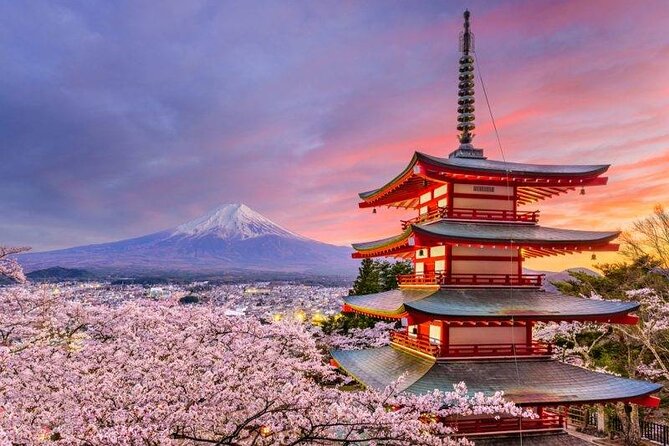
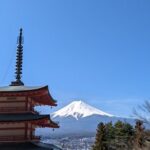
Your day’s visual payoff starts with Arakura Fuji Sengen Shrine and the Chureito Pagoda area. This is the place most people imagine when they think Fuji: shrine grounds, a pagoda on the hillside, and Mt Fuji rising behind it when the weather cooperates.
What makes this stop work well:
- It is a true viewpoint circuit, not just a photo-op plaza.
- The shrines and pagoda setting give you layers to frame Mt Fuji, so photos look more interesting than a single distant silhouette.
- The time here lets you slow down. You are not rushing off after one quick snap.
Practical note: the view depends on visibility. If clouds roll in, you may still get partial views. If the mountain is showing clearly, it is worth taking your time and trying a few angles from slightly different spots. Drivers who double as guides (like the ones you may meet on this kind of tour) often know where the light looks best and where your group can stand comfortably.
Lake Kawaguchiko and Oishi Park: Fuji with water and flowers
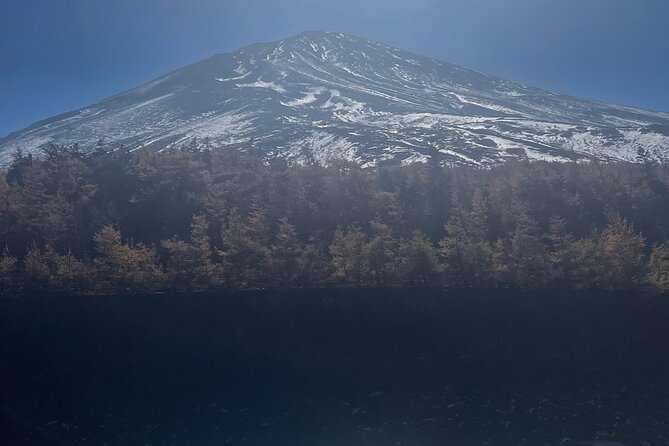
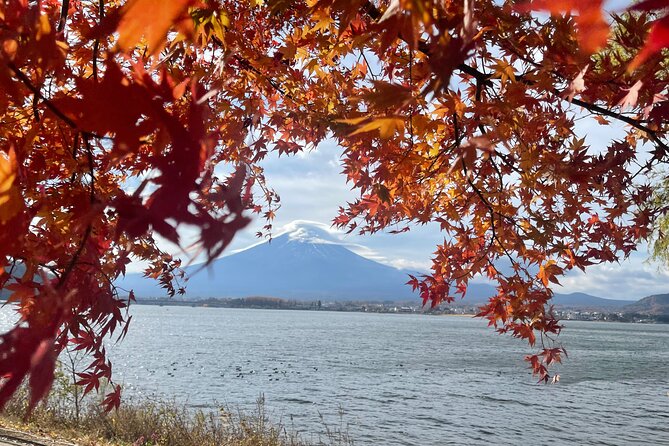
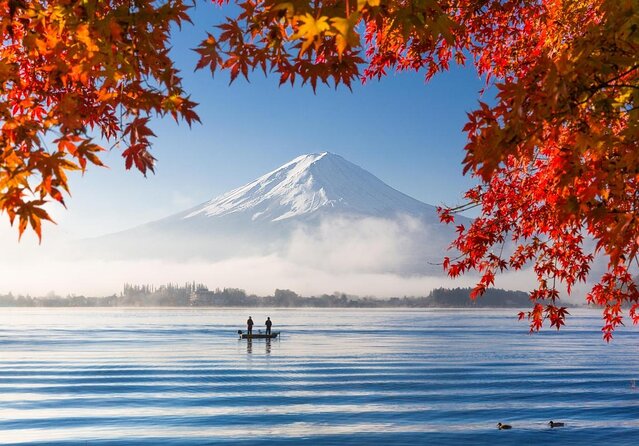
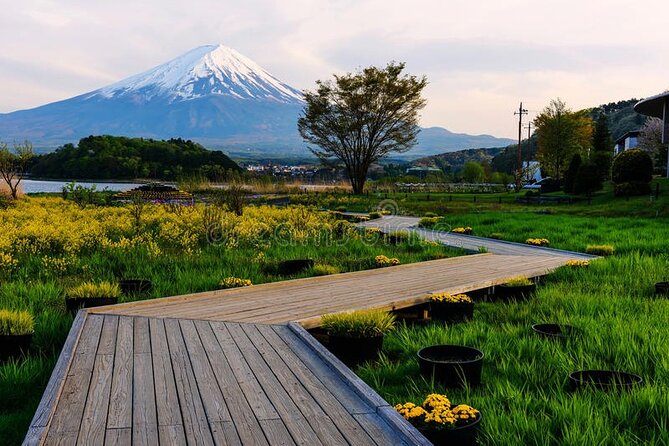
After the shrine-pagoda classic, the tour shifts to the Fuji Five Lakes area, and Lake Kawaguchiko is your base. This is the most accessible of the Fuji Five Lakes, which matters because you spend less time getting there and more time enjoying it.
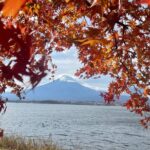
At Lake Kawaguchiko, the vibe usually feels calmer than the shrine area. You get your Fuji backdrop with water in the foreground, and that changes the look of your photos in a good way. Even on a partially cloudy day, the lake can still give you a pleasing scene.
Then you move to Oishi Park. This stop is short, but it is timed for views and seasonal color. The park is known for flowers, and lavender is a crowd favorite around mid-June. If you are traveling at another time of year, you still get a garden-style setting plus an easy Fuji viewpoint.
A small strategy that helps: if the mountain is visible, prioritize your viewpoint stops earlier in the day. If you wait until later, cloud cover can reduce your odds. Your driver can often help you decide how to sequence stops based on how Fuji is behaving that day.
Mt Fuji Panoramic Ropeway: the optional height boost
Next comes Mt. Fuji Panoramic Ropeway, listed as optional. This cable car takes you up around 220 meters to an observation point, giving you a higher angle over Lake Kawaguchiko.
Here is when it is worth doing:
- If you want a different perspective from ground-level viewpoints.
- If you like photo variety, where the composition changes as elevation changes.
- If your day has time and you are not rushing the rest of your stops.
Here is the downside:
- Ropeway charges are not included, so you pay extra on top of the tour price.
- If Mt Fuji is completely hidden, a higher viewpoint may not give you the payoff you were hoping for.
If you want the ropeway experience, ask your driver what the sky looks like at that moment and whether it makes sense relative to your remaining time.
More Tokyo tours and experiences for the shortlist

Fuji-Honcho Main Street and the clock-street photo zone
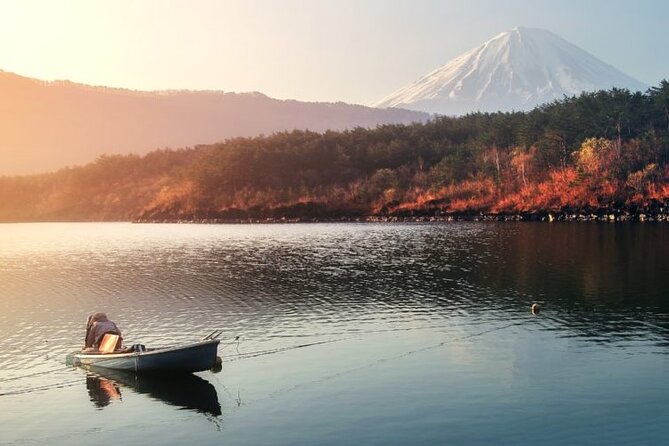
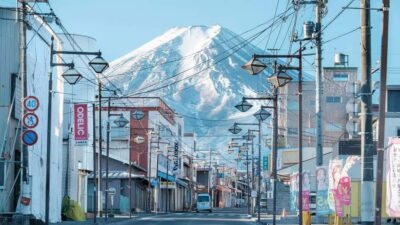
After the lake and park time, you get a quick cultural street stop around Fuji-Honcho Main Street (also tied to the Hikawa Clock Shop Street area). This is the sort of place you enjoy for short, satisfying breaks: snacks, strolling, and that classic stairway-to-Fuji style photo.
This stop is only about 10 minutes, so it is not for slow wandering. Think of it as a reset button. You walk, you grab something small if you want it, you take a few photos, and you move on while the rest of the day is still flowing.
If you care about pictures, this is a place to ask your driver to help coordinate timing. On busy days, even 10 minutes can feel shorter than you expect, and a quick plan can save your whole group from rushing.
Oshino Hakkai ponds: where Fuji water becomes a day highlight
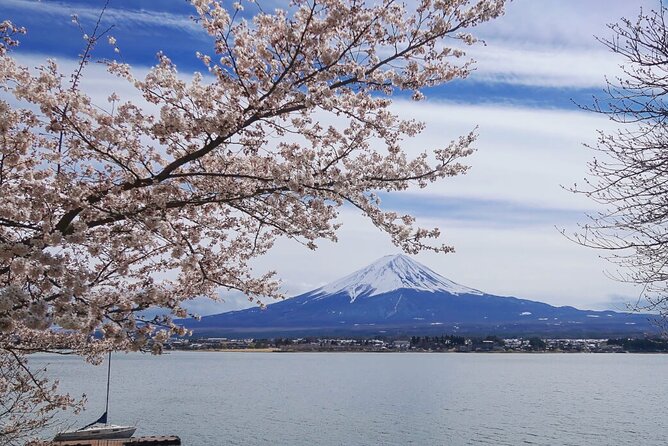
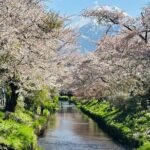
Then you hit Oshino Hakkai, a set of eight ponds in a small village setting between Lake Kawaguchiko and Lake Yamanakako. It is built around water sources from a former sixth lake, and the ponds give a gentler, more local feel to the day.
What I like about adding Oshino Hakkai to your Fuji plan:
- It breaks up the day with something that feels more “place-based” than “view-based.”
- The ponds give you reflections and texture, which can look great even when Mt Fuji is partly obscured.
- It is a nice change after shrines and park viewpoints.
The time is short, around 20 minutes, so treat it like a walking loop: arrive with your eyes open, take in the pond details, and don’t get stuck checking the same angle for too long. This is also where having a driver who can suggest a smart route through the area helps you feel efficient without feeling rushed.
Kitaguchi Hongu Fuji Sengen Jinja: ending with a calmer shrine note
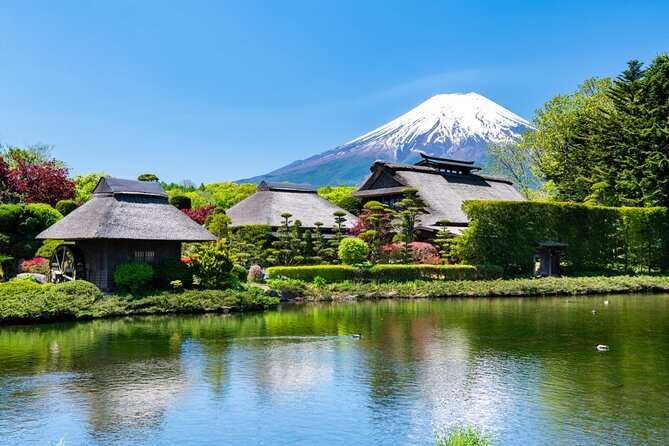
The final shrine stop listed is Kitaguchi Hongu Fuji Sengen Jinja. This adds a historical and spiritual anchor to the day. If the earlier shrine area felt like the “classic card,” this one tends to feel more like a quieter closing chapter.
This is about a 30 minute stop, so you get enough time to walk, look closely at the setting, and appreciate how many different shrine sites dot the Fuji region. If you like Japanese culture that is not just sightseeing photos, this is the kind of stop that makes the day feel complete.
Weather matters on Fuji, so plan like a realist
Here is the truth you should plan around: this experience requires good weather. Mt Fuji is famous for being moody, and even on a great day, clouds can come and go.
What you can control:
- Your attitude. Focus on the full area, not only the mountain peak.
- Your pacing. A private driver helps you use your time better when conditions change.
- Your expectations. Some clear views can happen even if Fuji is not fully exposed for the whole day.
What you can’t control:
- Cloud cover and visibility.
If the tour is canceled due to poor weather, you will be offered a different date or a full refund, so you are not stuck with a “bad luck” loss.
Photo tips and small practicals that make the day easier
Even if you are not a serious photographer, this kind of day benefits from a little planning.
Bring:
- Layers. Ridge-area weather can feel different from Tokyo, even when it is sunny.
- A power bank, because you will use your phone camera more than you planned.
- Comfortable shoes for walking at the shrine-pagoda hillside area and the pond village.
Use your driver:
Many drivers on this style of tour do more than drive. In particular, guides such as Vohra and Shaz are known for actively helping with pictures, picking good spots, and keeping the day smooth even when it is busy. That is not a small detail. It can turn a stressful day into a fun one, especially for families.
Also consider asking your driver to suggest where to eat. Lunch is not included, and some guides are known for steering guests toward local options like hoto noodle or ramen. Even if you choose your own meal plan, getting one solid recommendation can save time.
Should you book this Mt Fuji private tour from Tokyo?
Book it if you want a smooth, private day with language help and a strong hit list of Fuji-area highlights. This tour makes sense for first-timers who want iconic viewpoints without the train-bus hassle, and it also works well for families because it is built around a flexible, human-guided pace.
Skip it or reconsider if:
- Your dates are extremely tight and you cannot handle weather uncertainty.
- You hate paying extra for add-ons, because the ropeway is optional and not included.
- You prefer traveling independently by transit. If that is your style, you may already know the Fuji Five Lakes route and might not need a driver.
My take: for most people, the value is in the combination. You are paying for the comfort of being picked up, transported, and guided, while still covering the classic Fuji spots and the calmer pond village in one day. If you want a well-run day that feels easier than DIY, this is a very solid choice.
FAQ
What is the group size for this Mt Fuji private tour?
It is a private tour for your group only, priced per group for up to 3 people.
Where does the tour start, and do I get pickup?
The tour starts at Kaminari mon2-chōme-3-1 Asakusa, Taito City, Tokyo 111-0032, Japan. The tour also includes round-trip transfers from a Tokyo hotel or airport.
How long is the Mt Fuji day trip?
The duration is approximately 8 to 9 hours.
What stops are included during the day?
The stops listed include Arakura Fuji Sengen Shrine, Chureito Pagoda, Lake Kawaguchiko, Oishi Park, Fuji-Honcho Main Street, Oshino Hakkai, and Kitaguchi Hongu Fuji Sengen Jinja. The Mt Fuji Panoramic Ropeway is listed as optional.
Is lunch included in the price?
No, lunch is not included.
Is the Mt Fuji Panoramic Ropeway included?
No. Ropeway charges are not included, even though the ropeway is offered as an optional stop.
Is WiFi provided during the tour?
There is WiFi on board when available, listed as a hotspot.
Does the tour work only on clear days?
The experience requires good weather. If it is canceled due to poor weather, you will be offered a different date or a full refund.
What is the cancellation window?
Free cancellation is available up to 24 hours in advance of the experience start time for a full refund.
More Private Tours in Tokyo
More Tours in Tokyo





More Tour Reviews in Tokyo


Not for you? Here's more nearby things to do in Tokyo we have reviewed












Mount Fuji Tours, side by side.
 ★ 5.0Mt Fuji and Hakone 1-Day Bus Tour Return by Bullet TrainFrom $16326,383 reviews
 ★ 4.0Mt Fuji & Hakone Cruise, Drum Show Bullet Train 1 Day from TokyoFrom $1497,413 reviews
 ★ 4.4Tokyo Mt Fuji 5th St & Hakone Cruise Bus Tour w/Bullet TrainFrom $1545,024 reviews
 ★ 4.5From Tokyo: Mount Fuji Full-Day Sightseeing TripFrom $684,970 reviews
 ★ 4.7Mt. Fuji Tour, Hakone Ropeway, Owakudani, Lake AshiFrom $544,002 reviews
 ★ 4.2Mt. Fuji 5th Station & Hakone Cruise 1-Day Bus TourFrom $1292,381 reviews
 ★ 4.7Mt Fuji Top 5 Spots Day Tour: Arakurayama Park,Oshino HakkaiFrom $532,066 reviews
 ★ 5.0Private Tour to Mt. Fuji and Hakone (Fully Licenced Operator)From $4971,910 reviews
This tour also belongs to