
Review · TOKYO SAMURAI EXPERIENCES
Samurai Experience in Tokyo / SAMURAI’ve
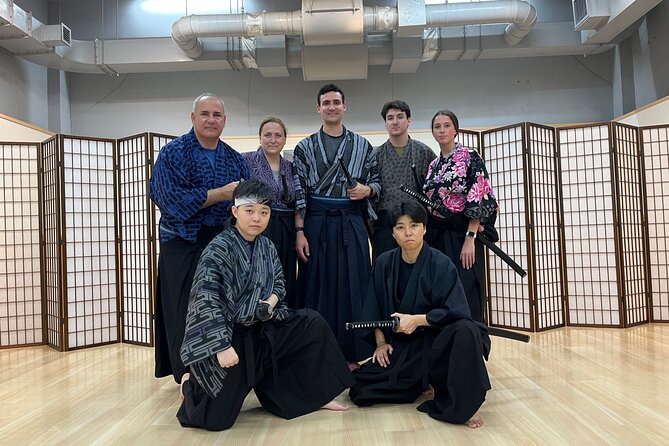
Tokyo turns samurai training into real fun. In SAMURAI’ve in Sendagaya, you get in costume, learn samurai etiquette basics, and practice with a metal practice katana, then you finish with a photo shoot. The session is run by professional performers, and I like how approachable it is, even if your Japanese is limited. If your group wants something hands-on instead of just watching, this is the kind of activity that actually sticks.
My favorite part is how much time you spend doing rather than listening. You go step by step, starting with how to wear the kimono (kitsuke), then moving into sword basics and a first-hand fighting sequence (tachimawari), with instructors staying patient and practical. One thing to watch: timing details can be confusing, so double-check your start time and arrive with buffer time, especially if your calendar link defaults to the wrong hour.
Key takeaways before you go
- Kimono kitsuke plus photos: you wear the costume and end with a dedicated photo shoot
- Metal practice katana: included, and it is a fake sword for safe practice
- Short but structured: about 1 hour with clear segments from etiquette to tachimawari
- Professional performers teach the class: instructors are samurai performers who train you in fundamentals
- Small group feel: limited to a maximum of 19 travelers
- Optional add-on performance: you can include a samurai performance for an extra fee
What This Tokyo Samurai Class Includes in 1 Hour
This is a compact, hands-on Tokyo samurai sword class built around five pieces: costume, manners, fundamentals, practice drills, and photos. The whole program runs about 1 hour, which is great if you want a memorable cultural activity without losing your entire day.
Here is the practical value of the structure. You do not start by waving a sword and hoping for the best. You begin with kitsuke, where you learn how to wear the kimono. That matters because it sets the right physical posture, and it turns the experience into a real costume session rather than a quick costume rental.
Then you move into Reigi sahou, the basics of samurai etiquette and manners. Even if you are not trying to become a scholar of traditional customs, you still learn how respect and form show up in movement and behavior. After that, the focus shifts to sword basics and the first-hand sequence, ending with a photo shoot where you get images you can actually use.
You also get a metal practice katana during the class. That included training weapon is a huge value point. Instead of just learning theory or watching someone else train, you get guided reps with the same type of tool you will be asked to use for the final sequence.
You can also read our reviews of more tours and experiences in Tokyo.



Finding SAMURAI’ve in Sendagaya (and Why Timing Matters)
SAMURAI’ve meets in Sendagaya, in Shibuya, Tokyo, at Japan, 151-0051 Tokyo, Shibuya, Sendagaya, 3-chōme312 Shibata Building B2. It is described as near public transportation, which is helpful in Tokyo where a lot of experiences hide in side streets.
Group size is capped at 19 travelers, so it does not feel like a giant assembly line. In a class like this, smaller groups usually mean more attention and more time to ask questions, especially once everyone is in costume and ready to practice.
Now the part that can ruin the day: time confusion. There are two time slots listed, 10:30 to 11:30 and 15:00 to 16:00. If your ticket or calendar reminder does not match the time you chose, you can easily show up late and miss the session. My advice is simple and boring, but it works: confirm the start time in local Tokyo time, then arrive early enough to handle elevators, stairs, and locating the B2 entrance.
Your Costume Start: Kitsuke and the Kimono Fit
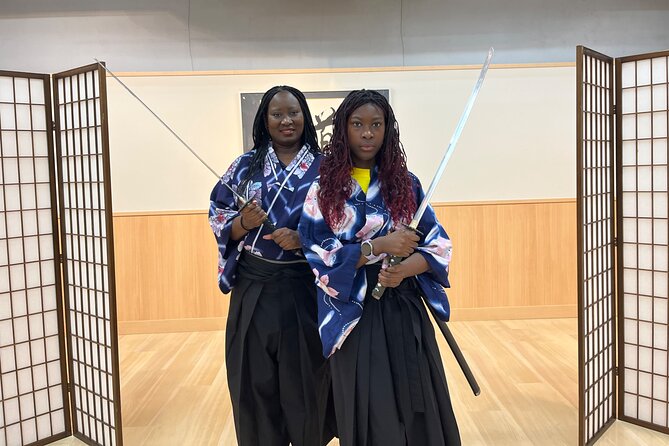
You begin with Kitsuke, which is the costume stage. You will learn how to wear the kimono, and the class helps you get dressed properly so you can move safely through the rest of the program.
This is not just for looks. A kimono setup changes how you stand and how you move your arms and body. When you later practice sword basics and tachimawari, you want your posture to feel stable. The costume part also makes the experience feel like an actual role you step into, not just a quick prop moment.
I also like that the program is designed to look good for photos at the end. You are not thrown into drills right away. You get your costume and your bearings, then your training begins.
Reigi Sahou: Samurai Etiquette and Manners in Plain Practice
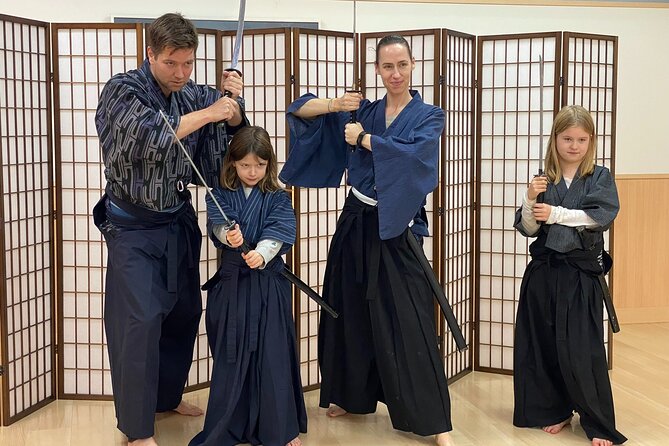
After kitsuke, you learn Reigi sahou, the basics of samurai etiquette and manners. This part can sound ceremonial on paper, but in practice it is a practical training foundation. When you are learning sword movements, you need discipline. Etiquette gives that structure.
In the class, you are not expected to be perfect. You learn how to behave and how to use respect and form while training. It also helps the group stay orderly when everyone is wearing costumes and holding a practice sword.
A key detail: the instructors are described as professional samurai performers. That experience usually shows in how they run the session. The vibe tends to be friendly, patient, and focused on safety and correct form, which matters more than speed in this kind of class.
Basic Lesson: Your First Katana Moves
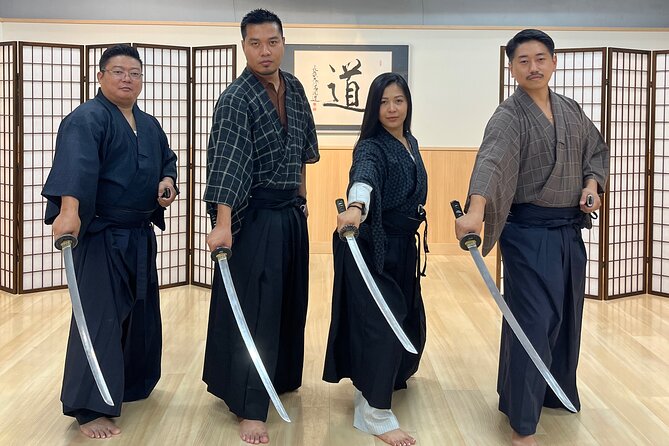
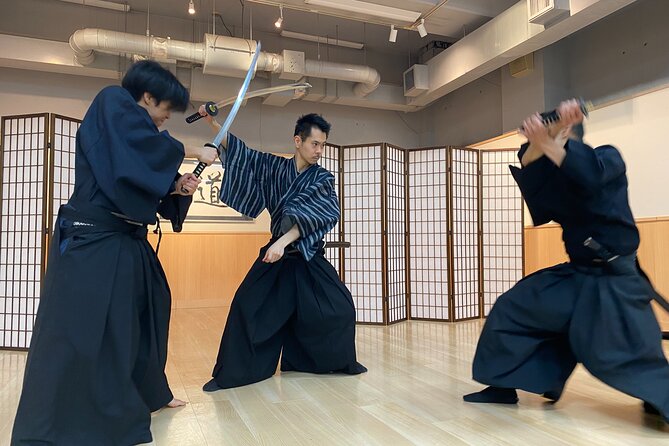
Next comes the Basic lesson, where you learn the basic moves of samurai sword fighting. This is where you trade curiosity for muscle memory. You follow the instructor, practice the motions, and then apply them as the session builds.
One helpful point from the experience details is the sword itself. You use a katana(metal fake sword). From the class descriptions and participant comments, it is treated as a training tool, with a focus on safe practice rather than real cutting. That means you can pay attention to form, timing, and control.
If you worry about being a beginner, don’t overthink it. This is built for most travelers to participate. The goal is learning the fundamentals, not proving you can fence like an action movie character.



Tachimawari: The First-Hand Fighting Sequence
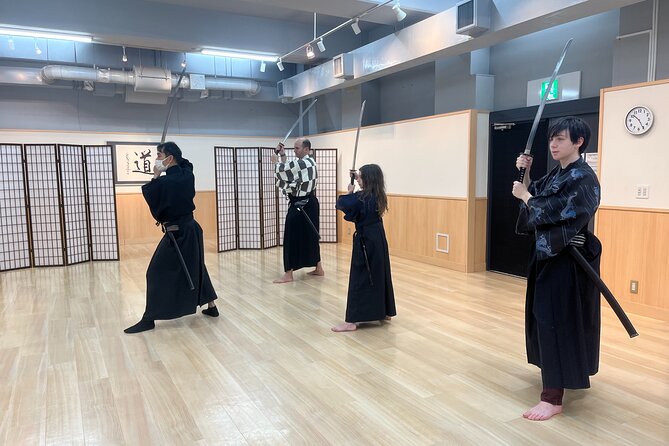
The highlight segment for many people is Tachimawari, where you experience samurai sword fighting first-hand. This is the part where the class finally feels like something you can put into your memory instantly.
In a structured session, tachimawari usually means you practice a connected sequence rather than one isolated move. You likely combine what you learned in the basics into a fuller movement pattern. That is exactly why it feels fun: you stop doing drills and start performing a mini-routine with direction.
This is also where you get to ask questions. When the instructor calls out corrections, you benefit most if you ask right there, while you can still feel the movement in your body.
From the way the class is described, the instructors are not just there to manage the group. They actively teach, and they are presented as professional performers who handle training in shows and events. You can feel the difference in how a teacher keeps you safe while still letting you try the real thing.
The Photo Shoot: Getting Your Samurai Moment Captured
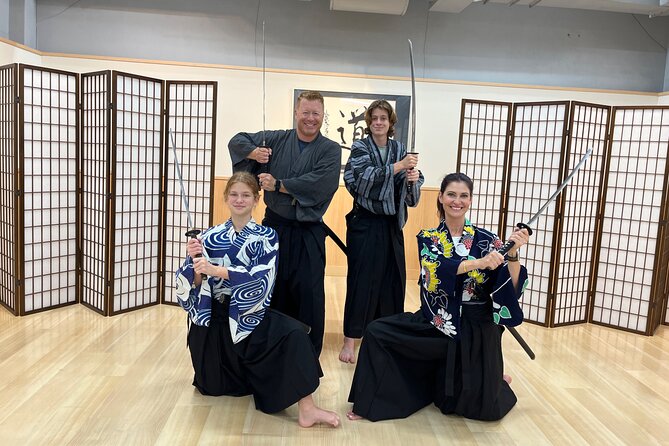
You finish with a photo shoot. This is one of the best parts of a costume-based activity because it turns effort into something you can keep. You spend the hour learning and practicing, then you get images that show the kimono, the stance, and the practice look of the sword.
Participant comments emphasize that instructors and assistants take many photos for posting. That makes sense, since most people arrive on vacation without a friend who knows how to frame a shot in a costume and keep you from wobbling in boots or sandals.
Practical takeaway: treat the photo moment as part of the training rhythm. Once you are done practicing, you will want to stay relaxed so the photos look confident, not like you just survived a gym class.
Optional Samurai Performance Add-On: Worth It?
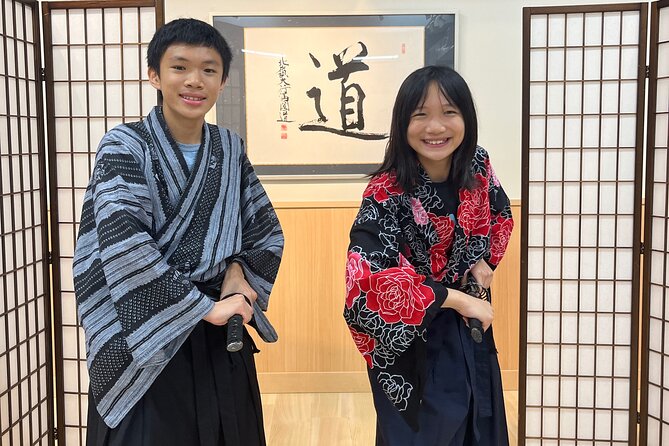
There is an optional way to extend the experience with a samurai performance by the instructors during your session, with additional fees. The class details frame this as something they can incorporate if you are interested.
Should you add it? If you are the type who wants the full arc, costume and training plus a performance afterward can be a satisfying pairing. It gives you a chance to see how the skills and stage presence translate from class mode into show mode.
If you prefer to keep your schedule flexible, you can skip it and still walk away with a hands-on hour plus photos. Either way, you will leave with more than a souvenir. You will leave with a sequence you learned and practiced.
Price and Value: Is $71.85 Fair for Tokyo?
The price is $71.85 per person for about 1 hour. On average, it is booked around 70 days in advance, which tells me it is a popular slot for people planning Tokyo days in advance.
Here is the value breakdown that matters in real terms:
- You get samurai costumes included
- You get a katana(metal fake sword) included
- You get guided instruction from professional performers
- You get a photo shoot included
- You travel in a small group, max 19, which can improve attention
In Tokyo, experiences that include both equipment and costume can cost more than you expect. Here, the pricing makes sense because it bundles the things that usually add extra fees on other tours. Group discounts are also mentioned, so if you have a small group traveling together, it may be easier to make the price feel lighter.
The only downside is the time limit. At 1 hour, you are not going to master swordsmanship. You are going to learn the basics and experience a sequence safely. That is still a lot for one session, but it is important to calibrate expectations so you feel satisfied rather than disappointed.
Who Should Book SAMURAI’ve (and Who Might Skip It)
This class is best for people who want an active cultural experience in Tokyo. It is a strong fit if you:
- Want hands-on sword practice with a metal practice katana
- Like dressing up and getting photos in a costume setting
- Prefer small-group instruction over large demonstrations
- Travel with family, teens, or anyone who learns best by doing
It is also a good choice if you enjoy questions. The class is set up so you can ask plenty of questions while you learn.
You might skip it if you expect a long, museum-style deep dive into Japanese history. This is not that. It is a training session with etiquette basics, sword fundamentals, and an end-to-end experience built for participating.
Quick Practical Tips So You Don’t Lose Your Slot
Based on what can go wrong, the key is timing. Confirm the start time for the session you booked, then arrive early enough to find the B2 meeting point without rushing.
Second, mentally prepare for a full costume experience. You will be in kimono throughout the practice and photos, so being calm and flexible helps. The instructors aim to be patient, but you still get better results when you follow their lead and keep your movements controlled.
Third, use the class structure. Kitsuke first. Etiquette second. Basics third. Tachimawari next. Photo shoot last. If you treat each stage as a step you are supposed to learn, the hour feels complete.
Should You Book SAMURAI’ve in Tokyo?
If you want one memorable, hands-on experience in Tokyo that includes costume, guided sword practice, and a photo shoot, I think SAMURAI’ve is a smart booking. The included kimono, the practice katana, and the professional performer teaching style are the big reasons it holds value at $71.85.
Book it especially if your group includes people who learn best by doing. And if you are sensitive to missing start times, double-check your session time early. Once you are there on the right hour, it is the kind of activity that feels fun, safe, and genuinely different from the usual sightseeing loop.
FAQ
How long is the Samurai Experience in Tokyo at SAMURAI’ve?
The experience is about 1 hour.
What times are available for the class?
The listed times are 10:30A.M. to 11:30A.M. and 3:00P.M. to 4:00P.M.
Where is the meeting point?
The meeting point is SAMURAI EXPERIENCE in Tokyo/侍体験/Sword Fighting Class “SAMURAI’ve”, Japan, 151-0051 Tokyo, Shibuya, Sendagaya, 3-chōme312 Shibata Building B2.
What is included in the experience?
It includes samurai costumes and a katana(metal fake sword).
What does the program include?
The program includes kitsuke (wearing the costume), reigi sahou (samurai etiquette and manners), a basic lesson (basic moves), tachimawari (first-hand sword fighting experience), and a photo shoot.
Do you use a real sword?
No. You use a katana(metal fake sword) for the class.
Is there an option to add a samurai performance?
Yes. There is an option to incorporate a samurai performance by the instructors during your experience for an additional expense.
How large is the group?
The experience has a maximum of 19 travelers.
Is this activity near public transportation?
Yes, it is described as near public transportation.
What is the cancellation policy?
Free cancellation is available up to 24 hours in advance for a full refund.
More Tour Reviews in Tokyo
Not for you? Here's more nearby things to do in Tokyo we have reviewed












Tokyo Samurai Experiences, side by side.
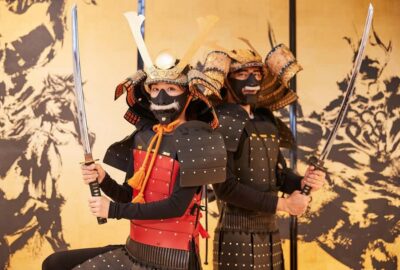 ★ 4.6Samurai Ninja Museum Guided tour and ExperienceFrom $271,010 reviews
 ★ 5.0Samurai Sword & Archery Class from Samurai DescendantFrom $193603 reviews
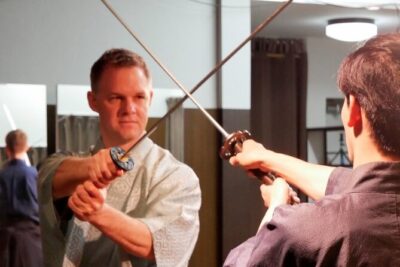 ★ 5.0Best Samurai Experience in TokyoFrom $65458 reviews
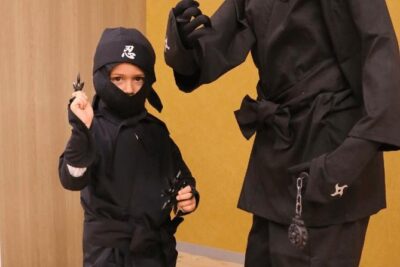 ★ 5.0Ninja Experience (Family Friendly) at Samurai Ninja Museum TOKYOFrom $47441 reviews
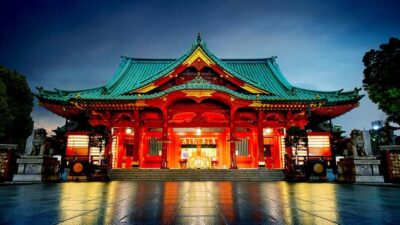 ★ 4.6Samurai Entertainment Night Show in Kanda ShrineFrom $41417 reviews
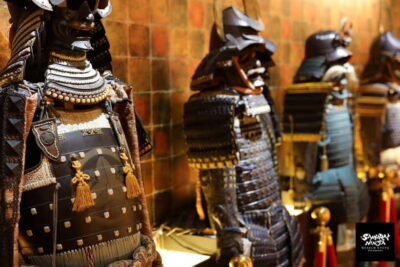 ★ 4.8Samurai Ninja Museum Asakusa: Samurai Sword Lesson & TourFrom $63306 reviews
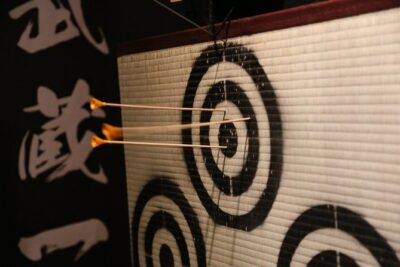 ★ 5.0Ninja Samurai 2-hour hands-on lesson by Japanese master in TokyoFrom $86194 reviews
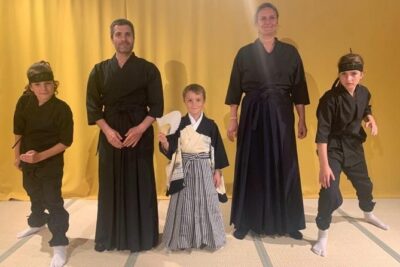 ★ 5.0Samurai Sword Experience (Family Friendly)at SAMURAI MUSEUM TOKYOFrom $65168 reviews
This tour also belongs to