
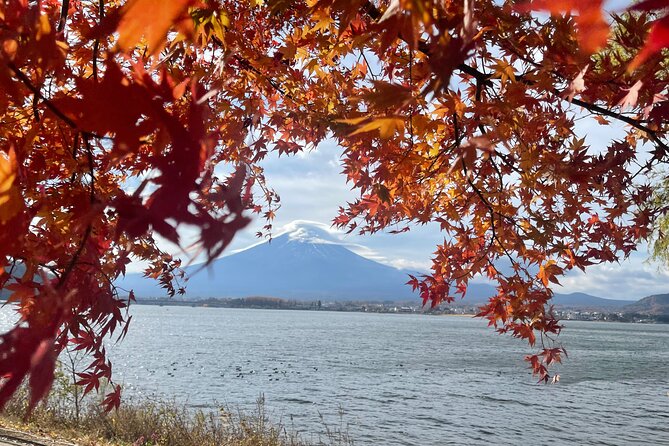
Review · MOUNT FUJI TOURS
Mt. Fuji Private Tour with English Speaking Driver
Mt. Fuji looks different at every stop. This private day tour bundles the big, iconic moments around the mountain into one easy plan, with a car and an English-speaking driver who can shape the day around what you care about most. I like that you can aim for close-up viewpoints at 5th Station, then switch gears to lake scenery and shrine-and-park views.
Two things I really like here are simple. First, the tour is genuinely private with pickup and drop-off in Tokyo, so you are not stuck with fixed timing like a bus day. Second, you get an English-speaking guide in the car, and the feedback attached to this experience repeatedly calls out drivers such as Irfan, Shahzaad, Shiro, Meebi, and Muneeb for being clear, helpful, and focused on making the day flow well.
One possible drawback to plan for: entrance fees and some key costs are not included, plus the mountain road and access can change with weather and season. If you’re unlucky with clouds, Mt. Fuji may play hide-and-seek, and your views can be less dramatic than the photos.
Key takeaways before you go
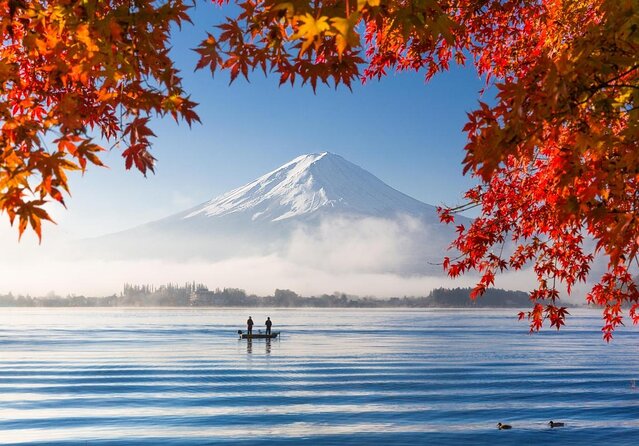
- Private and customizable: your route is flexible, not a rigid bus itinerary.
- Real Mt. Fuji proximity: 5th Station is the closest car-access point to the summit area.
- Chureito Pagoda viewpoint time: Arakurayama Sengen Park gives you a famous Fuji angle with stairs and decks.
- Lake time that you can shape: the Kawaguchiko area lets you mix views, ropeway time, and downtime.
- Oshino Hakkai water stops: spring ponds tied to Mt. Fuji’s world heritage water story.
- Optional Gotemba shopping: useful if you want a comfortable finish, not required for the core experience.
Price and logistics for a private Mt. Fuji day from Tokyo
This tour is priced at $464.71 per group for up to 3 people. That matters, because private tours in Japan can get expensive fast. Here, the cost is mainly about splitting the vehicle, driver, and Tokyo pickup, while you handle your own meals and site fees.
Duration is listed as 8 to 10 hours, which is the right length for a Fuji day if you want more than one scenic area. You’re not just doing a quick photo stop and rushing off. You’re also not trying to cram five places into a 4-hour sprint.
The included basics are practical: an air-conditioned vehicle, gas and highway tolls, meet-and-greet, pickup and drop-off in Tokyo, and an English-speaking driver/guide. You also get a mobile ticket. That sounds small, but it reduces friction on the day.
Keep your expectations clean. This is not an all-inclusive package where every snack and ticket is covered. Food and beverage are on you. Entrance fees for activities are also on you. And the Fuji Subaru Line 5th Station toll is 2100 yen and is not included.
You can also read our reviews of more private tours in Tokyo
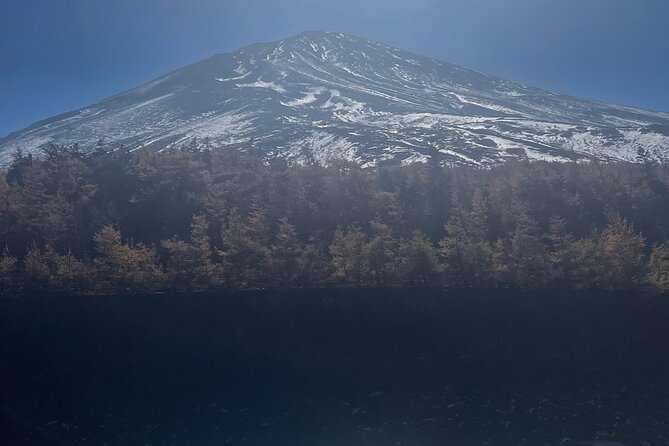
Mt. Fuji Subaru Line 5th Station: the closest car access and the big view bet
The day’s anchor stop is Mt. Fuji Subaru Line 5th Station, which sits around 2200 meters and is the closest car-access point to view the mountain’s upper shape. If you’re the type of traveler who wants the real “wow” moment, this is where it usually happens. You can also get city views from viewpoints in the area, which adds a different angle beyond just staring at the peak.
There’s also a practical reality: 5th Station is not just a lookout. It is interesting for hikers, and you’ll feel the mountain energy here. If you like walking for short stretches and taking photos from different viewpoints, you’ll use the time.
Your allotted time is about 30 minutes, and that can be enough if the weather cooperates. If clouds roll in, 30 minutes can feel short, but that is true of every Fuji day. If you have flexibility, you can ask the driver to prioritize viewpoint time, then keep the rest of your schedule efficient.
Here’s the key season-and-road consideration you should take seriously: the Fuji Subaru Line is reached via a scenic toll road, and the toll cost is 2100 yen (not included). In winter it may be partially closed due to heavy snow. During much of the climbing season (July 5 to September 10, 2024), the road is closed to private vehicles, and shuttle buses operate between designated parking lots at the base and the 5th Station.
What does that mean for you? If your travel dates are in the climbing window, your exact access route could shift. A private tour still helps because you’ll have an English-speaking driver who can guide you through the plan, but the geography rules do not change for anyone.
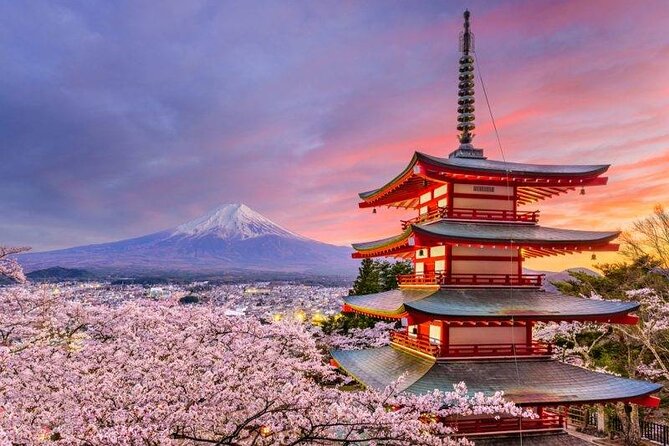
Arakurayama Sengen Park and Chureito Pagoda: the famous Fuji angle with stairs
Next comes Arakurayama Sengen Park, a peace memorial park that mixes Shinto shrines and viewpoints. The park is known for a lot of steps, up to around 400 stairs, so if you’re not into stair workouts, wear shoes that forgive you for it.
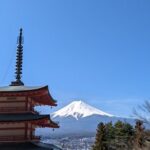
The payoff is the Fuji vista. The viewpoint deck gives you that classic “Fuji above the pagoda” composition, and you’ll see different angles of the mountain at varying elevations across the park. The Chureito Pagoda itself is built in memory of soldiers and civilians lost in World War I and II. That gives the place more meaning than just a photo background.
Time-wise, you get about 45 minutes, and that’s a workable amount if you move at a moderate pace. You can do the stairs, stop for photos, and still have time to look around without rushing.
One more small tip: this is a high-visibility photo stop. If the mountain is clear, you’ll want to take your shots early and then enjoy the park. If it’s hazy, take photos anyway, then shift your focus to the shrines and the memorial feel. Your experience will still land.
Lake Kawaguchiko: choosing views, ropeway time, and a slower pace
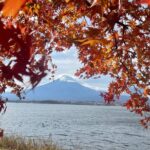
Then you shift from mountainside viewpoints to the Lake Kawaguchiko area. This is one of the most popular parts of the Fuji Five Lakes region, and the draw is simple: water reflections and a wider “Fuji in context” look.
You get about 2 hours here, which is generous for a day tour. It gives you breathing room to match your energy level. The plan highlights the Kachi Kachi Ropeway, which rises to an observation point near the summit of Mount Tenjo. From there, you can see Lake Kawaguchiko and Mount Fuji.
This is also a place with hot spring options nearby. The tour does not include a specific soak, but the region is set up for relaxing while you wait for clearer sky breaks.
A useful way to think about Kawaguchiko time: if you want more elevation views, prioritize the ropeway. If you’d rather stroll and keep it easy on your legs, aim for viewpoints around the lake and save your budget. Either way, you’ll be using this stop for the “long look” at Fuji, which is different from the intensity of 5th Station.
Since Lake Kawaguchiko tickets are not included, bring a little budget mindset. Ropeway and any paid activities should be paid separately.
Oishi Park: flower seasons and a short walk that feels worth it
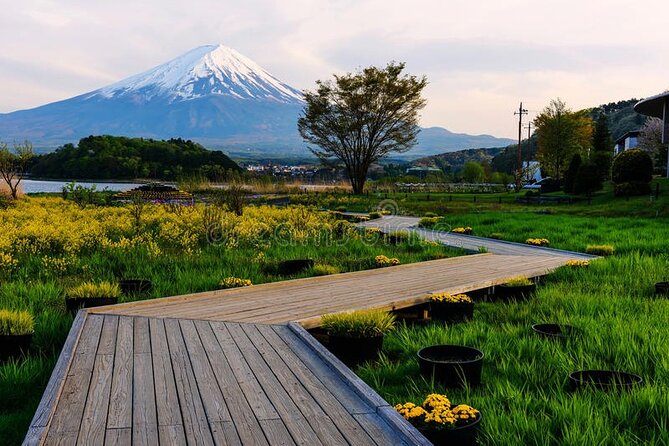
After Kawaguchiko, you head to Oishi Park, located on the north shore of the lake. This is one of those spots where the details matter because the views change with the season.
Oishi Park has a 350 meter walking path with flowers planted along it. The highlights by season are:
- Early April to late May: moss phlox spreads out like a pink carpet
- Late June to late July: lavender blooms
- Mid to late October: kokia shrubs show red autumn colors
You also get a straightforward payoff. From the park you can enjoy a beautiful view of Mt. Fuji and Lake Kawaguchiko together. Even if Fuji hides, the park layout can still make your photos look intentional.
The time here is about 30 minutes, and that’s perfect for a short loop plus a couple of good photo stops. If you’re traveling with mixed mobility in your group, this stop is more “manageable walking” than a stair-heavy park.
There’s also a practical bonus. The park is home to the Kawaguchiko Natural Living Center, where you can enjoy making fruit jam and an all-you-can-eat cherry and blueberry picking course. A café is also mentioned, including specialty blueberry ice cream. Those are optional paid experiences, but they’re a nice way to turn the scenic day into something hands-on.
More Tokyo tours and experiences for the shortlist

Oshino Hakkai: eight springs tied to Mt. Fuji’s water story
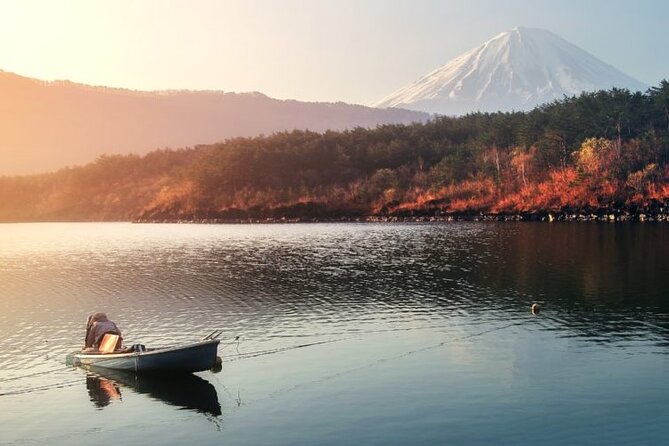
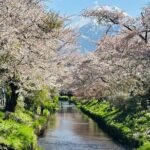
Next is Oshino Hakkai, one of the most interesting “Fuji isn’t just a mountain” stops on the route. Oshino Hakkai refers to eight springs. The aquifer water from Mount Fuji rises to the ground here, creating the springs you can see and photograph.
It’s also listed as a Natural monument of Japan and part of the Mount Fuji World Heritage Site, which is helpful context if you like understanding why a place is protected beyond aesthetics.
The tour allocates 45 minutes for Oshino Hakkai. That is enough to walk the area, pause at the ponds, and visit the small museum loop without turning it into a marathon.
A specific seasonal wow moment is mentioned in the plan: the “Diamond Fuji” phenomenon. This happens when the rising or setting sun lines up perfectly with the peak, making the mountain appear to cup the sun. It can only be seen from certain places due to the Earth’s position.
Even if you miss that exact timing, the area is still worth it because the ponds can look very crisp, especially in winter. There is also an open-air museum, the Hannoki Bayashi Shiryokan, around the largest pond. It has a small admission fee, and the Waku Pond is described as especially clear and clean.
Again, entrance for the museum is not included, so plan to add a little cash or card time for that.
Gotemba Premium Outlets: optional, practical, and good if weather changes
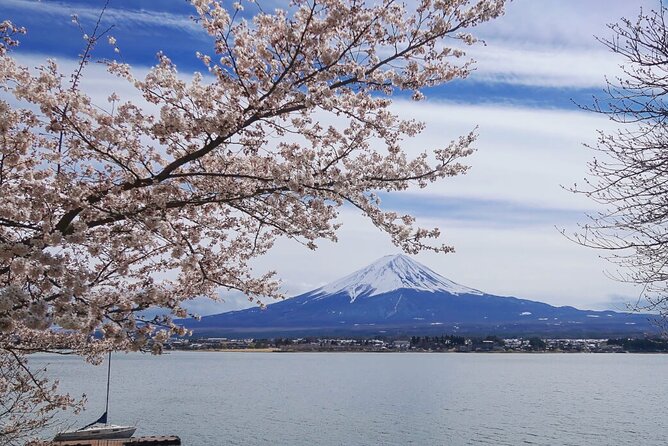
To close the day, you can include Gotemba Premium Outlets. This stop is optional, and you should talk it through with your driver in the morning. If your sky is clear, you might want more Fuji time. If it’s cloudy or rainy, the mall can be a comfortable way to end without feeling like you wasted the day.
Time allotted is about 1 hour, and entrance is free. That makes it a low-risk addition if you want a simple finish and easy snacks.
A word to the wise: if your plan includes shopping, keep your Fuji photos early in the day. Weather can shift, and you do not want to spend peak visibility time browsing shoes.
Driver experience: English help that makes the day feel smooth
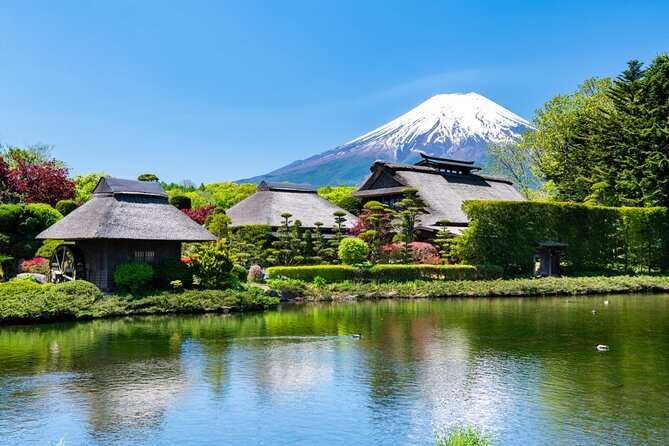
This tour lives or dies on the driver. The included English-speaking driver/guide is not a minor perk. It changes what you can do with a day that has limited time windows at multiple stops.
The feedback attached to this experience calls out drivers who were described as professional and attentive, with clear explanations at each stop. Names that show up include Irfan, Shahzaad, Shiro, Meebi, Muneeb, Mulky, and Mr Malik. Some were praised for helping guests find great food options and for adjusting the day so the schedule felt balanced rather than rushed.
One specific detail that stands out from the feedback is that some guides used a mix of guided talking and a guided voice approach so the listening rhythm stayed comfortable. In plain terms, you do not want a lecture. You want context that helps your photos and understanding, then breathing room.
This is also a customizable day tour. That matters because you might have a specific goal. You might want more time at Kawaguchiko if the Fuji is clear over the lake. Or you might want to skip the shopping stop and use that hour for viewpoints or extra walking at Oshino Hakkai.
If you do have requests, make them early in the day. The best outcomes are when the driver can plan around road timing and stop coordination.
How much walking is real here, and who this suits best
This route has a mix of easy and moderate walking. Arakurayama Sengen Park can involve a staircase climb, up to about 400 stairs. That’s not “end of the world,” but it’s real. Oishi Park has a short, defined walking path around 350 meters. Oshino Hakkai is mostly a walkable pond area within 45 minutes.
If you’re traveling with kids or older adults, you can still do this, but decide where you want to invest energy. The 2-hour Lake Kawaguchiko window is your friend for pacing. If anyone needs a slower day, it’s easier to rest near the lake than to scale stairs.
The tour also fits different travel styles. It suits:
- Photo-focused travelers who want classic Fuji angles at 5th Station and the Chureito pagoda viewpoint
- People who want both nature and culture, with shrines, memorial context, and world heritage water springs
- Groups that want control. Private vehicle + customizable stops means less stress and more “we choose” energy
Value check: when $464.71 per group makes sense
Let’s talk numbers. At $464.71 per group up to 3, you’re effectively splitting a private vehicle and driver cost across your group. If you travel as three people, it roughly becomes $155 per person. If you travel as two, it’s closer to $232 per person. If you’re solo, you’d want to confirm group rules with the provider.
Either way, what you’re buying is time, efficiency, and the ability to hit multiple Fuji locations in one day from Tokyo. Add to that included Tokyo pickup and drop-off, English driver/guide, and tolls/highways paid, and the value becomes clearer.
The catch is that entrance fees and the 5th Station toll add on top. You also pay for meals. But those are common add-ons for Japan day tours. You just need to budget a bit so you do not feel surprised later.
From the feedback patterns, the most praised aspect is how the driver shaped the day. People talked about comfort in the private vehicle, clear descriptions at each stop, and the sense that the guide made it feel like a plan, not just a ride. That’s what you should look for when deciding if a private tour is worth it for you.
Should you book this Mt. Fuji private tour?
Book it if you want a full Mt. Fuji day without the hassle of trains, transfers, and decision fatigue. This is especially a good match for couples, families, and small groups who want classic viewpoints plus flexible time at Lake Kawaguchiko.
Skip it or at least rethink your priorities if your travel dates are in periods where road access to 5th Station may be altered by closures or shuttle operations. You can still do the tour, but your exact logistics may shift, and it helps to have a flexible mindset about mountain access.
My final take: if you care about seeing multiple sides of Fuji in one day, with an English-speaking driver and a private vehicle, this is strong value for the price. Just remember that your biggest variable is weather, so plan your day around options, not one single photo outcome.
FAQ
How long is the Mt. Fuji private tour?
The tour is listed as 8 to 10 hours (approx.).
What is included in the price?
The included items are meet-and-greet, an air-conditioned vehicle, gas/petrol, highway/tolls, an English speaking driver/guide, and pickup and drop off in Tokyo, plus a mobile ticket.
What is the group size and price?
The price is $464.71 per group for up to 3 people.
Are entrance fees included?
No. Food and beverage are not included, and entrance fees for activities and stops are not included.
How much is the Fuji Subaru Line 5th Station fee?
The admission fee for the Fuji Subaru Line (5th Station) costs 2100 yen and is not included.
Is Gotemba Premium Outlets included?
Gotemba Premium Outlets is optional. If you want it in the itinerary, you should discuss it with the driver in the morning. The time is 1 hour.
What happens if weather is poor?
The experience requires good weather. If it is canceled due to poor weather, you will be offered a different date or a full refund.
More Private Tours in Tokyo
More Tours in Tokyo





More Tour Reviews in Tokyo


Not for you? Here's more nearby things to do in Tokyo we have reviewed












Mount Fuji Tours, side by side.
 ★ 5.0Mt Fuji and Hakone 1-Day Bus Tour Return by Bullet TrainFrom $16326,383 reviews
 ★ 4.0Mt Fuji & Hakone Cruise, Drum Show Bullet Train 1 Day from TokyoFrom $1497,413 reviews
 ★ 4.4Tokyo Mt Fuji 5th St & Hakone Cruise Bus Tour w/Bullet TrainFrom $1545,024 reviews
 ★ 4.5From Tokyo: Mount Fuji Full-Day Sightseeing TripFrom $684,970 reviews
 ★ 4.7Mt. Fuji Tour, Hakone Ropeway, Owakudani, Lake AshiFrom $544,002 reviews
 ★ 4.2Mt. Fuji 5th Station & Hakone Cruise 1-Day Bus TourFrom $1292,381 reviews
 ★ 4.7Mt Fuji Top 5 Spots Day Tour: Arakurayama Park,Oshino HakkaiFrom $532,066 reviews
 ★ 5.0Private Tour to Mt. Fuji and Hakone (Fully Licenced Operator)From $4971,910 reviews
This tour also belongs to