
Review · TOKYO SAMURAI EXPERIENCES
Tokyo: Samurai Adventure! Authentic Sword Action Experience
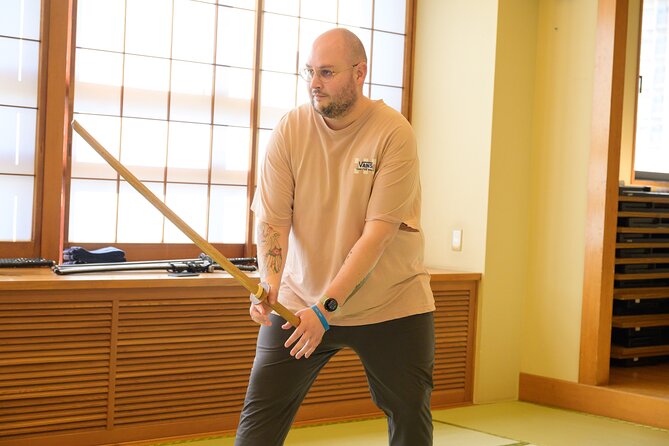
Samurai practice in Tokyo can be surprisingly fun. This hands-on workshop brings you close to training sword technique, live demonstrations, and a real performance-style scene. It is taught by Dai and Kume, professional instructors with action-actor experience.
I love that beginners can join, since the class starts with warm-ups and simple fundamentals like gripping, holding, and swinging. I also like the mix of watching first, then practicing yourself with wooden swords, and finishing with photos that actually preserve what you learned. Safety is built in, and you are not thrown into chaotic sword combat.
One thing to consider: it is only about 1 hour, so you will learn the basics and get a taste of the action, not a full long-form mastery session. If you want deep instruction for an extended time, you may wish you had a longer private lesson.
Key Highlights You Should Not Miss
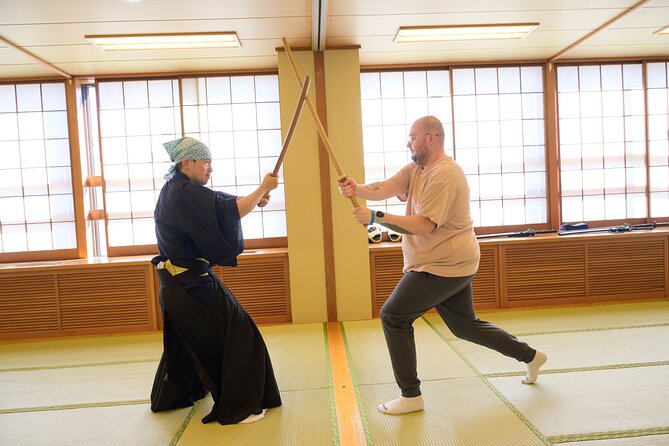
- Dai and Kume teach the forms, with a performance mindset that makes the moves feel real.
- Training swords, not live blades, so you can practice safely and confidently.
- Group class includes Japanese students and aspiring performers, so you get cultural context while you learn.
- A partner sequence with a professional samurai, built around an action-style scene.
- Photo session with the samurai, so you leave with something more than a selfie blur.
- Central meeting point in Tsukuda (Chuo City), handy for Tokyo Station, Ginza, and Tsukiji areas.
A Samurai Workshop You Can Do Without Prior Training
Tokyo has no shortage of “samurai experiences,” but not all of them let you actually put the sword moves into your hands. This one is different because it is built like a real class, starting with the basics and letting you practice with wooden swords right away.
The tone also matters. The instructors, Dai and Kume, bring that action-actor professionalism, but the vibe stays friendly and practical. You will learn what to do, then you will do it, with coaching along the way.
And yes, it is okay if you only want to observe. Watching the demonstration up close can be satisfying on its own, especially if you are curious about posture, distance, and rhythm.
You can also read our reviews of more tours and experiences in Tokyo.



Dai and Kume, the Instructors Behind the Moves
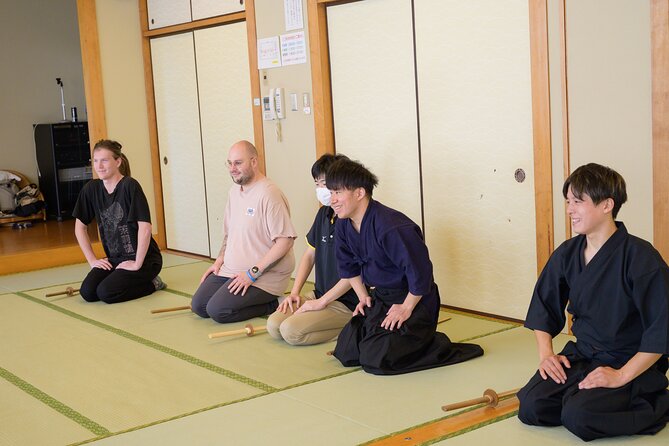
You will meet Dai and Kume, the instructors who lead the training and demonstrations. Their background comes through in the structure of the session: warm-ups first, then technique breakdown, then a partner scene that feels like a staged action sequence.
From the reviews, the biggest theme is professionalism mixed with warmth. People call them polite and engaging, and they consistently highlight how much attention Dai and Kume put into making the practice feel enjoyable, not intimidating.
There is also a cultural-awareness angle. In a few reviews, participants mention interacting with the instructors beyond the sword part, including small chats and guidance that makes the experience feel more like a lesson with people than a show you sit through.
Training Swords and Safe Practice, So You Can Focus
Let’s talk safety, since this is a big part of why the workshop works. You do not do real sword fighting. Instead, you practice controlled samurai movements using training swords that are provided for you.
That matters because it lets you focus on the technique that people actually notice in samurai performance: grip, posture, timing, and the clean movement of drawing and sheathing. When the stakes are not about contact, you can spend your energy on doing the form correctly.
It also helps your confidence. Even as a total beginner, you are not worried about doing something dangerous. The session is designed for “hands-on learning,” not athletic survival.
Group Class vs Private Lesson in Central Tokyo
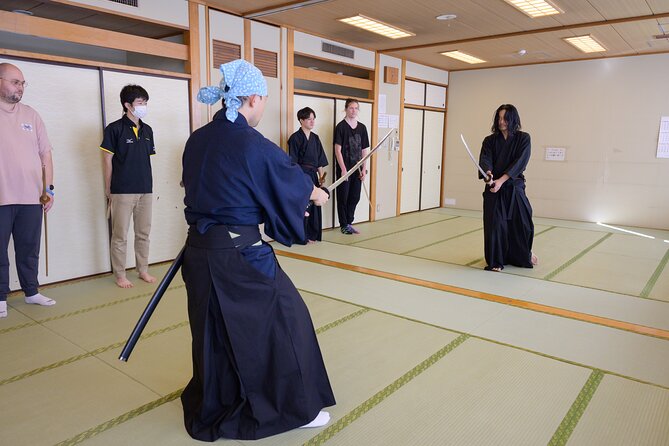
You can choose between a group class and a private lesson, and that choice affects how the hour feels.
In the group format, you join a mixed setting with aspiring Japanese actors learning samurai action. You watch first, then you practice alongside them, and you have chances to interact with Japanese students. If you like learning through conversation and sharing the room with locals, this is the more social option.
In a private lesson, you get a more direct coaching experience. The time stays short either way, but private lessons often feel more targeted because you can ask questions and receive more immediate correction. If you are nervous about speaking up, or you want the session to match your comfort level, private can be the better fit.
Either way, the workshop is capped at a maximum of 15 travelers, which is small enough that the instructors can keep an eye on what you are doing.
The Typical 1-Hour Flow, From Warm-Ups to a Scene
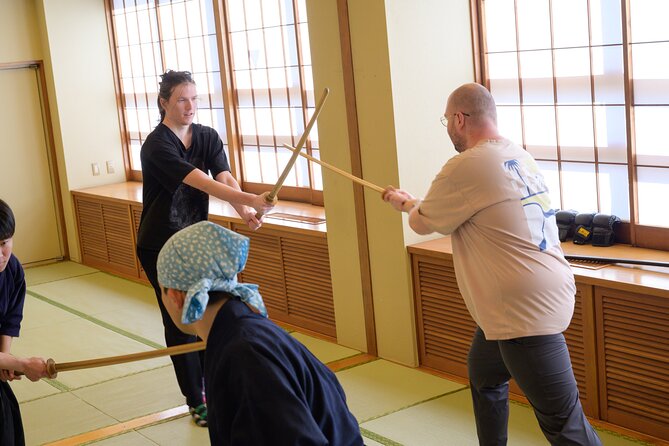
This class is approximately 1 hour, and it runs in a logical order. You do not waste time wondering what happens next.
Here is the flow as it is described for the workshop:
1) Warm-ups and setup
You start with a warm-up, then you get oriented to how the training will work.
2) Fundamentals with the sword
You practice the basics, including gripping, holding, and swinging. This is where beginners usually relax, because the moves are coached in a way that feels doable.
3) A demonstration up close
Along the way, you will see a powerful samurai demonstration right in front of you. Watching up close helps you connect the theory to what the movements look like when done with confidence.
4) Pair practice with a professional
Once the basics click, you pair up with a professional samurai for an action-style scene. This is the moment that turns “learning moves” into “experiencing the drama.” It is also where your timing matters, since you are practicing as part of a sequence.
5) Photo session
At the end, there is a photo session with the samurai. It is one of those small add-ons that can make your memory clearer later, especially if you are trying to remember details from a trip packed with sights.
Because the session is short, each step is streamlined. You get enough instruction to participate, then you move into the action quickly.



What You Actually Take Home (Beyond Photos)
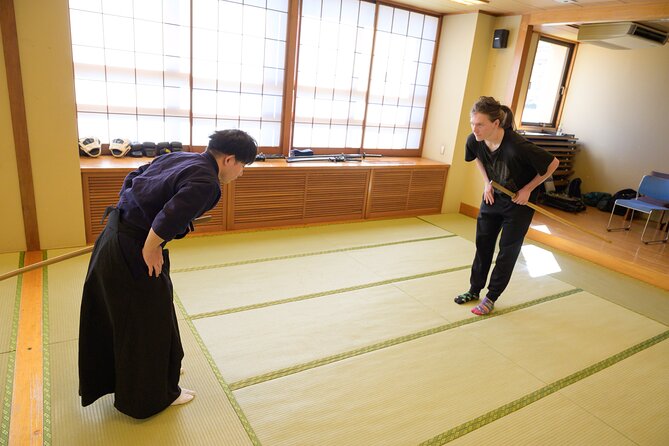
It is easy to think a samurai class is just a fun activity. But the value here is in muscle memory and clarity.
You will walk away with:
- A better sense of stance and grip, not just random swinging
- A feeling for the rhythm of sword handling
- An appreciation for how the movements are built to look controlled and intentional
Also, the included intro to history and the live training demonstrations give your practice context. Even if you are not becoming a samurai scholar, you are connecting the movements to something bigger than a “cool trick.”
If you like to travel with a learning mindset, this workshop hits nicely. If you mostly want entertainment, it still delivers, because the partner scene and close demonstration are genuinely exciting.
Where the Workshop Starts: Tsukuda (Easy for Tokyo Sightseeing)
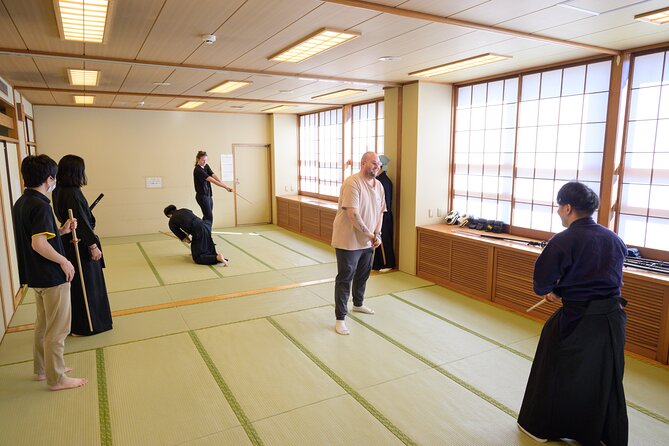
The meeting point is at 2-chōme-15-3 Tsukuda, Chuo City, Tokyo 104-0051, Japan. The location is described as central and accessible from Tokyo Station, Ginza, and Tsukiji.
In practical terms, that is what you want in Tokyo. You are not spending your whole limited time in a long commute just to do one experience. With a workshop of about an hour, keeping logistics reasonable makes a real difference.
The session also notes it is near public transportation, which helps if your plans move around day to day.
Value for the Price: What $32.84 Really Buys You
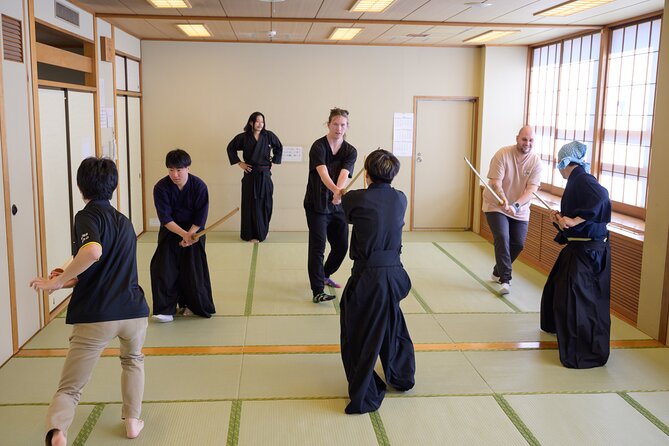
At $32.84 per person for about one hour, you are paying for a compact but real training experience. That price includes more than just standing and watching.
What you get included:
- Introduction to samurai history
- Live samurai training demonstrations
- Hands-on swordsmanship practice using wooden swords
- A photo session with the samurai
What you do not get:
- Meals and beverages
- Transportation to and from the workshop
- Kimono dressing
So where is the value? It is in the combo. You are not only getting a demonstration, you are also practicing with instruction, and you end with photos. Many “performance-only” activities cost less on paper, but they leave you with less you can remember with your body, not just your camera.
Also, a smaller group size (up to 15) matters. In a class setting, that is part of why you feel like someone is actually watching and correcting you.
Finally, booking seems to be fairly popular, with an average booking time of about 39 days in advance. If you are traveling in a busy window, earlier booking is a good idea.
The One Drawback: It Is a Taster, Not Training for a Tournament
This workshop is built as a sampler. You do the fundamentals, you get coached, you have a chance to practice, and you participate in an action-style scene. Then it is done.
So if your goal is serious, long-term skill building, you might finish thinking, I want more time with the sword. That is normal, and it is not a bad sign. It is just how a one-hour experience is designed.
Also, the workshop does not include kimono dressing, so if you are hunting for a full costume experience, you will want to plan something else for that.
Who This Samurai Workshop Fits Best
This is a strong choice if:
- You want an activity that is hands-on, not just sightseeing
- You are a beginner and want clear instruction
- You like structured lessons with a fun, performance-style ending
- You want a small group experience in central Tokyo
It may be less ideal if:
- You need a full half-day or multi-hour deep practice session
- You are looking for a costume-heavy, photo studio style day
- You want meals included, since food is not part of this activity
From the reviews, the instructors are also good at keeping the mood welcoming. People specifically mention how friendly, engaging, and passionate Dai and Kume are, and that support can make a short class feel longer and more satisfying.
Should You Book It? My Practical Recommendation
I think this is a great use of time in Tokyo if you want one experience that mixes action, instruction, and a real cultural topic. The best part is the balance: you get safe practice with training swords, then you step into a partner scene, then you get photos to anchor the memory.
Book it if you can handle a one-hour “taster” and you are excited to learn by doing. If you are chasing maximum time with the sword, consider whether you want to pair this with another longer activity later, or book a format that feels best for you.
One more tip: wear comfortable clothes you can move in, since you will be swinging and practicing stances. Then show up ready to pay attention. When you do, this workshop turns into one of those Tokyo memories that feels physical, not just photographed.
FAQ
How long is the Samurai Adventure workshop in Tokyo?
The workshop lasts about 1 hour.
Do I practice with real swords or wooden training swords?
You safely practice movements using wooden training swords. Real sword fighting is not part of the experience.
Is there a group class option, or can I book a private lesson?
Both are offered. You can choose between a group class or a private lesson.
How many people are in the group?
This activity has a maximum of 15 travelers.
Where does the workshop start?
The meeting point is at 2-chōme-15-3 Tsukuda, Chuo City, Tokyo 104-0051, Japan. The activity ends back at the meeting point.
Is free cancellation available?
Yes. You can cancel for a full refund if you cancel at least 24 hours before the experience starts. If you cancel within 24 hours, the amount paid is not refunded.
More Tour Reviews in Tokyo
Not for you? Here's more nearby things to do in Tokyo we have reviewed












Tokyo Samurai Experiences, side by side.
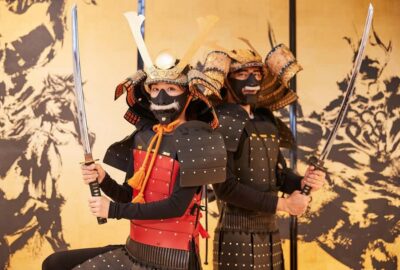 ★ 4.6Samurai Ninja Museum Guided tour and ExperienceFrom $271,010 reviews
 ★ 5.0Samurai Sword & Archery Class from Samurai DescendantFrom $193603 reviews
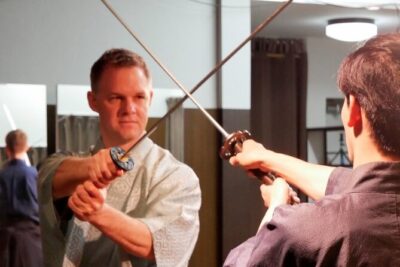 ★ 5.0Best Samurai Experience in TokyoFrom $65458 reviews
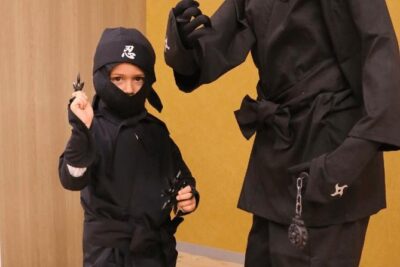 ★ 5.0Ninja Experience (Family Friendly) at Samurai Ninja Museum TOKYOFrom $47441 reviews
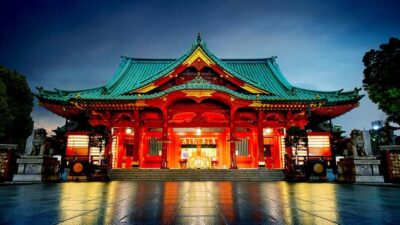 ★ 4.6Samurai Entertainment Night Show in Kanda ShrineFrom $41417 reviews
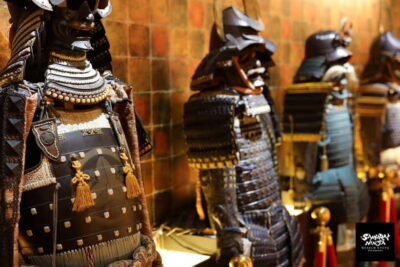 ★ 4.8Samurai Ninja Museum Asakusa: Samurai Sword Lesson & TourFrom $63306 reviews
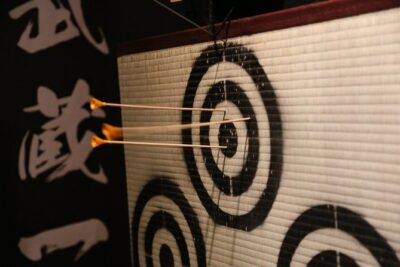 ★ 5.0Ninja Samurai 2-hour hands-on lesson by Japanese master in TokyoFrom $86194 reviews
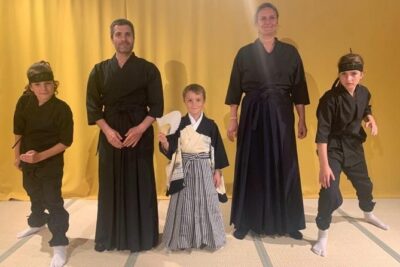 ★ 5.0Samurai Sword Experience (Family Friendly)at SAMURAI MUSEUM TOKYOFrom $65168 reviews
This tour also belongs to