
Review · TOKYO SAMURAI EXPERIENCES
Tokyo Samurai Experience
Tokyo turns serious when you step into samurai training. This 4-hour small-group outing pairs a guided walk through Kagurazaka with a hands-on samurai experience and kimono rental, plus a traditional lunch you can tailor with vegetarian options.
What I like most is that the morning leans into stories you would miss on your own, and the afternoon turns that theme into action, with you learning the basics from professional instructors and even doing a short performance. The main drawback to plan around is food rules: vegetarian is available, but vegan and gluten-free are not.
Why This Tokyo Samurai Experience Feels More Than a Show
This tour is built around a simple idea: don’t just look at samurai culture, follow it through the streets, then try it with your own body. You start in the Iidabashi area, hit Kagurazaka’s samurai-adjacent atmosphere, then change into a kimono and go to a dedicated training space.
You also get the benefit of a small group, with a cap of 7 people. That matters for something as physical as training, because you’re more likely to get direct attention and clearer guidance than you would in a big crowd.
One more practical win: it uses a mobile ticket, so you can keep things simple on your phone.
Key Details That Matter Before You Go
Small-group size (max 7): More hands-on guidance during training.
Kimono rental included: You show up dressed for the role, not just watching.
1-hour samurai basics: Focus is learning movements, not long, intense drilling.
Vegetarian lunch available: You can plan your meal, but vegan and gluten-free are not offered.
Lunch includes one food or sweet: You get a little extra treat on the side.
You can also read our reviews of more tours and experiences in Tokyo.



Meeting Point at Aoyama Flower Market, Then Straight Into the Day
The tour starts at Aoyama Flower Market, located inside the JR Iidabashi station area (Chiyoda City, Iidabashi). You’re meant to spot it by the West Exit area of JR Iidabashi station, then the tour loops back to the same meeting point at the end.
Why this matters: starting inside the station zone keeps you from burning time crossing the city while you’re still figuring out directions. Tokyo is great, but getting lost on a time-limited tour is a tax you do not need.
Expect a short, calm warm-up. You’re not going from zero to sword practice in one minute. Stop 1 is basically a breather and a visual kick-off, which helps you switch gears from commuter Tokyo to cultural Tokyo.
Stop 1: Aoyama Flower Market (A Short Intro, Not a Full Detour)
You’ll spend about 10 minutes at Aoyama Flower Market, with admission free. It’s a quick hit, just enough to set the scene.
This is the kind of stop that works best if you like light stops that give your senses something to do. If your priority is nonstop activity, keep your expectations realistic. This isn’t a long market browsing block, and the time is too short to treat it like a shopping stop.
Still, it’s a good way to start the day in a very Tokyo way. Even small, free moments like this can help the rest of your tour feel smoother.
Stop 2: Kagurazaka Streets, Where Samurai Culture Lives in the Layout
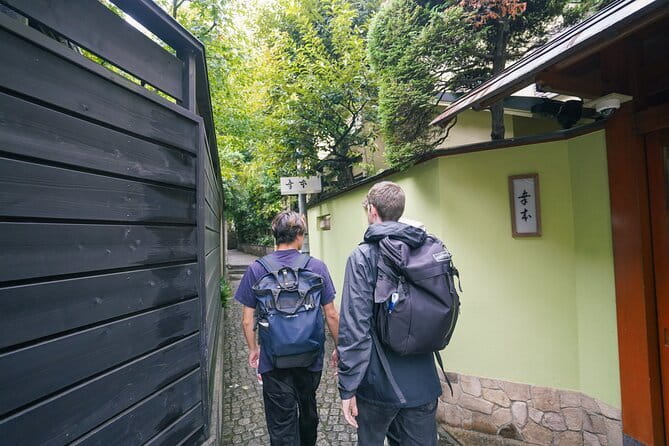
Next you head to Kagurazaka for about 20 minutes. This is one of the tour’s core cultural beats: you’re walking in an area known for historic samurai streets, and your guide points out temples and shrines along the way.
The practical value here is orientation. Kagurazaka can feel like a maze of small streets. A guided walk gives you a mental map fast, so later you can come back on your own and actually enjoy wandering instead of just hunting for sights.
What also helps is the guide style. The tour is presented as story-led, not sign-led, so you get context that helps you understand what you’re seeing. That’s what makes a short walk feel more meaningful.
A quick note for pacing: this is still a walking stop, so wear shoes that can handle uneven sidewalks and small street turns.
Stop 3: Samurai Theater Tokyo, Kimono Rental and Samurai Basics

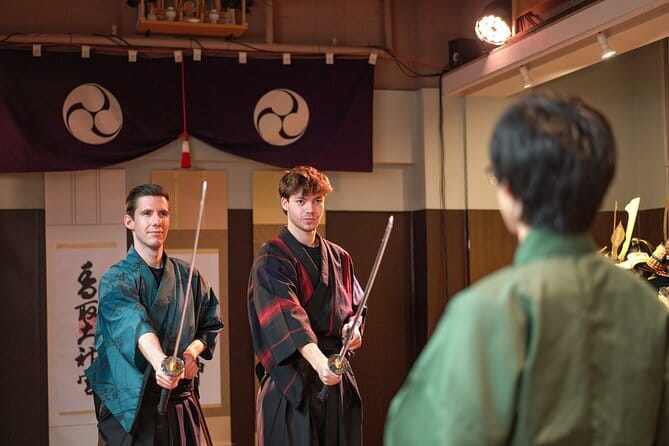
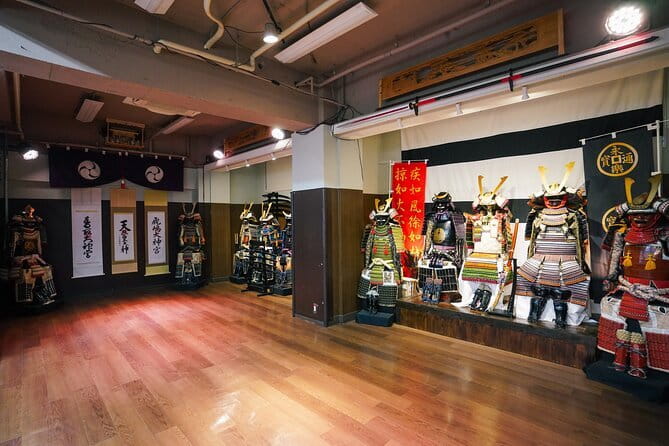
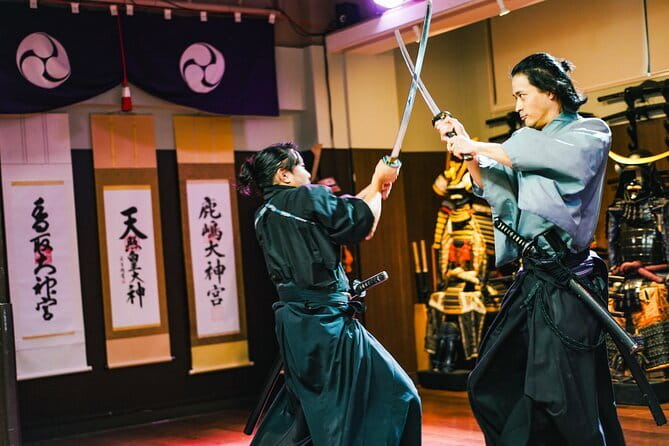
This is the heart of the experience, about 1 hour at Samurai Theater Tokyo. You’ll do two major things here:
- Kimono rental
- Samurai fighting basics and movement training with professional instructors
This is where the tour becomes physical. You learn foundational movements, and you are not just a spectator. Based on the way the experience tends to land with people, you should expect a sequence that includes handling katana training basics and a brief chance to perform, not only watch an instructor do everything.
How to think about it:
- You’re learning basics, so don’t expect an advanced martial arts program.
- You will still leave with that rare travel feeling of doing something you normally cannot do on vacation, wearing the right costume and getting direct coaching.
The kimono part is also a gift. You’ll feel the theme in your body and in photos, but it’s more than for looks. The rental sets the tone, and it helps you treat the training time as its own mini world.
If you’re worried about comfort, plan for the reality of a kimono. Wear clothing that layers easily and helps you tolerate dressing adjustments. Your comfort depends on how you handle tight fabric, but the training is only one hour, so it’s not an all-day commitment.



Stop 4: Traditional Japanese Lunch in Kagurazaka, With Vegetarian Options
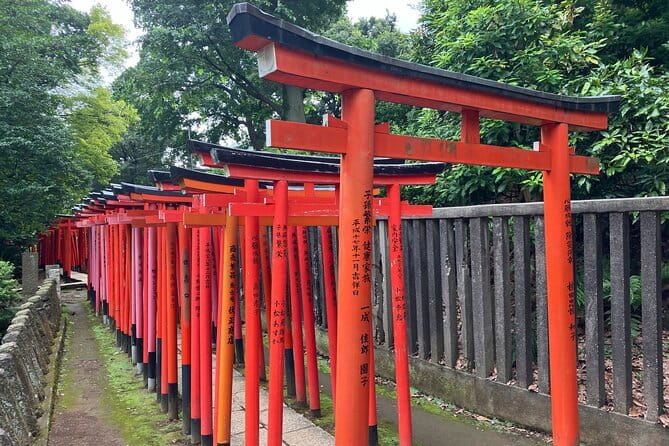
Then you refuel in Kagurazaka at a hidden restaurant setting, around 1 hour 40 minutes. Lunch is included, and vegetarian options are available.
Important dietary reality check: vegan and gluten-free options are not available. If you need gluten-free for medical reasons, you’ll want to plan carefully, since the data does not promise accommodations beyond vegetarian.
Here’s what you can expect in the included meal structure:
- A Japanese lunch with a vegetarian option
- One traditional food or sweet included, where you get to choose a single item
That “choose one” detail is small, but it helps. You can pick something you actually want, rather than forcing yourself to like whatever is served.
Also, since additional food and drink are available for purchase, you have a fallback if you want something different than what’s included. Just keep an eye on costs if you’re trying to hold your budget steady.
Why this lunch stop is valuable: it grounds the afternoon. After training, you want real food, not just a snack. And being in Kagurazaka, you’re eating in the same vibe zone as your walk, so the day feels cohesive.
Stop 5: One More Kagurazaka Walk, So It Sticks in Your Memory
After lunch, you return to a walking segment in Kagurazaka for about 20 minutes. The guide leads you to where samurai once lived, with continued talk tied to historic temples and shrines.
This second walk is the smartest kind of tour design. You do the training first, then you revisit the neighborhood with fresh context. In plain terms, you’re more likely to remember details when you’ve just taken part in the cultural theme.
If you want to get more value from the last walk, do this mindset trick: look at the street layout and think about what daily life might have looked like back then, even if you only know a little. The guide’s stories give you the framework, and the walking gives you the shape.
And yes, you end back at the meeting point at the end of the tour.
Price and Value for a 4-Hour Tokyo Small-Group Samurai Day

At $166.04 per person for about 4 hours, this isn’t a budget activity. The value comes from what you get in one package:
- Kimono rental included
- 1 hour of guided samurai basics with professional instructors
- A traditional Japanese lunch with vegetarian options
- A guided Kagurazaka walking experience broken into multiple stops
- One included traditional food or sweet
Many Tokyo tours charge similar prices for a walking-only experience or for a performance-only show. Here, the included training and costume change are the cost drivers, and that’s where you’re most likely to feel you actually participated, not just attended.
If you’re traveling with friends, the small group size also improves the experience, so you get more attention relative to the group number.
Who This Samurai Experience Fits Best
This tour is a good match if you:
- Want a hands-on cultural activity, not just photos
- Like story-led walking tours that teach you how to read a neighborhood
- Enjoy dress-up experiences but also want more than costume photos
- Are comfortable doing light physical movement training for beginners
- Need vegetarian lunch options (and do not require vegan or gluten-free)
It may feel less perfect if you:
- Need vegan or gluten-free meal accommodations (not offered)
- Want a long, advanced martial arts program (this focuses on basics and a single session)
- Prefer mostly indoor activities, since the tour includes walking time and street stops
Quick Practical Tips Before You Book
- Wear comfortable shoes for Kagurazaka sidewalks and repeated walking stops.
- Plan your meals around vegetarian lunch inclusion, then keep extra purchases as optional.
- Bring a phone with your mobile ticket ready, since the ticket format is mobile.
- If you dislike tight clothing, consider how you handle kimono dressing. The training time is one hour, which helps.
Should You Book This Tokyo Samurai Experience?
I think this is a strong booking for the right kind of traveler. If you want Tokyo culture that moves from streets to practice, this hits that goal. The combination of Kagurazaka walking, kimono rental, and a guided samurai basics session gives you real variety in one half-day block.
Book it if vegetarian lunch works for you and you’re excited to learn basics with instructors. Skip it if you require vegan or gluten-free, because the provided meal information only guarantees vegetarian. Also, if you want advanced sword training, adjust your expectations to basics and a short performance.
FAQ
How long is the Tokyo Samurai Experience tour?
The tour lasts about 4 hours.
How much does it cost per person?
The price is $166.04 per person.
What is included in the samurai experience?
It includes the Samurai Experience and kimono rental for 1 hour, led by professional instructors at Samurai Theater Tokyo.
What about lunch and dietary needs?
Lunch includes vegetarian options. Vegan and gluten-free options are not available. You also choose one traditional food or sweet during the tour.
Do I need to bring a ticket?
No. This experience uses a mobile ticket.
What is the group size limit?
The maximum group size is 7 travelers.
Where do I meet for the tour?
You meet at Aoyama Flower Market in the JR Iidabashi station area (Chiyoda City, Iidabashi), near the West Exit.
Is the tour route walk-heavy?
Yes. It includes multiple Kagurazaka walking segments, plus short stops before and after the training and lunch.
What is the cancellation policy?
You can cancel for a full refund up to 24 hours in advance of the experience start time. If you cancel less than 24 hours before, you will not receive a refund.
More Tour Reviews in Tokyo
Not for you? Here's more nearby things to do in Tokyo we have reviewed












Tokyo Samurai Experiences, side by side.
 ★ 4.6Samurai Ninja Museum Guided tour and ExperienceFrom $271,010 reviews
 ★ 5.0Samurai Sword & Archery Class from Samurai DescendantFrom $193603 reviews
 ★ 5.0Best Samurai Experience in TokyoFrom $65458 reviews
 ★ 5.0Ninja Experience (Family Friendly) at Samurai Ninja Museum TOKYOFrom $47441 reviews
 ★ 4.6Samurai Entertainment Night Show in Kanda ShrineFrom $41417 reviews
 ★ 4.8Samurai Ninja Museum Asakusa: Samurai Sword Lesson & TourFrom $63306 reviews
 ★ 5.0Ninja Samurai 2-hour hands-on lesson by Japanese master in TokyoFrom $86194 reviews
 ★ 5.0Samurai Sword Experience (Family Friendly)at SAMURAI MUSEUM TOKYOFrom $65168 reviews
This tour also belongs to