
Review · SHIBUYA TOURS
One Day Tokyo Group Tour: Asakusa, Harajuku, Shibuya and more
Tokyo moves fast, this tour keeps up. In about six hours, you’ll get a smart mix of ancient temple streets and modern, neon-soaked neighborhoods, all paced by an English-speaking guide. You start in Asakusa, then work your way through Shibuya, Harajuku, and Shinjuku on foot, with plenty of time to ask questions about daily life in Japan.
I especially like the small group size (up to 15). That matters in Tokyo, where things can feel chaotic fast, and a smaller group makes it easier to stay together and actually get your questions answered. A second thing I like is the variety packed into one day, you see the old side of Tokyo and the loud side, without needing to plan separate trips.
One possible drawback: this is a walking-heavy tour and it’s short on lunch support. Public transportation costs extra (listed as $5 per person), and the tour notes a moderate fitness level, so bring comfortable shoes and plan your food day accordingly.
Key things to know before you go
- Up to 15 people keeps the pace manageable and the Q and A more useful
- Four major areas in about six hours gives you a Tokyo “greatest hits” orientation
- A mix of free and included admission means you’ll have fewer ticket decisions to make
- Mobile ticket helps you check in without extra paperwork
- You’ll walk where cars can’t go, which is often the real fun of Tokyo
Tokyo in One Big Walk, with a Guide Who Can Explain the Why
If you’ve only got part of a day in Tokyo, this kind of tour can be a lifesaver. You’re not trying to research five neighborhoods, then figure out the best route, then interpret what you’re actually looking at. Instead, you get a guided path that connects the dots between Tokyo’s past and present.
What makes this tour work well is that it’s not just a list of famous spots. It’s designed to help you understand the flow of the city, where people go for atmosphere, where they go for shopping or nightlife, and why locals behave the way they do in each area. And since you can ask questions along the way, you can turn confusion into clarity while you’re still in the thick of things.
The group limit is also a big deal. In Tokyo, the difference between feeling fine and feeling lost can be one wrong turn. With a smaller group, you’re more likely to stay oriented, keep up comfortably, and get a guide to correct course quickly.
More Tokyo tours and experiences for the shortlist



Start in Asakusa, the Easy Way to Begin a Tokyo Day
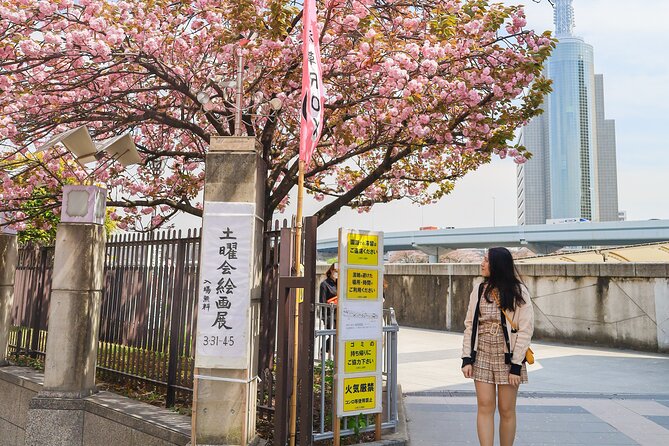
You begin at the Asakusa Culture Tourist Information Center in Kaminarimon, Taito City, with a 10:00 am start. Starting here is smart because Asakusa is one of the most classic first impressions of Tokyo: older streets, temple grounds, and a slower rhythm than the city’s office towers.
This is also a good meeting point if you want your day to feel organized from the start. You’re near public transportation, so getting there is usually straightforward. And because you’re starting with a traditional area, the guide has an easy way to frame what you’re about to see, including how this part of Tokyo fits into the larger city.
Timing matters too. A morning start gives you a chance to see Senso-ji and the surrounding area without it feeling like you’re only stepping into peak crowds. It’s still Tokyo, so it won’t be empty, but morning generally helps.
Senso-ji and Asakusa, Where the Old Tokyo Feeling Is Real
Asakusa is built around Senso-ji, with roots going back centuries. During your time here, you’ll focus on the temple experience and the traditional neighborhood atmosphere around it. The tour description highlights the temple’s age and its connection to Kannon, the Buddhist goddess of mercy, which gives the stop more meaning than just looking at buildings.
You get about two hours here, which is enough to take in the main sights without turning the day into a rushed sprint. The balance of time also helps you do what you actually want on a temple visit, pause, look closely, take photos if that’s your thing, and ask questions about what you’re seeing.
One practical consideration: temple areas often involve more standing and slow movement through pedestrian lanes. If your feet get tired easily, plan for breaks. A guided pace helps, but you still want to be ready for the physical reality of a busy old town.
Shibuya on Foot, the Crossing Is Just the Opening Scene
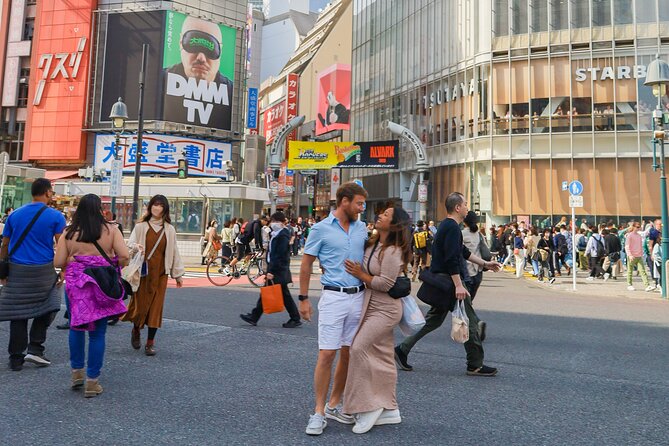
Next comes Shibuya, one of the city’s most famous neighborhoods. Yes, you’ll be near the world’s busiest pedestrian crossing, but this stop is more than the photo moment. Shibuya is also known for food, nightlife, and a wide range of places people go for the night, so it helps you understand why Tokyo’s younger crowds and visitors keep orbiting here.
You get about two hours in Shibuya, which is a solid window. It means you can experience that fast, modern Tokyo energy without only sprinting from one landmark to the next. And because the tour is on foot, you’ll be seeing the streets and storefronts in a way you miss if you only pass through on trains.
What I like about this stop is the way guides can translate what you see into context. If you ask about daily life, the guide can explain how people use neighborhoods like Shibuya, not just how to pronounce street names. That’s the difference between collecting sights and actually learning how the city works.
Tip from the practical side: bring a little cash. One of the big recurring bits of advice from people who did tours like this is to come prepared with cash for small purchases or spontaneous snacks along the way.
Harajuku Station, Style and Energy Without the Full Day Commitment
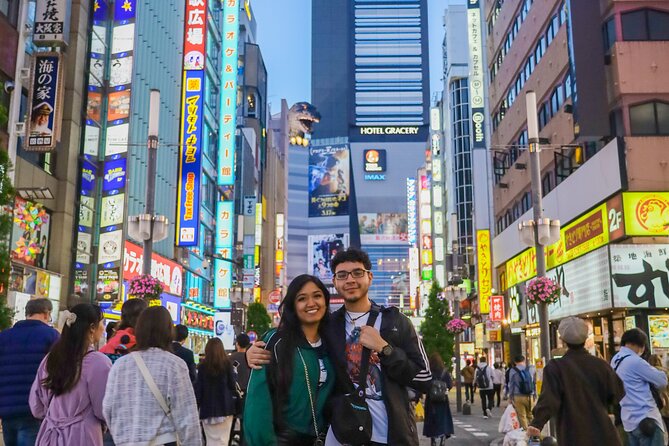
Harajuku is where Tokyo gets loud in a different way. During your time around Harajuku Station, you’ll experience that recognizable youth style vibe and the neighborhood atmosphere that people talk about for good reason.
This stop is shorter, about one hour, and that’s honestly a good move for a half-sit half-walk day. It keeps you from losing your entire afternoon to one area and then feeling behind schedule for the rest of Tokyo. Also, Harajuku is a place where your senses can take over quickly, so a guided hour can help you focus on what’s worth your time instead of wandering aimlessly.
The tour notes admission ticket included for this stop. The important part for you is that you don’t need to buy and manage every ticket decision yourself. You can spend mental energy on experiencing the neighborhood rather than doing paperwork.
One consideration: if Harajuku is your top priority, you might still want extra time on your own after the group ends. One hour gives a taste, not a full day of exploring.



Shinjuku, the Nightlife Hub That Makes Tokyo Feel Like It Has a Pulse
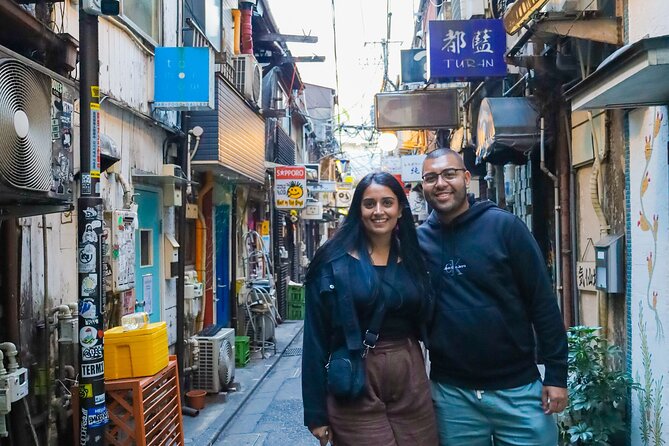
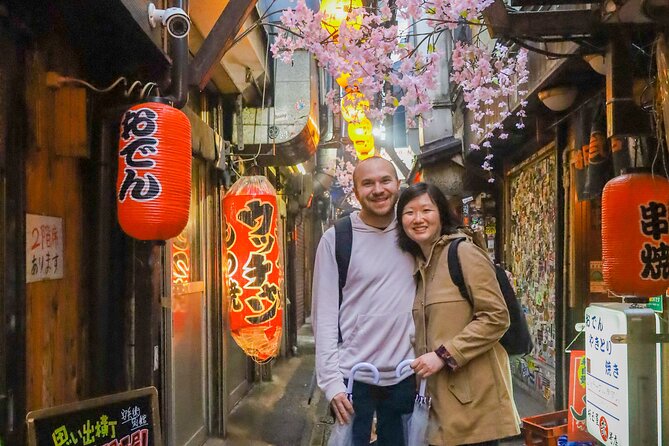
You finish at Shinjuku, which is often described as Tokyo’s nightlife central hub. Shinjuku is where the city feels most alive after dark, full of energy, lights, and late-night activity.
Even though your Shinjuku time is about one hour, ending here is strategic. By the time you arrive, you’ve already learned how the day’s neighborhoods differ. Now Shinjuku shows you the high-volume Tokyo side: where people go to unwind and where the city seems to run on motion.
The end point is in Shinjuku City, and the tour includes recommendations for what you can check out afterwards. That post-tour guidance is one of the biggest practical values of a guided day, because it helps you turn the final stop into a plan, not just a goodbye.
Also, think about what you’ll do after. If you’re trying to fit in dinner, shopping, or a bar stop, make sure you know roughly where you want to go next. Ending in Shinjuku can be a thrill, but it can also be a little overwhelming if you show up with no plan.
Why the Guide Matters More Than You Think
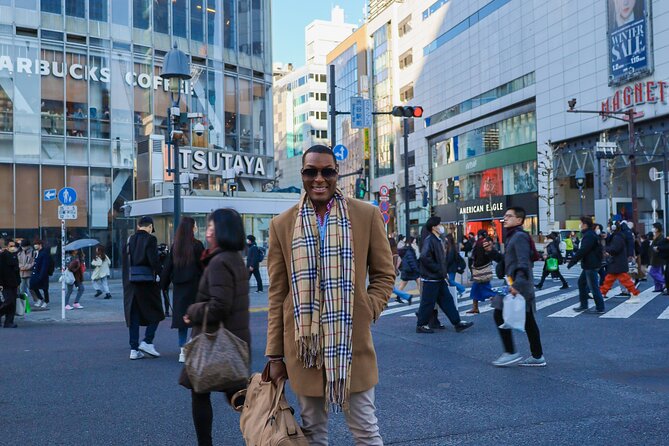
This tour’s biggest strength is the human factor. A lot of the praise in the guide experience centers on enthusiasm, friendliness, and the way guides answer questions in a way that makes Tokyo feel understandable.
People have specifically highlighted guides such as Amir, with praise for his enthusiasm and knowledge, and Firas, described as excellent and even able to tailor the experience when the group is very small. Flor is also mentioned for telling the history of shrine stops in a clear, engaging way, and for being especially strong for private or small-group-style attention.
Here’s why that matters to you: Tokyo is not a “read a sign and you’re done” city. Some of what you see has cultural meaning, and some of it is just practical, like how people move, queue, and organize daily life in crowded areas. When your guide can explain the why, you remember the day more, and you waste less time guessing.
It also helps that the tour is set up for questions about Tokyo’s culture, history, and daily life. If you’re the kind of traveler who likes to understand what’s happening, this is a format that rewards you.
Price and Value, What You Get for Around $75.77
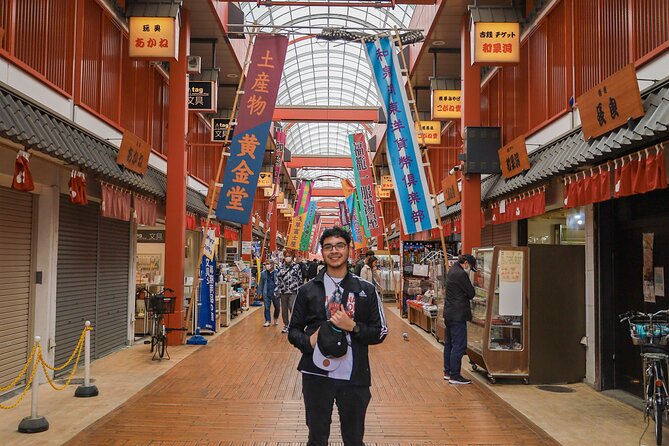
At $75.77 per person, this tour isn’t trying to replace a long independent Tokyo plan. It’s positioned as a fast orientation through major neighborhoods, with an English-speaking guide and a walking route that keeps you in the most interesting pedestrian areas.
The included items help the value story:
- English-speaking guide
- Walking tour of Tokyo highlights
- Mobile ticket
There’s also a note that public transportation costs extra, listed as $5 per person. Lunch is not included, so you’ll need to budget for your meal day. That’s not a dealbreaker, but it does mean you should plan food in advance, or at least decide you’ll grab something simple while you’re out.
The value comes from reducing three headaches:
1) Finding your way across neighborhoods efficiently
2) Understanding what you’re looking at in each area
3) Getting local recommendations at the end, so your day doesn’t stop when the tour ends
If you already know Tokyo well and just want the fastest possible self-guided route, you might feel like you could do it cheaper. But if you want less stress and more meaning in a few hours, this price can feel fair.
Logistics That Will Actually Affect Your Comfort
This is about comfort and timing more than paperwork. The tour is mobile-ticket based, which is convenient, but you should still have a charged phone battery and a plan if your signal is weak.
It also requires good weather. Tokyo can change fast, so if the day is rainy or miserable, you may need a backup plan. The tour description indicates it may be canceled due to poor weather and you’d be offered a different date or a full refund.
Physical fitness is listed as moderate. That’s honest, and it should inform your packing. You’ll be on foot through major areas with a mix of crowded pedestrian streets and sightseeing moments.
So, what should you do to make the day easier?
- Wear good walking shoes
- Bring a bit of cash
- Have a small plan for lunch since it isn’t included
- Keep your expectations realistic, this is a highlights day, not a slow museum crawl
Who This Tour Fits Best
This tour is ideal if you’re:
- Short on time and want a clear first introduction to Tokyo
- Interested in both traditional Tokyo and modern Tokyo in one day
- The type of traveler who likes asking questions instead of figuring everything out alone
- Traveling with people who want a guided structure but still like freedom afterward
It may not be the best fit if you:
- Want several hours in only one neighborhood
- Hate walking and would rather spend the day using transit with minimal legwork
- Plan to skip meals and prefer not to think about food at all, because lunch is not included
Should You Book This One-Day Tokyo Highlights Tour?
If you’re trying to make the most of limited time in Tokyo, I think this is a strong booking. The small group size helps you stay oriented, the guide Q and A makes the sights feel more understandable, and the four-neighborhood mix gives you a useful mental map for the rest of your trip.
Book it if you want an efficient, guided Tokyo sampler that ends in Shinjuku with recommendations for what to do next. Skip it if you want a deep dive into one area or you know you’ll hate lots of walking, because this day is designed to move.
If your goal is simply to get your bearings fast and see the Tokyo you came for, this tour is built for that.
FAQ
How long is the tour?
The tour duration is listed as about 6 hours.
Where does the tour start?
It starts at the Asakusa Culture Tourist Information Center in Taito City, Tokyo.
Where does the tour end?
It ends in Shinjuku City, Tokyo, with recommendations for what to do afterward.
What is the tour price?
The price is listed as $75.77 per person.
Is the guide English speaking?
Yes, the tour includes an English speaking guide.
What’s included in the tour price?
It includes an English speaking guide and a walking tour of Tokyo highlights, plus a mobile ticket.
What is not included?
Lunch is not included, and public transportation is listed as $5.00 per person.
Are admission tickets included?
Admission tickets are listed as free for Asakusa, Shibuya, and Shinjuku, and included for Harajuku Station.
How big is the group?
The tour has a maximum of 15 travelers.
What if the weather is bad or I need to cancel?
The experience requires good weather. Free cancellation is available, and you can cancel up to 24 hours in advance for a full refund.
Should You Book This One-Day Tokyo Highlights Tour?
If you’re short on time, want a guided path through major Tokyo neighborhoods, and like learning how to navigate the city, this is a good match. The combination of small group size and guide-led Q and A is the reason it works, especially on a fast-paced, walking-focused day.
More 1-Day Tours in Tokyo



More Tours in Tokyo


More Tour Reviews in Tokyo
Not for you? Here's more nearby things to do in Tokyo we have reviewed












Shibuya Tours, side by side.
 ★ 5.0Official Street Go-Kart in ShibuyaFrom $763,435 reviews
 ★ 4.9Street Kart Experience in ShibuyaFrom $741,484 reviews
 ★ 5.0Shibuya Meltdown Nightlife Tour: All-You-Can-Drink Bar HoppingFrom $1061,058 reviews
 ★ 5.0Shibuya Official Street Go-Kart in Shibuya AnnexFrom $69972 reviews
 ★ 5.0Shibuya Food Tour (13 dishes and 4 Eateries)From $77770 reviews
 ★ 5.0Best of Shibuya Food TourFrom $217612 reviews
 ★ 4.8Shibuya Highlights Walking TourFrom $19601 reviews
 ★ 4.7Premium Go-Kart Tour with Tower & Shibuya CrossingFrom $116528 reviews
This tour also belongs to