
Review · TOKYO SAMURAI EXPERIENCES
Tokyo: Best Samurai Experience
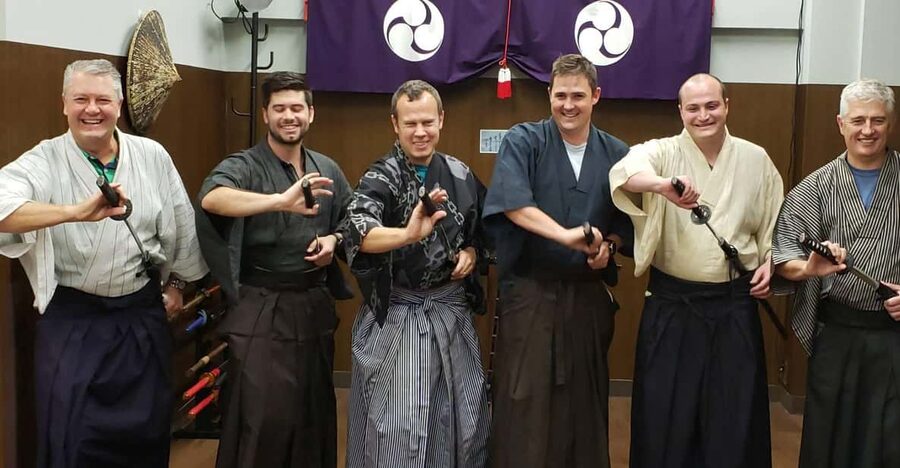
Samurai training beats a standard show. In one hour at Samurai Theater Tokyo, you get kimono and hakama plus real sword technique practice. It is part lesson, part performance, and very hands-on.
I love how the session is structured: draw the blade, learn stances, then practice a simple chanbara sword fight. Another thing I like is how easy it is to walk away with memories, because you can take photos and videos with your phone during the action.
One consideration: the sword is a fake, non-cutting one, so this is not about real weapon use. If you expect live steel or high-intensity sparring, you might feel the difference.
What You Get Out of a Tokyo Samurai Experience (Fast Facts)
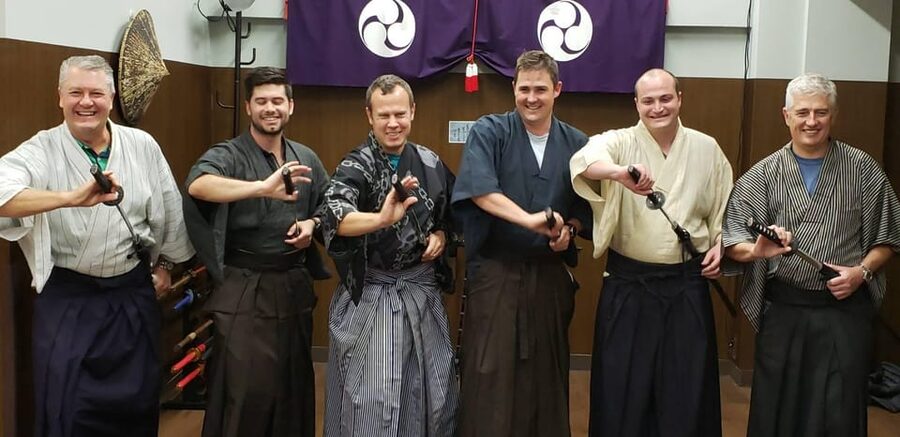
- Kimono and hakama first, so you start in costume, not in a lecture room
- Sword basics with guided repetition, including draw, hold, swing, and retract
- A fun chanbara fight sequence, where you apply what you learned
- Phone-friendly photo and video moments, plus a staff photo with a samurai
- Small group format limited to 10 participants, which keeps the pace personal
Choosing Your Kimono and Hakama, Then Stepping Into Costume Mode
The experience starts with the fun part that actually helps everything else work. You pick your favorite kimono and hakama, then change into your samurai outfit before any sword practice begins. Doing the costume step early matters because it puts you in the right mindset, and it also forces you to move carefully from the start.
Expect a real change into traditional clothing, not just a quick costume photo. Once you are suited up, you will feel the difference in posture, balance, and how your legs move in hakama. That practical body-awareness becomes useful later when you practice stances and controlled swings.
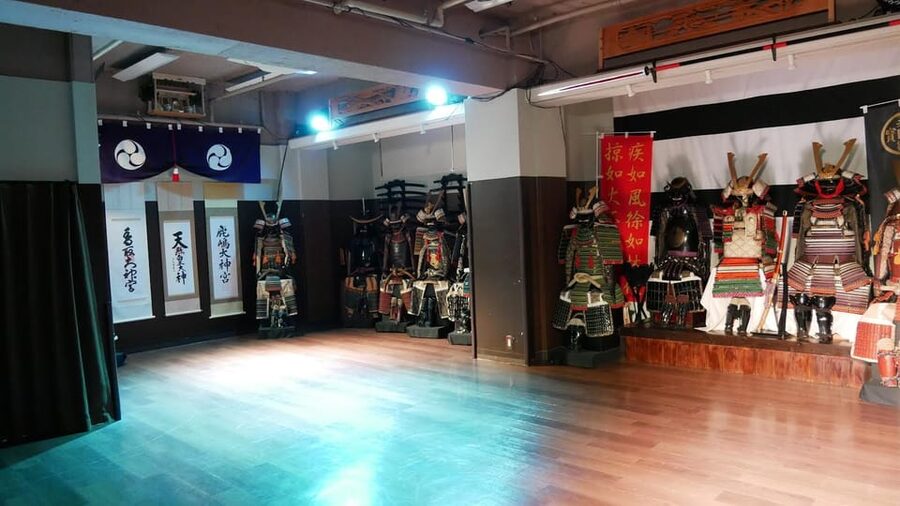
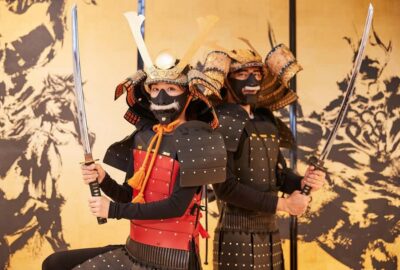
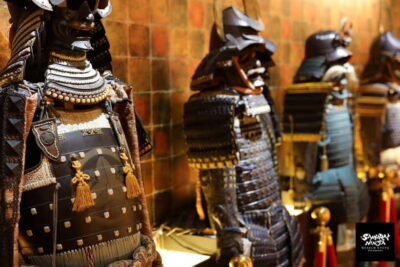
If you want extra photos, there is also armor displayed in the dojo area. Wearing the armor is optional, and it requires an extra fee. If you are thinking about the dramatic look, this is the moment to decide, because it changes how you pose in the final photo moments.
You can also read our reviews of more tours and experiences in Tokyo.



Inside Samurai Theater Tokyo: Dojo Atmosphere and Weapon Displays
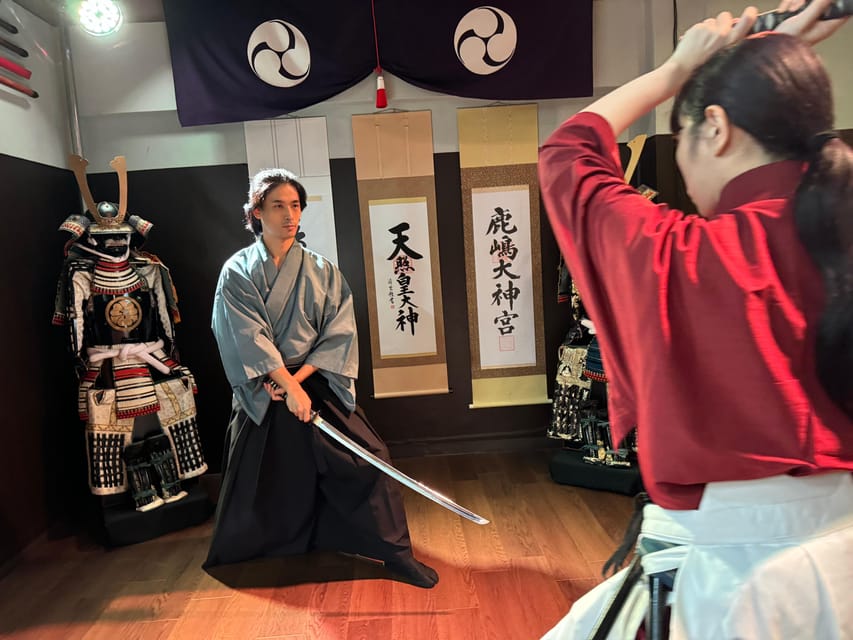
After costume, you move into the training space. The setting is intentionally styled as a dojo, with samurai-themed corners that do not feel modern. The space includes a display of weapons like swords and spears, plus armor on site.
This matters because you are not learning in a sterile studio. Seeing the equipment around you adds context for what you are holding and what the teachers are demonstrating. It also helps the session feel more like a living tradition than a one-off gimmick.
The dojos setup also explains why you get a bit of show and a bit of training. You are learning in a space designed for demonstrations, so you will frequently switch between watching, copying, and performing short fight moves.
Sword Basics You Can Use: Draw, Hold, Swing, Retract
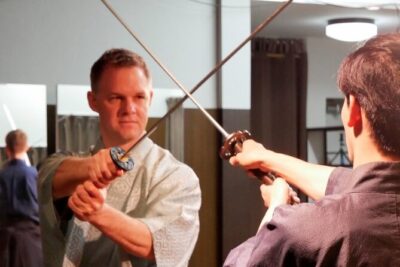
Now comes the skill part. You will learn how to handle a traditional sword while wearing your kimono and hakama, using a fake sword that cannot be cut. That safety detail is not boring, it is actually the reason the session works for beginners. You get time to repeat movements and build muscle memory without worrying about real blade risk.
The lesson covers key fundamentals in clear stages:
- Drawing the sword
- Holding it properly
- Swinging it in controlled ways
- Retracting the blade
You will also get an explanation of sword parts. In the feedback from previous participants, many people specifically highlight learning the blade parts and stance names in Japanese. Even if you do not catch every term, the idea is that the instruction gives you vocabulary to match the physical technique.
The best part of this approach for most visitors is that it turns sword play from random waving into a sequence. You are not just mimicking a single move. You are learning a flow you can recognize and repeat, which makes the later fight segment feel earned.
Chanbara Sword Fight: Applying the Basics With Samurai Energy
After you learn the basics, the session shifts into a simple chanbara (sword fight) practice. This is where the activity turns from training to performance. The goal is not to win a tournament. The goal is to understand timing, spacing, and how to execute basic offensive and defensive moves safely.
In the reviews, people repeatedly mention that instructors bring high energy and keep the group moving. You get guidance that helps you land the movements confidently, even if you have never handled a sword before. The instructors also appear to work well with different comfort levels, including people who are not naturally outgoing.
Then comes a fun twist: you practice exterminating bad guys to music. It sounds silly in the best way, but it serves a real purpose. Music cues help you stay synchronized, and that turns a group exercise into a shared mini-show. The result is less fear of doing it wrong and more focus on following the sequence.
Photos and Videos: Getting Real Content, Not Just One Quick Shot
If you care about photos, this part is a big selling point. You can take videos with your smart phone and take pictures with the samurai during the session. That means you are not restricted to a single posed photo at the start or end.
What makes it feel good is that the action creates natural moments. Your costume looks great in motion, and the staff helps set you up for the right angles. Reviews also mention that instructors and assistants record moments on mobile phones throughout the experience, so you are likely to leave with clips of your sword moves, not just still images.
The finale includes a full performance with lights and soundtrack. Even if you are there for the hands-on part, this performance is worth paying attention to. It shows how the choreography pieces connect: stance to draw, draw to swing, swing to the fight sequence, then into a dramatic ending.



Instructor Quality: Authentic Teachers With Screen Presence
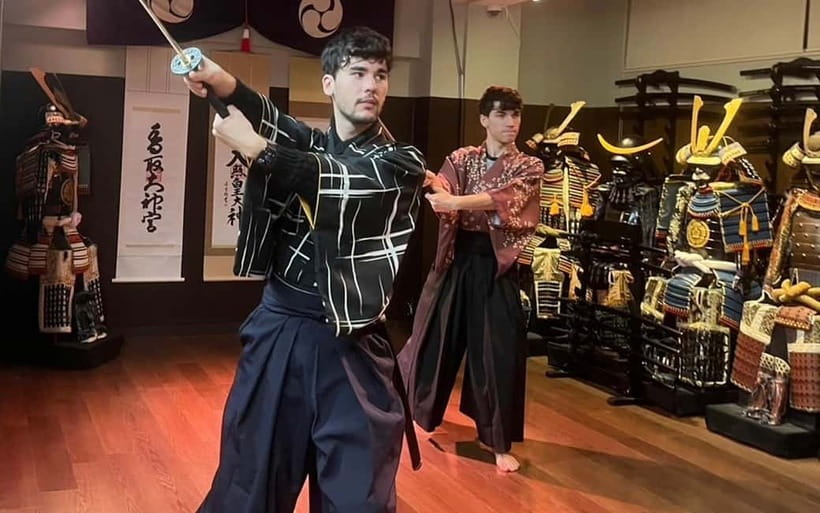
A strong reason to book is the instructor background. The teachers are described as authentic instructors who have appeared in major Japanese dramas and movies. That matters because performance in this kind of activity is not only about acting, it is about teaching.
From the feedback, the teachers and assistants are patient, energetic, and focused on making sure you can execute the moves. Multiple people highlight how the instructor demonstrates, then patiently guides you through repetition. Others mention that the guides help capture the best moments on your device.
This combination, teaching plus showmanship, is why a short 1-hour session does not feel like wasted time. You leave with a story you can tell, plus movements you can name and repeat.
Price and Value: Is $63 Worth It?
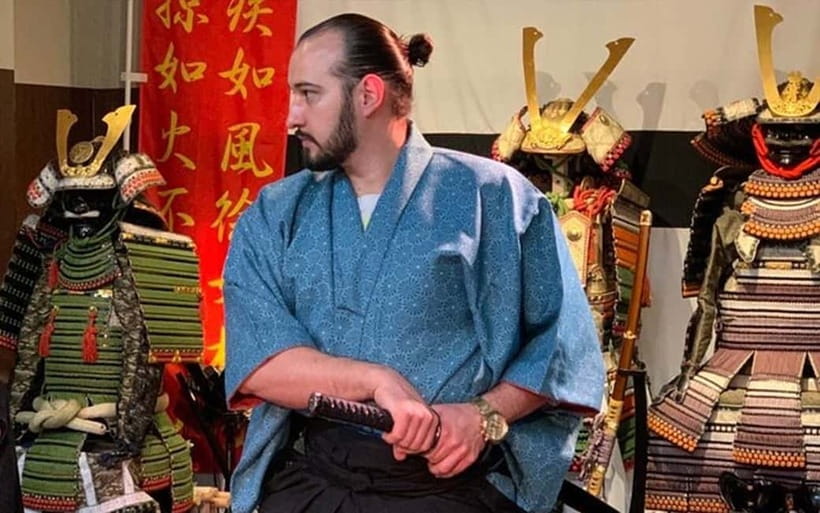
At $63 per person for a 1-hour experience, this is in the category of short, high-impact activities. You are paying for a packed format: costume (kimono and hakama), sword fundamentals, a chanbara fight segment, and a photo with a samurai, plus the chance to record your own video.
Here is why the value makes sense for many visitors:
- You get multiple “deliverables” in one go, costume, instruction, fight choreography, and media
- Small group size limited to 10 participants usually means less waiting and more time practicing
- The safety setup with a fake sword lets beginners participate fully without intimidation
One trade-off to consider is that the session is intentionally basic and beginner-friendly. You will learn fundamentals, not become a swordsman. If you want serious martial arts conditioning or advanced technical depth, you may want a longer class or a separate training program.
Still, if your goal is to experience samurai culture in a way that feels active and memorable, this is priced like a practical splurge, not a random tourist stop.
Who Should Book This Samurai Session in Tokyo
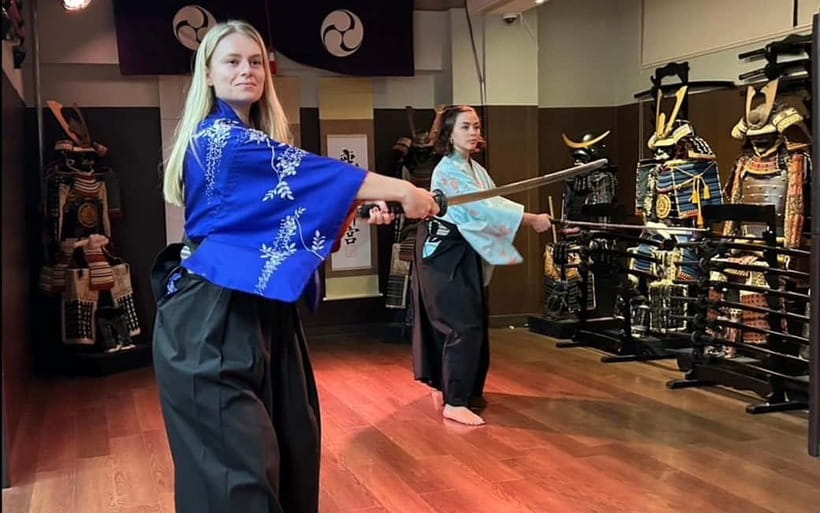
This experience is a good match if you want hands-on fun in a small group and you like cosplay-adjacent cultural activities. It is also great for families in the sense that the instruction is interactive and the session moves quickly. A lot of people mention it works well for different ages, as long as the age requirements are met.
It is not suitable for:
- Children under 2 years
- Children under 3 years
- Children under 4 years
- Babies under 1 year
- People under 3 ft (90 cm)
- Pregnant women
- Wheelchair users
- Visually impaired people
- People over 95 years
If any of those apply, it is better to skip this specific session. Also note that sword practice includes movement while wearing hakama, so comfort and mobility matter.
If you are traveling solo, you can still join, since one person can take the tour.
Timing, Duration, and Planning Your Hour
You should plan around a tight schedule. The duration is 1 hour, so you will want to avoid booking it right before a stressful transfer. That said, same-day reservations are possible, which is useful when Tokyo days shift unexpectedly.
To find it easily, use Google Maps and search Samurai Theater Tokyo as your meeting point. That simple search helps you avoid wasting time in a big city.
Language support is English and Japanese, which makes it easier if your Japanese is limited. You will still want to listen carefully during demonstration moments, since a lot of the learning comes from watching and copying.
Quick Checklist Before You Go
Here are a few practical tips so your hour goes smoothly:
- Wear comfortable clothes for your costume change, because you will be switching quickly
- If you have a phone or camera, bring a charger or a full battery if possible
- Be ready to follow instructions and move with controlled energy
- Decide in advance whether you want the optional armor fee, since it affects how you picture yourself
Should You Book the Best Samurai Experience in Tokyo?
I think you should book this if you want a short, structured Tokyo samurai experience that blends costume, basic sword skills, and a fun fight sequence. The small group size, the focus on repetition, and the emphasis on capturing video and photos make it feel worth the time even for first-timers.
Skip it if you are looking for serious martial arts training with real steel use, or if the listed suitability limits apply to you. Also, if you prefer quiet cultural sightseeing over active participation, this format may feel too physical and performance-heavy.
If your trip includes Tokyo but you only have time for one samurai-themed activity, this is the kind that gives you both the look and the story. You walk out with costume photos, short training memories, and a mini-action performance you can reenact for years.
FAQ
How long is the Samurai sword experience in Tokyo?
The duration is 1 hour.
How much does it cost?
The price is $63 per person.
What is included in the experience?
It includes changing into kimono and hakama, an explanation of sword parts, using a fake sword that cannot be cut, a sword fight with a samurai, and a photo with a samurai.
Can I take photos or videos with my smartphone?
Yes. You can take videos with your smart phone and take pictures with the samurai.
Where do I meet for the tour?
Search Samurai Theater Tokyo on Google Maps for the meeting point.
Can I cancel for a full refund?
Yes. You can cancel up to 24 hours in advance for a full refund.
More Tour Reviews in Tokyo
Not for you? Here's more nearby things to do in Tokyo we have reviewed












Tokyo Samurai Experiences, side by side.
 ★ 4.6Samurai Ninja Museum Guided tour and ExperienceFrom $271,010 reviews
 ★ 5.0Samurai Sword & Archery Class from Samurai DescendantFrom $193603 reviews
 ★ 5.0Best Samurai Experience in TokyoFrom $65458 reviews
 ★ 5.0Ninja Experience (Family Friendly) at Samurai Ninja Museum TOKYOFrom $47441 reviews
 ★ 4.6Samurai Entertainment Night Show in Kanda ShrineFrom $41417 reviews
 ★ 4.8Samurai Ninja Museum Asakusa: Samurai Sword Lesson & TourFrom $63306 reviews
 ★ 5.0Ninja Samurai 2-hour hands-on lesson by Japanese master in TokyoFrom $86194 reviews
 ★ 5.0Samurai Sword Experience (Family Friendly)at SAMURAI MUSEUM TOKYOFrom $65168 reviews
This tour also belongs to